Nippon Steel’s Deal for U.S. Steel Should Never Have Been Blocked
A deal that was blocked on nonsensical national-security concerns now contains a 'golden share,' one of the oddest provisions in merger history.
You've reached your free article limit
You've read 0 of 1 free Pro articles.
The Nippon Steel NPSCY (T:5401) deal to acquire U.S. Steel X is finally done. But the US$14.9 billion buyout should never have been blocked in the first place. And it’s concluded with one of the oddest stipulations in merger history.
The deal wrapped up Wednesday, ending an 18-month saga in which politics played a far greater role than common business sense. Both companies and their boards wanted the deal to proceed. It makes eminent sense for it to conclude.
Mysterious 'Golden Share'
Unusually, the U.S. government has inserted itself into the deal with a “golden share.” No one is quite sure exactly what that means. But it’s the kind of conditional clause that would be far more common out here in Communist China than in the heart of capitalism. It’s … whisper it quietly … an awful lot like socialism.
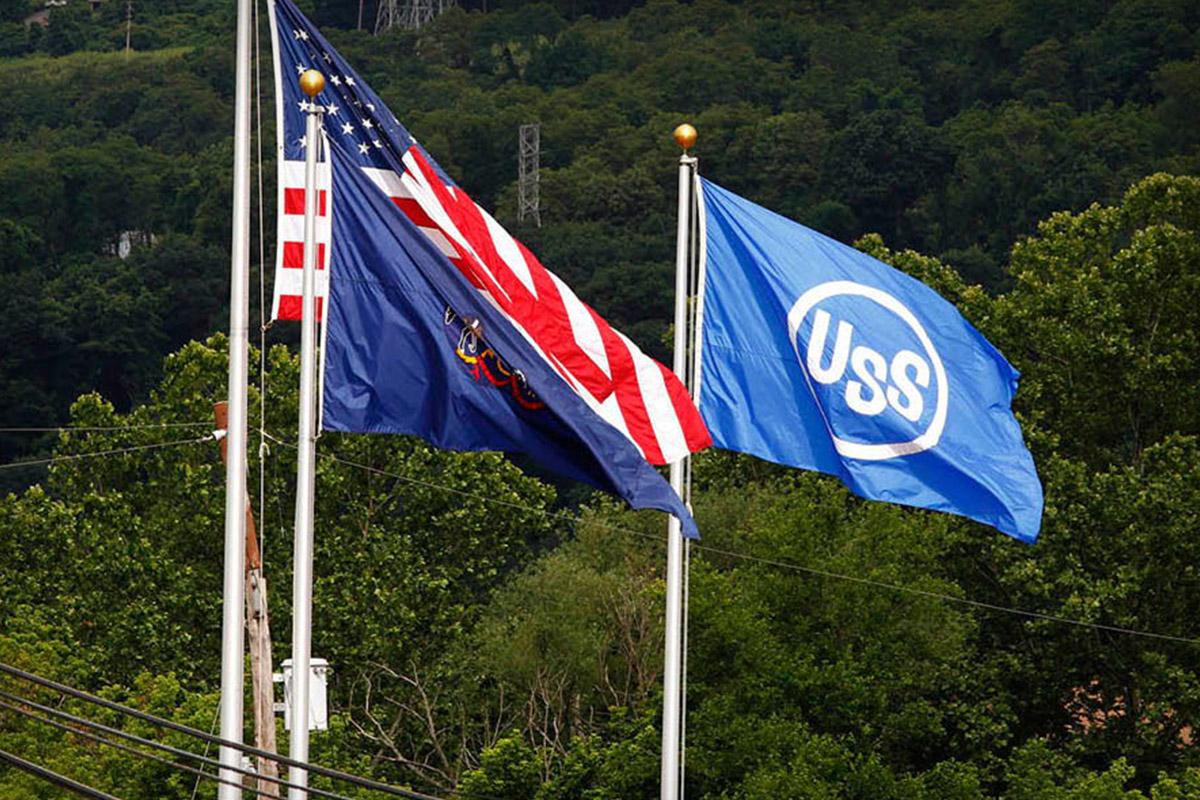
The companies have signed an agreement with the U.S. Treasury Department to appease so-called “national security” concerns with the bill. The companies, which consistently call the merger a “partnership” rather than an acquisition, agree that Nippon Steel will invest US$11 billion in U.S. Steel by 2028, including the initial stake in a greenfield project that will wrap up after that date.
I don’t understand why the deal was held up in the first place. Japan has long been a staunch U.S. ally, so it only makes sense on national security grounds if your mindset is still stuck in World War II. Or maybe you’re thinking back to the late 1980s and early 1990s, when movies like "Die Hard" and "Rising Sun" made it look like California was becoming the 48th prefecture of Japan.
I do, however, understand why the buyout became a political hot potato on the presidential campaign trail last year. I understand why the unions were so concerned about the sale. Mergers normally mean “economies of scale,” and lost jobs.
Rival CEO Dubs Japan 'Evil'
And I understand that jilted would-be American buyer Cleveland-Cliffs CLF, rejected in its low-ball US$7 billion bid for U.S. Steel, was doing whatever it could to disrupt the deal. It was lobbying intensely behind the scenes to block the sale to a foreign buyer, its Brazilian-born CEO Lourenco Goncalves going so far as to dub the entire nation of Japan as “evil.”
But Nippon Steel, which is paying more than double what Cleveland-Cliffs offered, is the best destination for U.S. Steel, now a wholly owned subsidiary of the Japanese company. Nippon Steel can help the ailing company by transferring improved technology in a bid to fend off the steel companies that are the real threat to U.S. manufacturing. And they’re in China.
U.S. Steel, founded in 1901 with the backing of John Pierpont Morgan, Andrew Carnegie and Charles M. Schwab, will retain its name and headquarters in Pittsburgh, even if Nippon Steel vice chairman Takahiro Mori will become chairman of U.S. Steel’s board. The deal stipulates that more than half of the directors as well as the CEO and key management must be U.S. citizens.
U.S. Presidential Consent
We do get some details on the U.S. government’s “golden share.” The government will have the right to appoint one independent director to U.S. Steel’s board. The U.S. president would also have to consent to any reduction in the pledged investment into U.S. Steel, as well as any change in the name, headquarters or domicile of the company.
The U.S. president must also consent to any buyout of another U.S. competitor, as well as business decisions such as the closure or idling of any U.S. Steel manufacturing plants, or sourcing of goods from overseas.
Current president Donald Trump gave the all-clear for the merger to proceed last Friday. That overturned a decision in January by then-president Joe Biden to block the deal. I wrote in a column last year when these nationalistic concerns first surfaced that there was no good reason for the acquisition not to proceed.
Nippon Steel says the deal brings its total annual crude-steel capacity to 86 million tons, near its “global strategic goal” of hitting 100 million tons.
Consider, then, that U.S. Steel is adding 20 million tons of capacity, while Cleveland-Cliffs produced 17.3 million tons at last count. But Nippon Steel will still lag its largest competitor, Shanghai-based China Baowu Steel Group, which targeted expanding its capacity to 200 million tons of steel as of 2025.
China’s producers, backed by subsidies and cheap loans from state-owned banks, continue to expand. That’s even as world No. 2 ArcelorMittal MT, founded by executive chairman Lakshmi Mittal, saw its capacity shrink from 81.0 million tons in 2023 to 76.7 million for 2024. ArcelorMittal itself was formed by the hostile takeover of Luxembourg-based Arcelor, a rollup of three European steel producers, by Mittal Steel.
U.S. Steel Investor Gain
For U.S. Steel investors, the buyout has been a boon. The stock had been idled since the 2008 financial crisis. But it has now more than doubled since it became clear the company was in play. From a price under US$25 in July 2023, when Cleveland-Cliffs first declared an interest, U.S. Steel shares last traded at US$54.84.
Nippon Steel shares, by contrast, are trading at similar levels to where they started 2023. They are down 13.5% so far this year, underperforming a Tokyo market that’s essentially flat, with the broad-market Topix up 0.5% in 2025.
I wouldn’t expect Nippon Steel shares to outperform anytime soon, as it contends with cheaper Chinese output. But at least the objections to the U.S. Steel deal have been removed, and a sensible deal has been allowed to proceed.