Lunar New Year Begins With Forecast for Summer Gains
Here's everything you need to know about how welcoming the year of the fire horse will affect Asian markets and global investments.
You've reached your free article limit
You've read 0 of 1 free Pro articles.
It’s Lunar New Year on Tuesday, and some 2 billion people are ushering in the year of the fire horse.
The holiday is recognized across greater China (where it’s called the "spring festival") but also in South Korea ("seollal"), Vietnam ("tet") and across Southeast Asia.
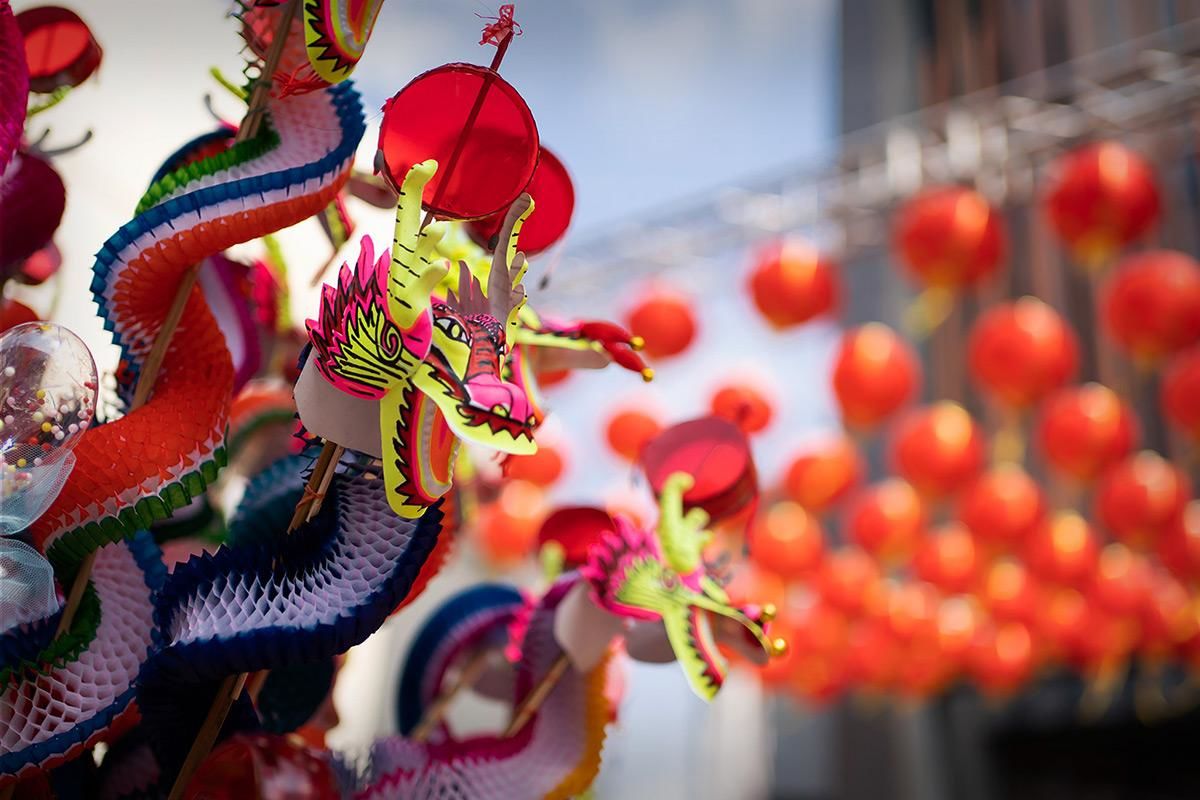
Just before the 15-day holiday, celebrants will clean and sweep their home. Best to cut your hair, too, since the word for “hair” sounds like the first character in the word “prosperity.” Then families will gather for a Thanksgiving-like feast on New Year’s Eve.
Many businesses close for several days. In practical terms, it means the markets in mainland China, Hong Kong, Indonesia, the Philippines, Singapore, South Korea, Taiwan and Vietnam are all closed on Tuesday. There will be an extended break for China, Taiwan and Vietnam, where trading will only resume next week, on Tuesday in the case of mainland markets.
Late Lunar New Year
This is also a particularly late Lunar New Year, which generally falls between January 21 and February 20, moving with the cycles of the moon. So, economists and analysts often combine data for January and February for nations that recognize the holiday. February is already the shortest month, and this year, the holiday falls entirely within it, reducing the number of working days in China to 14 once you also back out weekends.
Things are slowly changing, but Lunar New Year has often been the only time in the year that the millions of migrant workers who move to Asia’s largest cities get to see the families that they left back home.
In the days after the start of the new year, it’s tradition to visit family and head to the temple to wish for good fortune in the year ahead. Besides not washing or cutting your hair during the 15-day holiday, it’s also considered bad luck to sweep and clean over the period, for fear of sweeping away for your good fortune for the year ahead.
Record Number of Trips
This is big business for the travel industry. China alone predicts there will be a record 9.5 billion passenger trips over the chunyun spring-festival travel rush, up from 9.0 billion last year. Some 80% of those will take place by road, with 540 million passenger trips by rail and 95 million trips by air. Those figures would also set new highs.
We can expect retail sales and inflation to be higher for February, but industrial production, exports and imports to be lower than normal.
The Asia specialists at the Hong Kong-based brokerage CLSA put out an annual feng shui guide making predictions for the year ahead. Given it’s the turn of the horse out of the 12 animals in the Chinese zodiac, they expect “bold moves, rapid momentum and sharp turns” to define the energetic waves of the year ahead.
Where Will the Earth Rooster Head?
Hong Kong’s Hang Seng Index is an earth rooster per the Chinese zodiac. As a result, the start of 2026 is likely to see disruption.
“Noxious spirits are likely to stir up trouble in the early part of the year,” the CLSA guide to this year of the horse states. “We see rain and pestilence in the spring; those on high ground will fare better than lowlanders.”
The Hang Seng will “stumble” in the first month of the new year before “waddling ahead” in early summer.
The summer looks promising.
“Those planning on a fine harvest this year may be better off planting their seeds later than usual, through the spring and into summer,” the prognosticators predict.
The exception would be July, when too many fire elements in the natural world combine with “deliberate human actions” and produce a “sharp reversal of fortune.”
Best to avoid the Hong Kong market through March 4 then, with a “good rise” beginning in the period April 5 and running through July 6. Avoid the fall from July 6 to August 6 that wipes out half of the prior month’s gains. August, November and next January then produce strong gains.
Asian Markets Outperform
We shall see. Asian markets outperformed their U.S. counterparts in 2025 and continue to do so heading into 2026. At least according to the forecasts, those trends should continue.
South Korea’s Kospi is leading the way in Asia with a chipmaker-inspired 30.7% rise, but stocks in last year’s under-performer of Thailand (the SET up 15.9%) and exporter-heavy Japan (Nikkei 225 up 12.4%) have both rallied post-election results.
That’s far better than the flat showing for the S&P 500 in 2026. All Asian markets outside India (Nifty 50 down 1.7%) and Indonesia (down 5.0% after MSCI’s warning) are well into the green, producing a 7.5% rise for the Asia Dow and 7.7% for the MSCI All Countries Asia Index.
Whatever you make of the predictions for the year of the horse, Asia’s showing so far in 2026 makes an excellent case for diversification outside the S&P 500, and the Magnificent Seven under-performers year to date.