Latest Release Shows Fed Could Be Behind on Inflation Yet Again
The latest economic data suggests that rate cuts could be off the table for 2025.
You've reached your free article limit
You've read 0 of 1 free Pro articles.
On Wednesday, the minutes from the December Fed meeting were released. The Federal Open Market Committee (FOMC) minutes provide insight into the opinions of its 12 members — their current assessments and their future projections.
According to the minutes, the FOMC believes the rate of inflation has eased substantially, although recent readings were higher than expected.
The market’s initial reaction to this news was positive. Stocks climbed as bond yields dipped.
My takeaway is less enthusiastic, though. Is the Fed underestimating inflation again?
The FOMC meeting took place on December 18. Since that date, all of the following pointed to a stronger economy:
- GDP: stronger than expected
- Retail sales: stronger than expected
- Existing home sales: stronger than expected
- Pending home sales: stronger than expected
- Manufacturing PMI: stronger than expected
- ISM Services PMI: stronger than expected
One recent data point was beyond strong. The Institute of Supply Management (ISM) Services Prices Paid Index registered a shocking 64.4. It was the highest reading this year, and a huge jump from the prior month’s 58.2 reading.
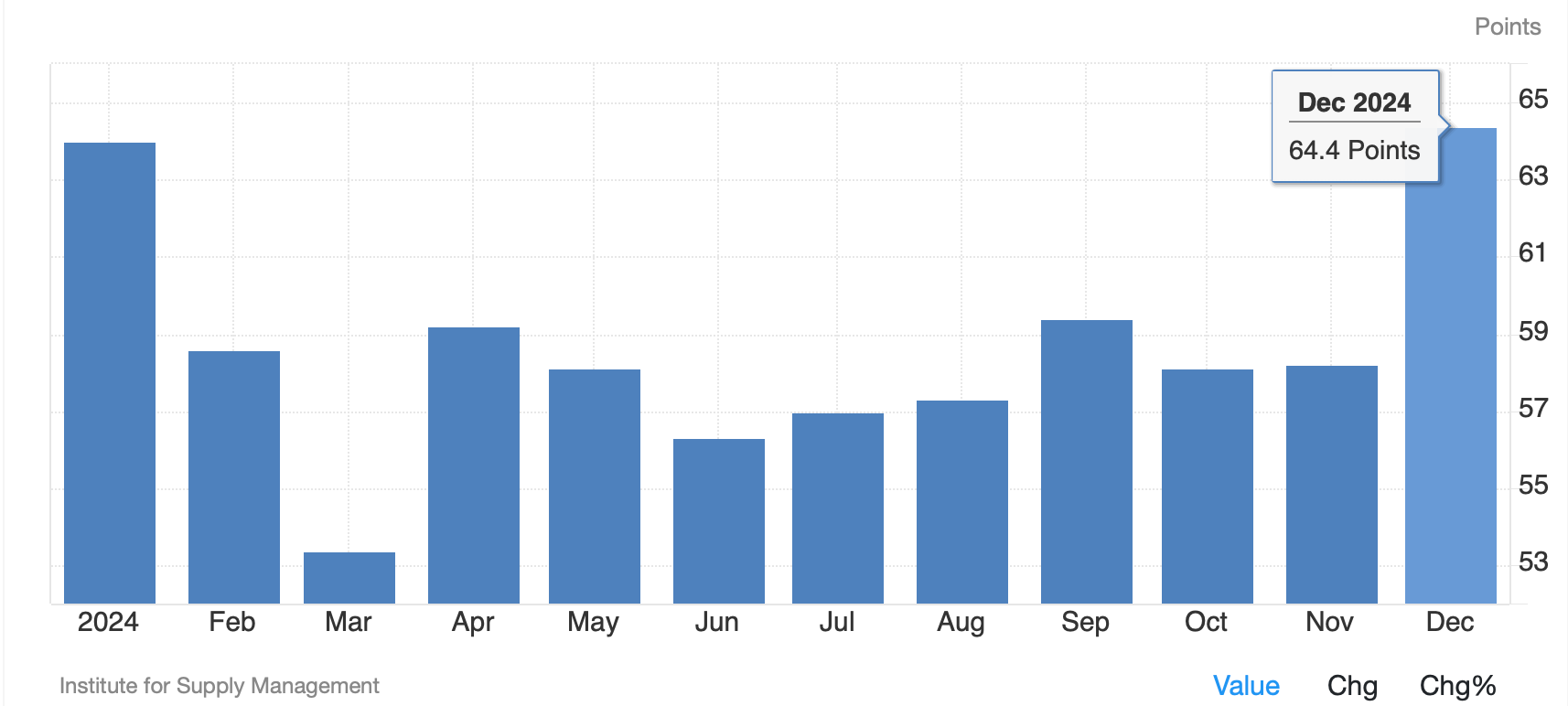
ISM filters statistics via a diffusion index. Figures above 50 represent expansion, while anything below 50 represents contraction.
Figures above 60 are extraordinarily strong. Last year’s lowest reading for the prices paid index was 53.4 in March.
Since all of the data mentioned above was released after the December 18 meeting, it's likely that none of it was reflected in the FOMC minutes. Investors should monitor speeches by FOMC voting members for tonal changes going forward.
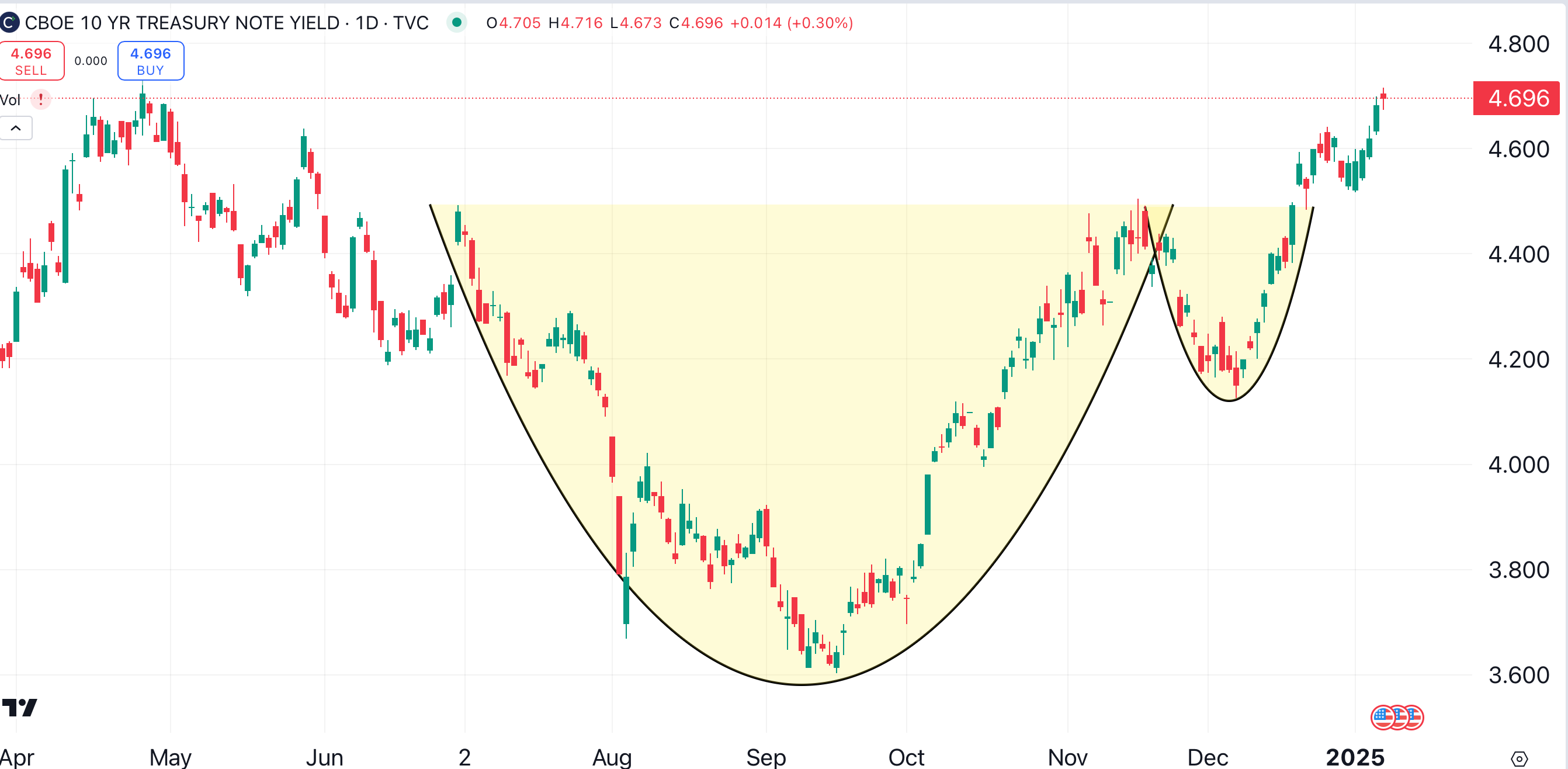
Meanwhile, bond yields continue to rise. The yield on the 10-year treasury note climbed to 4.7% on Wednesday, the highest figure since March. This represents an increase in yield of over 100 basis points since the FOMC started cutting rates in September.
The 10-year’s yield chart has broken out of a bullish cup-and-handle pattern (shaded yellow).
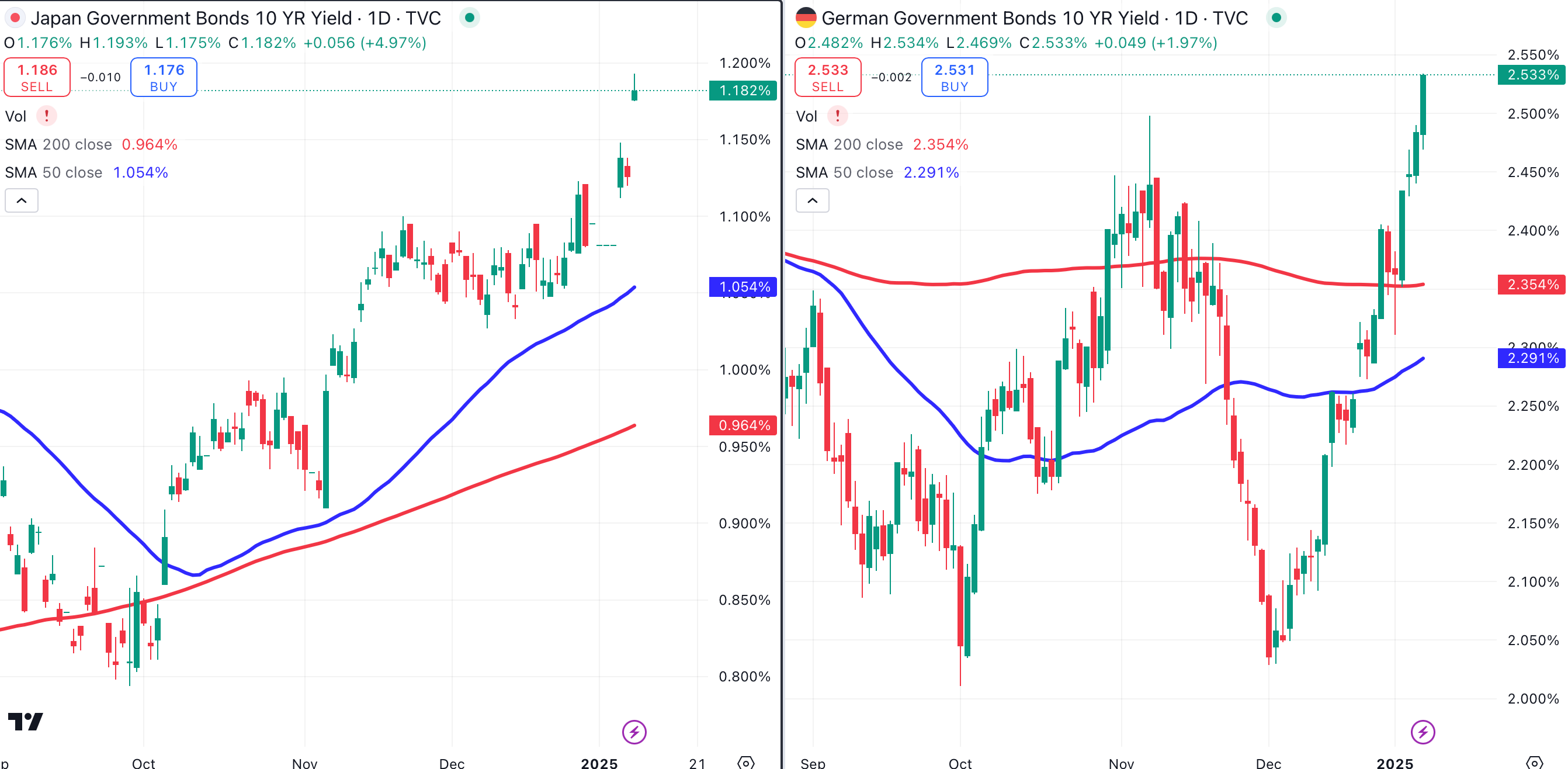
Overseas bond yields are also climbing despite central bank rate cuts. Yields on Japan’s 10-year government bond (left chart) are soaring. The German 10-year (right chart), which had a negative yield as recently as 2021, also has a skyrocketing yield.
Investors need to consider the potential effects of higher yields on stock prices. Hedge fund managers are eyeing that 4.70% yield, considering if they should sell stocks to lock in gains. If the yield breaches 5%, it will be even tougher to resist.
Higher bond yields also impact the housing markets, as mortgage rates often correlate with the 10-year note. A 5% T-note yield would likely push the 30-year fixed mortgage rate to 7.5%, making it even tougher to buy or sell a home.
Keep an eye on Fed speakers in the coming weeks. Listen for indications that FOMC members are taking a more hawkish tone toward inflation. Markets may be disappointed by the thought of a more restrictive FOMC, but the alternative is a Fed that is once again behind the curve on inflation.
At the time of publication, Ponsi had no positions in any securities mentioned.