Latest Body Blow to Indonesia's Credibility Drives Worst Selloff of the Century
The pressure is mounting for serious reform of the Indonesian market. But how likely is it to come?
You've reached your free article limit
You've read 0 of 1 free Pro articles.
The pressure continues to mount on regulators and lawmakers in Indonesia to reform corporate governance and how its financial markets operate.
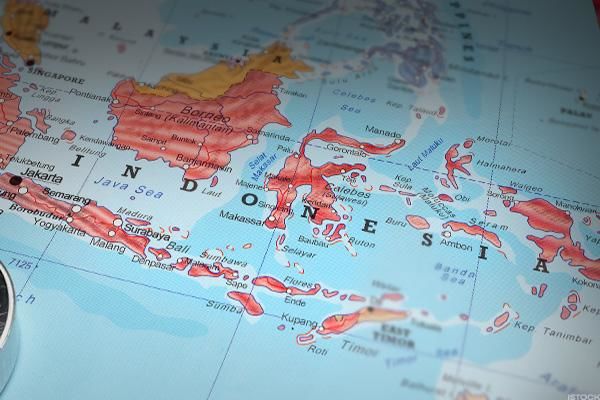
Moody’s Ratings on Thursday downgraded the Indonesian government’s credit rating from stable to negative, blaming “reduced predictability” in policymaking.
That’s a polite way of putting the political interference from the administration of President Prabowo Subianto, a former head of the feared Indonesian special forces who took office in October 2024.
Moody’s Body Blow After MSCI Haymaker
Moody’s move is a body blow after index provider MSCI last week delivered what I called a “haymaker to the chin” of Indonesian equities, with the threat to downgrade Indonesia from emerging-market to frontier-market status.
MSCI has already frozen the composition of its indexes that contain Indonesian companies, and besides not adding any new Indonesian companies to indexes, it will not reclassify companies either. For example, if a small-cap stock grows in size to the threshold where it would normally meet “standard” classification.
The moves by MSCI and Moody’s may seem mundane. But they have profound ramifications since institutional investors and fund managers must adjust their portfolios accordingly.
An emerging-markets fund or exchange-traded product, for instance, would have to sell all its Indonesian holdings and replace them if Indonesia is downgraded, assuming the fund does not have a frontier-stock component.
Potential Downgrade of Government Debt
Likewise, holders of Indonesian government bonds manage their portfolios according to sovereign-bond ratings. Although Moody’s renewed its rating on long-term Indonesian government bonds, a negative outlook hints at the potential for a downgrade, forcing global institutional investors such as pension funds to sell off Indonesian government debt. It would also make it more expensive for the Indonesian government to borrow.
Moody’s said that the current unpredictable state of Indonesian policymaking “risks undermining policy effectiveness and points to weakening governance.”
It is no surprise these issues are coming to a head under Prabowo, who remains married to but separated from the daughter of former Indonesian dictator Suharto and is a deep insider with a foot in both the military and political elites.
Apparent Nepotism at Central Bank
Prabowo last week appointed his nephew, Thomas Dijwandono, as deputy governor of the central bank, passing over two career central bankers. While the Indonesian president claimed the promotion was based on merit, it raises the likely prospect of Prabowo attempting to shape central-bank policy and interest rates.
This apparent nepotism followed after the well-respected Indonesian finance minister Sri Mulyani Indrawati was fired by Prabowo last September, reportedly given one hour’s notice while chairing a meeting. She was seen as one of the few checks and balances on Prabowo’s plans to ramp up government spending.
It is also notable that Prabowo replaced the popular Joko Widodo, known as Jokowi. Prabowo’s predecessor is a former furniture salesman who became the first Indonesian leader to come from outside the small circle of tycoons, generals and powerful families that have controlled Indonesia essentially since it gained independence from the Netherlands in 1945.
Jokowi, who had to step down as president after serving two five-year terms, left office with a 75% approval rating. He oversaw a period of steady economic growth, major infrastructure improvements and attempts at governance reform.
Jokowi’s son ran as Prabowo’s vice president. But such nepotism only heightened the sense that Indonesia’s government was back in the hands of the political elite under Prabowo.
Backsliding in Governance Assessments
Moody’s says that a lack of policy coherence and an absence of effective communication has undermined Indonesia’s credibility with investors. Indonesia has also been backsliding on issues such as “control of corruption” and “voice and accountability” in the World Bank’s Worldwide Governance Indicators.
Although we’re seeing the usual promises of reform after the decisions by Moody’s and MSCI, it’s noteworthy that there’s also denial, in the form of comments from Indonesia’s chief economic minister, Airlangga Hartarto, who said the ratings agencies and international investors are “yet to understand the economic reforms and growth strategy that are under way in Indonesia."
Prabowo has launched a sovereign wealth fund, Danantara Indonesia, that holds the government’s stakes in seven major state-owned enterprises. It’s designed to be a way for the government to hold positions in equities and companies much in the way that Temasek serves the Singapore government.
Indonesia, the world’s fourth-biggest country in terms of population, on Thursday did report good news in the form of a gross domestic product that grew 5.1% in 2025, the highest rate since 2022, albeit a tad shy of the government target of 5.2% growth. The Q4 pace of 5.4% growth was the best quarter since 2022 Q3.
Worst Stock Selloff Since Asian Financial Crisis
Indonesian stocks slipped 0.5% on Thursday, in the form of the IDX Composite Index, but are down 9.8% since last Tuesday’s close, before the MSCI decision. The potential downgrade to frontier status prompted the worst selloff since the Asian financial crisis in 1998, with circuit breakers kicking in on consecutive days to stem the bleeding.
The Indonesian currency, the rupiah, also fell to its weakest level in history on January 20, hitting 16,988 to the U.S. dollar. That low was prompted by the elevation of Prabowo’s nephew at the central bank. The currency has recovered slightly to now stand at 16,872, but could easily retest that record.
One of the major factors behind the Asian financial crisis was the high level of U.S. dollar debt held by Indonesian companies, obligations that escalated dramatically as the currency tumbled into free fall.
The MSCI decision puts pressure on the handful of tycoon families that control the Indonesian economy. According to Bloomberg, three billionaires own 85% or more of three major listed companies, and seven billionaires own more than 50% of at least 13 companies. For example, Southeast Asia’s richest person, Prajogo Pangestu, owns 84% of the shares in mining company Petrindo Jaya Kreasi, and a 68% stake in Barito Renewables, the largest listing in Jakarta.
Indonesia’s market regulator says it will double the amount of free float required as a minimum for market listings, to 15% of shares. Around 25% of the listings in Jakarta may have trouble meeting that threshold.
Investors should be careful with index trackers investing into Indonesia. The benchmark IDX Composite rose 22% last year, but the MSCI Indonesia Index, with stricter screening on stocks, fell 3.6%. Analysts point to that as evidence that the closely held, concentrated ownership of certain companies skewed the overall performance of the market.