Japan Eyes Surprise Rate Move With U.S. Dollar on 50-Year Losing Streak
Besides the Fed, we have the central Bank of Japan due to meet on interest rates later this month, and rethinking 'stupid' hikes.
You've reached your free article limit
You've read 0 of 1 free Pro articles.
All eyes in Asia are on interest rates, and the currency impact they’re having. Not only is the U.S. dollar on a 50-year losing streak, but the Japanese yen is … wait for it … actually gaining in strength.
Why?
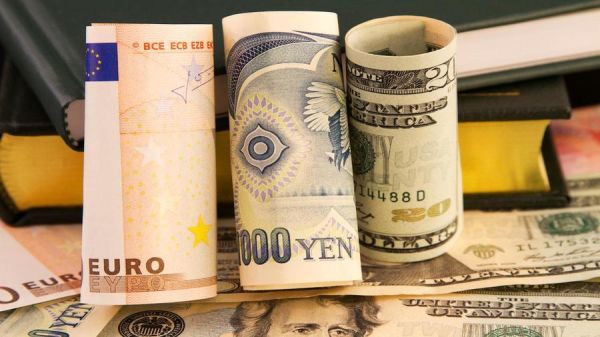
Well, besides the Fed, we’ve got the Bank of Japan (BOJ) set to meet on rates at the end of next week. The monetary-policy meeting will run December 18-19, and looks set to deliver something of a surprise.
Run of Currency Weakness
The Japanese yen weakened dramatically in early October, when Sanae Takaichi won the leadership vote for the ruling Liberal Democratic Party (LDP). A disciple of Shinzo Abe, she’s known to favor low interest rates and heavier stimulus spending, as I explained at the time.
The LDP’s coalition immediately collapsed, as its partner, the Komeito party, walked away. The centrist Komeito declared it would not support Takaichi, a foreign-policy hawk and social conservative. But she cobbled together enough support from smaller right-wing parties to take over as prime minister on October 21.
The yen sank again on her ascension to the country’s top office. But Takuji Aida, who has advised Takaichi on economic policy, wrote in a research note that she might well tolerate a single 25-basis-point rise in rates, so long as that’s the only hike before 2027.
Aida, now chief Japan economist at Credit Agricole, suggested the rate hike would come in January. It looks like the timeframe has accelerated, with odds on a 25-basis-point increase in December instead.
Change in Course for Yen
The Japanese yen has been on a run of recent strength as a result. Takaichi’s easy-money stance saw its exchange rate to the U.S. dollar move higher to ¥157.72 two weeks back, its weakest level since January. But it has changed tack since then, and is now on a strengthening path, rapidly gaining 2.0% to ¥154.56 Thursday.
These are still crazy-high exchange rates to the greenback. The yen “normally” changes hands around ¥110 to the U.S. dollar. But it hasn’t seen those levels in more than four years.
Japan generally tolerates a weak currency because it magnifies overseas profits for the major exporters that dominate “Japan Inc.” But Japan must also import all its oil, priced in U.S. dollars, and a weak currency contributes to domestic inflation by making any foreign goods or raw materials more expensive.
Rethinking 'Stupid' Rate Hikes
So Bank of Japan Governor Kazuo Ueda has stressed the need to control inflation with a rate rise. Japan longed to see inflation for many years after its 1980s asset bubble burst so painfully in 1992. It now has its wish, with the current rate of inflation at 3.0%, and staying above the central bank’s desired 2.0% level since early 2022.
It was the first time in 17 years when Japan raised rates in March last year, as I noted back then, taking them out of negative territory. The central bank has now moved three times, rate increases that Takaichi in September 2024, then simply a lawmaker, called “stupid.”
She now appears willing to listen to the BOJ chief. On Monday, Ueda said the BOJ will consider the “pros and cons” of taking the base rate from 0.5% to 0.75%, comments that the market reads as an 80% likelihood rates will rise.
Ueda sounded confident, in that speech to business leaders in Nagoya, that Japan’s economy could rebound from a Q3 contraction of 0.4%, and said the negative hit from increased U.S. tariffs is proving smaller than first feared.
Bond Market Action
Among other signs that rates look set to rise, the yields on Japanese government bonds (JGBs) are hitting highs last seen in 2007, just before the collapse of Lehman Brothers prompted central banks the world over to slash rates, and there was the strongest demand since 2019 for an auction of 30-year JGBs on Wednesday.
Still, Takaichi has unveiled a stimulus plan to the tune of ¥21.3 trillion (US$135 billion), the biggest package since the Covid-19 pandemic. Much of the spending is looking to offset highest costs, with for example ¥7,000 (US$45) per household in subsidies to offset gas and electricity bills, and a one-off payment of ¥20,000 (US$130) per child.
The market implications are less clear. A rate hike should in theory be negative for growth stocks, making borrowing more expensive to fund expansion. But the BOJ has put off any rate rises since January, after the inauguration of U.S. President Donald Trump set in motion a series of destabilizing actions on U.S. tariffs and trade policy.
So it is a vote of confidence in the Japanese economy if the BOJ feels safe to raise rates. Japanese stocks rose Thursday despite Wednesday’s strong bond auction in Tokyo, with the Topix up 1.9% for Thursday and the Nikkei 225 moving ahead 2.3%. Both the broad-market Topix, up 23.3% in 2025, and the blue-chip Nikkei, up 29.8%, are having very strong years. In fact, they’re just off all-time highs set before the global November correction in markets.
U.S. Dollar on 50-Year Losing Run
The U.S. dollar is weakening ahead of the likely rate cut from the Fed next week. The U.S. dollar index, weighted against other major currencies including the yen, is on its 11th straight trading day of weakness. That is its longest stretch of consecutive declines since 1971, LSEG numbers indicate.
The yen moves in unpredictable ways surrounding rate decisions. It weakened when the BOJ first raised rates last year because the surrounding communication indicated the central bank would move extremely slowly in the future.
That it has done. Ueda is now seen as a voice of stability, holding back an increasingly hawkish BOJ board. His team worked hard to prepare his speech on Monday and to communicate the need for rate rises to Takaichi’s team.
We will have to watch for the wording coming out of the BOJ’s rates meeting in two weeks to give us guidance for how confident the central bank is feeling. Much will ride on Ueda’s ability to communicate change.