Investing is Rigged (In Your Favor)
If you want to retire and have nice things, you have to be an investor. And the good news is that if you follow a few simple rules, you can be successful! We're here to help you.
You've reached your free article limit
You've read 0 of 1 free Pro articles.
This is the first article of ten in the Filthy Rich Animal Investing Basics Series.
If you like what you see and are not yet subscribed or would like to share with a friend, please visit this link to join us. It's free!
Investing is Rigged In Your Favor
You hear it a lot: The small investor can’t possibly beat Wall Street at its game.
They say it’s rigged against you, that whatever you do, the Wall Street casino will collect your chips and you’re toast.
But how does that explain the growing numbers of 401(k) millionaires who have salted away money regularly for decades?
Speculating is Not Investing
There’s a big difference between speculating, which aims to nab a quick profit, and investing, which focuses on sustainable long-term returns.
Traders often mock the idea of “buy and hold” as somehow being for those who don’t have the chops to time the market, but over time, the investors get the last laugh.
Here's why:
The S&P Trends Higher
The stock market’s track record speaks for itself. The S&P 500 has grown at an average annual rate of about 10% before inflation since its inception in 1957.
Of course, there are some scary bouts of volatility and downturns, but the general trend over decades is upward.
Here’s how that looks.
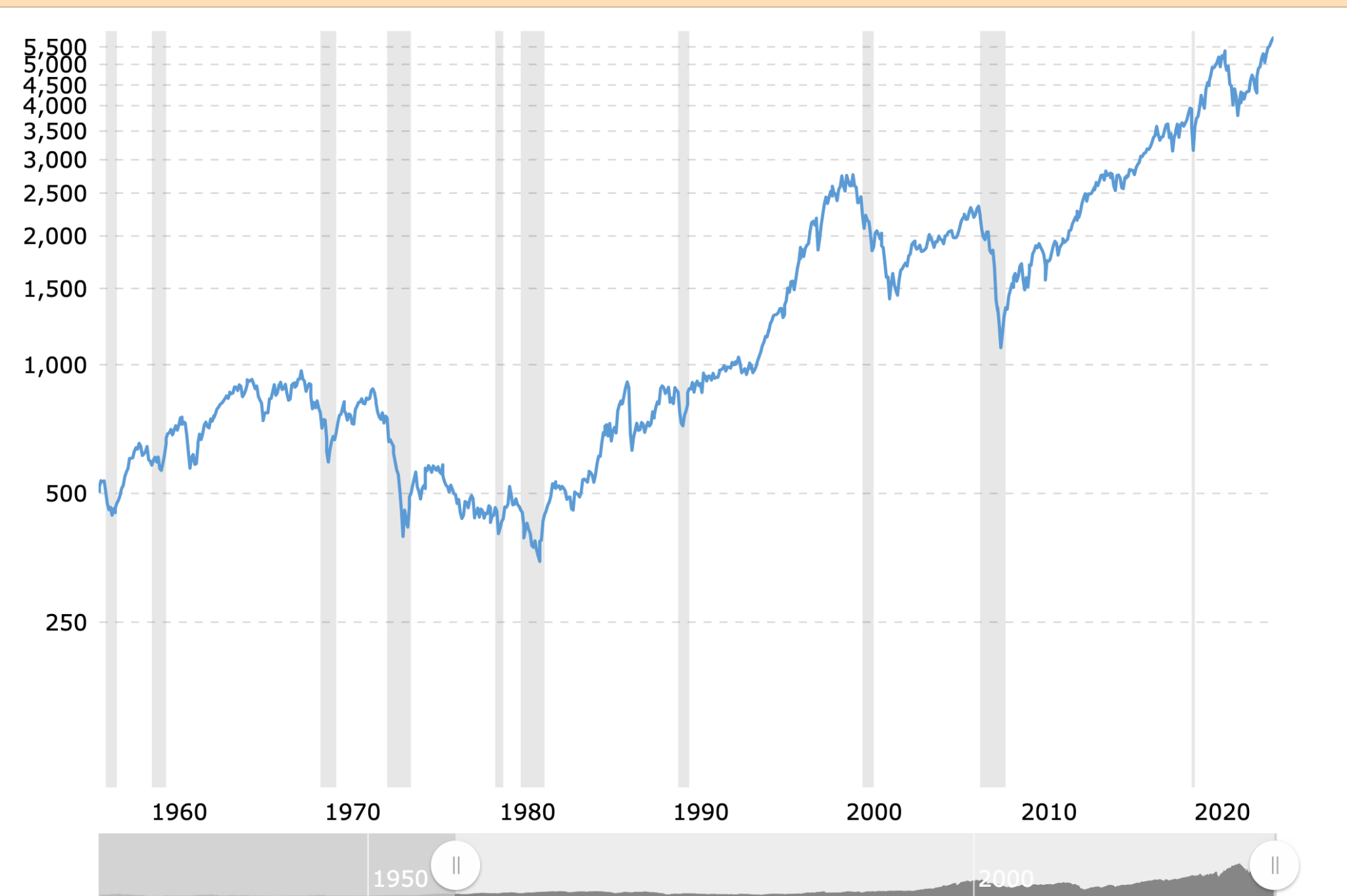
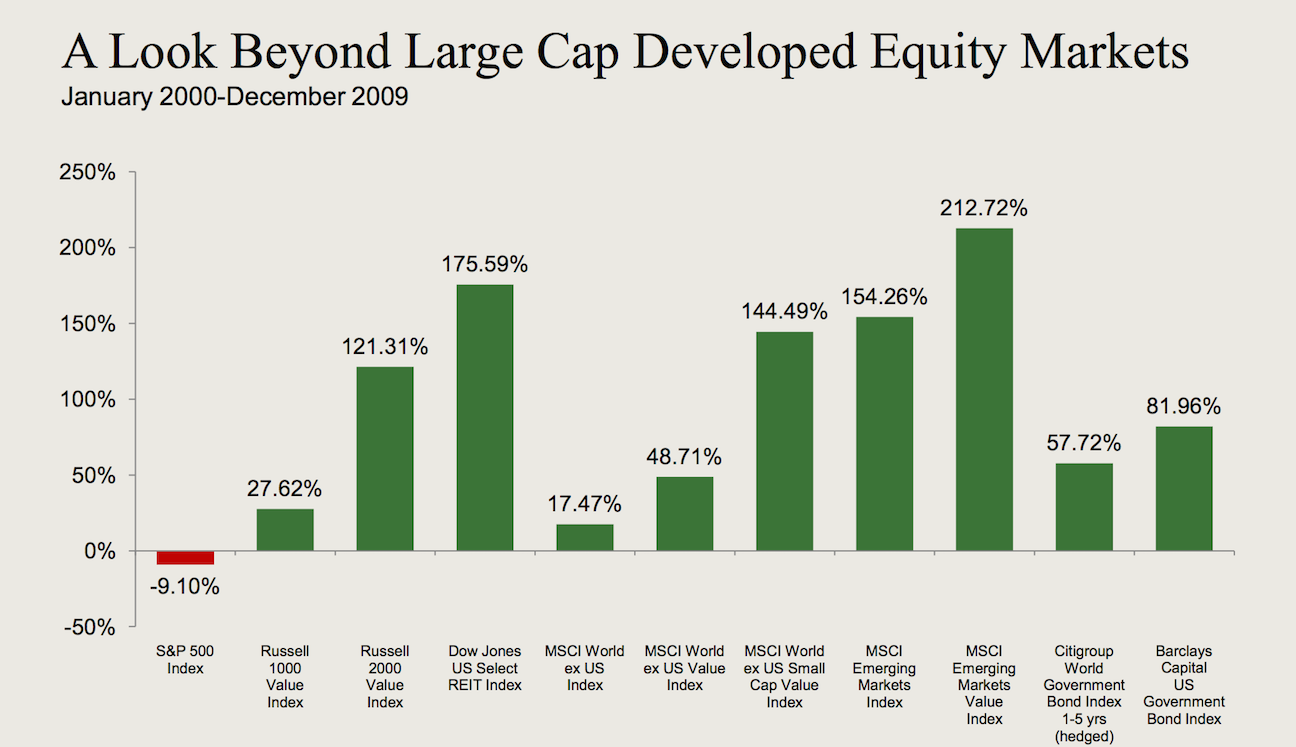
Yes, there were some “lost decades” in there for large-cap U.S. stocks. A long-term investor with a diversified portfolio has been able to offset those losses with better performance from fixed income, gold, other commodities and other types of equity, such as non-U.S. stocks or small caps.
Here’s a chart I’m particularly fond of, showing how asset classes outside of large-cap U.S. stocks fared between 2000 and 2009.
How the Deck is Really Stacked
Remember the meme stock frenzy? It’s like the movie monster that seems dead, but suddenly roars back to life.
Here’s a blurb from Investor’s Business Daily from May of this year, after traders sent GameStop GME 60% higher, only to see the stock quickly plummet from that high.
Investors who jumped into the latest online frenzy over shares of the struggling video game retailer lost $13.1 billion in just three days from the mania's high, says an Investor's Business Daily analysis of data from S&P Global Market Intelligence and MarketSurge. That loss from the May 14 high now far exceeds GameStop's total value of $6.8 billion.
That type of market action should never be confused with investing.
Meme stock trading, or any type of trading intended to generate a quick return, is risky. But over the long haul, the odds are actually stacked in your favor, especially if you take a long-term approach.
Unlike gambling, where outcomes are unpredictable, the stock market - which means more than just the S&P 500, although I’m using that as an example - tend to reward patience and consistency.
Historical data makes this clear: investors who stay invested for the long haul generally have a much higher chance of success than loss.
How Often Does the Market Rise?
A common misconception is that investing is highly uncertain, like gambling. But while casinos have odds that favor the house, stock markets are different.
Historically, the S&P 500 rises on about 53% of trading days and falls on 47%.
While this may seem like a near split, gains on “up” days are often larger than the losses on “down” days, creating a natural upward trend that benefits long-term investors.
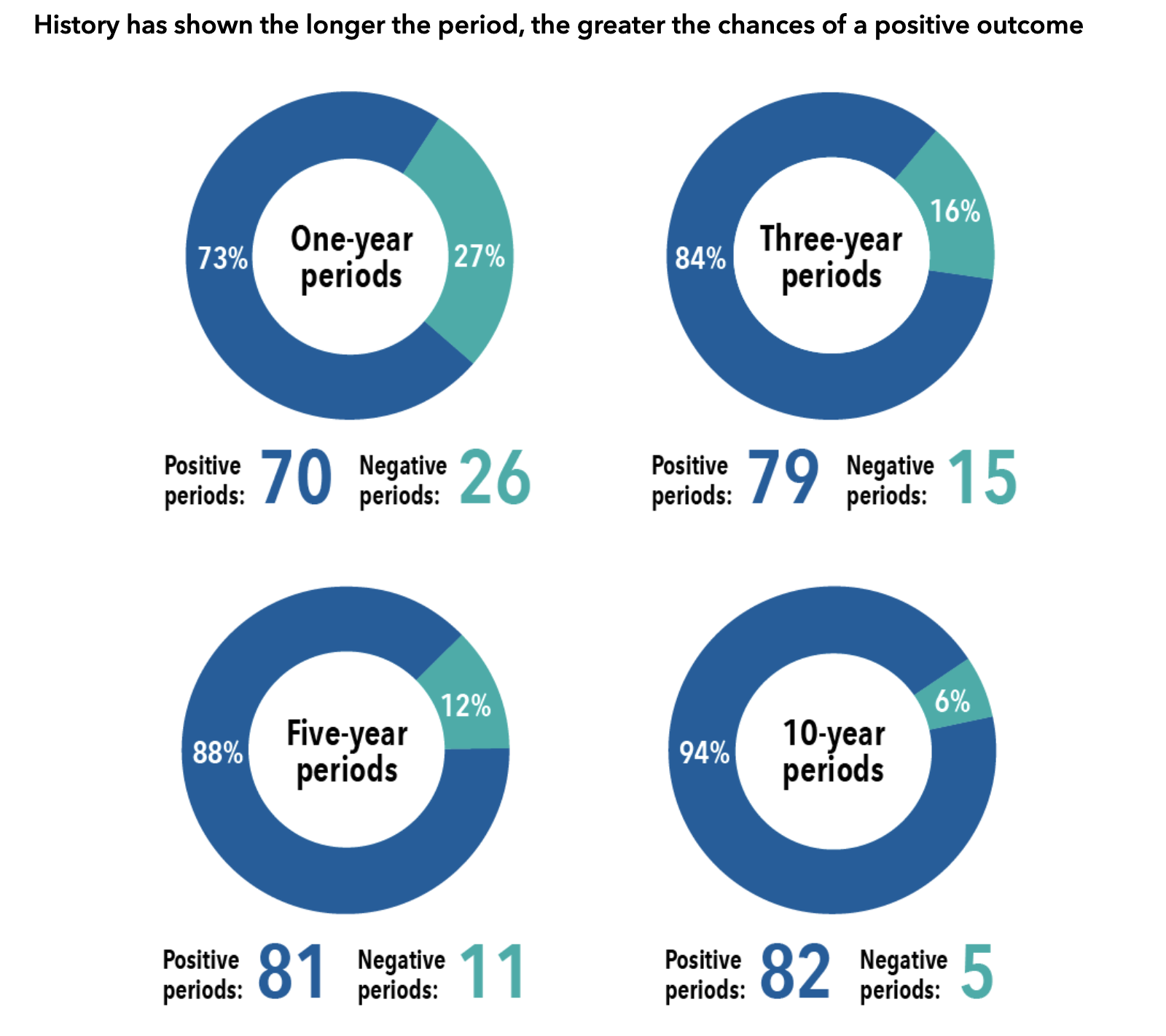
If you chose any random year over the last century, there’s about a 73% chance you’d experience a positive return on the S&P 500. Extend this period to three years, and the odds improve to 84%. Over five years, that’s 88%, and a whopping 94% over a 10-year time frame.
The longer you stay invested, the better your chances of success.
Why Investing Isn’t Gambling
In gambling, randomness dictates outcomes, and odds are structured to benefit the house.
The stock market is entirely different: it’s built on the growth of real businesses, innovation and productivity.
Every dollar you invest goes to work helping companies grow, typically leading to higher stock prices over time.
Dividends further boost portfolio growth by a significant margin, meaning investing isn’t about luck; it’s about capturing a share of real economic progress.
The Power of Consistency
Consistency and discipline are essential for successful investing. Regular contributions, even small ones, compound significantly over time.
For example, investing $200 monthly at a 7% annual return for 30 years could grow to over $226,000, thanks to the power of compounding.
Investors who follow a consistent investing schedule benefit from dollar-cost averaging, buying more shares when prices are low and fewer when prices are high, which smooths out the impact of volatility on long-term returns.
The Favorable Odds of Investing
Long-term investing truly is “rigged” in your favor.
The stock market’s natural upward drift, particularly when you include equity asset classes outside the S&P 500, as well as fixed income and alternatives, provides a favorable environment for investors with patience.
Unlike gambling, where outcomes are random, investing rewards discipline, time and resilience.
So keep making those 401(k) or IRA contributions. If you’re already retired, have a plan for your “play money” to trade with, versus the money you’ve earmarked to fund your lifestyle.