Here’s How Tech and Tariff Uncertainty Underpin Asian Stocks
We saw a serious selloff in Asian chip plays to start the week, but now we’ve got doubts over the legality of U.S. tariffs lending support to regional equities.
You've reached your free article limit
You've read 0 of 1 free Pro articles.
We had a pretty serious correction in Asian chip stocks earlier this week. It was the “disappointing” earnings from Palantir Technologies (PLTR) that kicked things off, as I noted in my last column, on Tuesday.
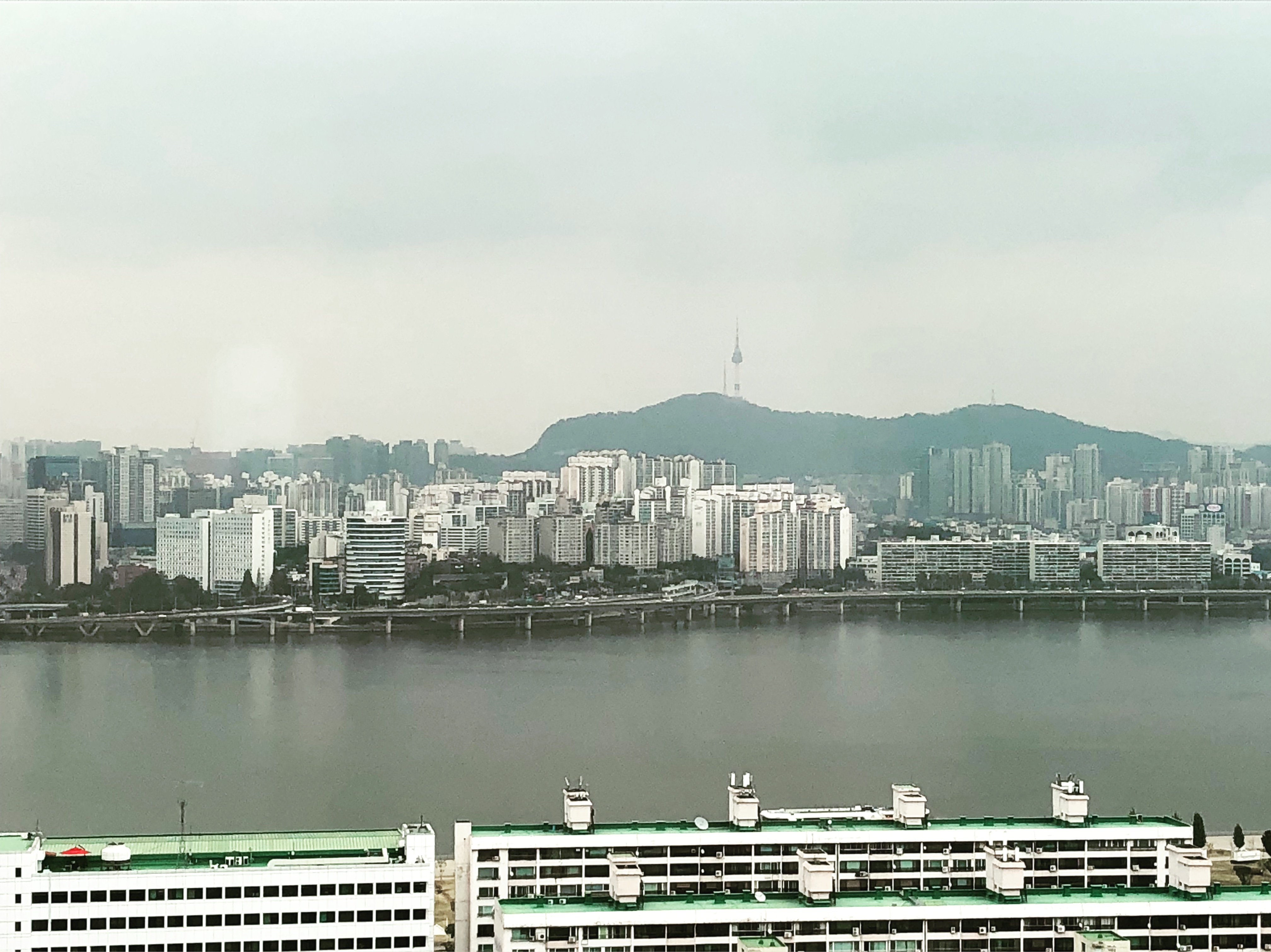
But the selling only intensified Wednesday. South Korea’s market has been the top performer in Asia this year, but the Kospi (up 76.2% this year at its Monday all-time high) tumbled 7.8% from Tuesday’s open through early trade Wednesday.
Thursday though? Ah, we’re all good! Asian screens are green, with the Hang Seng index in Hong Kong up 2.1%, and Japan’s broad-market Topix firing ahead 1.4%.
So what’s going on? Why are we getting these wild swings in markets?
Tariffs in Doubt?
I should note that Korean equities are “only” up 0.6% Thursday. So we can see some continued hangover from the Palantir-induced selloff.
Besides Wall Street’s small move higher Wednesday, with the S&P 500 up 0.4% and Nasdaq gaining 0.7%, we see the export-heavy markets moving higher in Asia Thursday.
That’s a read on the U.S. Supreme Court case being heard, where a small toymaker and other U.S. importers are making their case against U.S. President Donald Trump’s tariffs. The noises out of the Supreme Court justices suggest they are deeply skeptical about Trump’s move to, basically, raise U.S. taxes singlehandedly.
What’s more, the president has deployed the International Emergency Economic Powers Act of 1977 to declare an economic emergency with, well, the rest of the world. Are NATO allies like Spain and France really posing a direct national-emergency threat to the United States, asks conservative appointee Amy Coney Barrett. Oh, and that 1977 act? It doesn’t mention or use the world “tariff” at all. So it’s highly unlikely, the justices appear to believe, that the law gives the president the “power to tax” — something the Constitution says expressly is up to U.S. Congress.
We have a lot of uncertainty, then, as to whether many of the Trump tariffs will stand. (Trump has implemented other trade taxes based on separate logic, like fighting the war on drugs).
That’s giving a boost to Asian consumer plays and industrials. In Hong Kong, we’ve got good gains for Alibaba Group Holding (BABA) (HK:9988), up 4.1% Thursday, and rival e-commerce platform JD.com (JD) (HK:9618), up 3.3%.
Industrials Moving Higher
Aluminum producer China Hongqiao (HK:1378) is Thursday’s top performer in Hong Kong, up 9.9%. That continues a rip-roaring year for the industrial, which has almost trebled in 2025. Citi recently released a “Buy” rating and bullish report, predicting tight supply will drive the HK$32.42 price toward HK$36. China has a tight cap on production, so domestic demand should remain strong, even in the face of 50% U.S. tariffs on imported aluminum.
In Japan, we’ve got strong gains for the largest Tokyo listing, Toyota Motor (TM) (T:7203), up 3.3%, and other “Japan Inc.” industrial heavyweights. Toyota upped its full-year profit forecast 6% in announcing earnings Wednesday. CFO Kenta Kon warns that North America continues to be a “very tough situation,” and the company expects to take a ¥1.45 trillion (US$9.4 billion) tariff hit this fiscal year, but profits and sales elsewhere are “solid.”
Japan’s trading houses are also advancing, with the likes of Mitsui (MITSY) (T:8031) and Itochu (ITOCY) (T:8001) delivering earnings. Sumitomo (SSUMY) (T:8053) is up 3.8% Thursday, with Mitsui moving up 3.2%, and Itochu gaining 2.8%.
Warren Buffett’s favorite Japan plays — in that they’re his only Japan plays — are prime beneficiaries of international trade, set up originally in the mid-1800s, as Japan opened up, to help Japanese companies expand overseas. They’ll gain from any easing of the conditions for global trade.
What’s Bugging Korea?
Korea benefits in comparison to other Asian markets from its supremely high concentration in just two tickers: Samsung Electronics (KR:005930) and SK Hynix (KR:000660). Those two companies, both semiconductor heavyweights, account for a combined 35% or so of the entire market capitalization in Seoul.
So when we get a strong run in chip stocks, Korea’s going to look good. Really good. And it’s equally why it sold off harder earlier this week.
While Palantir isn’t directly linked to the chipmakers, it is an Artificial Intelligence (AI) play. And while its earnings beat expectations, they didn’t beat expectations by enough … the kind of “good news is bad news” that you sometimes get from, say, the jobs report, if strong job growth makes it unlikely we’ll get another interest-rate cut.
Palantir’s profit projection suggests that the AI frenzy may be abating. With plenty of warnings about an AI bubble building, some investors are looking for excuses to lock in profits. Notably, we now have Michael Burry — played so brilliantly by Christian Bale in the movie The Big Short — placing bets against Palantir and Nvidia (NVDA) , according to a regulatory filing revealed Monday.
Is Burry making another prescient contrarian move, just as he bet against the U.S. subprime mortgages market back in 2008?
Second Big Short?
I have great respect for short sellers, who play an incredibly difficult game. Burry faced a shareholder revolt from within his own fund for holding his bets against the property market for so long — a housing market that appeared to know only one direction, up — until they finally came good.
Even successful short calls can end up losing you money if, before the crash, those holdings rise fast and far enough to wipe out any gains. And let’s not forget Palantir may have corrected, but is still up 150% this year, and 2,826% since the start of 2023!
AI is also lifting Asia’s best-performing markets. Seoul stocks have typically traded at a “Korea discount” to regional peers. A 2023 study found Kospi stocks trade at price/earnings ratios that are 30% lower than similar stocks listed abroad.
Investors have been bidding them up this year, however. They have rewarded Hynix for its early foray into AI, while Samsung has successfully been playing catchup, securing a significant contract to supply AI chips to Tesla (TSLA) . Both Samsung and Hynix inked new deals with Nvidia when NVDA chief Jensen Huang brought his black leather jacket to town last week for the APEC Summit.
Outside chips, we can look at Hyundai Motor (KR:005380) and affiliate Kia (KR:00270) to capture Korean carmaking, up 27.2% and 10.2%, respectively. In terms of shipbuilding, there’s HD Hyundai Heavy Industries (KR:329180), notching an 81.7% advance this year.
But the gains are overwhelming stemming from the chipmakers. The two semiconductor stocks account for 40% of the Kospi’s gains, while in Taiwan, just one stock has made up more than half this year’s gains.
Just as Hynix and Samsung have driven Korea higher, Taiwan’s market has risen almost singlehandedly thanks to gains in Taiwan Semiconductor Manufacturing Co. (TSM) (TW:2330). The chip-foundry market-share leader is up 37.6% in 2025, dragging the benchmark Taiex 22.2% higher in the process.
Chips in Korea and Taiwan, Trade in China and Japan
If I want to simplify how to read Asian markets, it would be that Korea and Taiwan represent semiconductors, and by extension Asian tech. Hong Kong and Japan, meanwhile, represent the simplest calls on Asia trade.
It is a slight oversimplification. Alibaba is both a consumption-trade play and an AI investment, with extensive cloud-computing operations. Hong Kong’s stock showing this year is also buoyed by “superapp” operator Tencent Holdings (TCEHY) (HK:0700), smartphone maker Xiaomi (XIACY) (HK:1810), the video-sharing app Kuaishou Technology (KUASF) (HK:1024), the “Google of China” in the form of Baidu (BIDU) (HK:9888), and China’s domestic chip hope SMIC (HK:0981).
Just as in the United States, the bull case argues that the chip industry, typically cyclical, is now in a secular mode of outperformance and revaluation. Alibaba (forward P/E ratio 24.5) and Tencent (20.0) meanwhile, are still cheaper than U.S. counterparts such as Amazon.com (AMZN) (34.0) and Apple (AAPL) (32.0).
But the two trends — tech and trade — continue to hold sway for Asia’s top performers. This week started with suffering, and ends with supportive Supreme Court speculation.
At the time of publication, McMillan was long TSMC, BABA and AAPL.