Here’s What Thursday’s Massive Moves in Asia Tell Us About Trade Talks
Asian equities have rallied and redressed much of Monday's selling. But what do the stock moves indicate in terms of the U.S.-China tariff standoff?
You've reached your free article limit
You've read 0 of 1 free Pro articles.
Were you getting “a little bit yippy” after we saw US$10 trillion erased from U.S. stock markets from the start of the year through Tuesday’s nadir?
“No other president would have done what I did,” U.S. President Donald Trump said.
And he is quite right. No other president has been so idiotic.
While my portfolio may look a lot better Thursday than it did at the start of Wednesday, it is both scary and frustrating to see it whipsaw at the whim of one man. Particularly one who provokes global economic catastrophe, then glibly walks his crazy plan back.
This Ain't Over
We are seeing Asian equities roar back Thursday, with investors cheering Wednesday’s suspension of the super-high tariffs he imposed via his chart display in the Rose Garden last week. But this isn’t over.
We will have to revisit the tariff topic in 90 days since this is only been a temporary suspension. And all U.S. imports face an extra 10% import tax, with autos still slapped with 25%, and higher trade duties promised on sectors such as pharmaceuticals, too.
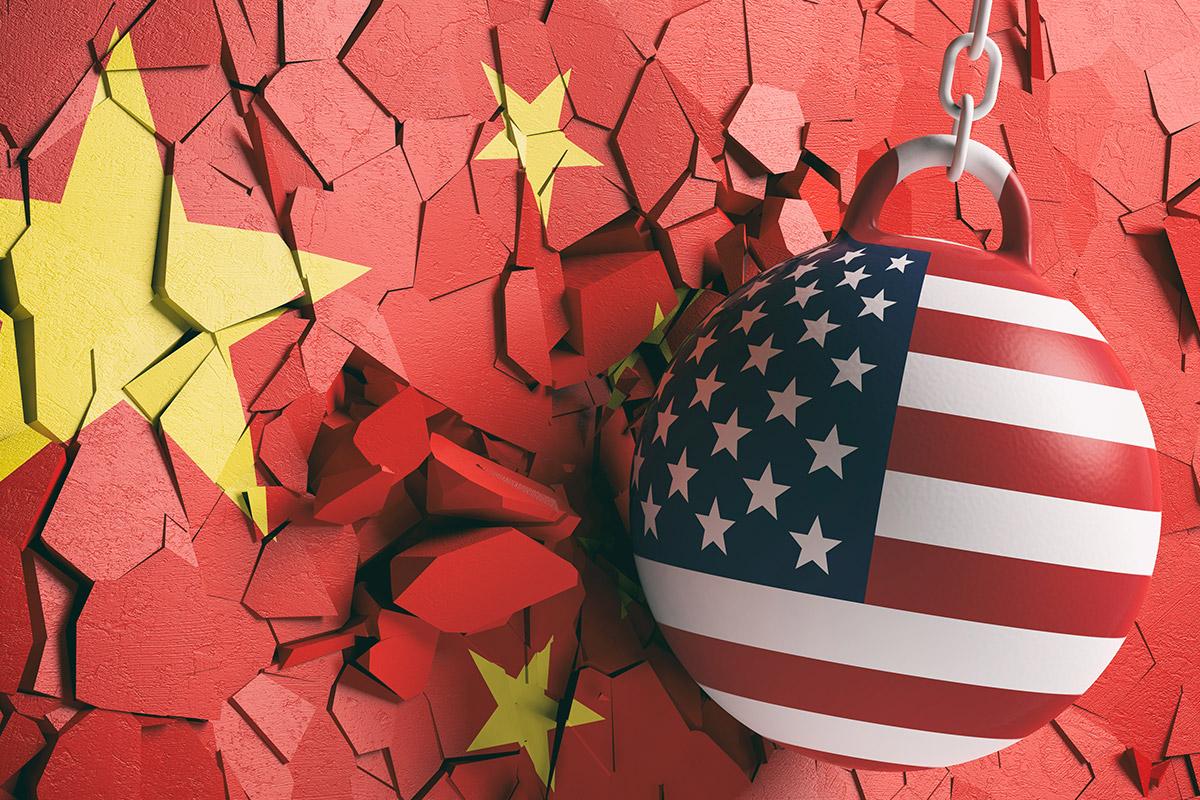
So U.S. consumers can still expect higher prices, and the import tax will be inflationary. The whipsawing imposition of punitive and certainly not “reciprocal” tariffs is also having a chilling effect on any company that relies on international trade, particularly involving the world’s two largest economies, with China and the United States still locked in a trade war.
I don’t buy the notion that Trump is playing a complex game of 5-dimensional chess, cannily goading the Chinese government into a mistake. China and the European Union are two of the jurisdictions with the economic clout to call out Trump’s tariffs, and respond in a way that could hurt U.S. companies and exports, rather than run groveling to Washington seeking exemptions.
The World Trade Organization forecast Wednesday that U.S.-China trade could fall by 80%, or US$466 billion. China has initiated a dispute with the WTO to protest the initial 34% tariff imposed on the country, before Trump escalated that by another 50%. Coupled with an extra 20% tariff added earlier this year, Chinese imports into the United States now face a doubling in price, and Trump says on social media that he will ensure China tariffs are 125%. China has tariffs of 84% on U.S. goods.
The European Union, meanwhile, has imposed retaliatory tariffs of US$25 billion on up to US$23 billion in U.S. imports. The EU measure targets farm goods and “red states.”
Nimble Trades?
Have you been nimble to trade in and out of equities amid the massive single-day moves?
I filed my last story on Monday, a day earlier than expected as Asian equities entered freefall. Taiwan set a record decline and Hong Kong had its worst selling since the Asian financial crisis in 1997.
I noted in that column that I had cut my positions in Taiwan Semiconductor Manufacturing Co. TSM (TW:2330) and Nvidia NVDA after the Rose Garden presentation, fearful those companies in particular will suffer if cross-border shipments grind to a halt, then sold out of Microsoft MSFT on Friday to avoid any issues with margin reserves.
Last night, Asia time, I put the trades back on, buying back the same stocks albeit slightly smaller positions. The biggest gain comes on TSM, with a 10.1% advance, although I’ve trimmed my holding. The MSFT trade results in a 4.1% gain but again leaves me with a smaller position. The NVDA trade has produced a slight loss, down 1.7% given the massive moves either direction in that stock.
I also expanded my position slightly in the KraneShares Hang Seng Tech Index KTEC. That’s still yet to claim back the ground lost from its pre-tariff levels. I hadn’t sold any of that.
What Are Asian Markets Telling Us?
So what are today’s Asian market movements telling us?
Essentially, that a full-on U.S.-China trade war is unlikely.
Even with China continuing to feel the full force of Trump’s wrath, both Hong Kong and mainland markets are up Thursday. That doesn’t make sense if investors truly believe trade between the two nations will cease.
In Hong Kong, the Hang Seng is up 2.1%, certainly held back by trade-war concerns but a gain nonetheless. Mainland markets have not sold off as hard, with the CSI 300 of the largest listings in Shanghai and Shenzhen up 1.3% on Thursday.
It is via the Shanghai and Shenzhen “A shares” that the Beijing administration is seeking to support stock prices. Four state-owned Chinese holding companies – Central Huijin Investment, China Chengtong Holdings, China Reform Holdings and China Electronics Technology Group – said on Tuesday they would buy shares to stabilize the market.
We have to watch the Hong Kong market to see what international investors think, largely free of Chinese central government intervention. The Hang Seng had been the world’s best-performing major market this year, but has given virtually all the gains back. After Wednesday’s relief rally, the index is up 5.4% in 2025.
The Hang Seng Tech Index is up 2.7% Thursday, and 7.7% on the year. But it had been up 36.6% this year through its March 19 high close. The Hang Seng China Enterprises Index, representing Hong Kong-listed Chinese businesses, has a greater element of state ownership and influence, and is now netting a slightly better 8.2% year-to-date, after a 1.8% inch forward Thursday.
Shocking Volatility
You have to be a very brave trader indeed to predict which way markets will turn given political pronouncements.
Japan has experienced massive volatility, with the Topix broad-market index down 7.8% in Tokyo trade on Monday, up 6.3% on Tuesday when the Trump team said Japan would get priority in trade talks, down 3.4% on Wednesday since tariffs were going into effect anyway, then up 8.1% Thursday.
Phew.
On Monday, the Taiwan stock market was essentially limit down, off 9.7%, with TSMC posting the maximum 10.0% downward move.
And Thursday the situation is directly reversed. TSMC is up 9.9%, and the Taiex index in Taipei is up 9.3% on the day.
There are big gains across the board in Asia for Thursday. The one exception is for Indian markets, which are closed for a holiday, so we’re seeing no reaction yet in Mumbai.
In terms of Asian exposure, Indian equities have offered some safe-haven status given the China selloff. India has some of the highest tariffs globally and most-protectionist policies so it has escaped the very worst treatment.
The contrarian stance would be to buy back into the Hong Kong market, now that it has any hot air and most of 2025’s gains knocked out of it.
Hong Kong stocks could rally if we see progress on talks between China and the United States. But for now, both Trump and Chinese President Xi Jinping have hardened their stance.
Given Thursday’s big runup in Asia, and Wall Street’s massive rally, markets still look susceptible to downward shocks if the talk on tariffs turns negative again. And as that 90-day deadline on Wednesday’s tariff suspension looms.
At the time of publication, McMillan was long TSM, NVDA, MSFT and KTEC.