Here's What OPEC+ and ADP Are Telling Us About the Markets
Why doesn't the stock market seem to care about the state of the U.S. economy? Here's why.
You've reached your free article limit
You've read 0 of 1 free Pro articles.
Despite the shutdown, the world just keeps on spinning.
With all the hype and excitement about the U.S. government shutdown, it was easy to miss two significant events that occurred this week (for more information about how the shutdown might affect your portfolio, click here).
These events could have major implications for the markets for weeks to come, so let’s dig in.
Crude Oil Hits a 4-Month Low
On Wednesday, WTI spot crude oil traded down to $61.65. That’s the lowest level since June 2, four months ago.
OPEC+, which includes Russia, Mexico, and eight other oil-producting countries in addition to the original OPEC participants, might raise production by 500,000 barrels per day next month. The move is seen as a bid by Saudi Arabia to gain market share.
Saudi Arabia can maintain profitability at lower price levels due to ease of extraction. Meanwhile, many U.S. drilling companies lose profitability when WTI crude drops below $60.
While WTI flirts with multi-month lows, it remains within an area of consolidation (shaded yellow). Crude oil also remains below its 50-day (blue) and 200-day (red) moving averages.
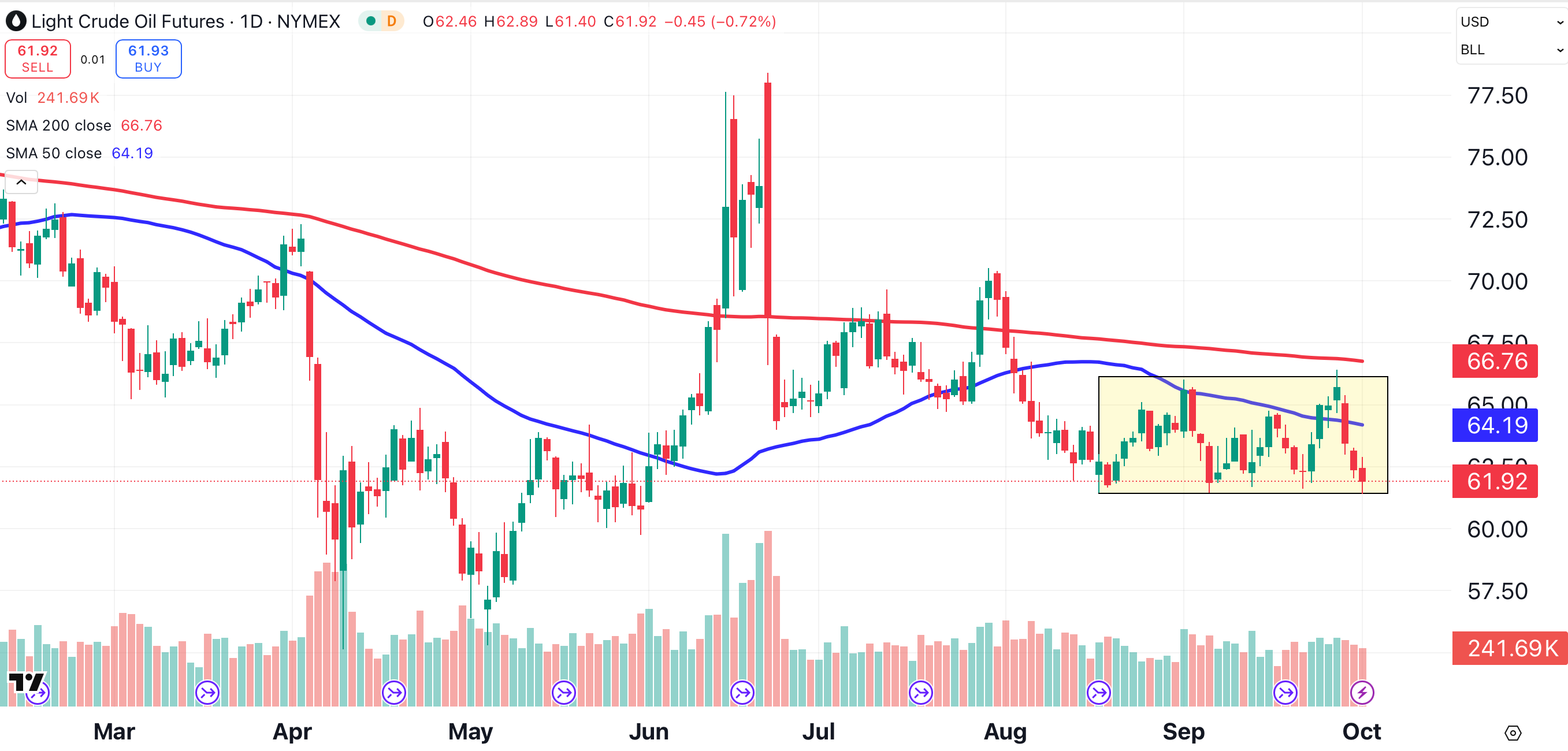
The key level here is $60. If WTI crude gets below the May 30 low of $60.13 (point A), the door is open for a decline to $55.64, a major low from May 5 (point B).
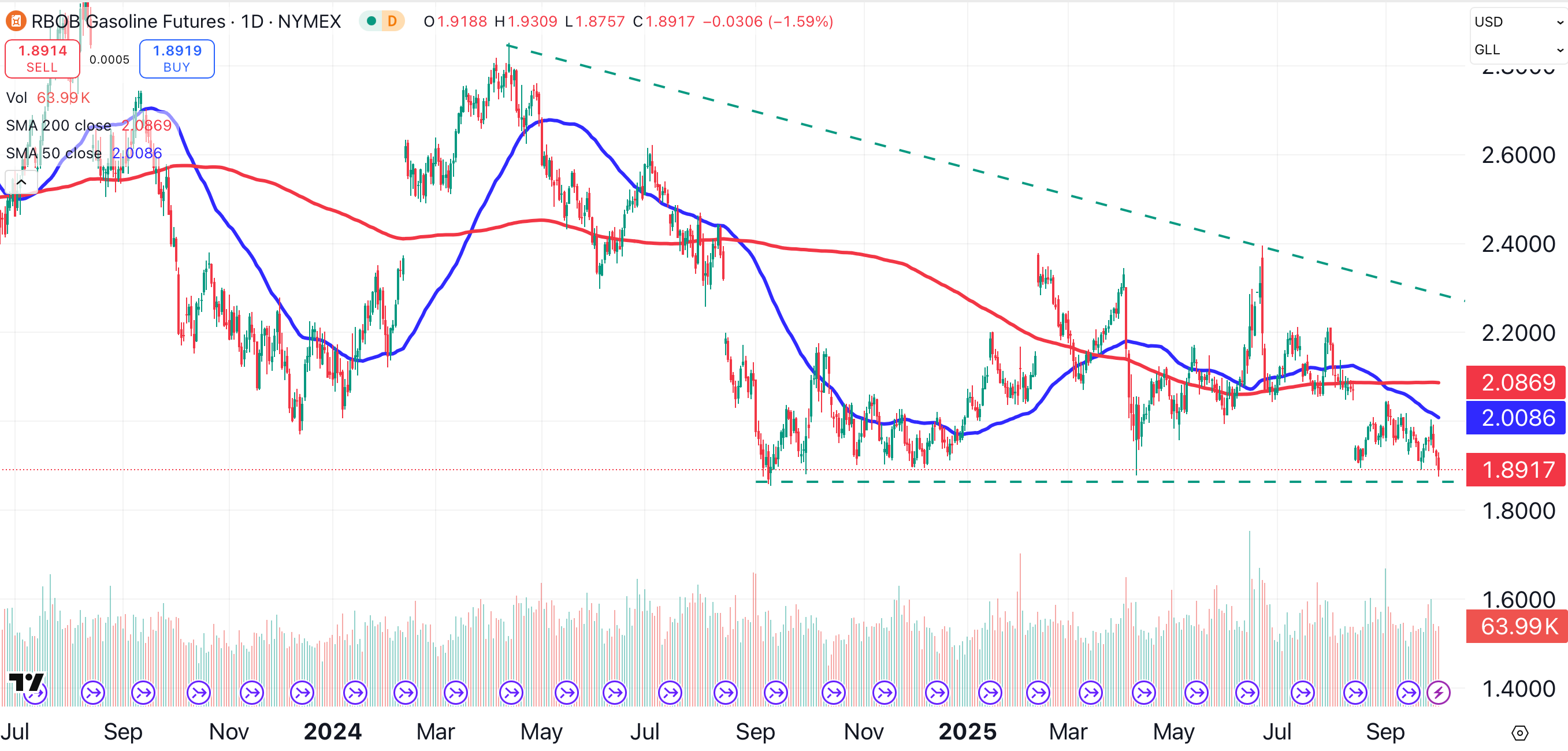
The decline in crude is weighing on RBOB gasoline futures, which have formed a huge descending triangle pattern (dotted lines). Major support here is 1.8545, a low point from early September of last year (arrow).
Right now, this appears to be a supply issue, but the slowing economy, plus the shutdown, could put downward pressure on demand as well.
Speaking of slowing economic growth…
Big Swing and a Miss for ADP
This Friday, we won’t be getting the monthly non-farm payroll (NFP) jobs report, as the Bureau of Labor Statistics (BLS) will be affected by the U.S. government shutdown.
Never fear, the NFP’s pesky little brother, the ADP National Employment Report, is here.
New Jersey-based ADP, formerly known as Automatic Data Processing, is one of the country’s largest paycheck processing companies. ADP gleans data from those payrolls in an attempt to determine the level of job creation in the U.S.
Wednesday morning’s September figure showed a loss of 32,000 jobs, way below the estimated gain of 52,000. The previous month’s figure was revised sharply downward, from 54,000 jobs created to a loss of 3,000 jobs.
If these figures are accurate — and that’s a big if, as both the BLS and ADP sometimes miss the mark — the economy could be fading fast. For what it's worth, markets seem to trust the data.
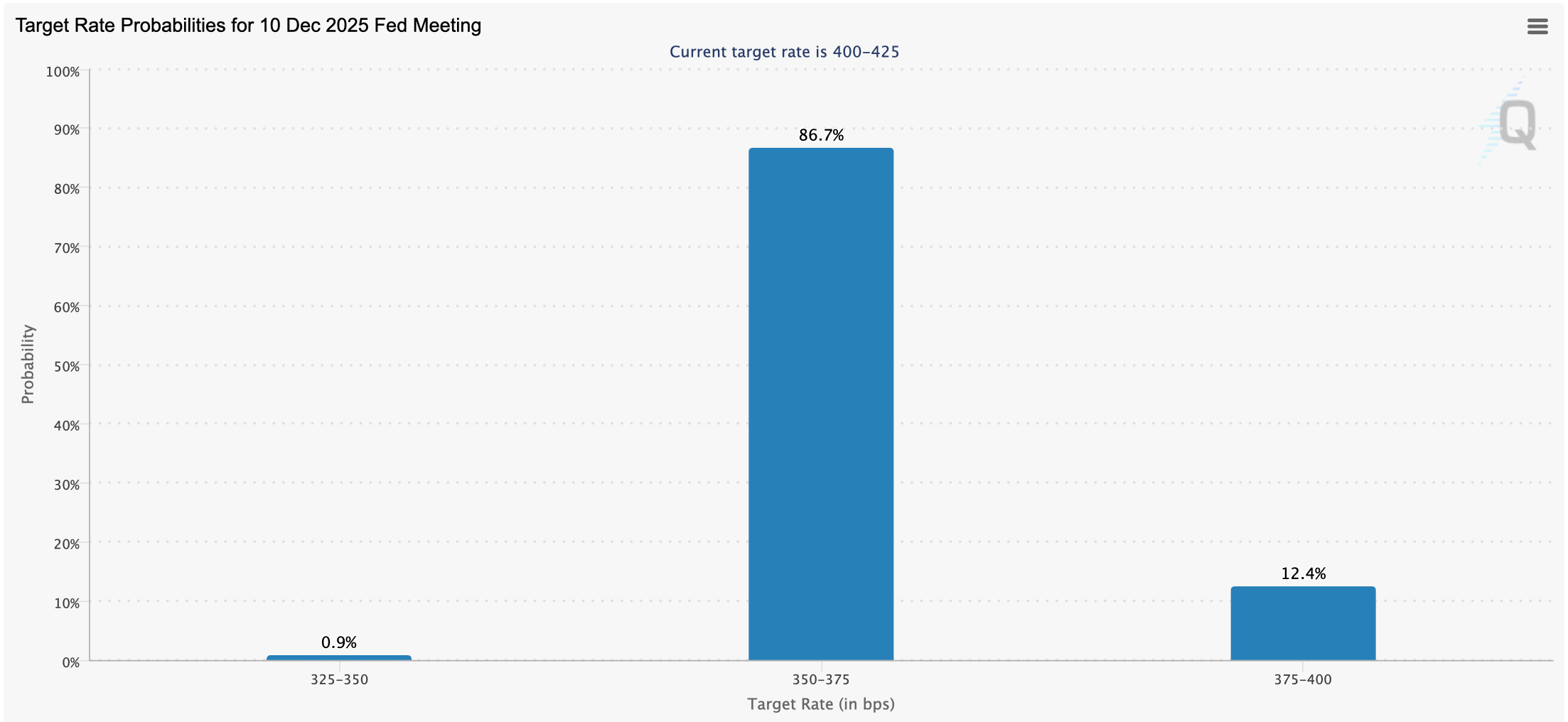
The CME’s Fedwatch Tool now projects a 99% chance of a 25-basis point rate cut when the Fed meets on October 29, with a slight chance of a 50-basis point cut. By the end of the December 10 meeting, chances of a total reduction of 50-basis points stand at 86.7%, as seen below.
Why is it that the stock market doesn't seem to care about the state of the U.S. economy?
The combination of high liquidity and lower interest rates is rocket fuel for stocks. This scenario is unfolding as the market enters its fourth quarter, which tends to be the strongest quarter of the year for stocks. Plan accordingly.