Here’s the Takeaway From Japan's First 3 U.S. Investments
Japan has a commitment to invest US$550 billion into the United States. Here are the implications from the first three deals.
You've reached your free article limit
You've read 0 of 1 free Pro articles.
The Trump administration has unveiled the first three projects that will be funded by Japan, under a commitment from Tokyo to invest US$550 billion into the United States.
While details are thin on the ground, the takeaway is that U.S.-Japan relations are back on an even keel, ahead of the March visit to Washington for Japanese Prime Minister Sanae Takaichi, fresh off her record winning margin at elections earlier this month.
I explained in a column after the February 8 Lower House elections in Japan that Takaichi now has a powerful mandate to push forward the stock-stimulative policies launched by late leader Shinzo Abe. This week’s developments — notably not discussed on Japanese government platforms — provide a firm foundation on which for her to build.
Tokyo Stocks Resetting Records
Japanese stocks have been setting and resetting all-time highs, closing at record levels after slight gains Thursday. So they look set to continue their powerhouse performance so far this year, and maintain their outperformance advantage over U.S. stocks.
The blue-chip Nikkei 225, capturing the performance of “Japan Inc.” and its major exporters, is already up 14.2% year to date, while the broad-market Topix is up 13.0%.
That’s significantly better than the major U.S. indexes, which are slightly in the red so far in 2026, with the S&P 500 down 0.12%.
Japanese stocks are also well ahead of the Asia average, with the Asia Dow up 8.5%, and global stocks, with the Global Dow ex-U.S. up 8.8%. In Asia, only stocks in Thailand, recovering from Asia’s worst showing last year, and South Korea, the top-performing major market last year and this thanks to its heavy weighting toward chipmakers, are outgunning Japan.
Details on 3 Deals
We got the first details on the Japanese investment in a statement late Tuesday from U.S. Commerce Secretary Howard Lutnick. The projects are:
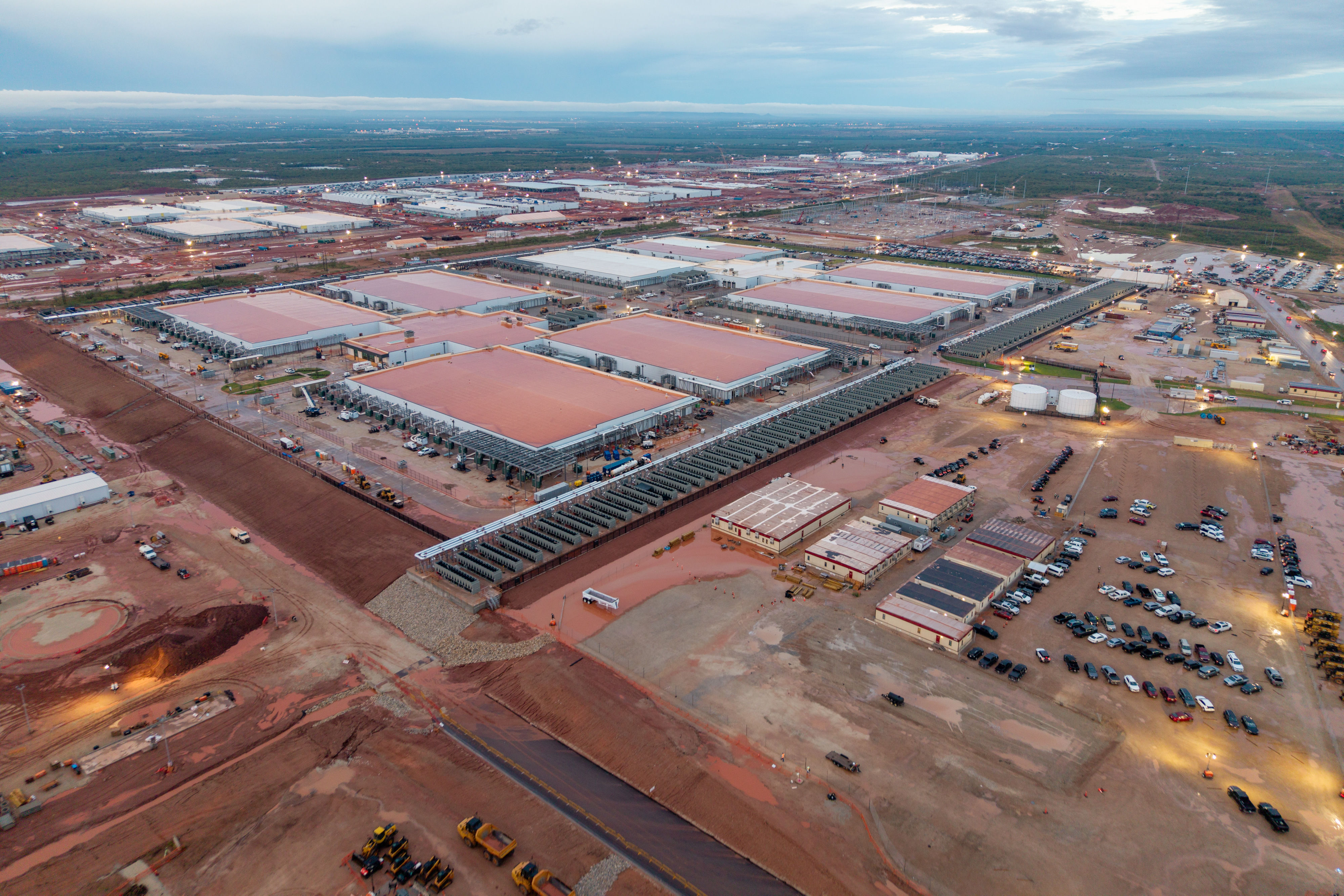
- A natural-gas project in Portsmouth, Ohio, where SoftBank Group (SFTBY) subsidiary SB Energy will build a US$33 billion power plant with a generation capacity of 9.2 gigawatts, close to the 9.5 gigawatt output of the world’s largest facility, in Dubai.
- A US$2.1 billion deepwater crude-oil export terminal in the Gulf of Mexico, off the Houston coast.
- A US$600 million plant in Georgia to make synthetic diamonds for use in manufacturing.
Credit Due to TARIFFS?
U.S. President Donald Trump also championed the deals on social media. He claims the projects “could not be done without one very special word, TARIFFS.”
That’s simply not true. While the White House likes to champion the headline figure that Japan will invest US$1 trillion into the United States, much of that money stems from existing agreements or projects that are already under way.
Japan is already the largest source of foreign direct investment into the United States, and many of these projects were already earmarked for investment. The US$550 billion figure was agreed last July, as I outlined at the time, in a deal to cut U.S. import taxes on Japanese goods from 25% to 15%.
A Breakdown From Japan’s Government
We got greater detail on that investment when Trump visited Japan last October. As I explained when Trump met Takaichi for the first time after she took power, the Japanese government indicated where US$393.45 billion of the funding into U.S. projects will be allocated.
Some are U.S. projects that have Japanese suppliers, such as the development of Westinghouse nuclear reactors that will use parts from Mitsubishi Heavy Industries MHVIY (T:7011) and Toshiba Group.
The US$550 billion tally also already includes US$25 billion in investment into “large-scale power infrastructure” by SoftBank Group (SFTBY) (T:9984). There weren’t further details at the time on the SoftBank investment.
SoftBank and OpenAI are each investing US$500 million into SB Energy, which is already building a Texas data center that OpenAI will lease as part of the Stargate initiative, which also includes Oracle (ORCL) . SB Energy already operates a Texas solar power plant for Google (GOOGL) and also has power facilities under construction outside Los Angeles and San Diego.
As I explained last week, the SB Energy partnership coupled with SoftBank’s 11% stake in OpenAI make the Tokyo-based venture capital investor a smart way to invest into OpenAI, ahead of any initial public offering.
With SoftBank already heavily invested into the United States, we can’t be sure whether any of the capital is new funding agreed after last July’s trade deal. The White House may attribute the investment to tariffs, but SB Energy wouldn’t have been importing power to drive these projects and would always have had to build U.S. power plants to supply these new data centers.
U.S. Consumers Paying the Price
The average U.S. tariff shot up from 2.6% to 13% last year, the vast majority of that additional cost paid by U.S. companies and consumers. Data released last week by the Federal Reserve Bank of New York that U.S. importers paid 94% of the increased tariffs between January and August 2025, although that figure fell to 86% as of November. In any case, exporters into the United States barely reduced their prices.
What we can say about this week’s detail on Japan’s funding is that there’s a good relationship between the Trump administration and Takaichi’s team. We should get further detail on Japanese-backed projects when Takaichi comes to the White House, a summit scheduled for March 19.
The hostility that prevailed prior to the U.S.-Japan trade deal last year has evaporated. That will stand the Tokyo team in good stead. Last year’s geopolitical tension that battered the stocks of companies such as Toyota Motor (TM) (T:7203) and Honda Motor (HMC) (T:7267) is long gone, suggesting Tokyo equities will continue to power ahead in 2026.
At the time of publication, McMillan had no positions in any securities mentioned.