Here’s How the H-1B Visa Hike Hurts U.S. Tech, and Helps China
As Hong Kong braces for Super Typhoon Ragasa, the sudden escalation in H-1B visa costs will be destructive in a different way, with long-running implications. I speak from personal experience.
You've reached your free article limit
You've read 0 of 1 free Pro articles.
The unexpected escalation in cost for H-1B visas in the United States is another blow to India, and will only drive the world’s most-populous nation closer to China, Brazil and the rest of the BRICS.
We are seeing some follow-through selling in Indian stocks Tuesday as a result of the visa tensions with the United States. China shares are selling off, too, after the central bank left rates unchanged, disappointing some optimistic traders. But in the long run, the hike in cost for H-1B visas to US$100,000 is only likely to harm the U.S. tech sector, and U.S. diplomacy.
It’s unclear how the increase in price will create jobs for Americans, since the number of visas is due to remain the same. It will just be more expensive for U.S. companies to hire foreign workers, and makes the workers holding these visas feel unwelcome. I said as much on Tuesday's Money Talk podcast with host Peter Lewis. You can find the links to the episode here.
Personal Experience
I speak from experience.
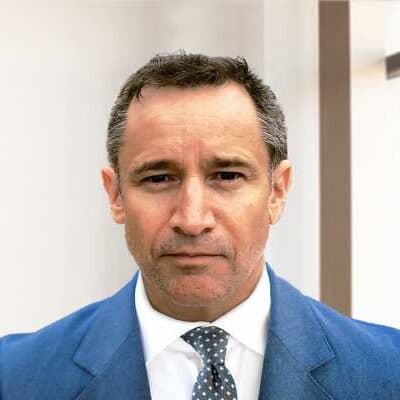
I held an H-1B visa myself, as a British graduate of the University of North Carolina at Chapel Hill who went on to work at first for Business North Carolina, kind of a state-level version of Forbes, and then moved to work for CNN in New York. I secured two H-1Bs, the maximum allowed, and even though CNN was applying for a “green card” that would give me U.S. permanent residence, I eventually grew weary of feeling like a “visa slave.” My permission to remain in the United States was tied directly to my job. So I took the opportunity when CNN offered me a chance to move to Hong Kong, where immigrant employees are far more welcome. I stayed 25 years.
The situation for H-1B visas has changed since I secured one in the mid-1990s. They’re nearly all gobbled up by the tech sector, and the available tally of 65,000 is snapped up as soon as it’s released. Indian citizens secured 71% of the visas last year, with China the second-largest nation at 11.7% of the total.
So the move from the Trump administration is pushing India and China further together. They will find an eager ally in Brazil, which like India is subject to 50% U.S. tariffs, not to mention Russia and South Africa, and the other five nations now included in the expanded BRICS grouping.
Trump Card for China
This offers China another trump card. And I think the Trump administration is starting to recognize that China already has a pretty decent hand, since it has stopped buying U.S. soybeans altogether, turning instead to Brazil, and is restricting the flow of rare-earth minerals necessary in the tech and defense sectors.
We explore those issues on Money Talk. I was a guest alongside U.S. economist Barry Wood, calling in from Truckee, Calif., near Lake Tahoe, as well as Mark Michelson, the chairman of the Asia CEO Forum, who is hunkering down in Hong Kong.
Hong Kong, by the way, is bracing for a massive typhoon. Super Typhoon Ragasa will likely be on the magnitude of Typhoon Mangkhut, which wrought havoc in the city back in 2018. All the trees snapped in half across the wall from my house, and the city spent several days removing debris from blocked roads.
Hong Kong International Airport will essentially be closed from Tuesday night through Wednesday, with the city’s flagship airline Cathay Pacific suspending flights until Thursday. Other carriers are following suit.
Massive Storm Hits Hong Kong
Ragasa — a name chosen by the Philippines and meaning “rush” or “haste” in Tagalog — is the equivalent of a Category 5 hurricane, as big as they get. It has passed between the islands of Luzon and Taiwan, and looks set to deliver an almost direct hit on Hong Kong, skirting just to the south of the city.
I’m currently in Britain, however, so I will be personally spared the storm, even if my house will not. We can only hold our breath, and hope the storm is not as destructive as predicted.
Meanwhile, these new policies are destructive in a different way. Yes, Indian outsourcing companies are directly affected. But in the long run, I fear U.S. competitiveness is weakened by pushing away these skilled tech workers, or at least making them feel unwelcome and unwanted.
They will have seen the images of South Korean workers being led away at gunpoint, some with their hands zip-tied, from the Georgia battery factory being built by Hyundai Motor HYMTF (KR:005380) and LG Energy Solution (KR:373220). It mattered not whether workers had the right visas for a short-term business visit to the United States.
Now we have further obstacles placed in the way of legal immigration to the United States. Indian outsourcing companies such as Tata Consultancy Services TTNQY (NSE:TCS) (down 3.0% on Monday), Infosys INFY (NSE:INFY) (down 2.6%) and Wipro WIT (NSE:WIPRO) (down 2.3%) bore the brunt of Monday’s selling, dragging the Nifty IT index down 3.0%. The Sensex dropped 0.6% Monday and the Nifty 50 fell 0.5%. The Nifty 50 is down another 0.1% for Tuesday, the Sensex down a similar amount, with Infosys the only one of that trio of outsourcing heavyweights to reclaim ground Tuesday.
Testy Partners Driven Together
India and China have a testy relationship, a clash of cultures and political systems between fiercely democratic India and Communist China. But they find themselves increasingly encouraged to partner up, as a result of the challenge from antagonistic U.S. foreign policy.
The Hang Seng index in Hong Kong fell 0.7% Tuesday, and will Wednesday face a test of the exchange’s new policy to remain open, now that it has shuttered its physical trading floor, even in the face of fierce weather. The CSI 300 of largest mainland listings dipped 0.1%.
Investors were responding to the central People’s Bank of China’s decision to leave interest rates as they stand. They were also disappointed that the central bank governor, Pan Gongsheng, did not deliver any stimulus.
China is playing its cards very close to its chest in trade negotiations with the United States. Despite claims from President Trump that a deal has been secured on TikTok’s sale to a U.S. consortium, China’s foreign ministry responds only that the “competent authorities” have shared information on the “basic framework consensus” as to how to move forward.
Trump also says he will meet Chinese President Xi Jinping at the APEC Summit in South Korea, to be held near Ulsan on Korea’s southeast coast from October 31-November 1. Yet the Chinese side say only that Washington and Beijing are “in communication” about such a meeting.
Will a Trump-Xi Meeting Take Place?
Trump has been keen to visit China, too. But officials in his administration are warning behind the scenes that it may be too early for such a trip, particularly if trade negotiations are not at a point where any “Phase Two” U.S.-China trade deal can be reached.
The two men last met face to face in pre-Covid times, in June 2019, at the G20 summit in Osaka. It would surely be a positive for the leaders of the two largest economies to meet once again, though any bilateral meeting at the APEC event would likely be a couple of hours at best.
We shall see what kind of trade détente can be reached. Meantime, there have been no orders from China for U.S. soybeans at all this year, normally worth US$12 billion trade. China absorbs 60% of all soybean exports globally but will be counting on Brazil to meet its demand.
China has also instructed companies such as Alibaba Group Holding BABA (HK:9988) and the TikTok parent ByteDance not to buy the downgraded Nvidia NVDA chip, the RTX Pro 6000D, made specifically for the China market. It is instead directing companies to ramp up their efforts to make the chips domestically.
So there’s plenty on the agenda for Trump and Xi to address. It would be a positive for global trade and growth for them to meet at the end of October. Meanwhile, the BRICS grouping continues to gain in importance.
At the time of publication, McMillan is long NVDA and BABA.