Early Chinese Trading Reveals Impact of Trump Tariffs
U.S. firms find themselves in the crosshairs as the first shots are fired in a trade war that’s turned hot.
You've reached your free article limit
You've read 0 of 1 free Pro articles.
Another day, another declaration of a tariff war. Or is it a ceasefire? Who knows.
Perhaps not even U.S. President Donald Trump, since he announces, implements or suspends trade duties apparently on a whim.
There’s no rhyme as to why goods should go up 25% if they’re coming from Canada or Mexico, or 10% from China, and not much reason why they should either.
It’s the “dumbest trade war in history” in the words of the editorial board at The Wall Street Journal, typically a Trump ally.
But markets must respond. The bond market is telling us with great conviction that tariffs mean higher inflation. Stocks tend to sell off, companies that depend on trade or a lower cost of borrowing, since inflation will tie central-bank hands when it comes to future interest-rate cuts.
I should make clear that the Journal called China a “real adversary,” and saved its harshest criticism for Trump’s trade taxes on Mexico and Canada. Those tariffs won a last-minute reprieve, but are only delayed for 30 days so we’ll go through this same rigmarole again at the start of March.
The tariffs on China have gone into effect as of Tuesday. China responded immediately, at least politically. Ironically, mainland Chinese financial markets will only have their first opportunity to react on Wednesday. They’ve been closed more than a week, since January 27, for the Lunar New Year holiday.
Stocks have been trading in Hong Kong, however, so we do have an indication that the reaction won’t be intense. The Hang Seng rose 2.8% on Tuesday, after an essentially flat Monday where they drifted 0.1% lower, the first trading since a midday close last Tuesday. The Hong Kong benchmark is up 6.0% so far this year, and has actually recovered 10.2% since January 13, the week before Trump took office.
So Hong Kong stocks are telling us that, all in all, a 10% extra trade tax is far, far better than was first expected. Let’s not forget that Trump threatened Chinese companies with an extra 60% trade tax while on the campaign trail, only to suddenly say — after a phone call with Chinese President Xi Jinping — that he didn’t really want to impose extra tariffs at all.
I discussed in a column just before the start of the Year of the Snake how this admission became very good news for Chinese stocks. We’ll see how mainland markets react tomorrow but it looks from Hong Kong’s reaction that they’ll take the extra 10% and the added political pressure in their stride.
The mid-January dip, selling before Trump took office, took Hong Kong stocks to their lowest close since their runup last September. But Chinese and Hong Kong stocks are still riding high on Beijing’s pledge last fall to introduce both fiscal and monetary stimulus to spur the world’s second-largest economy.
Beijing has responded to the imposition of the 10% tariff by imposing a 15% tariff on U.S. coal and liquefied natural gas, and a 10% tariff on U.S. crude oil, agricultural machinery, pickup trucks and large-engine cars. Its tariffs would go into effect on February 10. The likes of Caterpillar CAT, Deere & Co. DE and even Tesla TSLA, if it attempts to ship Cybertrucks made in Texas into China, could be affected.
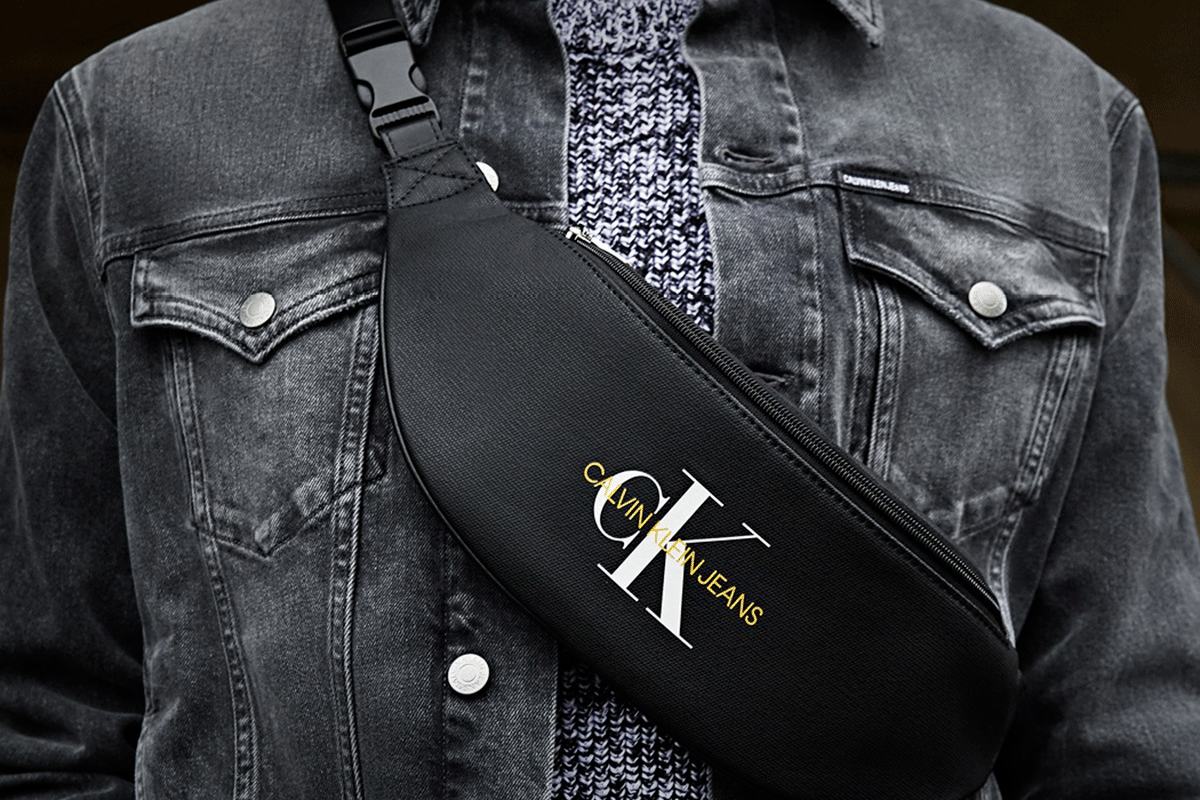
China has also filed a complaint with the World Trade Organization, added the Calvin Klein parent company PVH PVH as well as biotech-equipment maker Illumina ILMN to its unreliable entity list, and launched a monopolies investigation into Google.
The brief announcement by China’s State Administration for Market Regulation doesn’t mention Google parent Alphabet GOOGL, or provide any detail. But Google itself is an unusual target since Google pulled its search engine out of China in 2010, amid a major hacking incident and disputes over censorship, and has been blocked ever since.
It is the Google app store and Android operating system that are likely under the microscope. Android runs half of Chinese smartphones, according to Statista, with manufacturers such as Xiaomi XIACY (HK:1810), Oppo and Vivo using it. Huawei used to rely on Android but has rolled out its own HarmonyOS, while Xiaomi used Android open-source software to design its HyperOS.
Google is, of course, a highly-symbolic, high-profile target. Alphabet shares look set to rise today, up 0.4% in premarket trade, having slipped 1.4% on Monday. So equity investors are shaking off any hit to Google’s business in China, but there’s always the risk of a penalty or punitive measures
This could be a much bigger deal for PVH, parent not only of your Calvin’s but also Tommy Hilfiger as well licensing brands such as Michael Kors that prove popular in China. The company says it got 6% of 2023 sales in China and 16% of profits.
PVH shares are down 4.0% in premarket trading, having slumped 7.0% on Monday. China has previously investigated the company for alleged discrimination against cotton produced in China’s Xinjiang region, where Beijing is accused of human-rights abuses against ethnic minorities such as the Uighur population.
New York-based PVH (the former Phillips-Van Heusen Corp.) may struggle not only to sell clothing into China but also to source production in the country and partner with Chinese counterparts.
Illumina shares fell 1.2% on Monday but are looking at a 5.0% hit in premarket trading. The San Diego-based maker of gene-sequencing equipment opened a manufacturing plant in Shanghai in 2022, its third production site, and got 8.5% of its 2023 sales from greater China.
China’s actions against Google, Calvin Klein and Illumina can be interpreted as shots across the bow if the trade war is to intensify.
Will Xi and Trump be speaking anytime soon? Their future conversations may dictate how intense the trade war becomes.
Both Mexican President Claudia Sheinbaum and Canadian Prime Minister Justin Trudeau got on the phone with Trump, with Mexico pledging to send 10,000 National Guard members to the border, and Canada likewise deploying forces to the border and pledging to appoint a “fentanyl czar.”
“It’s Almost Like They Knew Trump Was Bluffing” is the title of an opinion column from Bloomberg.
The whole justification of the illegal trade in fentanyl as a justification for the trade war makes no sense. Illegal drugs have flowed into the United States since, well, prohibition, and are both run by organized crime and, yes, illegal. It is a law and order issue, something for the cops and customs forces to solve, not something Apple AAPL can address if it is paying higher prices for foreign-made parts for its iPhones. TikTok owner ByteDance won’t even be able to help on this one, even if most of the precursor chemicals for fentanyl are produced across the border from where I’m sitting in Hong Kong, in Guangdong Province.
The inclusion of law enforcement in a trade equation only confuses the math further. Yet Trump frequently uses countries and corporations interchangeably, mixing up important questions such as headquarters, stock-market listing, jurisdiction and production. He likes, for instance, to say that “China” operates the Panama Canal, by which he means the Hong Kong-based company CK Hutchison CKHUY (HK:0001), as I outlined in an earlier column.
By this definition, “America” is running your Google browser, making your Calvin Kleins and put together the iPhone in your pocket, even though the iPhone was almost certainly made in China. I just checked, and the Calvins that I bought on sale in Britain and brought back with me to Hong Kong were made in China, too.
Any trade war will get messy for the companies involved, as PVH and Illumina investors look set to discover today. Overall, we’re seeing investors in Asia largely shake the effects off. “It’s almost like they knew Trump was bluffing” applies to markets in Asia for the timebeing, too.
At the time of publication, McMillan had no positions in any securities mentioned.