Doug Kass: I See Recession, War & Trump's Exit in My 10 Surprises of 2026
Here are my predictions for the year ahead, which is already off to a wild start.
You've reached your free article limit
You've read 0 of 1 free Pro articles.
This is my 24th year of Surprise Lists — my predictions of what could happen during the year. This year, I'm reverting back to 10 surprises in 2026 from 15 surprises last time.
As usual, I have some bold ideas of what 2026 could bring. Some will be right, many will be wrong. But I explain each. A taste of the predictions includes that precious metals and equities will rise early in the year, then find, "there is no place to run, no place to hide"; Trump will resign; war will break out globally, and the U.S. economy will move toward recession.
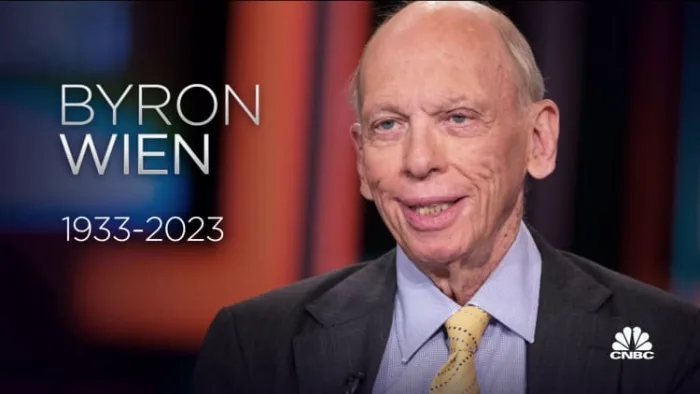
I have to stop here to give credit to the creator of the annual Surprise List, Byron Wien, who remains in my thoughts after his passing several years ago.
Two years ago, in preparation for the assembly of that year's Surprise List, I paid homage to my dear pal.
Here was my tribute to Byron on TheStreet Pro. May his memory be a blessing.
Concentrate on finding a big idea that will make an impact on the people you want to influence. The Ten Surprises, which I started doing in 1986, has been a defining product. People all over the world are aware of it and identify me with it. What they seem to like about it is that I put myself at risk by going on record with these events which I believe are probable and hold myself accountable at year-end. If you want to be successful and live a long, stimulating life, keep yourself at risk intellectually all the time.
-- Byron Wien
Without further ado, here are my 10 surprises for 2026:
Surprise #1: War Breaks Out Throughout the World, the President Resigns and Equities Decline by More Than 20% in 2026
I won't bury the lede.
President Trump, like The Godfather's Michael Corleone, becomes a wartime President — initially with no opposition in his Cabinet or in Congress (and without a wartime consigliere like Tom Hagen to smooth things over!)
After attacking Venezuela and failing to learn the expensive lessons of regime change attempts with Iraq and Afghanistan, Pres. Trump's popularity plummets. Like Corleone, Trump grows more unhinged and the Administration's rhetoric against Mexico's President (Claudia Sheinbaum Pardo) becomes more heated. Pres. Trump gives the Mexican President an ultimatum as an attack on that country is openly discussed on Truth Social. Other regimes, like that of Cuba's Miguel Diaz-Canel's (whose security forces are behind the protection of Venezuela's Pres. Maduro), are also highlighted by the Administration as possible targets early in the year. With the cover of US aggression, Russia becomes more aggressive against Ukraine (there is no peace) and China invades Taiwan in late Summer.
Separate from geopolitics The Epstein Files uncover a deeper (and unsavory) relationship with President Trump.
A week long investigative report entitled "Trump First (Not America First") by The Washington Post discloses how much the Trump family has profited from his Presidency. Pres. Trump's base is fractured - his popularity moves to unprecedented and low depths as the Marjorie Taylor Greene led America First movement permeates both political parties.
Several high level Trump Administration resignations are announced in the first half of 2026.A number of senior Republican Senators and Congressman distance themselves from the President.
By mid year impeachment is openly discussed. Surprisingly, four women -- Marjorie Taylor Greene, Elise Stefanik, Alexandria Ocasio-Cortez and Elissa Slotnick -- emerge as the leaders of their respective political parties. Georgia's Congresswoman Marjorie Taylor Greene doesn't disappear -- just the opposite occurs. Greene becomes the titular leader of the "America First" movement of the Republican Party, which is at odds with MAGA:
The "America First" movement gains ever more prominence and popularity within the Republican Party. Marjorie Taylor Greene overtakes Vice Pres. JD Vance in the polls as the likely next Republican Presidential Nominee. New York Congresswoman Alexandria Ocasio-Cortez takes a large lead in the polls to be the next Democratic Presidential Nominee. Michigan Sen. Elissa Slotnick becomes the leading moderate in the Democratic party.
New York Congresswoman Elise Stefanik (who, after stepping down from Congress, breaks with Pres. Trump and announces that she plans to run for Sen. Schumer's NY Senate Seat) becoming another important leader in the "America First" faction of the Republican Party, joining the growing ranks of her party who finally split ranks with Pres. Trump.
Another woman is in the limelight — as First Lady Melania Trump begins divorce proceedings against Pres. Trump. (This was a surprise last year that turned out wrong.) The divorce settlement is nearly $1 billion, calling further attention to how Trump has profited from his Presidency. Trump unexpectedly resigns under the intense political, social (Epstein) and mainstream media pressure - citing his deteriorating health as the reason.
Despite all of the Administration's woes (and that of the domestic economy), the Democratic Party fails to offer a coherent alternative message as the Party remains hostage to the Left. (New York City Mayor Zohran Mamdani, Senator Bernie Sanders and Congresswoman Alexandria Ocasio-Cortez denounce the apprehension of Venezuela Pres. Maduro.)
In a surprise (considering all of the above factors adversely impacting Republicans), the Democratic Party (barely) wins a narrow majority in the House. The U.S. economy weakens as the year proceeds. By year's end unemployment rises above 5% and the CPI is back near 4%.
The 2026 deficit approaches a staggering $2.5 trillion (and US debt exceeds $40.5 trillion).
A recession in 2027 appears likely.
Equities (led by the Magnificent Seven tech stocks) succumb to slowing economic and corporate profit growth, the reappearance of inflation, questionable foreign and domestic policy, growing political uncertainties, emerging "problems" for the hyperscalers (as AI capital spending plans are reduced) and elevated valuations.
The K-shaped economy's weakness in the lower income cohort spreads into the middle and upper middle class as the cumulative (or stacked) inflation since Covid finally has an impact — causing a spending freeze. With the outlook for global economic growth dissipating, consumer and business sentiment plummets. Buy now, pay later and credit defaults rise and auto repossessions increase dramatically.
Drawdowns in the global equity markets and a moribund housing market contribute to a negative "wealth effect" and an air pocket with the high end consumer as the investor optimism of 2023-25 is abandoned.
There is no place to run, no place to hide — most asset classes fall in the 2026 Bear Market.
Precious metals, commodities and crypto currencies all collapse (after a strong start early in the year) — in Martha Reeves' Revenge. Bottom line: After starting the year positively, the S&P Index drops by more than — 20% in 2026 — with three separate drops of 10%.
Surprise #2: In early 2026 Pres. Trump selects Kevin Warsh as new Fed chairman
Kevin Warsh follows through with Pres. Trump’s view that the U.S. should have the lowest interest rates and cuts the Fed Funds rate to 2% by the end of 2026. At the same time he transfers the Fed’s mortgage holdings to government-sponsored enterprises and the Fed’s coupon holdings to the Treasury in exchange for short-term bills. He works relentlessly to shorten the duration of the Fed’s balance sheet and expresses a goal for 2027 to shrink it. The bond market cheers the more responsible balance sheet management and the 10-year bond rallies to 3.5% but treasury supply/deficits keep the term premium elevated and the reappearance of inflation risk limits how far the long end can fall and the yield on the long bond remains stubbornly high.
Despite lower short interest rates, housing continues to suffer. After several years of rising prices, home prices are too high to attract adequate demand. Construction volumes suffer and home builders are caught with commitment to take delivery of lots from off balance sheet partners that they can’t fulfill. A housing prices war follows and the average new home prices falls 7%. Homebuilder stocks are down by greater than 25%. The resale market remains in the doldrums and volumes fall by 10%. Homebuilders such as Home Depot (HD) and Lowes (LOW) , real estate brokers and furniture companies all collapse under the weight of lower home prices and slowing sales activity.
Surprise #3: The AI economy and (a heavily weighted and imbalanced) stock market dependent on AI show signs of interruption, then disruption
The AI bubble bursts as the circular financing deals unwind (or are pushed out) — AI capital spending slows abruptly as return on investment concerns emerge as power generation and grid modernization are bottlenecks. Depreciation charges and lower demand wrecks havoc with consensus AI 2026-27 earnings per share expectations. Another big AI surprise would be if China decides to flood markets with inexpensive AI models — pressuring the ultimate and expected robust ROI forecasts (which are already in question by some skeptics).
Sam Altman's effort to make OpenAI too big to fail, fails. ChatGPT turns out to at best be a commodity large language model purveyor. It becomes obvious to all that its recent $500 billion-plus valuation can’t be supported. Without an ability to do a down round without losing face, OpenAI loses all access to capital. Ultimately, a consortium of its customers and suppliers takes it over to modify its business plan and reduce the cash burn.
With Altman tossed to the curb (or worse), the prosecutions begin. OpenAI’s problems push a deeply committed (to OpenAI) Softbank to the verge of collapse.
Nvidia shares fall by -40% as Coreweave is driven into bankruptcy. A basket of defensive consumer nondurable equities ( (PEP) , (KO) , (PG) and (KMB) ) materially outperform the Magnificent Seven by a decisive amount.
The shares of (boring and previously hapless) PepsiCo outperform most other staples and 90% of the S&P Index after a much better skein of organic unit growth and as its core business is rationalized.
Surprise #4: Market structure, so positive an influence in 2023-25 begins to weigh on equities after a clear change in market momentum leads to a deleveraging in the leveraged, passive and quantitative equity fund worlds
With so many positioned on the same side of the (bullish) boat, retail investors begin to liquidate from equity funds — reversing the experience of the last few years. The movie of the last decade (of inflows) goes into reverse in 2026 — it's October 1987 (portfolio insurance was to blame) all over again. More than one quarter of the listed ETFs close during the year due to "indifference".
Surprise #5: Japan finally faces its day of reckoning after decades of excessive fiscal spending
Yes, they “owe it to themselves,” but they also have paid themselves very little interest. With inflation a continuing problem the deficit situation comes to a head. Japanese 10-year rates cross 3% and the yen falls to 200.
Facing the possibility of spiraling inflation and a collapsing currency, Japan organizes a global central bank intervention to stabilize the yen. The situation remains precarious at year end setting up for a possible crisis in 2027.
Surprise #6: The bill finally comes due from the 2020-2022 LBOs that relied on low cost debt that now can’t be effectively rolled over
Valuation opacity, a compression in exit multiples and unrealistic net asset value marks (mark to model delays volatility but doesn't remove it) in private equity come into focus in 2026. The greatest problems are companies tied to commercial real estate and Saas companies. There are a number of high-profile bankruptcies in notable private equity portfolios.
A market for stranded LP interests trading at deep discounts becomes widely followed. Further, the IPO market continues to not be a viable exit for most holdings. Gated redemptions become common place. Apollo (APO) , TPG (TPG) , KKR (KKR) and Ares ARES each fall by 30%.
Surprise #7: The U.S. government nationalizes Fannie Mae and Freddie Mac early in the year to bring them public later in the year
After reviewing a possible initial public offering with bankers, the government determines the current corporate structures can’t be reconciled with an IPO and without risking enormous litigation from legacy investors. So, the administration simply nationalizes them — thereby moving the litigation risk away from the enterprises.
Bill Ackman commences litigation that will keep him busy until 2035. The IPOs are ultimately successful and the biggest issuances of all time.
Surprise #8: In a bold move by CEO Greg Abel, Berkshire Hathaway makes a $100 billion-$150 billion acquisition of an energy-related company
In the rapidly eroding 2026 equity market landscape, Warren Buffett's cash hoard at Berkshire Hathaway (BRK.A) (BRK.B) becomes a valuable gift to Greg Abel. Greg Abel announces that Berkshire Hathaway will begin to whittle down its investment portfolio as the future direction of the company is to purchase full ownership in companies (and not in making minority equity investments).
By the end of 2026, Berkshire Hathaway eliminates its entire holdings in Apple (AAPL) and Bank of America (BAC) . Berkshire Hathaway's shares disappointing recent performance (following Warren Buffett's "retirement") is reversed. The share price rises modestly in 2026 as the major Indices drop significantly.
Surprise #9: Predictive products and the gambling markets become driven by fraud, corruption and enormous ‘up-front’ payoffs to guarantee outcomes (at both the college and professional levels)
Half of the male population between 18 and 50 have a sports betting account. Nearly one quarter of the sports bettors say they are addicted. And one in five persons with a gambling addiction attempt suicide. Wagering on the next Federal Reserve Chairman, Pres. Trump's next tweet, whether the next pitch is a strike or a ball (or how many home runs NY Yankee Aaron Judge will hit, who will score the first Super Bowl point, etc.), invites corruption into every aspect of American life.
More professional teams and college teams are embroiled in "fixes." The shares of Robinhood (HOOD) , Caesars (CZR) , Flutter (FLUT) , MGM Resorts (MGM) , Draft Kings (DKNG) and other companies involved in gambling and predictive markets fall in half - as regulatory authorities begin to place new restrictions on the space.
A deteriorating equity market results in massive retail trading losses — from leveraged ETFs, zero-days to expiration options, etc. Calls for regulatory action (on leveraged ETFs and zero dated options) grow louder as YOLO and HODL become OHNO.
Surprise #10: In an attempt to thwart the stock market's decline, Trump signs an executive order to end short-selling
Many (including myself) have predicted that Pres. Trump’s second-term would be filled with unexpected, extreme and controversial policies that go much further than anything in his first term. Based on the last six months no one has been disappointed!
In early 2026, in a move that stuns even his own party, Pres. Trump in an attempt to stabilize his dwindling poll numbers, a weakening U.S. economy and a sharp drop in stock prices, "rewards" (his words) the country's economy in the hopes of furthering his bull market narrative — by abolishing short-selling in all individual U.S. equities (futures are still allowed to be shorted).
The president markets his Executive Order by stating "that you either own a stock or you don’t," prompting a very short-lived and violent rally in global markets. However, very soon after the announcement, his plan backfires as he fails to realize the enormous and leveraged hedges that exist in today's market. Those hedges are forced to be unwound in anticipation of the implementation of the Executive Order to eliminate equity shorts.
The decline in stocks quickly accelerate as Citadel, Susquehanna and Goldman Sachs (GS) (in particular) grow ever more aggressive in selling out their large hedged books. Market makers and quant strategies hedged books are ruined — their liquidation of their hedges add even more fuel to the avalanche of selling.
Global equities decline by more than -10% in the ensuing two months.
This commentary was orginally posted in Doug's Daily Diary on TheStreet Pro.
At the time of publication, Kass was long PEP (L), KMB (M), PG (S); short CRWV (S), NVDA (S).