Asian Stocks Expose the 'Fairy Tale' of This Week’s Wall Street Rally
China is denying that there are even talks to start talks on trade, and the early examples of India and Japan suggest the tariff tension will continue to hurt stocks over the short term.
You've reached your free article limit
You've read 0 of 1 free Pro articles.
The two-day rally on Wall Street has some market watchers swooning. The worst is over, the tariff furor will fade, and we can return to the “U.S. exceptionalism” trade.
I don’t buy it.
From my view here in Hong Kong, this looks a lot like a dead-cat bounce on the way down. And indeed, we’re already seeing signs any rally is flagging.
The issue of tariffs is not resolved, and will come to a head as we near the 90-day deadline for the crazy Rose Garden chart to go into effect.
Fairy Tale on China
It takes time to negotiate trade deals. U.S. President Donald Trump has unilaterally upended the global system of trade in a way that’s going to take a long time to fix.
We can see from the head start that Japan and India have taken on trade talks with Washington that progress will be slow. Their initial meetings with U.S. tariffs negotiators essentially set the stage for more talks. Nothing was resolved. They didn’t even establish exactly what goods and services any negotiation would cover, let alone hash out the details.
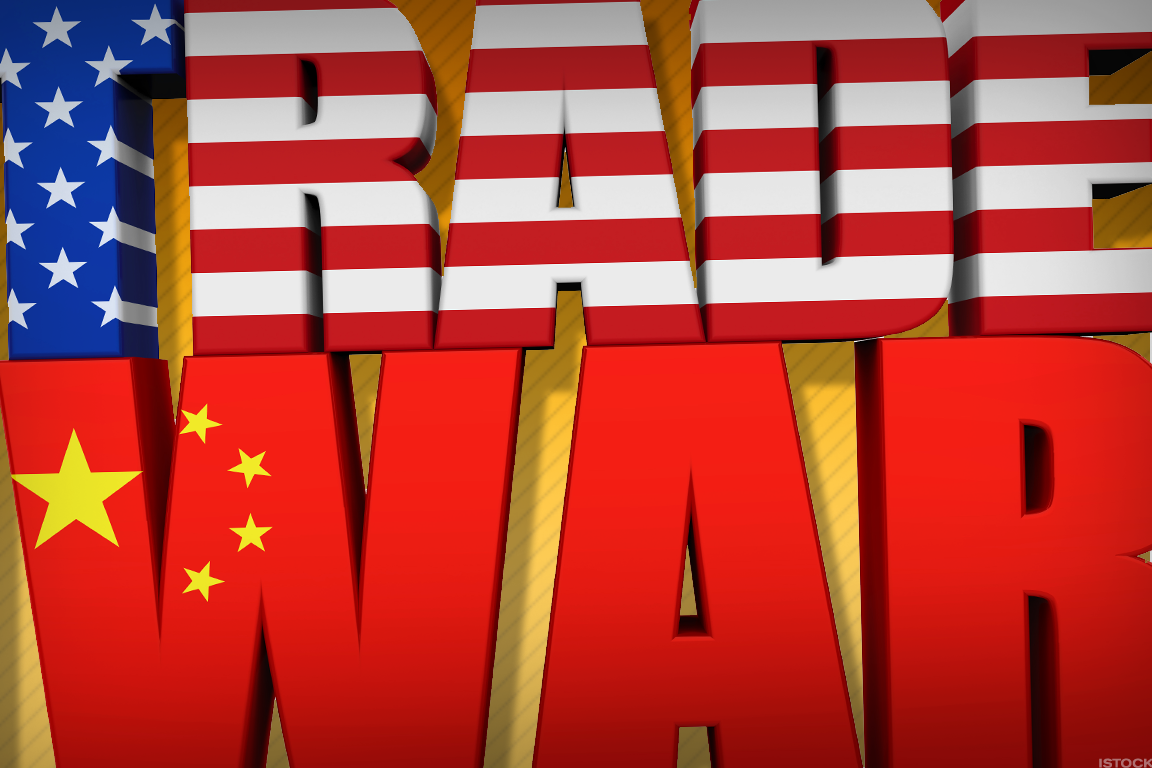
We are also getting blather from Trump about a China trade deal that he hasn’t even begun negotiating.
Of China, he says “they’re going to do very well,” as Trump tells reporters in this video the White House. “And I think they’re going to be happy, and we’re going to live together very happily, and ideally work together. So I think it’s going to work out very well.”
This sounds a lot like “They all lived happily ever after …” It is a fairy tale, particularly since China and the United States have not even started talks on when talks might start.
U.S.-China Trade Deal 'Fake News'
That’s why the stock rally has limped into Thursday. China is denying that there’s any semblance of a trade deal in the works, or even talks to start trade talks. Beijing is also demanding that the United States lift all unilateral tariffs before it’ll even consider approaching the negotiating table.
“We will fight, if fight we must,” Chinese foreign ministry spokesperson Guo Jiakun said Thursday in a news briefing. The suggestion that the United States and China are negotiating is “fake news,” Guo said.
China is not averse to trade negotiations but believes its position has been “consistent and clear,” while the White House has started this tariff war. “Our doors are open, if the U.S. wants to talk,” Guo said, by way of offering out an olive branch.
U.S. Retailers State Their Case
Trump nodded when asked if the 145% tariff rate currently imposed on Chinese goods is an effective embargo on U.S.-China trade, going on to say “It won’t be anywhere near that high.”
He repeated his rant that the tariffs have something to do with the illegal shipment of fentanyl into the United States, which is a total red herring. Sometimes that’s his excuse for tariffs, other times it’s about recalibrating the balance of trade, at other times it’s about reshoring industry, and at yet other times tariffs sound like they’re going to remain in place, because Trump says they’ll be a great money maker.
It’s clear that he’s now worried they’ll be as economically disastrous as virtually every trade expert and economist says they’ll be.
The issue is how Trump walks the ruinous tariffs back. It’s clear that Monday’s meeting with executives from the very largest of U.S. retailers – Walmart WMT, Home Depot HD and Target TGT were in attendance – must have carried some sway.
Even if they expand their supply chains beyond China, there’s no way those companies can source cheap goods and keep prices low if we have worldwide high tariffs. While those retailers are quick to stress just how much they do source from within the United States, it takes time to rejig sourcing. And does the world’s biggest, most-successful economy really want sweat shops and polluting manufacturing moving back onto its shores?
Asian Equities Drift on Slow Talks
I’ve taken a look in my last column at how Indian stocks look a strong defensive play, since the world’s most-populous nation has already begun negotiations on a U.S. trade deal. But while those talks – unlike with China – are actually in progress, all we’re getting right now is political warm air that there’s “significant progress.” No details at all have been set straight.
And as I noted last week, Japan was first in line to send a trade delegation to Washington, faced with what Prime Minister Shigeru Ishiba calls a “national crisis.” Trump even unexpectedly popped his head into the talks between the U.S. secretaries of the Treasury and Commerce and a Japanese tariff team led by U.S.-educated Ryosei Akazawa, the Japanese minister for economic and fiscal policy.
Again, we’ve got no sign that any details are being ironed out, or any numbers crunched. If the talks don’t progress fast with U.S. allies sending teams to Washington, it’s a sure thing they will prove far more difficult and protracted with a rival like China.
So Thursday’s trade in Asia saw an end to the two-day rally we’ve seen on Wall Street. Japan inched ahead with the broad-market Topix up 0.3%, but Hong Kong’s Hang Seng corrected 0.7%, and markets are also slightly in the red in South Korea, Taiwan and India.
Beijing’s denials have not lightened the mood. China likely does want to strike a deal, but it’s as vital for Chinese President Xi Jinping to appear a “winner” or at least a Trump equal in any negotiations. Until the two men get on the phone and agree to meet, relations will remain frosty.
Investors are currently at the mercy of geopolitics. It does look like the Trump team want to find a way to back off the ruinously high tariffs presented in the Rose Garden, but it’s going to take time if this administration is really going to renegotiate trade pacts with every single nation in the world. The risk of missteps is high.
Sold Out of Mag Seven
The White House may also have backed off its criticism of U.S. Federal Reserve Chair Jerome Powell. But the dollar’s continued weakening is likely to continue, all the more so if the Fed does start to cut rates. That makes overseas, unhedged equity markets more attractive by comparison.
Personally, as I’ve noted in discussions with readers in the comments on my stories, I’ve sold down much of my holdings in Magnificent Seven holdings such as Nvidia NVDA, Apple AAPL, Microsoft MSFT. It could be a costly mistake if U.S. markets continue to rally. But I believe we’ll see them continue to sell off, a decline that could pick up pace if any suggestions of recession magnify.
I do risk missing out on rallies. The proceeds of the Mag Seven sales are currently sitting in cash. I’m looking to rotate into the likes of Alibaba Group Holding BABA (HK:9988) on signs of any weakness. BABA is already up 40.0% year-to-date but any price near $100 has proved attractive in the past. It briefly sank to that level earlier this month but has joined the Wall Street rally.
I'm also happy with my position in BYD BYDDY (HK:1211). It wasn't selling into the United States anyway, so U.S. tariff negotiations have little effect. However, higher duties on European Union imports do suggest it should continue to accelerate its efforts to build factories outside China.
Otherwise I don't yet hold the other China's "Tech Titans" that I've highlighted in recent stories. But I favor them over their Mag Seven counterparts.
Investors can either buy and hold, and ride out this tariff tantrum, or attempt to trade on the momentum. But there have been plenty of warnings that simply buying U.S. equities on dips may not work in a U.S. market that’s still down 11.1% since inauguration day in terms of the S&P 500.
I think we will have a heightened period of uncertainty over tariffs at least until the 90-day suspension is lifted in early July. Asian stock market moves Thursday certainly tell us that the two-day buoyancy on Wall Street is likely to be short-lived.
At the time of publication, McMillan was long NVDA, AAPL and BYDDY.