Asian Markets React to Trump's Update on Iran War Progress
Asia-based investors had a clear reaction to the U.S. president's speech detailing the country's conflict in the Middle East.
You've reached your free article limit
You've read 0 of 1 free Pro articles.
 Market Responds to Iran Overnight Missile Attack With a Morning Yawn
It’s clear from Asian trade on Thursday that investors were not reassured by U.S. President Donald Trump’s primetime address to the American nation the night before.
With many Asian markets heading into a long weekend, investors were looking for reassurance from Trump, ideally some kind of guidance that the Iran war would soon end.
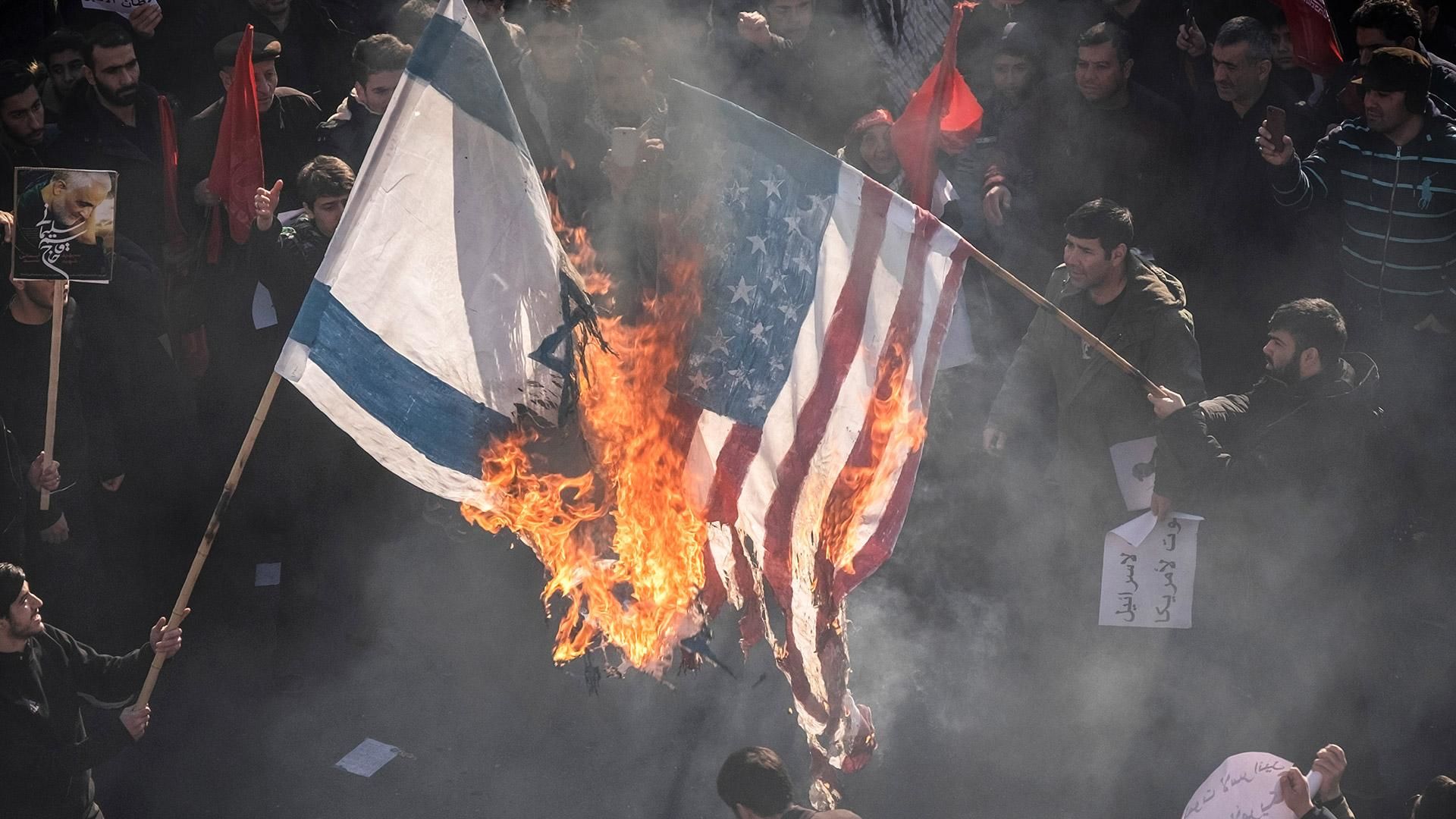
Morteza Nikoubazl/NurPhoto via Getty
They got anything but. In a 19-minute address, Trump threatened, over the next two to three weeks, to bomb Iran “back to the Stone Ages, where they belong,” and delivered the kind of speech you might have expected at the start of the conflict. He claims the war is “nearing completion,” which investors clearly interpret as meaning it will extend.
Unclear Goals, Unclear Timeframe
Above all, since there is still no clear objective for the war from Trump, markets got no sense of how or when it might end. Trump insists it’s necessary to honor the 13 U.S. war dead “by completing the mission,” but what is the mission?
The president framed it in several ways: as a quest to destroy Iran’s missile capability; cripple its military; crush its support for terrorist proxies; prevent Iran from threatening the United States; hobble its ability to project power abroad; and stop Iran from ever building a nuclear bomb.
“We’ve done all of it,” Trump said, the full text of his speech here. Equally, he said “these core strategic objectives are nearing completion.”
So, we’re done … but not done. Yet.
Iran’s retort to the speech was that it will unleash “crushing, broader and more-destructive” attacks on the United States and Israel. More of the same. In politico-speak, there’s still no “off-ramp” in sight.
Gas Prices Make it Expensive to Stay on Highway
So we’re stuck on the highway, and with U.S. gas prices above $4 per gallon, it’s getting more and more expensive to drive.
As I noted in my column last week, Trump has set himself a deadline of four to six weeks to conclude the Iran war, with the added time pressure of a trip to China now rescheduled for May 14 to 15. Trump will want hostilities to cease before he meets Chinese President Xi Jinping.
We’re now four weeks into the war. Markets are pricing in the potential for conflict to continue for much of this month. Then we’ll have the long-term disruption to energy supplies to price in.
Oil Back Near $110
The Brent crude benchmark we’ve all been watching so closely as a barometer of global oil prices has shot back up to $108.38 as I write. It had eased back to $101.16 on Wednesday, with the optimists among us hoping Trump’s speech would lay out some kind of road map for the end of the war.
So Asia’s oil importers are hobbled again on Thursday. South Korea’s Kospi is the biggest mover, down 4.5% on Thursday, although that still leaves it with a world-leading 24.2% advance for 2026.
In Japan, the Nikkei 225 sold down another 2.4%, with the market-wide Topix down 1.6%. That leaves both major Tokyo indexes only slightly in the black for the year, to the tune of around 4.0%.
Asian stocks are moving based on energy costs, and Asian currencies have weakened dramatically, which inflates imports even if it will, down the line, aid the profit margins of large exporters.
Yen and Won at Crisis Levels
The Japanese yen breached ¥160 to the U.S. dollar late last week, and remains just below that level, at ¥159.29 as I write. The Korean won is at crisis levels, north of 1,500 to the U.S. dollar, a threshold it has only previously crossed during the Asian financial crisis in 1997 to 1998 and the Global Financial Crisis in 2008 to 2009.
The cheap yen makes the case for holding unhedged Japan positions, Christopher Wood, the global head of equity strategy at Jefferies, argues in his latest "Greed & Fear" newsletter. The real effective exchange rate is down 36% since May 2020. But he is watching for any signs that the central Bank of Japan has lost control of the currency, if it breaks above that ¥160 level.
Stagflation concerns haunt both Asia and Europe.
“There are still no signs that energy trades are normalizing,” Nomura’s chief strategist Naka Matsuzawa wrote in a note to clients.
He believes investors are prepping “ceasefire trades,” but there’s dramatic day-to-day volatility driven by the view of how close we are to end to the Iran war.
Nomura Downgrades India on Energy
Nomura has also just downgraded Indian equities to neutral, from overweight, blaming the risk to earnings and valuations that high energy prices present. Indian stocks have held their ground on Thursday, with the Nifty 50 essentially flat on a 0.15% rise. But they have sorely disappointed this year, with Nomura assessing that India is particularly vulnerable to the threat of elevated energy prices.
The Nifty 50 is down 13.1% in 2026, with the Sensex off 13.9%. That leaves India and Indonesia, where the Jakarta composite is down 18.7% this year, as the largest laggards in Asia this year.
We can expect Asian markets to trade on energy prices until there’s a clearer indication of an end to the conflict in the Middle East. Trump hints he may wind down hostilities in 2-3 weeks. But he also promises that the Strait of Hormuz, the key bottleneck blocking Asia’s oil imports, will open up “naturally,” which looks simply like wishful thinking.
Pakistan has been looking to play the role of mediator in any peace talks. But without real U.S.-Iran negotiation, Trump has at times appeared to be negotiating with himself on a way to end the war. The behind-the-scenes diplomacy has yet to yield results.
Trading in many Asia Pacific nations will be suspended on Friday for Good Friday. That’s the case in Australia, Hong Kong, India, Indonesia, New Zealand, Singapore, Sri Lanka and the Philippines, with the Manila market also closed for Maundy Thursday. Most of those markets will also be shuttered on Monday for Easter, although trading resumes in India.
Taiwan’s markets are also closed on Friday for Children’s Day. Both Taiwan and Hong Kong observe the Ching Ming Festival for tomb sweeping on Monday, meaning the Hong Kong market will observe the Easter holiday on Tuesday, with an extended five-day holiday through Wednesday.
Related: Asia’s Top Performer Touches Bear Market, But Is Still Up Big in 2026