Asia Preps for Worst-Case Energy-Disruption Scenarios
Asian shares are in the red, with chipmakers selling down separately on Google’s algorithm innovations.
You've reached your free article limit
You've read 0 of 1 free Pro articles.
 Philippines
There’s clear skepticism in Asian trade over U.S. claims that the war in Iran is nearing some kind of resolution. Markets are drifting lower on Thursday as investors factor in the likely long-term impact of the disruption in energy markets.
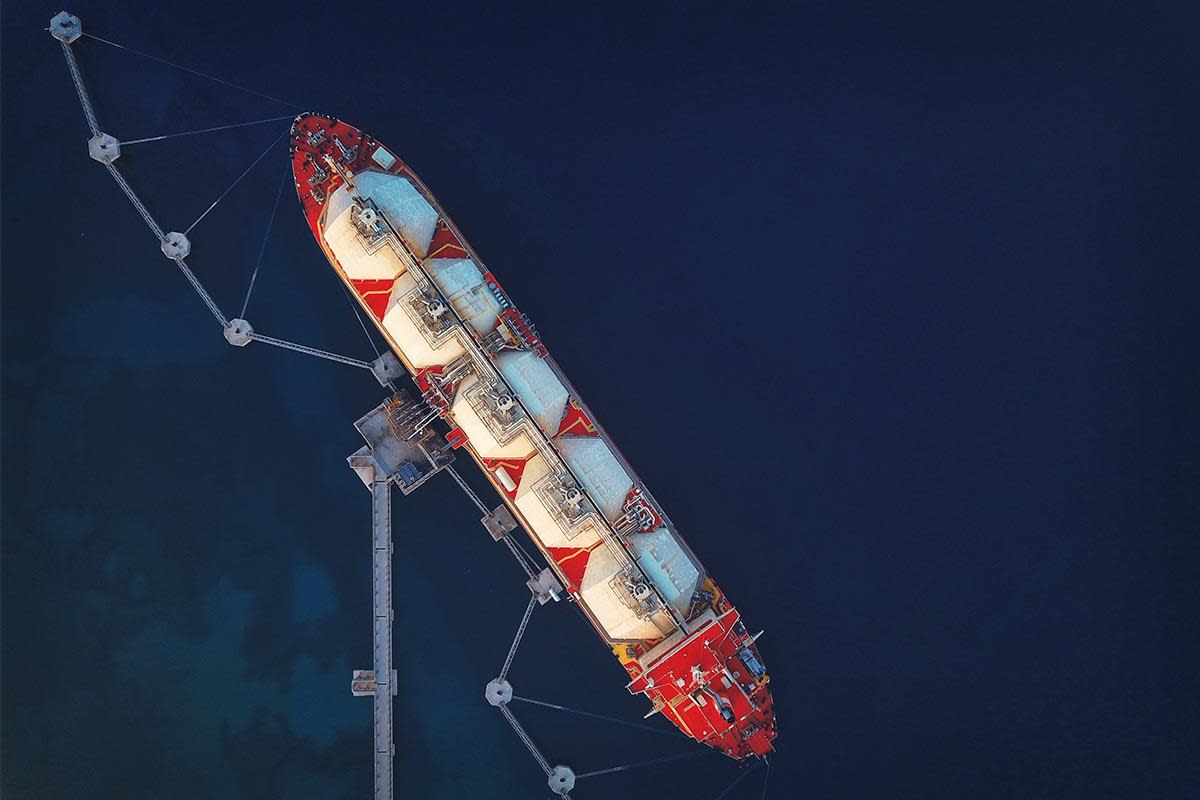
Asia is at particular risk since it’s the destination of 90% of the crude oil and 50% of the natural gas that normally flows via the Strait of Hormuz, S&P Ratings notes.
A prolonged conflict could breach the region's oil and gas reserves, the ratings agency notes in a new report. That's particularly true in nations such as India, with only 10-65 days of energy reserves, but also in China (around 110 days of reserves) and even Japan and South Korea (200 days).
Getty Images
For now, those defenses offer ways to mitigate higher oil and gas prices. But inflationary pressures are mounting that would eat into corporate profit margins.
"If the disruptions in the Strait of Hormuz persist, Asia Pacific defenses against oil and gas shocks will be tested as rising costs squeeze margins downstream and offset windfalls upstream," S&P states.
Philippines Declares Energy Emergency
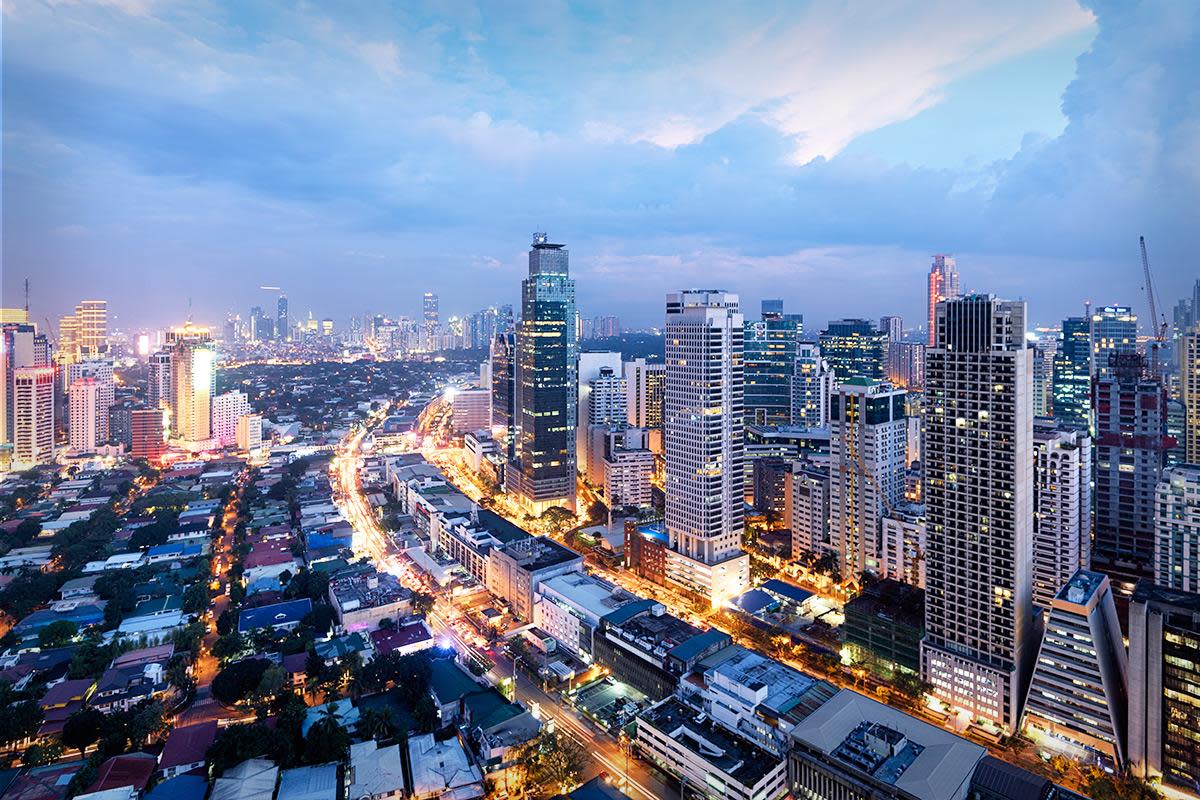
Asian nations are prepping for worst-case scenarios, with the Philippines declaring a national emergency based on the “imminent danger of a critically low energy supply.” South Korea has set up an emergency economic task force to examine adverse scenarios. Japan is reviewing national supply chains in an attempt to stave off oil-product shortages and economic knock-on effects.
We can use oil prices as a barometer of the economic impact on Asia. Thursday, Brent crude is trading back at $107 per barrel, having briefly rallied to $98 on Wednesday based on U.S. claims that talks with Iran are “ongoing” and “productive.”
Iran countered those statements in a separate war of words to match the battle on the ground. Iran’s foreign minister, Abbas Araghchi, says no talks are currently taking place at all.
Back-Channel Discussions on Ending the War
We’re all reading tea leaves here, based on statements from both sides that may well be lies or obfuscations, but there’s likely some middle-ground truth. Back-channel negotiations are said to be taking place via Pakistan, with the U.S. issuing a 15-point plan to end the war, and Iran countering with a five-point retort.
In any case, Thursday’s trading subverts any sense that the conflict will soon wind down. Almost all Asian markets are in the red, with the Hang Seng off 1.9% in Hong Kong, a market where international investors can quickly express their opinions on prospects for Asia in general and greater China in particular.
Semiconductor Stocks Sell Off
Chip stocks and the tech sector are also selling off in Asia, with the Hang Seng Tech Index down 3.3% for Thursday.
China’s major chipmakers Hua Hong Semiconductor (HHUSF) (HK:1347), down 6.2% on the day, and SMIC (HK:0981), down 5.9%, led the selling in Hong Kong alongside short-video and live-streaming operator Kuaishou (KSHTY) (HK:1024), down a whopping 14.0% as the company reported earnings and said 2026 capital expenditures would increase to $3.8 billion, up from $1.6 billion for 2025.
The chip-heavy South Korean market is the region’s worst performer, with the Kospi ending the day down 3.2%. It’s a shift at a time that domestic-demand themes are generally underperforming, with sectors such as construction, real estate and finance hit particularly hard by the likely pullback in consumer activity due to higher prices.
Today though Samsung Electronics (KR:005930) fell 4.7% and rival chipmaker SK Hynix (HXSCL) (KR:000660) dropped 6.2%. The iShares MSCI South Korea ETF (EWY) is down 3.7% in early U.S. trade on Thursday.
Does Google’s TurboQuant Undermine Demand?
Investors are selling down the chip sector after Google (GOOG) unveiled its TurboQuant system, a set of algorithms designed to compress the memory necessary to run Artificial Intelligence models.
While it’s true Google’s model may reduce the amount of memory required to run a large language model, previous advances in memory technology have not resulted in a decline in demand for chips. For instance, the Nvidia (NVDA) rollout of chips with greater efficiency did not shrink the semiconductor market but instead turbocharged it.
So while chipmakers are seeing a share-price setback, it will likely only be a temporary response. Nomura notes that thanks to semiconductor-maker gains, earnings per share for the Kospi look set to rise 166% for 2026 and 33% for 2027, year over year.
Those are the kind of numbers underpinning South Korea’s world-leading performance, with Seoul shares up 26.7% year to date, adding to its 75.6% surge last year.
The Iran war uncertainty will continue to restrain markets for now, and Asian shares are essentially trading based on the direction of oil: oil up, Asian shares down, and vice versa. But it remains true that Asia’s chipmakers likely have the best growth prospects despite the disruption.
Beijing Trip a Potential Deadline to End Iran War
We did also get an update on U.S President Donald Trump’s plan to travel to China this year, with a date set that puts pressure on the White House to end the war. Trump was originally due to travel to Beijing from March 31-April 2 but pushed the visit back due to the Middle East conflict.
That trip to Beijing is now rescheduled for May 14-15, Trump says in a social media post, with Trump due to meet Chinese counterpart Xi Jinping. The new timeline does provide some time pressure to wrap up U.S. hostilities in Iran, which the White House indicated at the onset would take around 4-6 weeks.
“I look very much forward to spending time with President Xi in what will be, I am sure, a Monumental Event,” Trump states.
The White House is also prepping for a “reciprocal visit” to Washington later this year.
Xi’s trip would likely coincide with the G20 summit due to take place December 14-15 in Miami.
It is unlikely that Trump would travel to Beijing while the war continues. While the war with Iran has muddied the waters, the world’s two largest economies have much to discuss on trade and other issues of shared concern such as energy stability, intellectual-property rights, and the potential creation of a “U.S.-China board of trade” to stabilize trade relations and manage disputes.
Trump last traveled to China in 2017, although he met Xi in October at the APEC Summit in South Korea. Those talks yielded a trade truce.
Indian markets are closed on Thursday for the Hindu festival of Rama Navami. They resume trade Friday but are also closed March 31.
At the time of publication, McMillan had no positions in any securities mentioned.