As Southeast Asian Stocks Surge, We Get a Window Into All Those Trade 'Deals'
After stagnating on trade, there’s been a double-digit stealth rally for stocks in Thailand, Indonesia and Vietnam. But if you look closer, you'll also see more clues about supposedly settled tariff talks.
You've reached your free article limit
You've read 0 of 1 free Pro articles.
Southeast Asian markets have struggled for direction this year, but have surged in the last month.
Stocks in Vietnam, Thailand and Indonesia are all up double digits for July. Those heady gains across the region that saw Vietnamese stocks hit a record yesterday.
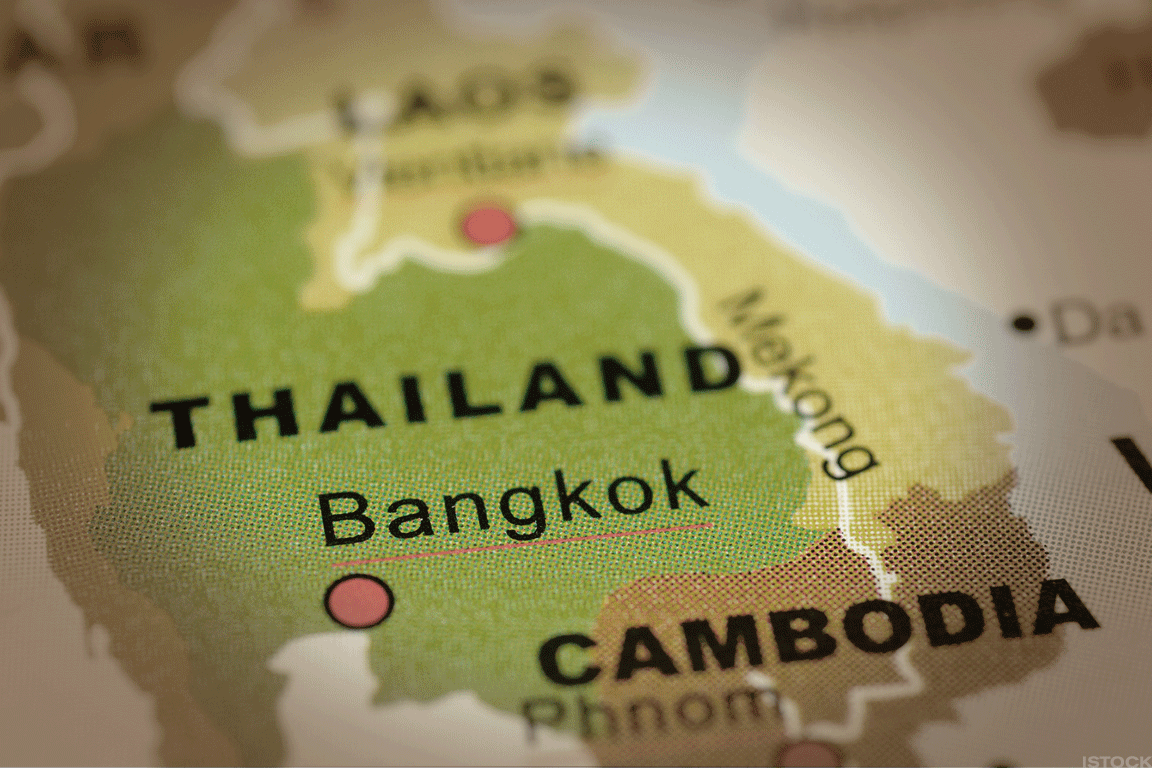
The ceasefire in hostilities after five days of deadly clashes between Thailand and Cambodia has given added impetus to a rally that was already under way.
Vietnam stocks hit record, then sell off
But these remain volatile exchanges. The VN-Index rose to a record on Monday on the Ho Chi Minh Stock Exchange, closing up 1.7% at that 1,557.42 high. The record, coincidentally, was set on the 25th anniversary of the founding of Vietnam’s stock market.
Today has seen heavy selling, however, with financials leading the selling as the Ho Chi Minh market ended the day down 4.1%. That takes it back below double digits for the month to an 8.9% gain.
The HNX Index in Hanoi, home mainly to mid- and small-cap stocks, is up 12.1% in the last month but ended today down 3.2%.
The conglomerate Vingroup (VN:VIC) is the largest Vietnamese listing by market capitalization, at the equivalent of $16.2 billion. It is up 179.2% year to date, buoyed by its expansion from its base in tourism and property development into new industries.
Two years ago it took its auto affiliate VinFast Auto VFS public on Nasdaq in a backdoor listing. VinFast, now ditching combustion engines to focus on electric vehicles, is the first Vietnamese automaker to expand overseas. Vingroup also relisted its hotel subsidiary Vinpearl (VN:VPL) in May, having delisted the unit in 2011.
Details of trade deals in flux
The gains in Southeast Asian markets have come despite struggles on trade.
U.S. Pres. Donald Trump claimed at the start of July that the United States had struck a trade pact with Vietnam. Trump claimed the Hanoi government had agreed to a blanket 20% tariff on Vietnamese goods and a 40% U.S. import tax on transshipments, to prevent Chinese goods being rerouted through its southern neighbor.
But it immediately became clear that the Vietnamese government had not actually agreed to the terms posted by Trump on social media. Politico reports that Vietnamese negotiators thought they had agreed to an 11% tariff but Trump declared different numbers after talking by phone with Vietnamese leader To Lam, who had not taken part in the trade talks.
Pres. Donald Trump claimed at the start of July that the U.S. had struck a trade pact with Vietnam. But it immediately became clear that the Vietnamese government had not actually agreed to the terms posted by Trump on social media.
There’s been no confirmation of the deal by Hanoi, and as with virtually all the Trump 2.0 era tariff trade “deals,” we have not seen the specific text. I noted at the time that Vietnam stocks didn’t respond at all to the “deal.”
Vietnamese and Philippines negotiators are keen to continue negotiating trade terms. The White House also claims that Indonesia has agreed to a 19% tariff. But even though Indonesia issued a joint statement confirming some of the terms, all these deals appear to be works in progress rather than inked, concrete trade pacts.
The IDX Composite Index in Jakarta has risen 10% in July on the back of financials, infrastructure and agriculture stocks. It closed Tuesday at its high for the year, levels last seen in October 2024.
Philippines also cites 'more discussions'
Philippines Pres. Ferdinand Marcos Jr. last Tuesday became the first Southeast Asian leader to meet in person with Trump during Trump’s second term. Trump then declared the Philippines would face a 19% tariff, higher than the 17% when Trump first presented his tariffs in April, but less than the 20% that Manila faced after receiving a Trump letter on July 9.
Like Vietnam, however, Philippines trade negotiators say talks will continue. “The lowering of tariff to 19% is a good deal for the moment but there is still more that we can do and that there will still be more discussions ahead,” Manila’s ambassador to the United States, Jose Manuel Romualdez, says.
Trump, calling himself the Dealmaker-in-Chief, also claims to have brokered peace between Cambodia and Thailand, part of his ongoing push to win the Nobel Peace Prize. Malaysia, as this year’s chair of the Association of Southeast Asian Nations (ASEAN), hosted peace talks on Monday that led to the ceasefire, with U.S. and Chinese envoys watching on.
At least 38 people have been killed and 300,000 civilians displaced after shelling and air strikes over the course of five days of clashes along the contested Thai-Cambodia border. Talks between the two militaries continue today, with a border committee formed by the two nations due to meet on Aug. 4.
Monday was a holiday in Thailand in honor of the Thai king’s birthday. So Tuesday is the first day for investors in to respond. The Stock Exchange of Thailand Index (SETI) rose 1.4% for Tuesday.
Thai stocks come off bottom
Thai stocks have been the region’s worst performers so far this year, leaving the index down 11.9% year to date. But the picture is improving in Bangkok, too, with Thai stocks surging 16.0% this month alone.
Investors have returned to Southeast Asian stocks as central banks in the region cut or look to cut interest rates. Bank Indonesia in mid-July cut rates for a third time while Malaysia, Thailand and the Philippines are all in easing mode.
Singapore’s Straits Times index has been the region’s star performer. Singapore stocks are notching a 22.8% gain over the last year. So the rest of the region has been playing catchup in July, a month that has seen the Straits Times notch “just” a 6.6% gain.
We’ll have to watch for any further details on trade – with plenty that could go wrong on tariffs. But economically, the ASEAN nations are forging ahead on the back of their expanding domestic markets, and increased trade across Asia. China has expanded its trade with Southeast Asia in the face of U.S. antagonism, making ASEAN a key focus for Beijing.
At the time of publication, Alex Frew McMillan had no position in any security mentioned.