AI Impact Leads to Chipmaker Volatility After China’s Golden Week Holiday
The mainland markets have been out of action since September 30, leading to intense volatility for chip stocks as investors assess AI.
You've reached your free article limit
You've read 0 of 1 free Pro articles.
It’s been a confusing resume to trade for Chinese tech stocks, chipmakers in particular, after an extended break of more than a week.
Chinese stocks are back in action Thursday, fresh from the “Golden Week” holiday after China’s national day on October 1. This year’s holiday is extra-long, since the Golden Week led into the Mid-Autumn Festival, China’s equivalent to Thanksgiving, which fell on Monday.
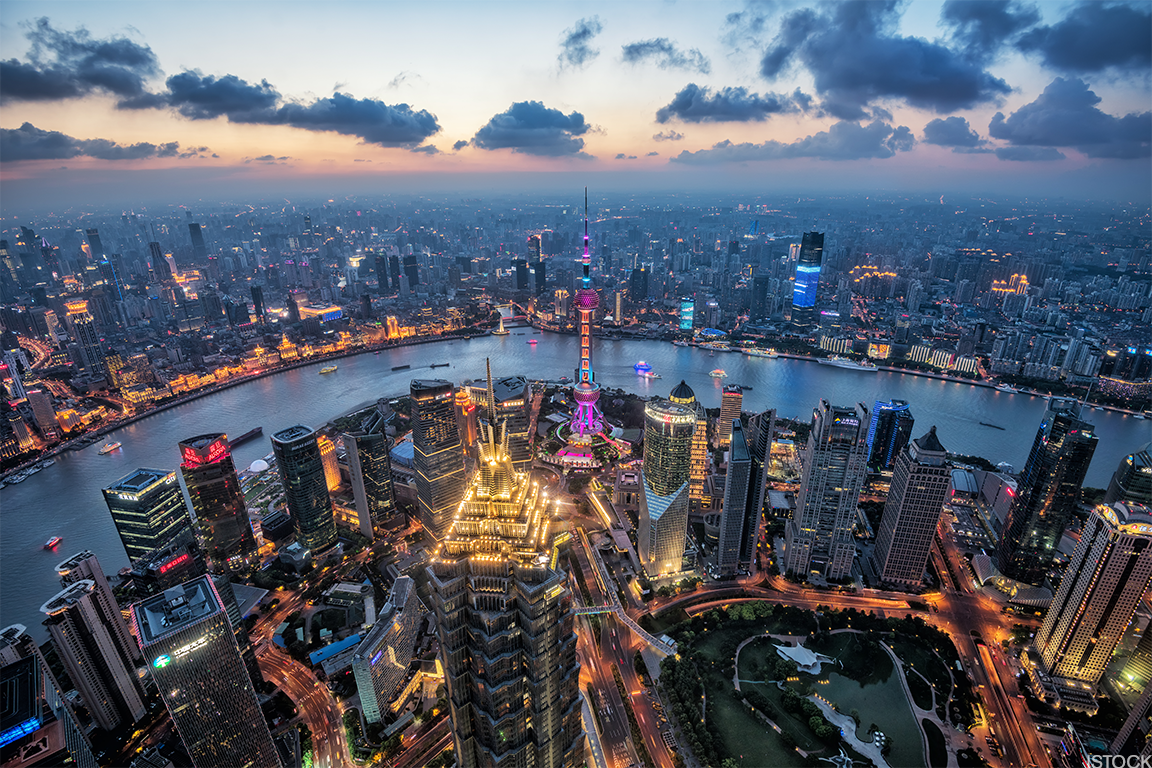
So while Hong Kong stocks have been in action since this Tuesday, today is the first chance for investors in Shanghai and Shenzhen to respond since the end of September.
The main action has been in the tech sector, where Asia-based investors are responding to the developments surrounding Artificial Intelligence investment.
Strong Open Takes Stocks to New Records
The two main Chinese chipmakers opened strongly in Hong Kong, with Hua Hong Semiconductor (HHUSF) (HK:1347) up as much as 9.3%, and SMIC (HK:0981) quickly rising 4.5%.
Both companies set new record highs with Hua Hong Semi hitting HK$99.50, and SMIC touching HK$93.50. That’s after Goldman Sachs this week raised its targets for both stocks for the fourth time, to HK$117 for both companies, on the assumption that progress with Chinese AI models such as DeepSeek will lead to strong demand for home-made chips, and Chinese chip foundries.
But Hong Kong investors thought better in afternoon trade, sending the two stocks to heavy losses by the end of the day. SMIC finished Thursday with a 6.7% loss, while Hua Hong Semi fell 6.4%. That made them the worst performers in the Hang Seng Tech Index, dragging it down 0.7% on a mixed day for tech in general.
It’s clear Chinese investors are trying to assess how the latest developments in AI will impact the chipmakers. It led to the strange situation where Hua Hong finished Shanghai trading up 12.0%, an hour before the full effect of the sharp selling in Hong Kong. The performance of SMIC was similar in both Hong Kong and Shanghai.
Both Hua Hong and SMIC have essentially tripled this year, as the Beijing government stresses the importance of investing into its homegrown chip industry. Hua Hong is up 194.4% in 2025, and SMIC up 187.9%.
Disappointing Consumption Data
Hong Kong stocks were reflecting disappointing Golden Week numbers, with this year’s holiday seeing weaker spending growth than the National Day holiday last year.
While the Ministry of Transport reports a record 2.4 billion passenger trips over the Golden Week, up 6.2%, Chinese consumers are keeping the purse strings tight on spending. Retail sales rose 3.3% year on year for the first few days of the holiday, slower than the 3.4% expansion in September and the 6.3% growth during the Labour Day holiday in May.
The broad Hang Seng Index finished down 0.7%, similar to the tech index. On the flipside, the CSI 300 index of the largest listings in Shanghai and Shenzhen rose 1.5%, as investors played catchup.
While the Shanghai and Shenzhen bourses are back in action Thursday, trading in South Korean stocks is closed for the Hangul Day holiday in recognition of the creation of the Korean alphabet.
Bank Stocks Rise on Hang Seng Buyout
There was one major gainer in Hong Kong, where banking market-share leader HSBC (HSBC) (HK:0005) is proposing to take its separately listed subsidiary Hang Seng Bank (HSNGY) (HK:0011) private.
That sent the stock of Hang Seng Bank shoot up 25.9% Thursday at the close in Hong Kong. Thursday's surge doubles the rise in Hang Seng Bank shares year to date to 58.4%.
Just to remove any confusion — Hang Seng is both a major bank, and index provider. So the bank Hang Seng lends its name to the Hong Kong benchmark, the Hang Seng Index.
HSBC shares fell 5.4% in Hong Kong trade. But this has been a generally strong year for Hong Kong’s market-share leader, with the stock up 28.9% even after today’s slide.
HSBC is offering HK$155 per share in an all-cash deal, a 30.3% premium to Wednesday’s close of HK$119. They finished Thursday at HK$149.80.
HSBC already owns 63% of Hang Seng shares. So it will cost the bank US$14 billion to buy the remaining 37% of the shares that it doesn’t already own. Hang Seng has been dogged by worries about its exposure to Hong Kong's troubled property sector, with the bank reporting its bad loans to the property sector rose 85% in the year to June 2025, hitting HK$25 billion (US$3.2 billion).
It’s a negative for existing HSBC shareholders not only because the price is relatively expensive but also because HSBC says it will not buy back its own shares for the next three quarters, to help restore its capital ratio. But HSBC CEO Georges Elhedery says the deal “delivers greater shareholder value than buybacks.”
Under Elhedery, who took over as CEO in September 2024, HSBC has reorganized itself with a focus on Asia. Now based in London, the bank is going back to its roots in 1865, when it began life as the Hongkong and Shanghai Banking Corp.
Even if privatized, Hang Seng would continue to function under its own name, banking license and brand. HSBC is by far the largest bank in Hong Kong by assets, with Hang Seng No. 4, sandwiching the local branch of the Bank of China (BACHY) (HK:3988) and of Standard Chartered (SCBFY) (HK:2888). Their competitors finished with modest gains, BOC up 1.0% and StanChart up 1.5%.