7-Eleven Parent Plunges After $46 Billion Circle K Bid Decision
Should investors explore Seven & i shares, or the U.S. operations likely to be spun off next year?
You've reached your free article limit
You've read 0 of 1 free Pro articles.
Strange things are sometimes afoot at the Circle K, as Keanu Reeves fans will know well. And this last year has been one of the strangest.
The Canadian owner of the Circle K convenience-store chain has just walked away from a year-long, $46 billion bid to buy the owner of the rival 7-Eleven store network, a company now based in Japan.
Circle K parent Alimentation Couche-Tard ANCTF faults Tokyo-based Seven & i Holdings SVNDY (T:3382) for failing to negotiate in good faith. I wrote about the bid last November, when the founding Ito family proposed taking Seven & i private to the tune of $58 billion. But that effort collapsed when the Ito clan couldn’t find financing.
Circle K first made its overtures on July 23, 2024 with a meeting in Tokyo. Despite signing a nondisclosure agreement so it could conduct due diligence and the merger talks could proceed, Circle K says “there has been no sincere or constructive engagement” to progress the merger. That runs contrary to the public comments from Seven & i executives that they would “seriously” consider the takeover proposal.
Now the merger has collapsed, the Ito family gets what it always wanted – control of the company without having to own it outright. The pressure to improve shareholder performance and to spin off operations has also dissipated.
Shares Back Below Offer Price
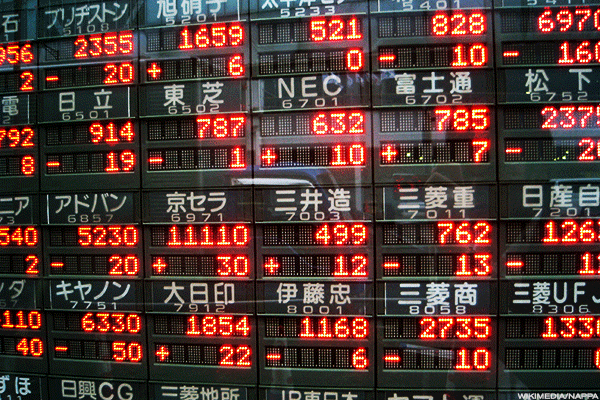
Thursday's trading in Asia has seen the 7-Eleven parent’s shares descend dramatically, with Seven & i shares down 9.2% on Thursday alone. The merger fervor and prospect of a bidding war back in November pushed the stock above the ¥2,600 offered by Circle K.
Thursday's tumble leaves the shares 17.7% lower for the year, drastic under performers whether you look at the broad-market Topix, up 3.0% in 2025, or the blue-chip, exporter-heavy Nikkei 225, above water despite global trade tensions, but barely, 1.5% to the good so far this year.
Should investors be snapping up the stock of Seven & i, which bought out the original Texas-based parent of 7-Eleven in November 2005? The company now falls back into the hands of the founding Ito family. They had sought to fend off the bid from Circle K’s Quebec-based parent Alimentation Couche-Tard, French for “night owl food.”
There shouldn’t be much confidence that the Ito family will fight to improve shareholder returns.
The stock has descended back below the ¥2,600 offer price from Circle K. As of Thursday’s close, it’s at ¥2,008, little changed from a decade ago.
Merger 'Talks' Carefully Scripted
Circle K was willing to divest some of the 7-Eleven stores in the United States if necessary to meet concerns from regulators about over concentration in the convenience-store industry. In breaking off the talks, Couche-Tard also revealed that it explored the option of buying 100% of Seven & i’s business outside Japan but just 40% of the operations inside Japan, leaving 60% in the hands of the existing shareholders.
But meetings in Tokyo and Dallas didn’t go anywhere. Couche-Tard says the “talks” were often carefully scripted corporate readouts, and didn’t involve any significant discussion, negotiation or due diligence. Instead, it seemed to be an exercise in fending off the acquisition.
The “quantity and substance” of permitted due diligence has been negligible, Circle K says.
“Rather, you have engaged in a calculated campaign of obfuscation and delay, to the great detriment of Seven & i shareholders,” Couche-Tard founder and chairman Alain Bouchard and CEO Alex Miller wrote in the termination letter.
Circle K concludes it can’t progress “without deeper and genuine further engagement” from the Seven & i management team.
Seven & i’s Response
Seven & i put out a brief response that Couche-Tard has “unilaterally” ended discussions.
“While we are disappointed by (the) decision, and disagree with their numerous mischaracterizations, we are not surprised,” the 7-Eleven parent states. It insists that economic conditions have changed and claim “extraordinary” antitrust hurdles could disrupt the transaction. Without any actual deal, though, those claims were never tested.
Dealogic data shows the $46 billion bid is the largest corporate buyout to fall apart in the Asia Pacific region. So far, Couche-Tard has ruled out a hostile bid. It would also have been the largest buyout in Japan by an overseas company. The failed Ito bid would have been the largest management buyout anywhere worldwide.
Seven & i named the American Stephen Dacus as CEO in May. Dacus, who was lead outside director, becomes the first international leader of the company, although Dacus, the former CEO of Walmart Japan, does have a Japanese mother and speaks both English and Japanese. Junro Ito remains executive chairman.
Seven & I says it will now progress with plans to spin off its U.S. convenience-store operations as a separate public company, likely in 2026. The parent runs 87,000 stores globally, including 23,000 in Japan. Via the sale of its superstore business to Bain Capital for $5.5 billion, as well as the IPO of the U.S. 7-Elevens, the company aims to return ¥2 trillion ($13.5 billion) to shareholders through the end of the 2030 fiscal year.
Konbini Turned Art Form
I’ve just returned to Hong Kong from Japan, and convenience stores there are refined to a fine art form. Called “konbini” in an adaptation of the English for convenience, the stores stock reasonably healthy food options besides the typical junk food, snacks, beer and sodas. There’s also plenty of basic household wares. In some smaller towns around Japan, the local FamilyMart, Lawson or 7-Eleven becomes the de facto grocery store.
Yet Japan’s population is aging and declining. That likely restricts growth prospects at home. Some are pursuing international ambitions as a result.
FamilyMart, a subsidiary of the Warren Buffett-backed trading house Itochu ITOCY (T:8001), has roughly one-third of its 24,813 stores outside Japan, mainly in China.
Here in Hong Kong, Lawson has successfully registered its brand name, suggesting it may branch out in a city dominated by 7-Eleven and Circle K. Lawson is another U.S. brand, this time from Ohio, that was ultimately gobbled up by Circle K’s parent. So the convenience-store nameplate vanished from U.S. cities, but survived and thrived in Japan, where it has operated since 1975.
Lawson now has 22,264 stores, again about two-thirds inside Japan, with a hefty presence in China. Ironically, given Lawson’s American roots, the Japanese parent has two stores in Hawaii, and a cluster each in Thailand, the Philippines and Indonesia.
Lawson itself delisted in 2024 after 24 years on the Tokyo Stock Exchange, after telecom KDDI paid the equivalent of $3.2 billion for a 50% stake in the chain to then-parent Mitsubishi Corp. MTSUY (T:8058).
Follow Buffett’s Lead
And yes, Buffett has a hand backing Mitsubishi, too. That vote of confidence has helped the trading-house conglomerate shake off some of the skepticism surrounding its complex, diversified operations. Mitsubishi shares are outrunning the Tokyo market as a whole, up 11.5% this year.
Minority shareholders will likely continue to pressure Seven & i to improve returns for external shareholders. But U.S. investors may be better off buying into the sogo shosha trading houses that Buffett has made his first and so far sole holdings in Japan.
Besides Itochu and Mitsubishi, Berkshire Hathaway has bought into Marubeni MARUY (T:8002), Mitsui MITSY (T:8031) and Sumitomo SSUMY (T:8053) as well, taking stakes as high as 9.8%.
“In the next 50 years, we won’t give a thought to selling those,” Buffett said at the Berkshire annual meeting in May, comments overshadowed by his declaration the next day that he would step down as Berkshire CEO at the end of this year.
Unlike Couche-Tard’s experience with 7-Eleven, Buffett has felt highly valued albeit as a minority investor.
“We have been treated extremely well by the five companies,” he said. “Our main activity is just to cheer and clap.”
The performance is mixed so far this year, with Marubeni leading the way with a 23.7% gain. With Mitsubishi up 11.5%, Sumitomo is also outdoing the broad Tokyo market with a 7.8% advance. But Itochu (down 2.7%) and Mitsui (down 9.3%) are nursing losses so far this year.
The trading houses started life helping Japanese companies source goods and ship exports overseas, after Japan opened up economically in the 1800s and then again after World War II. While they are exposed to the geopolitical trade winds currently blasting Japanese stocks, they have the staying power that will ride out the Trump presidency, and sustain them for Buffett’s preferred holding period: forever.