3 Reasons Why Investors Are Unconcerned About Failed U.S.-Iran Negotiations
Oil is trading higher, but equities are shrugging at news of a naval blockade of the Strait of Hormuz. Here's why it's not adding up for bears.
You've reached your free article limit
You've read 0 of 1 free Pro articles.
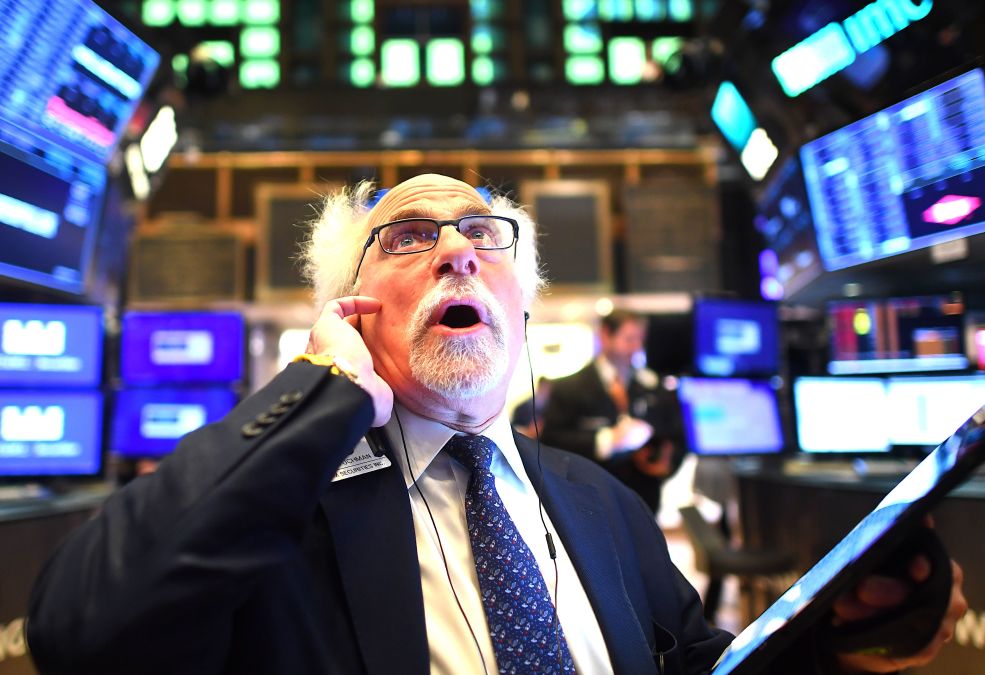 US-STOCKS-MARKETS-OPEN
The major indexes are down less than 1% while oil is trading around 7% higher early Monday morning. Headlines about the failure of U.S.-Iran negotiations in Islamabad over the weekend and the start of a naval blockade of oil shipments through the Strait of Hormuz are eliciting only a mild response, despite the blaring coverage in the financial press. This resilience should reassure investors about the market's ability to withstand geopolitical tensions.
That resilience has been a recurring theme for weeks now. The market has absorbed the steady drumbeat of negative news from the Iran conflict, escalating military action, and an oil price that has roughly doubled since the war began, yet the resulting upward pressure on inflation and interest rates is mostly ignored.
The bears have a long list of grievances that simply aren't moving the needle. There are three reasons for this.
Valuations Have Reset to Levels That Offer Real Support
First-quarter earnings season kicks off Monday morning with Goldman Sachs (GS) reporting, and the setup is constructive. Analysts are projecting earnings per share growth of roughly 13% for the S&P 500 in Q1, which would mark the sixth consecutive quarter of double-digit gains. That is a difficult backdrop for the bears to argue.
More important is what has happened to valuations in the technology sector. The price-to-earnings multiples of many leading U.S. technology names have collapsed from the mid-to-high 40s to the low 20s. We are now at or below the levels that existed before ChatGPT was announced and the AI excitement began.
Whatever you think about the near-term news flow, paying 2019-era multiples for companies generating 2026-era earnings is a different proposition than it was 18 months ago. That valuation reset has put a floor under the market that wasn't there before.
The AI Trade Has Matured and Is Now More Defensible
The second reason is related to the first. The AI sector has undergone a meaningful rotation over the past several months. Early enthusiasm spread to anything labeled as AI. That has changed. Investors have moved toward names and themes that show the clearest path to profitability and away from those that don't.
Software has been the biggest casualty as investors reassess whether legacy businesses face a genuine threat from AI-native alternatives. Infrastructure has been the biggest beneficiary regardless of which model ultimately wins.
The concern that the massive capital expenditure cycle would never generate an adequate return has eased as real-world productivity gains from tools like Claude, Gemini, and others have become more visible. The trade is now more focused and disciplined, making it more durable.
The Technical Picture Is Creating Its Own Momentum
The third reason is straightforward. Stocks have held up well, and that creates FOMO. Investors sitting on cash are increasingly more worried about missing a positive development on the Iran front than about being caught in a downturn. There is strong dip-buying support at every pullback, and anyone waiting for a more meaningful washout has been repeatedly frustrated. The folks hoping to buy real weakness aren't getting many opportunities, and that impatience feeds on itself.
The bearish arguments are also too easy. Yes, high oil is creating headwinds, particularly in China and parts of Asia. Yes, inflationary pressures are building. But the U.S. economy continues to perform reasonably well. When you layer that on top of the valuation reset, the math doesn't add up to the kind of deterioration the bears are forecasting.
My Approach
I am carrying a fair amount of cash and actively looking for opportunities, but staying selective. I will not let FOMO drive my decisions any more than I would let fear.
My focus is on names with the best relative strength, and I am looking to do some careful positioning ahead of earnings this week. Goldman Sachs is first up this morning, with Bank of America (BAC) , Wells Fargo (WFC) , Citigroup (C) , JPMorgan Chase (JPM) , and Morgan Stanley (MS) following throughout the week. How this group performs and what they say about the economic environment will tell us a great deal.
Stay vigilant and disciplined. The underlying conditions are better than the headlines suggest, but there will likely be some churn as we work through the news flow.
Related: 6 Psychological Traits Necessary to Be a Great Trader
At the time of publication, Rev Shark had no positions in any securities mentioned.