Your IRA Isn't a Pre-Retirement Piggy Bank
Penalty-free IRA withdrawals have hidden costs.
You've reached your free article limit
You've read 0 of 1 free Pro articles.
If money feels tighter and less predictable lately, you’re not imagining it.
But one way of alleviating some money pressures may not be a great choice.
I’m referring to the ability to withdraw $1,000 from your individual retirement account (IRA).
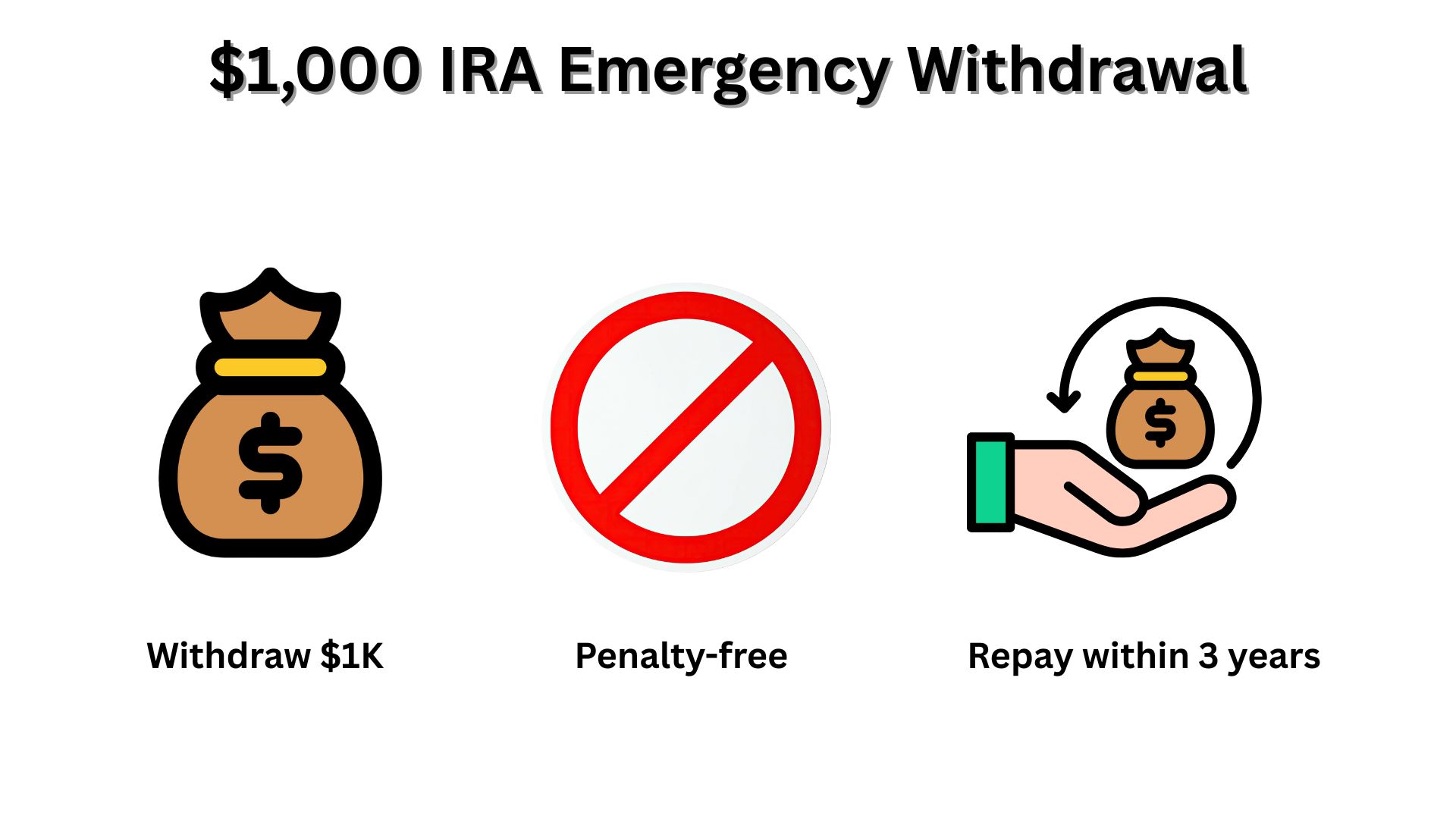
Under SECURE 2.0, IRA owners can take one emergency distribution of up to $1,000 per year, completely penalty-free, for an unforeseeable personal or family expense. The IRS doesn’t require receipts or proof of the emergency, so you’re on the honor system here when it comes to defining an “emergency.”
Why the $1,000 Withdrawal Rule May Be Useful
Before I get to the potential pitfalls of lending yourself a grand from your IRA, let’s look at some positives.
- No 10% penalty. In a true emergency, you won’t have the added worry over being dinged for an early withdrawal. This matters if you’re under age 59 ½.
- Paying yourself back. Repay it within three years and it’s treated as a tax-free rollover, essentially undoing the withdrawal.
- Better than truly bad alternatives. Interest rates on credit cards or payday loans can be predatory, and skipping or being late on critical bills can result in late fees or a hit to your credit score.
- Simple and fast. No paperwork. No documentation. No waiting for approval. All of this time-consuming bureaucracy only delays things in a real emergency.
- Built-in cap. The $1,000 limit, along with the repayment rules, means this loan isn’t an open door to raiding your retirement accounts.
Now the Reasons NOT to Do This
You already know the deal: There’s a tradeoff to everything. It’s not tough to see where borrowing from your retirement accounts may not be the best decision, especially because you’re on your own to declare the reason as an “emergency.”
Penalty-free doesn’t mean consequence-free. Here are some of the ways taking an IRA withdrawal could put a dent in your retirement savings plan.
- Slippery slope: The honor system could easily lead to behavioral risk. No receipts required sounds helpful, but it also makes it easy to redefine “emergency” when money feels tight.
- Hiding a bigger problem: If you’re leaning on retirement savings for short-term expenses, the real issue is cash flow. A lot of people are feeling a financial pinch right now, and this seems like an easy way to relieve pressure, but if you use this out, also consider your overall income and spending picture.
- You interrupt compounding. Even a temporary $1,000 withdrawal loses growth. That’s especially true in a small account where you don't have much growth leverage.
- It’s still taxable income. Just because there’s no 10% penalty, that doesn’t mean it’s tax-free. Unless you repay it, that $1,000 counts as income and could:
- Bump you into a higher tax bracket
- Reduce tax credits or other benefits tied to income
- You limit future flexibility. If you don’t repay it, you can’t take another emergency withdrawal for three years unless you “backfill” the amount with new contributions.
It Can Make Sense ... If
The $1,000 IRA emergency withdrawal isn’t some tax loophole or gimmick. Real life doesn’t always wait for perfect planning, and with the economy feeling shaky, I get why people may turn to this source of funds.
The idea behind your IRA is to save for your future, not be an ATM for today.
If you find yourself needing the money, try to use it sparingly and repay it within the three-year time frame.
As with most retirement saving rules, the value isn’t in knowing that it exists; it’s in understanding how it best fits your situation, both now and in the future.