Was Oracle's Monster Gain Based on AI-Trade FOMO?
Every market needs a buyer and a seller. Let's look at the move in Oracle shares and see what investors were thinking.
You've reached your free article limit
You've read 0 of 1 free Pro articles.
Buyer + Seller = A Market
At the most basic level, stocks are priced based on the interaction between buyers and sellers. It’s a simple auction process where people who want to buy shares meet with people who want to sell shares and decide on a price that makes them both happy.
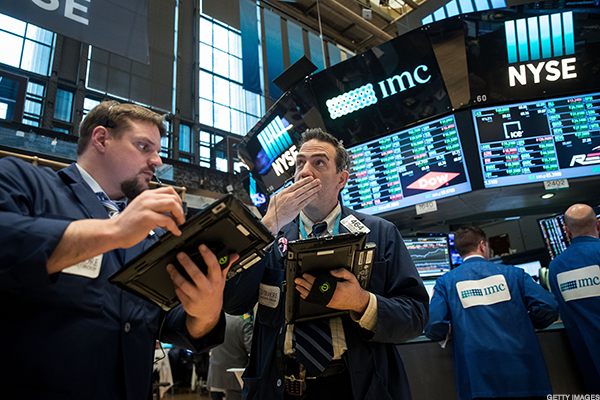
Sometimes, they can’t agree on a price. When that happens, no trade will happen until one (or both!) party resets their expectations and increase (or decrease) the price that they are willing to buy (or sell) shares at.
This all happens electronically, on servers buried deep within the exchanges. It used to happen face-to-face, but humans have been deemed too expensive to handle stock trading. I disagree, but it’s a battle I lost years ago. Still, the basic process has not changed in centuries.
Stocks trade on supply and demand
Let’s say that on Tuesday, you were interested in buying shares of Oracle stock. Maybe you thought the shares were a nice buy at $245, and would be happy if you could get them cheaper than that. Also on Tuesday, perhaps I was interested in selling my shares of Oracle. After all, I had purchased them in April at around $120 (hypothetically) and was willing to take my 100% profit. I was willing to sell them as low as $240.
So, the buyer is willing to pay as high as $245 and the seller willing to sell as low as $240.
That’s a market! Because I was willing to sell at a price lower than you were willing to buy, both of us could be made happy with the transaction. We might have met in the middle and made the trade at $242.50.
Now, if I were willing to sell only above $250, the transaction would not have taken place. See? It’s an auction.
The question is, how do you and I decide what the right valuation is for our shares? Why are you willing to buy at the same price I’m willing to sell?
Generally, it’s about expectations. I think there are better opportunities to make money in other stocks. You think this stock offers a better opportunity than other stocks. Why? Earnings. We are each considering the future prospects for the company.
Oracle is a great example of this process.
Oracle shares skyrocketed Wednesday following earnings that were below expectations. They went to the moon 🚀 despite earnings that were stuck on earth!
TheStreet Pro’s own Stephen “Sarge” Guilfoyle reported that “the results were not stellar by any measure. The firm posted an adjusted EPS of $1.47 (GAAP EPS: $1.01) on revenue of $14.926 billion. While that top-line (aka Revenues) result was 'good enough' for year-over-year growth of 12.3%, these top- and adjusted bottom-line numbers both fell short of Wall Street's expectations.”
Here’s a chart:
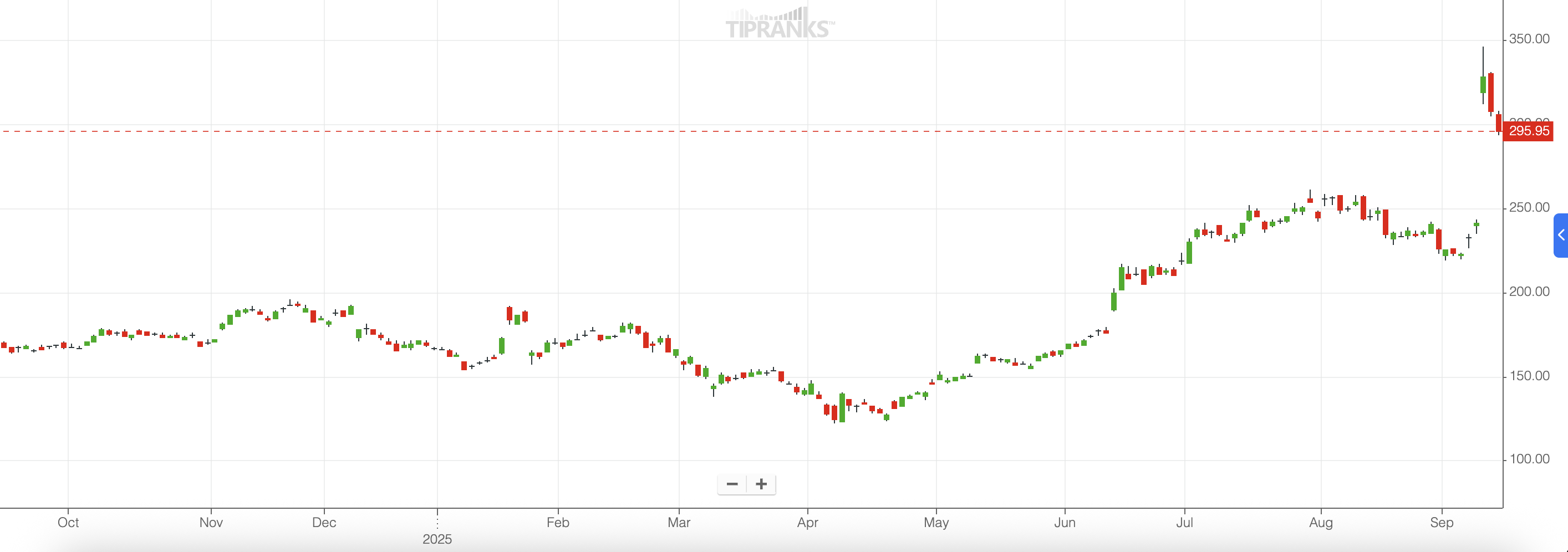
That’s a monster 33% gain at the start of trading on Wednesday.
Earny and I discussed this and he was a little confused.
Earny asks, if Oracle couldn’t even match the earnings result that analysts were expecting, why did buyers aggressively buy the stock? Was it FOMO?
ANSWER
The answer, as with anything in investing, lies in future expectations, or, as Earny said, FOMO-Fear of Missing Out.
You see, Oracle’s management told investors that the future for the company was so bright that they could just sit back and watch the money roll in. I mean not really, but sort of.
In their earnings call, they discussed their backlog, or commitments for future business from the companies that are building our AI-controlled future. Those companies have committed to $455 billion in future purchases with Oracle. That’s an increase of 359%.
In other words, it’s not about current earnings. Those were meh. It’s all about the future and Wall Street thinks that Oracle will have significantly higher earnings down the road than it does today.
Buyers said to sellers, “we must have your shares!” Sellers said, “you’re welcome to them, but it’s gonna cost you more today than yesterday!” In the end, those buyers and sellers agreed that $320 was the right price and that’s where the stock opened on Wednesday.
FOMO.
But is it the right price? I mean, that’s what the market says. But should you or I buy shares? I dunno. Filthy Rich Animal can’t give you specific investing advice since we don’t know you personally and are not aware of your goals.
The point is, the stock rallied on expectations that the future would be better than the present.
As Annie said, the sun'll come out tomorrow.
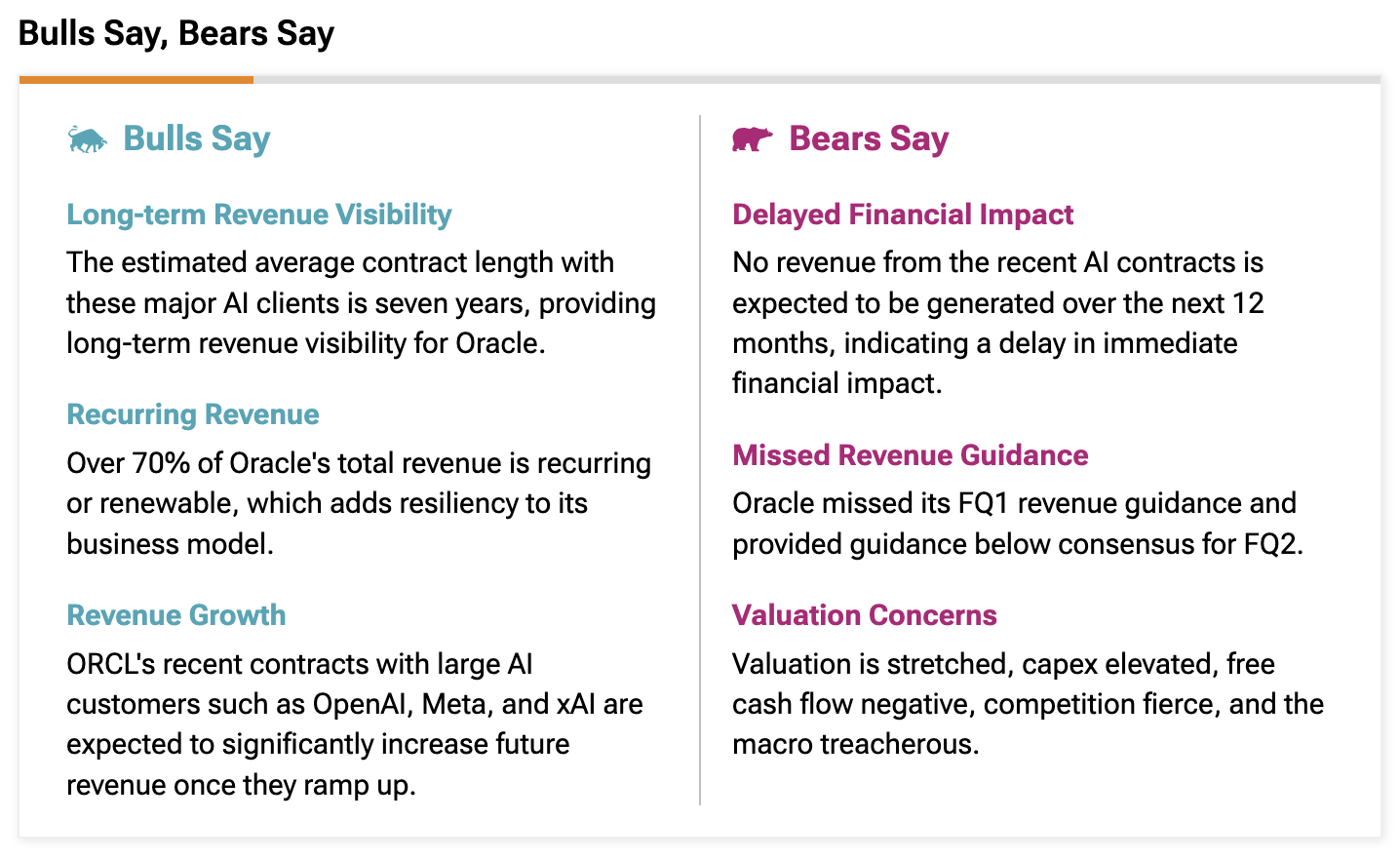
Good practice for any investor is to see what other analysts think. And there are bullish and bearish cases to be made about Oracle, even at these lofty prices.
On the bearish (pessimistic) side:
- Valuation. Sarge says that shares are trading at enormous multiples to earnings. In other words, when you buy shares, you’re paying a lot for each dollar of that company’s earnings.
- It’s a zero sum game. Doug Kass says that “...Oracle's future revenues are someone else's future capital spending. (According to the conference call three individual companies contributed to much of the company's dramatic rise in backlog.)”
- Kass also claims that the company’s margins (profits on each dollar of revenues) will decline.
- Exposure: You probably already own Oracle. It’s the 11th largest company in the S&P 500, so, if you own an S&P 500 ETF, you have exposure to Oracle already.
On the bullish (optimistic) side:
- The AI trade is in the early innings and there’s so much investment being made that will create incredible opportunities.
- According to TipRanks, Analysts have a target price of $333, about 11% higher than the price as of the time I’m writing this.
There’s two sides to every story and if you’re only looking at one side, you’re not doing a good job in your analysis.
I like this Bulls say, Bears Say table from TipRanks, which does a nice job of summarizing what the analysts are thinking, into bullish and bearish arguments. It’s a good starting point.
Summing it up
Here’s what you need to know. Every market is needs buyers and sellers. When buyers want to buy at or above the price that sellers are willing to sell, a sale can occur.
The real question is about how buyers and sellers (market participants) decide the prices that they're willing to interact at. Investors will sometimes use hardcore fundamental analysis; they look at the company’s earnings and revenues and projections. Sometimes, however, they get caught up in the moment.
When a new technology like AI comes on the scene, it can be hard to know what the companies shaping that technology are really worth. So, do your research, don't get caught up in FOMO and be sure to consider both sides of the argument.
Most importantly, stocks don't trade on what's happening today. Investors buy and sell based on what they think will happen tomorrow.