Top-5 ETFs That Can Minimize IRA Fees and Improve Investments
Your IRA fees may be higher than you know and these five ETF picks can help.
You've reached your free article limit
You've read 0 of 1 free Pro articles.
 4-19-24-what-is-irs-form-1099-div-dividends-and-distributions_l8tworcjv-ty19-turbotax_large-ty19-turbotax_large
Your individual retirement account gives you all the freedom to choose investments that you don’t find in a 401(k). But that freedom is only valuable if you use it well.
You can think of investing your IRA like a “choose your own adventure.” It sounds exciting to have more choices, but the wrong choice could lead you off a cliff.
You may think first of what investments to stuff into an IRA. That’ a crucial decision, but it’s also impactful to consider how much you’re paying for those securities.
One way to achieve broad market exposure is through exchange-traded funds. By leaning into index funds rather than actively managed funds, you can minimize the fees you pay.
“In 2024, index equity ETFs had an average expense ratio of 0.14 percent. By comparison, the average expense ratio of active equity ETFs was 0.44 percent.”
-ICI Research Perspective, Vol. 31, No. 7, September 2025
This illustration from JPMorgan illustrates the downward trend of passive fund fees in recent years:
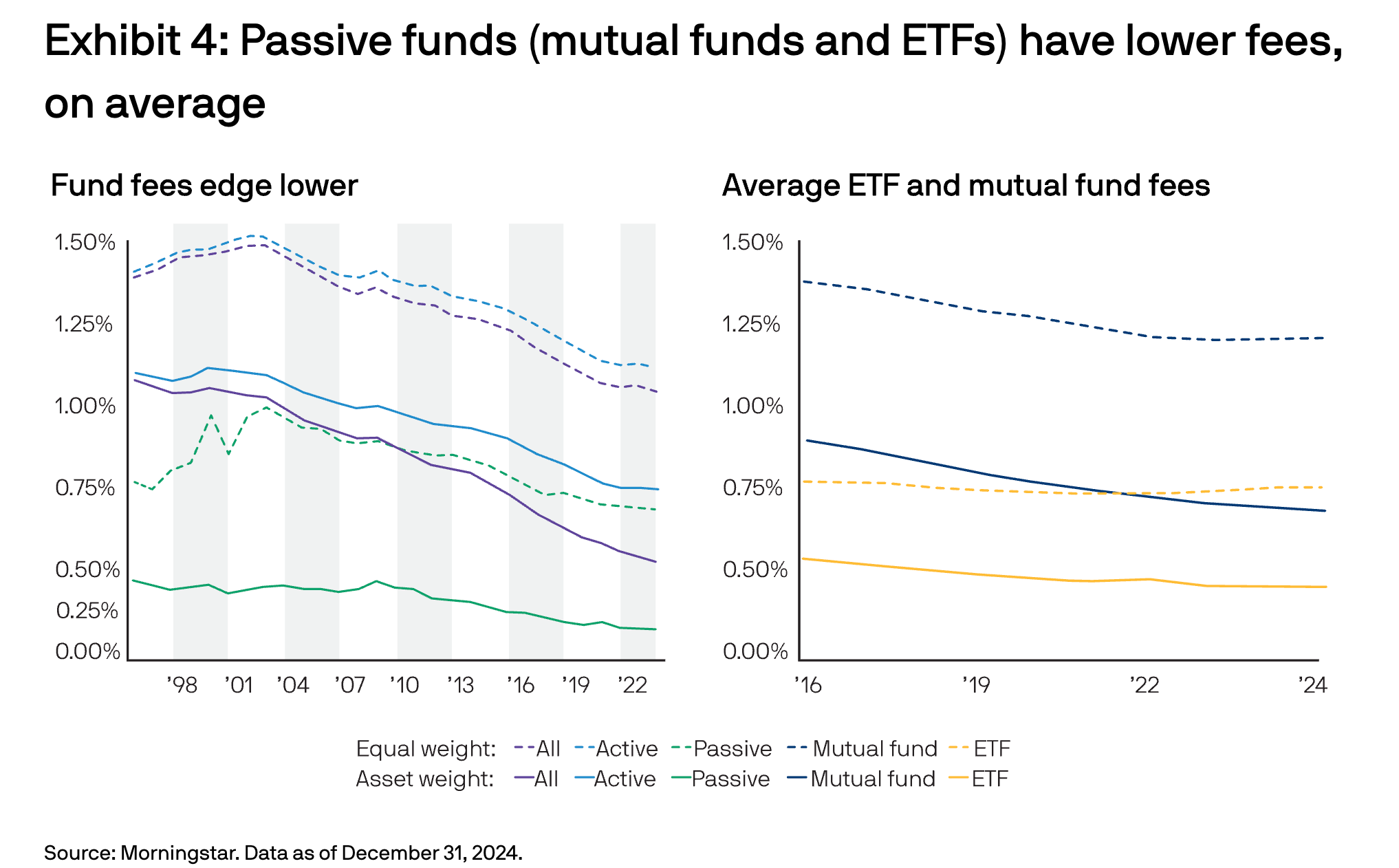
JPMorgan
A Low-Cost Core Lineup
Below are five index ETFs, one per core category, from different fund families.
These are not broad recommendations for every portfolio; there are cases where other index funds can help an investor achieve specific goals.
Think of these like the “serving suggestion” on a cereal box.

Those are not necessary for a healthy breakfast, but they might make your morning meal a little more tasty and nutritious.
1. Schwab U.S. Large-Cap ETF (SCHX)
(SCHX) offers low-fee exposure to the 750 largest U.S. companies. With an expense ratio of 0.03%, it tracks the Dow Jones U.S. Large-Cap Total Stock Market Index, covering about 90% of total U.S. market cap.
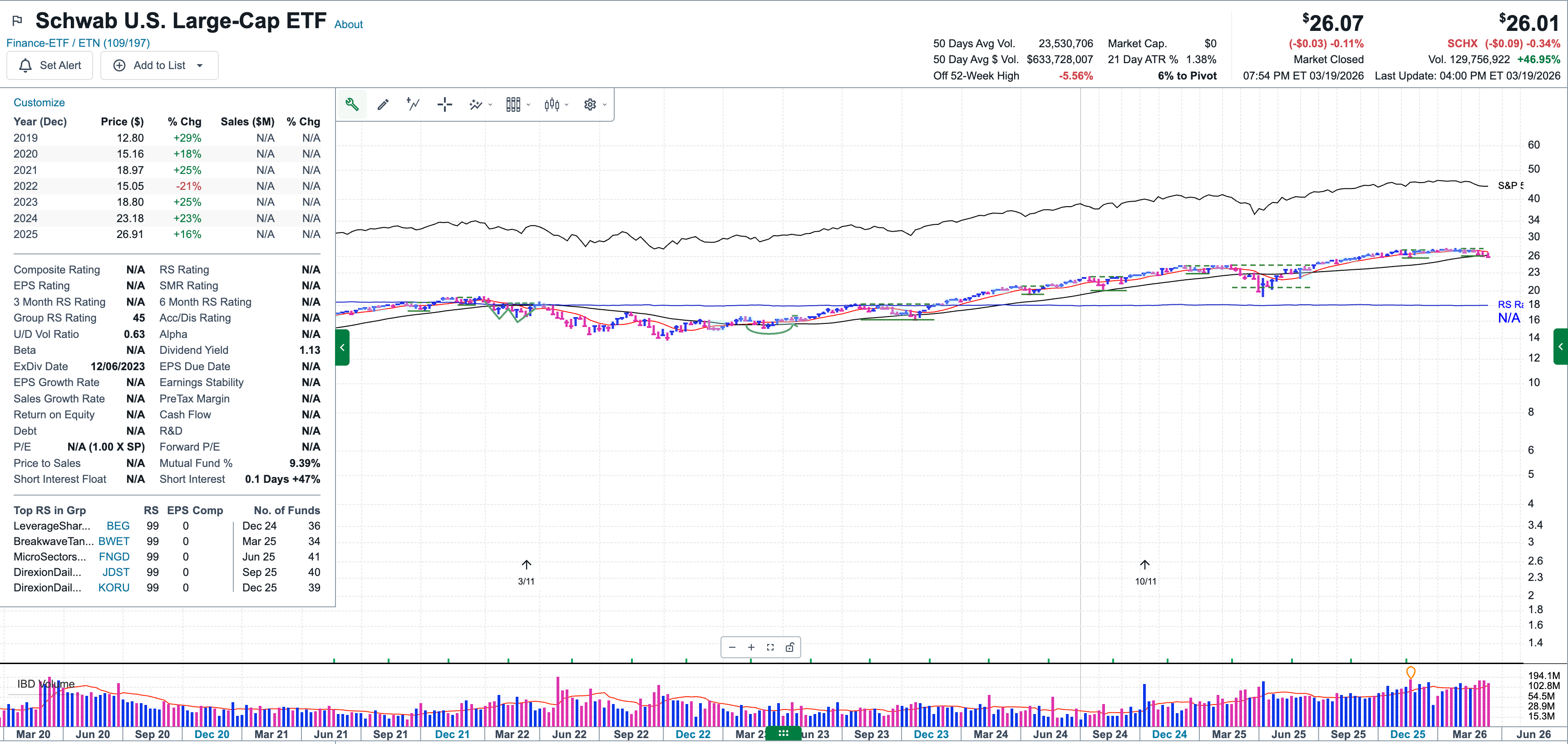
MarketSurge
2. iShares Core MSCI Total International Stock ETF (IXUS)
(IXUS) tracks the MSCI ACWI ex USA IMI Index, comprising roughly 4,170 stocks representing developed and emerging markets outside the U.S., spanning large-, mid- and small-cap stocks. This offers broad geographic diversity for an expense ratio of just 0.07%.
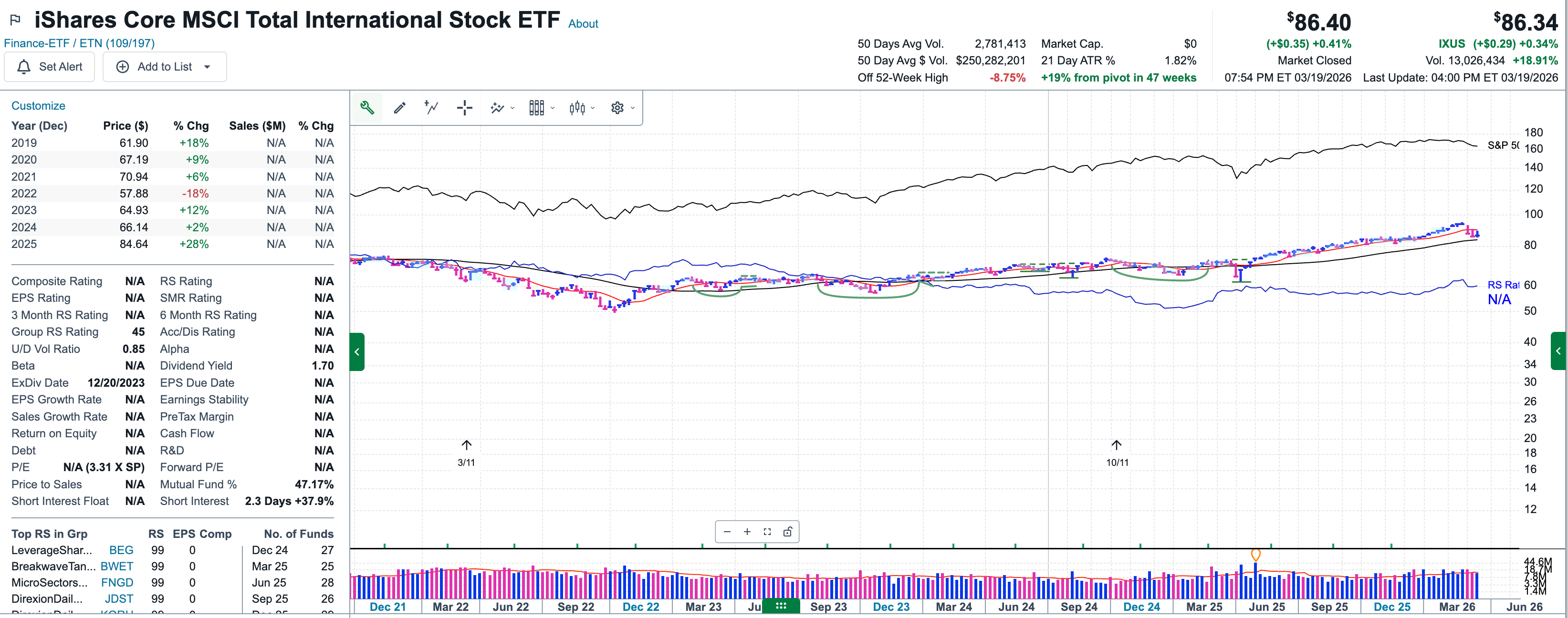
MarketSurge
3. iShares Core Universal USD Bond ETF (IUSB)
(IUSB) tracks the Bloomberg U.S. Universal Index of investment-grade and a small number of high-yield U.S. bonds. Its trailing 12-month yield is 4.22% and its expense ratio is just 0.06%.
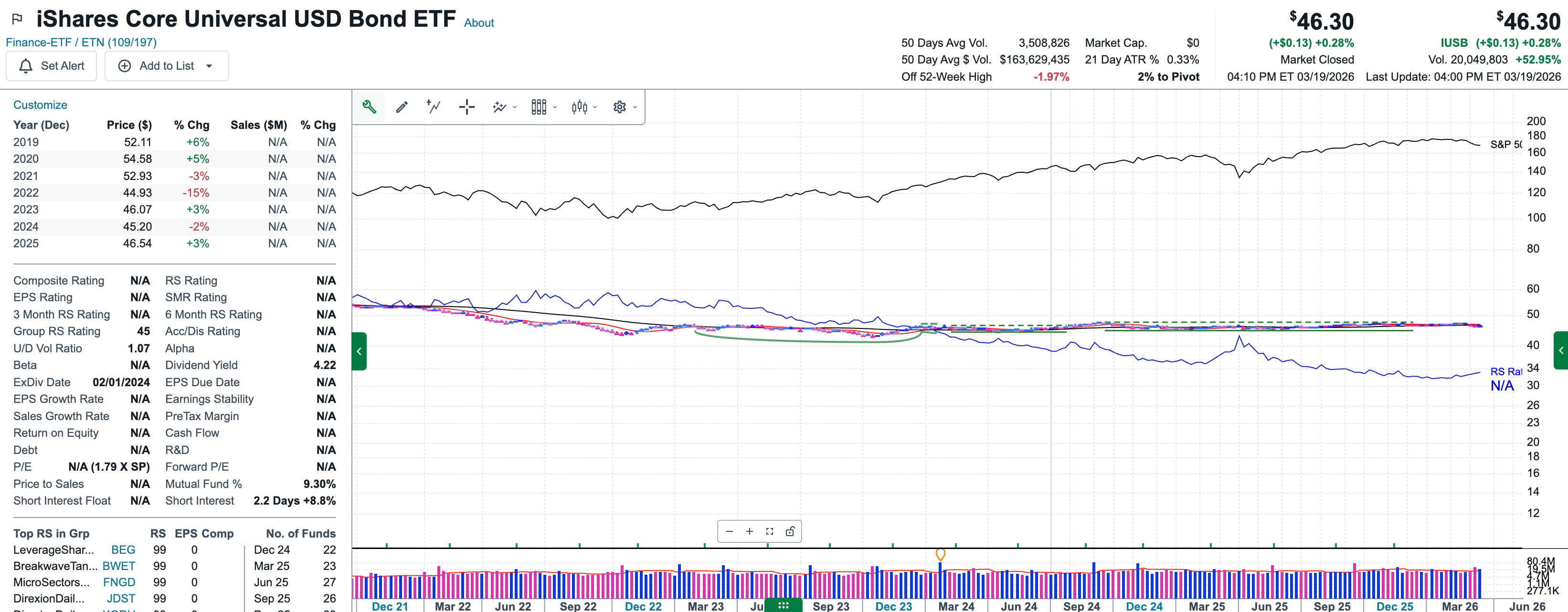
MarketSurge
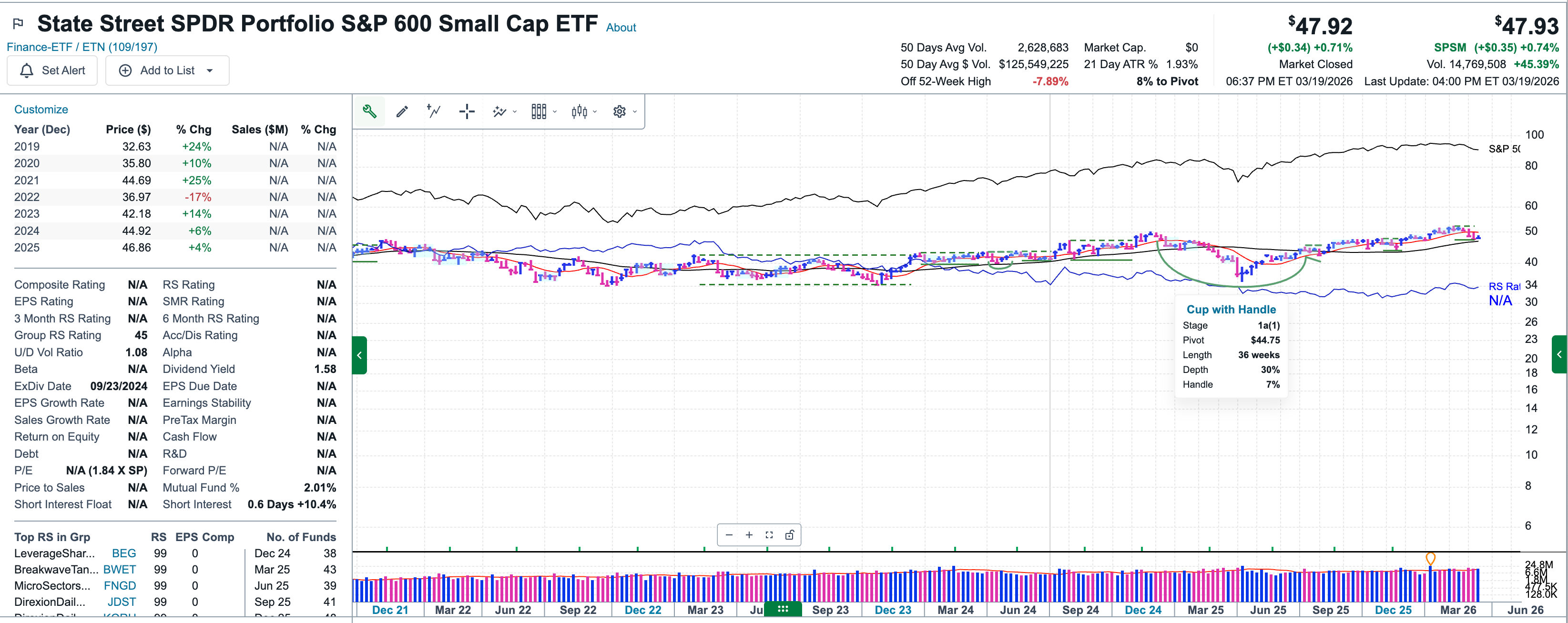
4. SPDR Portfolio S&P 600 Small Cap ETF (SPSM)
(SPSM) measures performance of the S&P 600 Small Cap Index of small U.S. companies screened for profitability. That profitability screen gives it a quality edge over other small-cap indexes, for an expense ratio of 0.03%.
MarketSurge
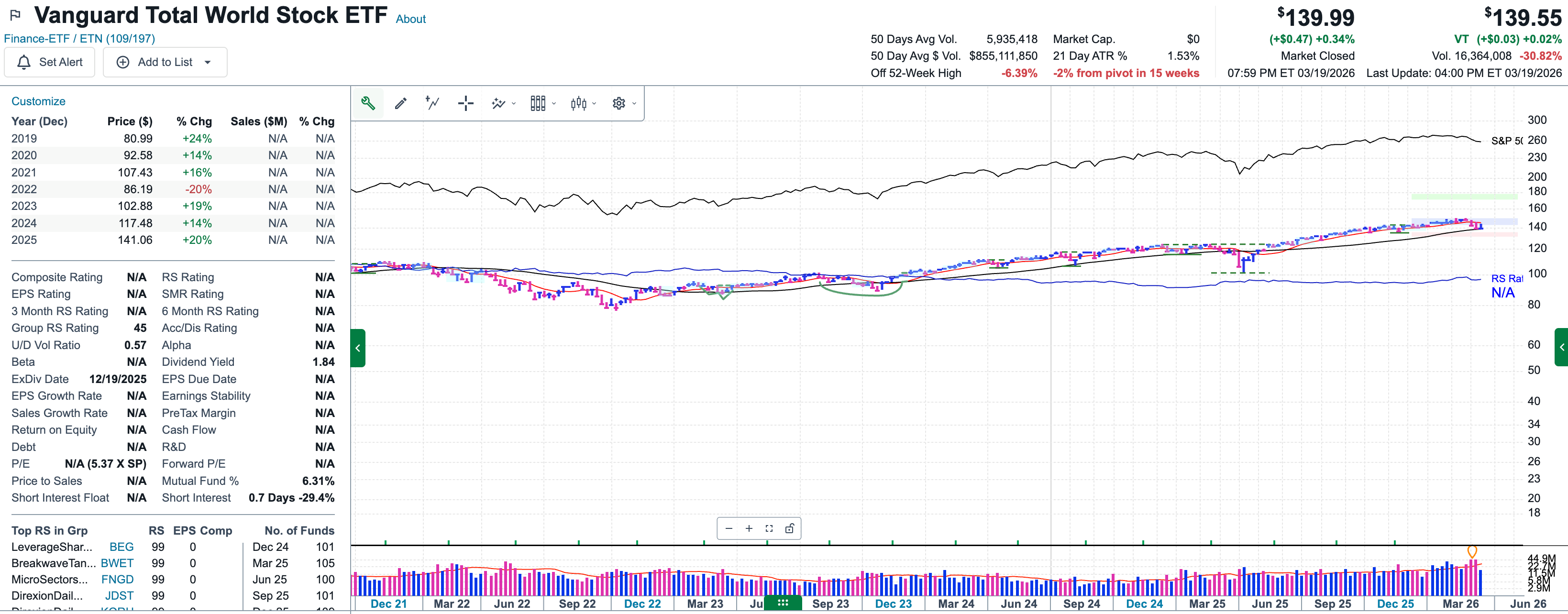
5. Vanguard Total World Stock ETF (VT)
(VT) offers exposure to the FTSE Global All-Cap Index, representing the entire investable global equity market. Here, investors find U.S. and international stocks of large, mid and small capitalizations. Its fee is 0.06%.
MarketSurge
Collectively, these funds span U.S. large and small cap, international developed and emerging markets, and investment-grade bonds. Those asset classes can be considered core building blocks of a diversified portfolio.
The Math on Fees
Recalling the ETF fee stat from ICI above, the gap between 0.14% and 0.44% doesn’t sound like much. But on a $250,000 IRA, that amounts to $750 a year. That’s every year, in good markets and bad, whether the index leads or lags relative to the broader market.
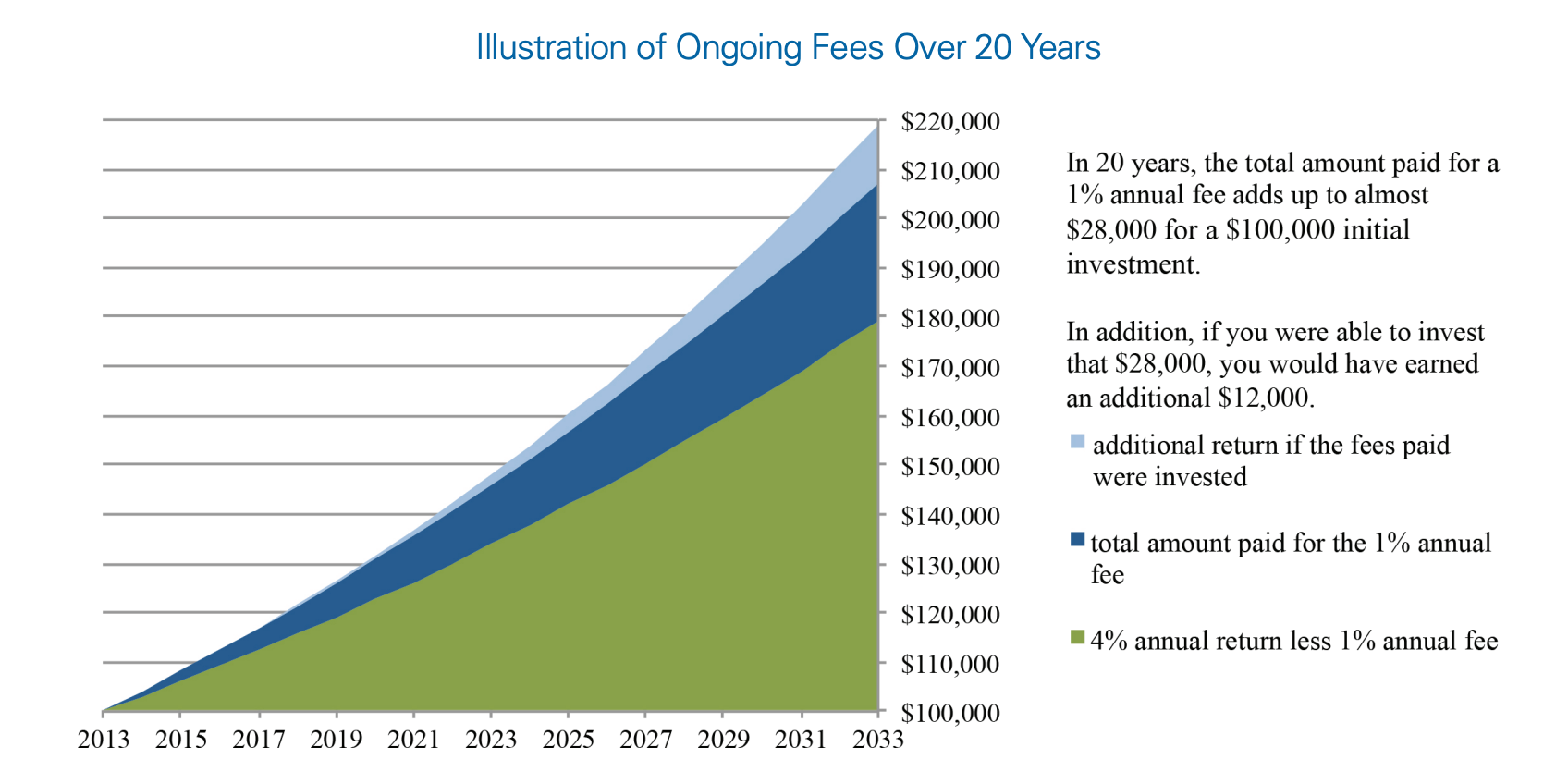
Over 20 years, that compounds into a meaningful drag on wealth. According to Securities & Exchange Commission data, over two decades, the payment of a 1% annual fee adds up to nearly $28,000 for an initial investment of $100,000.
Securities & Exchange Commission
What This Isn’t
Just as the fruit pictured in a bowl of grape nuts isn’t prescriptive, neither is this the definitive recipe for an ETF portfolio. I’ve had clients in index funds not listed here, including, but not limited to:
-iShares Core S&P 500 ETF (IVV)
-iShares MSCI Emerging Markets ETF (EEM)
-Invesco QQQ Trust Series (QQQ)
-Vanguard Total Bond Market ETF (BND)
Tax situations, time horizons and income needs aren’t universal.
This brings us back to the idea of choosing wisely.
The freedom to invest IRA funds, as opposed to a 401(k)’s more limited choices, becomes most valuable when you act deliberately, or collaborate with your financial advisor to understand why you own what you do.
That's not a constraint on the “choose your own adventure” theme; instead, it’s how you make sure the adventure ends well.
Related: Wall Street Turns on India as Oil Shock Drives 'Unprecedented Crisis'