These 5 Top-Inflow ETFs Give Retirement Investors Some Small-Cap Exposure
The ETFs with the biggest fund inflows show how the U.S. tech trade isn’t dead, despite the DeepSeek-driven selloff.
You've reached your free article limit
You've read 0 of 1 free Pro articles.
When you’re looking at your retirement savings, investor sentiment isn’t a bad thing to watch, but it’s not a great thing to obsess about, either.
What do I mean by that?
Rebalancing your portfolio is important, but not every week or even every month. If tech is getting a boost as buyers scoop up recently bludgeoned shares, that’s great for your portfolio if you’re overweight in tech.
But it doesn’t necessarily mean you should rush to rebalance.
Here are three bullet points from Morgan Stanley’s February 5 letter describing events that could shape the market in 2025:
- With the Fed signaling higher-for-longer rates, S&P 500 gains going forward may hinge on earnings growth, rather than monetary policy.
- The emergence of Chinese AI rival DeepSeek challenges the dominance of mega-cap U.S. tech firms and may compel investors to begin favoring other sectors that can benefit from AI.
- Against this backdrop, investors should consider focusing on cyclical and value stocks as well as companies aligned to long-term market trends.
Did you catch that last line?
What it really means is: Keep your portfolio diversified with cyclical, value stocks and companies poised for long-term growth. Those companies include tech firms, of course.
So, in that context, here’s a look at where institutional investors have been putting their money.
1. GraniteShares 2x Long NVDA Daily ETF (NVDL)
- Weekly Inflows: $1.9 billion
- Total Assets: $5.4 billion
- Expense Ratio: 1.060%
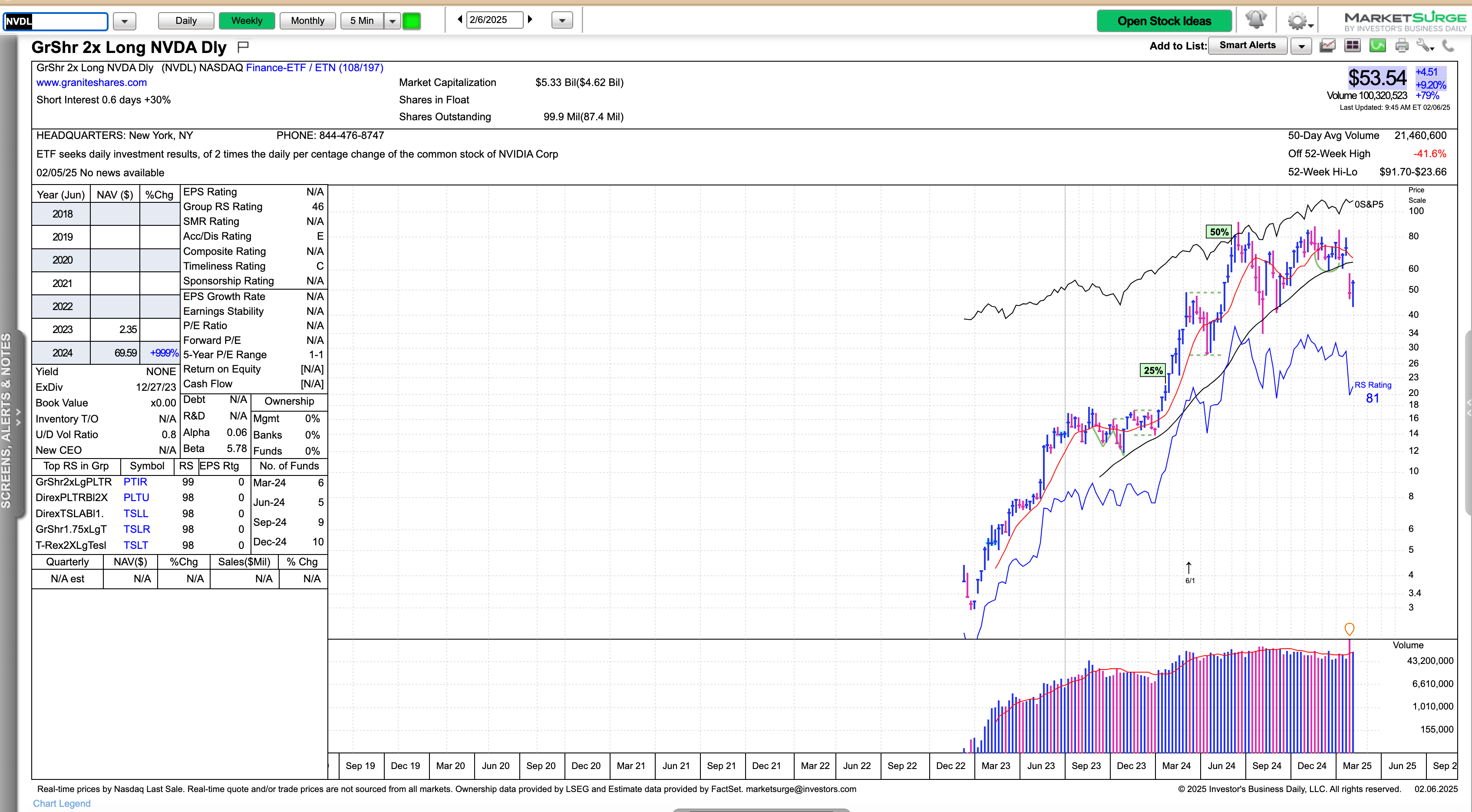
The GraniteShares 2x Long NVDA Daily ETF (NVDL) is a leveraged fund designed to provide twice the daily performance of Nvidia NVDA stock. It’s not a stretch to consider that investors with conviction in Nvidia took the opportunity to capitalize on other investors’ bargain hunting.
However, NVDL is highly volatile, and unsuitable for long-term holding or retirement accounts.
Leveraged ETFs reset daily, meaning their compounding effects can lead to significant losses if you hold for extended periods, especially during market downturns.
Retirement investors who want exposure to Nvidia might do well by considering traditional, non-leveraged funds instead of this high-risk product.
2. Vanguard Information Technology ETF (VGT)
- Weekly Inflows: $1.8 billion
- Total Assets: $86.87 billion
- Expense Ratio: 0.090%
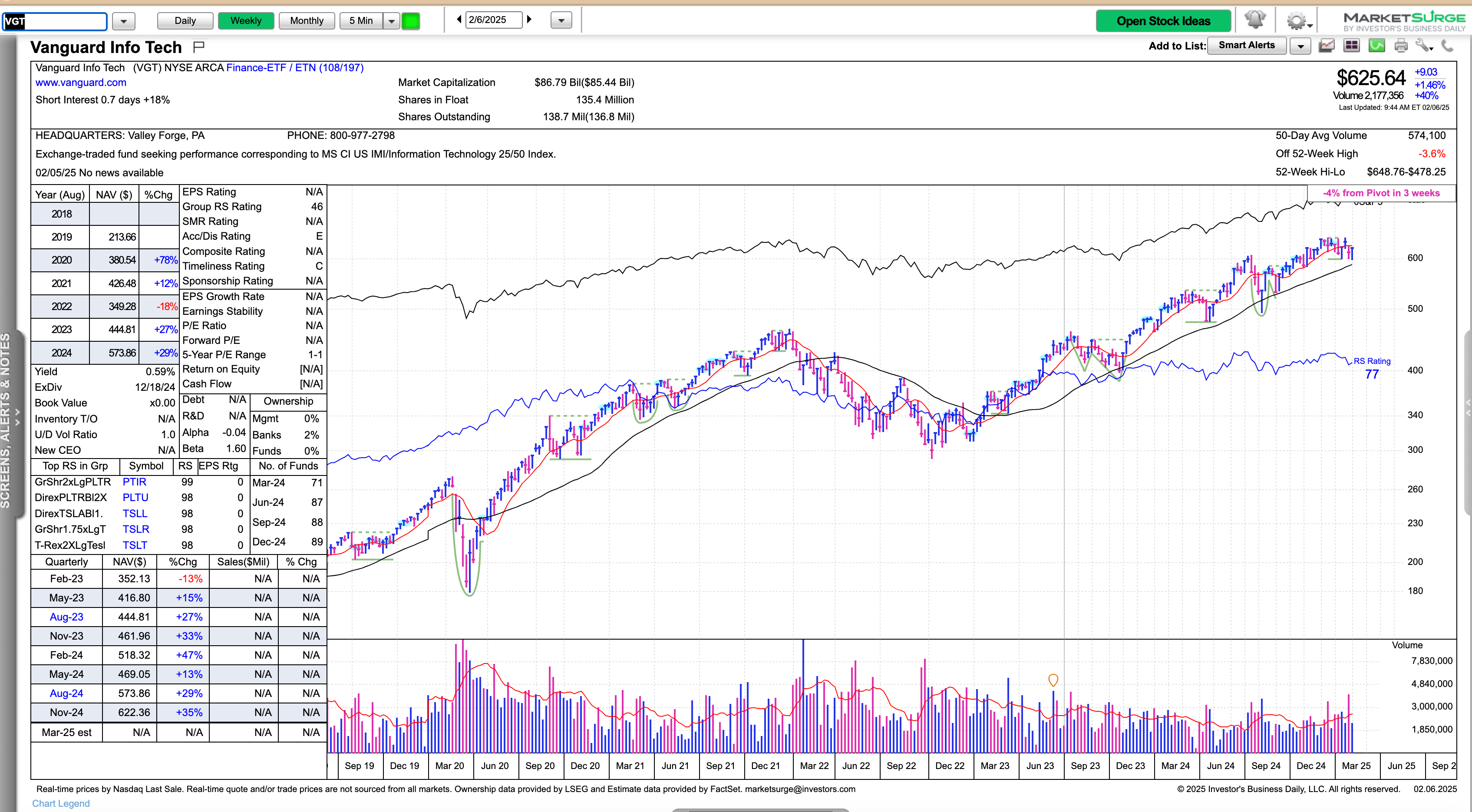
This is in the same category as NVDL’s inflows, as we’re seeing AI-related techs bounce back after the initial selloff. This one has a low expense ratio, which is typical of all Vanguard funds. VGT gives you exposure to major technology companies like Apple AAPL, Microsoft MSFT, and yes, Nvidia.
A diversified fund like this can be a safer option than a leveraged ETF betting on a single stock.
Keep in mind that technology stocks have historically been pretty volatile. That’s not uncommon in high-growth sectors. For retirees looking for stability and income, VGT may add risk, especially during market corrections.
This ETF could be an OK choice, but balancing exposure to technology with dividend-paying or less volatile sectors could mitigate risks.
3. Financial Select Sector SPDR Fund (XLF)
- Weekly Inflows: $1.65 billion
- Total Assets: $54.41 billion
- Expense Ratio: 0.080%
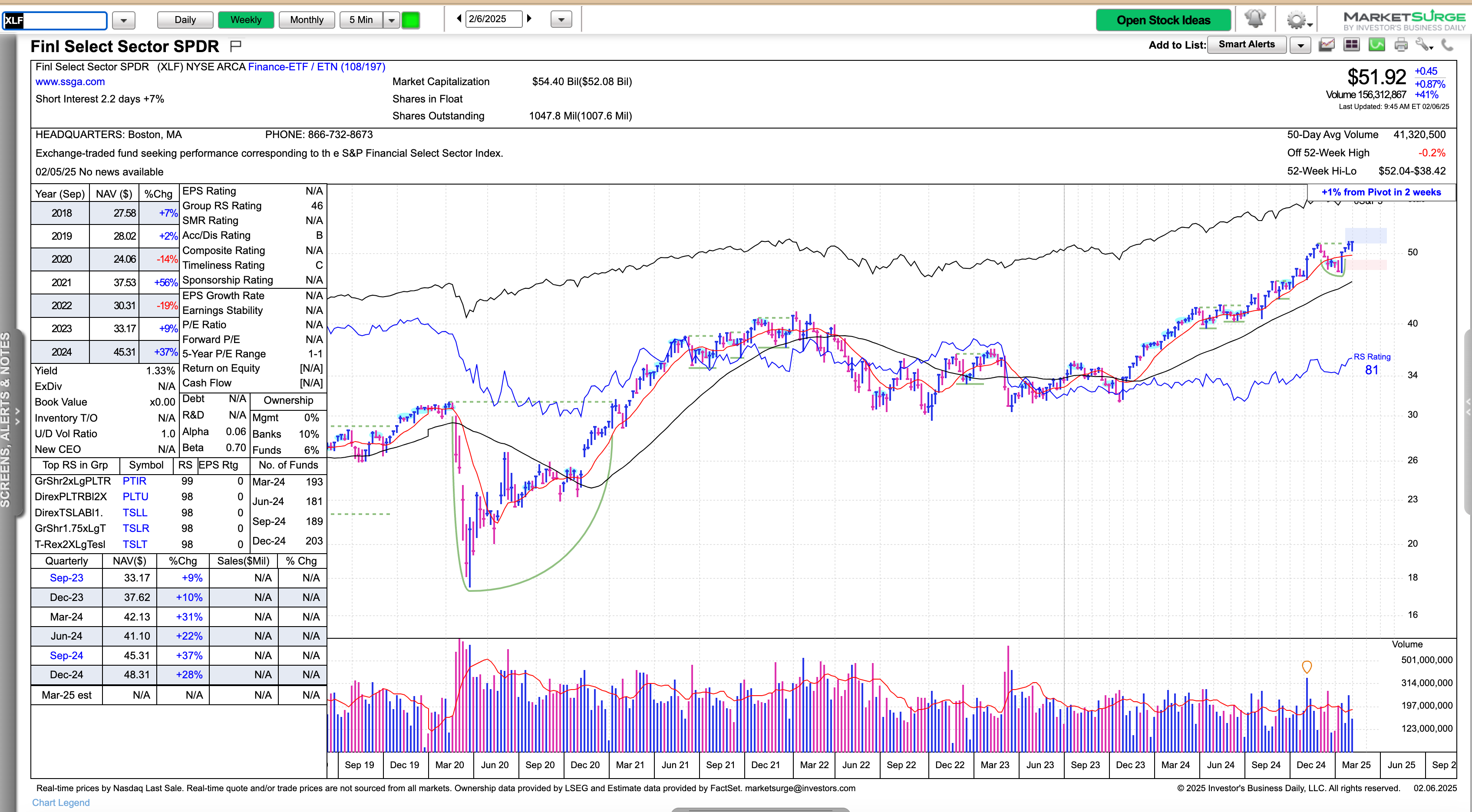
The Financial Select Sector SPDR Fund XLF saw over $1.6 billion in inflows, underscoring confidence in the sector. Believe it or not, financials, not techs, have been the top-performing S&P sector in the past year.
Holdings here include big banks, insurance companies and asset managers including JPMorgan Chase JPM, Berkshire Hathaway BRK.A BRK.B and Bank of America BAC. Higher interest rates have helped increase net interest margins for banks. In other words, that’s driven profitability.
This could be a tactical allocation for retirement investors, but this sector can be especially sensitive to economic downturns and market sentiment. Retirees may want to balance XLF with more defensive or income-generating investments. Or simply consider a broad S&P index fund.
4. Direxion Daily Semiconductor Bull 3x Shares (SOXL)
- Weekly Inflows: $1.65 billion
- Total Assets: $9.74 billion
- Expense Ratio: 0.760%
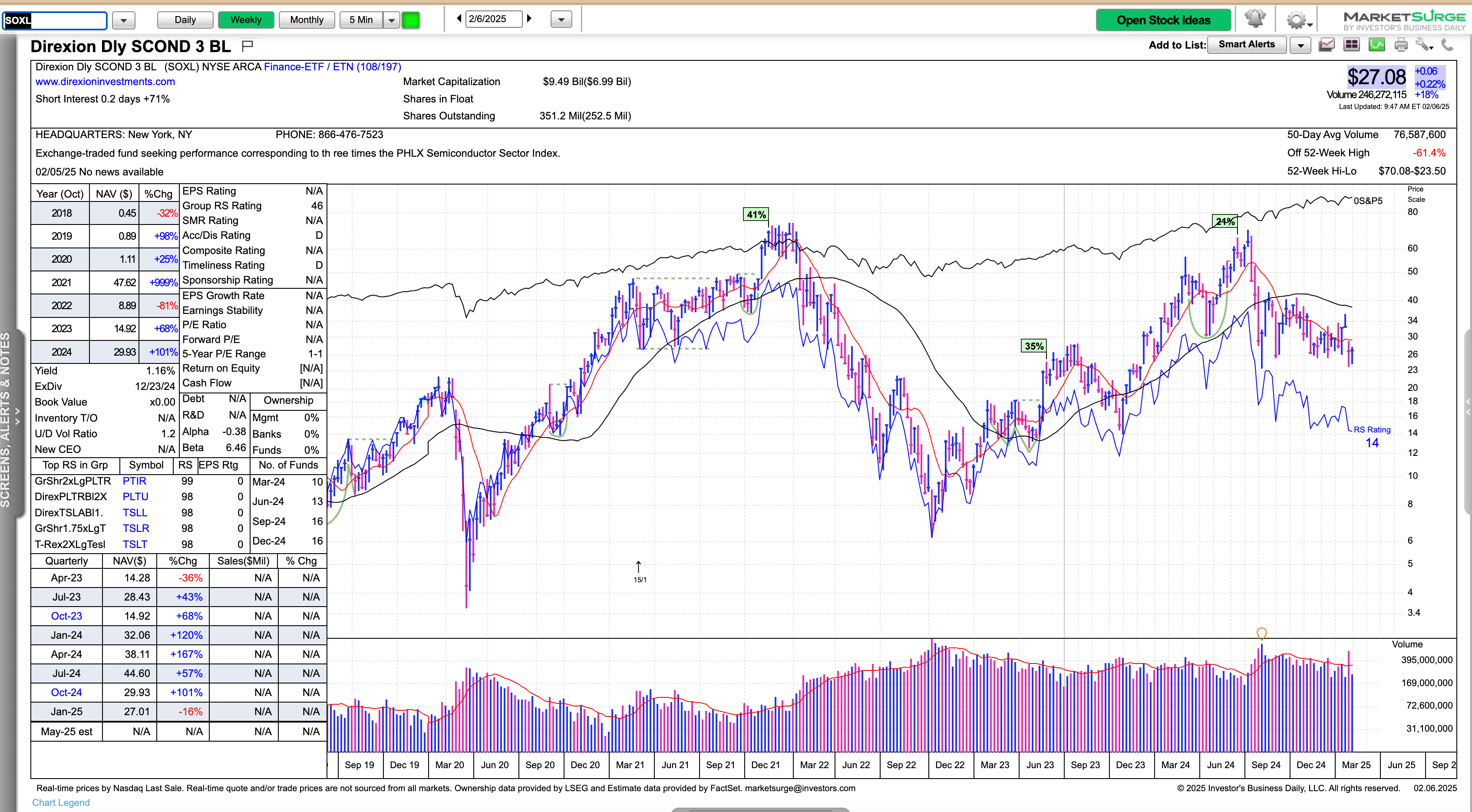
Another leveraged ETF here. SOXL measures three times the daily performance of semiconductor stocks, a sector benefiting from AI and cloud computing.
You can tell that I’m not a fan of these, as investors often hold them too long. Years ago, I interviewed the CEO of Direxion funds, and he told me these are meant as short-term trades, not long-term holds.
The fund’s daily resets and high volatility are what make it risky.
OK, public service announcement over.
For exposure to chips, look into non-leveraged ETFs like the iShares Semiconductor ETF SOXX. This can give you broader exposure to the sector without the higher levels of risk.
5. iShares Russell 2000 ETF (IWM)
- Weekly Inflows: $1.21 billion
- Total Assets: $75.25 billion
- Expense Ratio: 0.19%
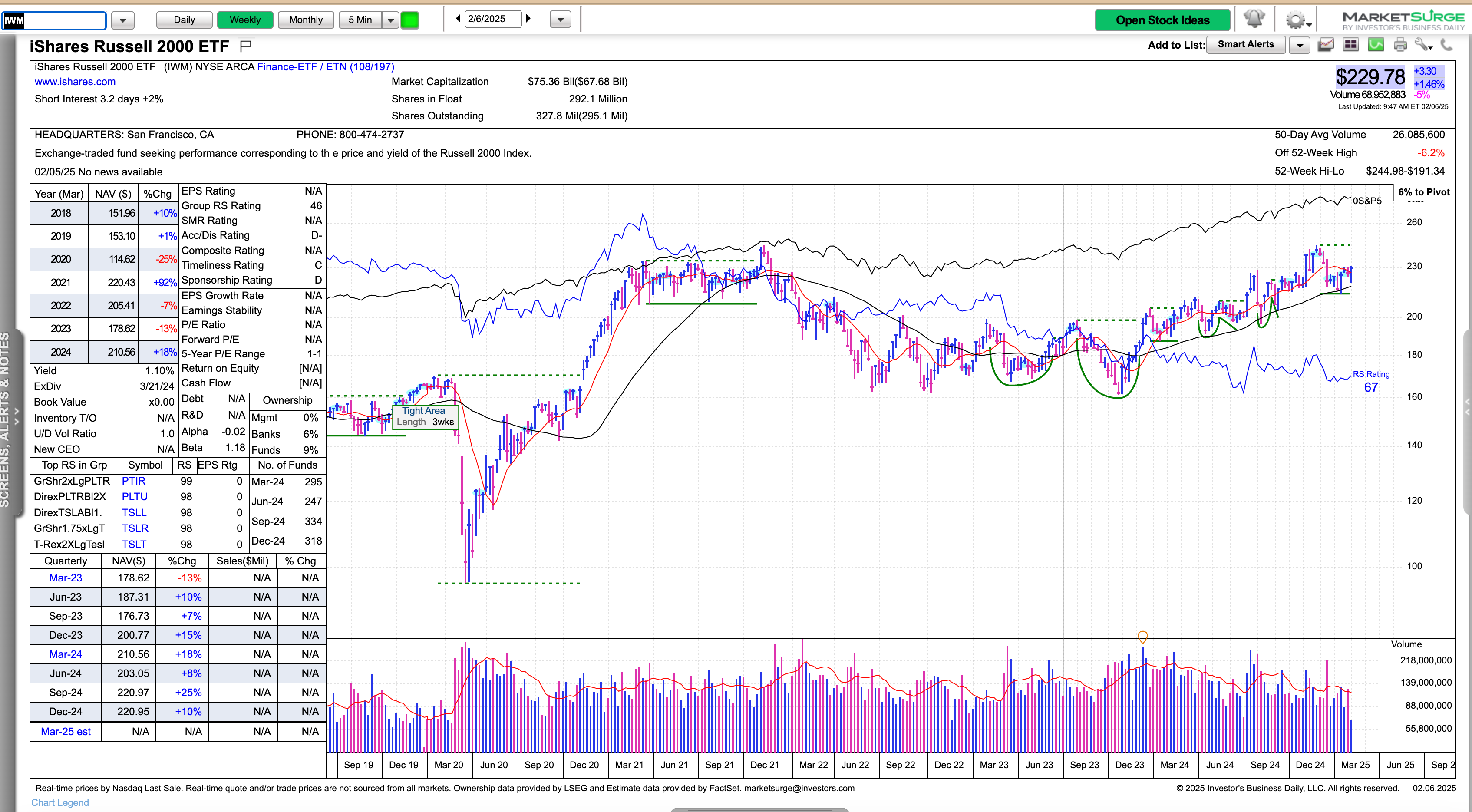
IWM is a domestic small-cap fund. Small caps have underperformed larger peers over the past 15 years, as the chart below shows.
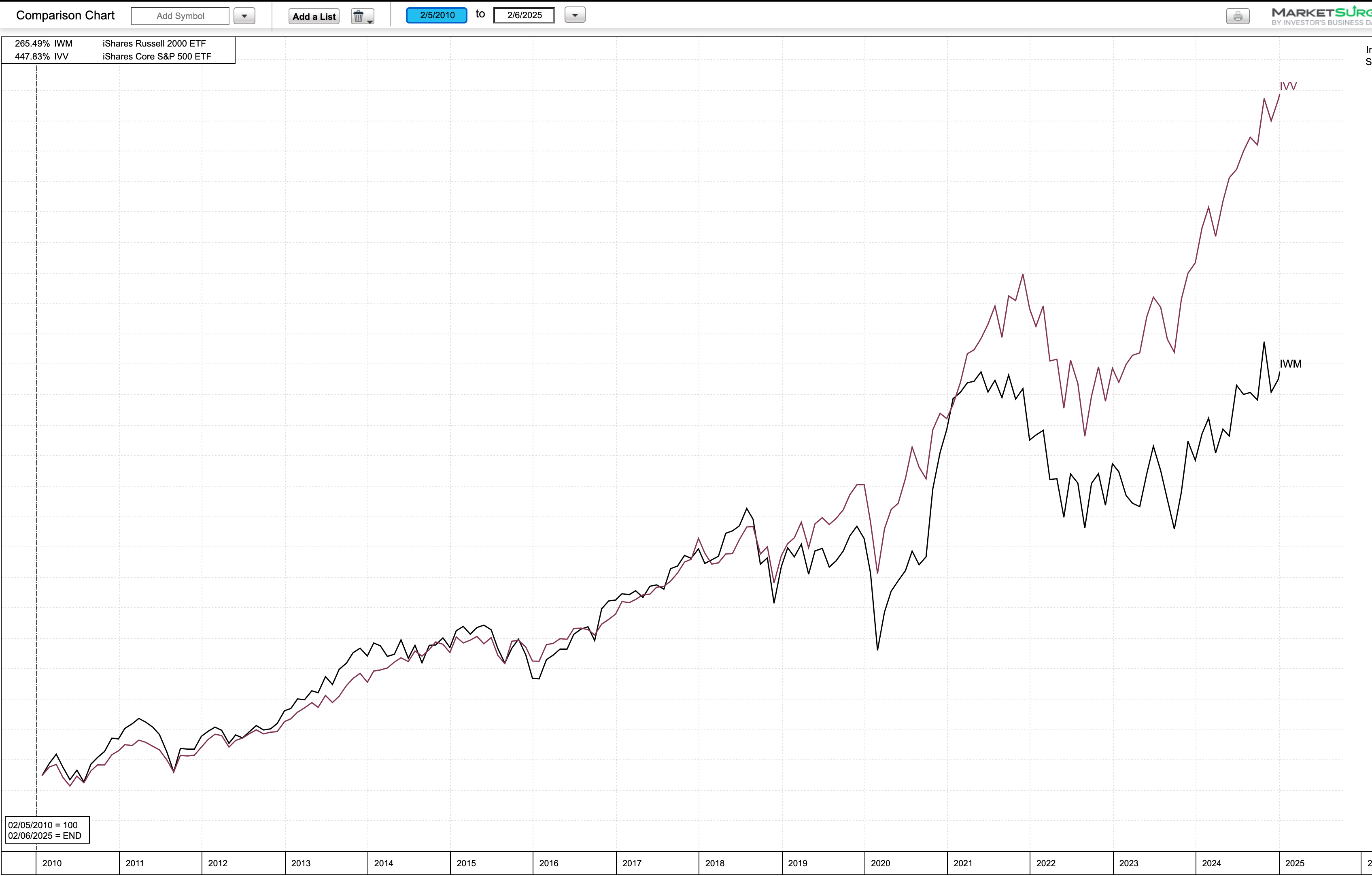
These inflows suggest investors may be confident in smaller stocks, at least for the moment. You can see on the line chart that small caps have outperformed during some short periods of time.
Confidence in smaller companies can indicate expectations for a strong economy, but they’re also more risky than larger stocks. Exposure through a basket of stocks like this helps mitigate the risk of picking single stocks.
Retirees prioritizing stability should have some small-cap exposure, but be careful to keep it limited. An ETF like IWM can be paired with income-focused or less volatile investments to reduce risk.
At the time of publication, Stalter had no positions in any securities mentioned.