So, You Want to Be a Great Investor?
Here are some intuitive and simple guidelines
You've reached your free article limit
You've read 0 of 1 free Pro articles.
This is the sixth of ten articles in the Filthy Rich Animal Investing Basics Series.
If you like what you see, are not yet subscribed, or would like to share with a friend, please visit this link to join us. It's free!
In a few weeks, we'll begin providing actionable advice and weekly educational content.
And that's when the real fun will start!
Being your own portfolio manager
Let’s say you want to manage your own portfolio, and you’ve got the time to really dive in.
That’s fantastic, but be aware of the challenge you’re taking on: You’ll need to develop a clear investment plan, maintain consistent diversification, monitor your portfolio regularly, and make adjustments as needed.
This includes staying informed about market trends, understanding your risk tolerance, and setting clear buy, hold, and sell rules to guide your decisions. Successful management also requires periodic rebalancing and an emotional discipline to stick with your strategy during market volatility.
Oh, and you’ll also need to understand how to make decisions that minimize return-eating taxes.
If that’s something you’re ready to take on, let’s look at the pros and cons of managing your own portfolio.
Creating a Plan
Every successful endeavor starts with a plan, and investing is no different. As the saying goes, “If you fail to plan, you are planning to fail.”
Your plan should begin with you!
- How much time do you have?
- How engaged do you want to be?
Some of the best investors, like Warren Buffett, dedicate their entire lives to researching investments and carefully timing their buys and sells. Maybe that’s the level of commitment you’re ready for, or maybe you’re simply looking to grow your wealth without spending all day glued to a screen.

And keep in mind: Warren Buffett isn’t sitting in his pajamas with an iPad propped up on his dining room. He has a staff of researchers, analysts and traders to help make his decisions. There’s nothing spur-of-the-moment about the Berkshire Hathaway strategy.
Timing the Market
The “super speculator” is someone who has the time, interest, and knowledge to grow a portfolio by leaps and bounds, outpacing the broader market year after year.
That’s a nice thought, but unfortunately, there’s plenty of research to show how incredibly rare that is, in reality.
“There’s no proven way to time the market—targeting the best days or moving to the sidelines to avoid the worst—so the evidence suggests staying put through good times and bad. Missing only a brief period of strong returns can drastically impact overall performance. We believe that investing for the long term helps ensure that you’re in position to capture what the market has to offer.” - Dimensional Fund Advisors
I get where the speculators are coming from. Some of my earliest training in understanding the markets came from the legendary Bill O’Neil, who developed the CAN SLIM system of picking growth stocks. I learned a lot in my decade with Investor’s Business Daily, which still informs my market outlook to this day, even though I’ve been a fiduciary investment advisor for the past dozen years.
But stock picking remains a risky endeavor,
Here’s data from Dimensional Fund Advisors showing what happens to traders who miss the best periods of market performance, relative to the Russell 3000 index
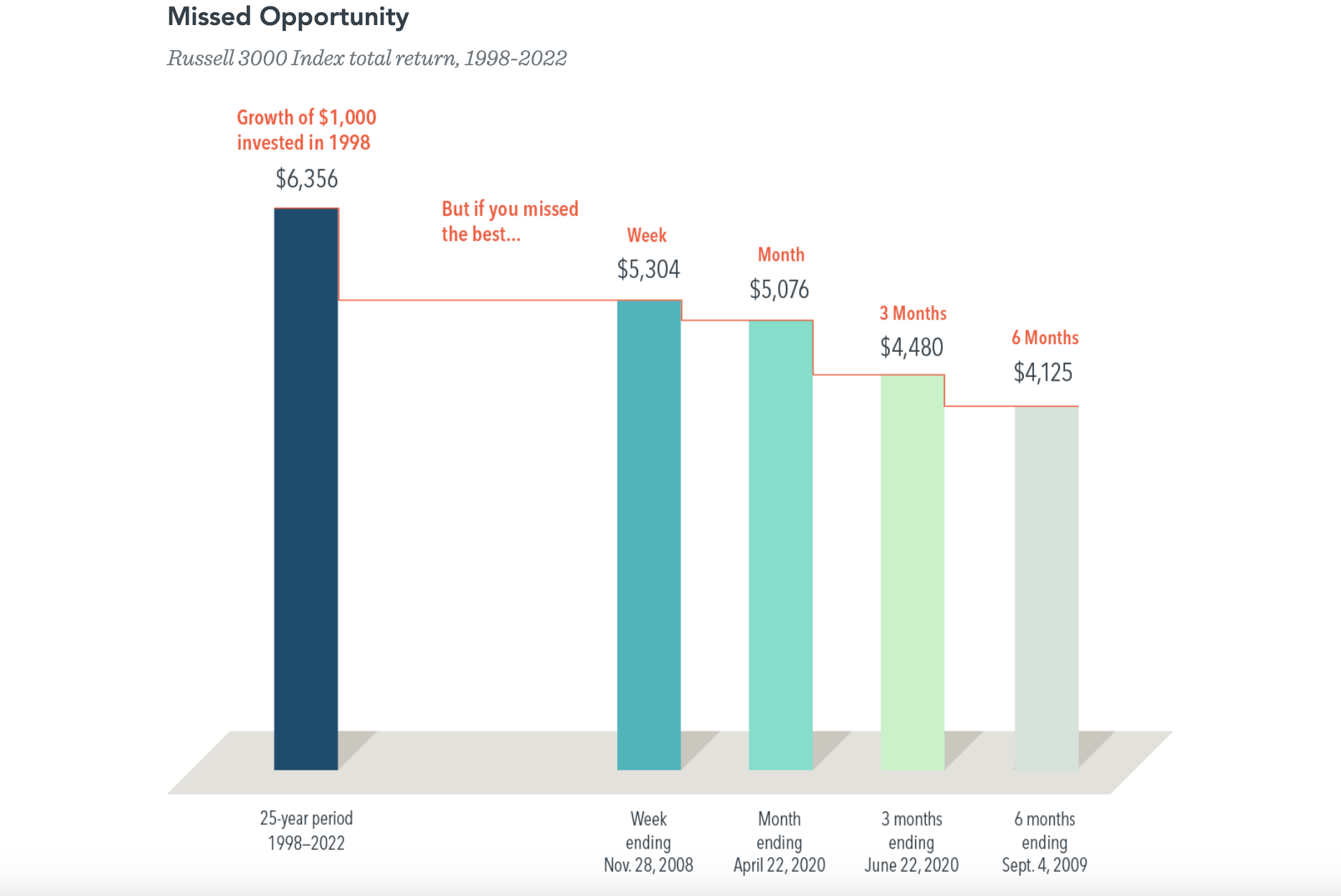
Opportunity Cost
Don’t get me wrong: I’m not anti-stock picking. There are periods of time when a stock picker or an active fund manager can beat an allocated portfolio, or even a single benchmark index, like the S&P 500.
(Public service announcement: Contrary to what you see in much of the media, the S&P 500 is NOT the broad market benchmark, and isn’t always the appropriate yardstick for your individual stock performance. It measures only the performance of domestic large caps. Lately, that’s been limited to large-cap growth.)
Stock-picking performance is, of course, dependent on market conditions. Even growth investors who strayed too far outside the confines of AI-related leaders such as Nvidia (NVDA), Vistra (VST), Microsoft (MSFT) and Palantir (PLTR) gave up sizeable returns.
There have been smaller growth stocks posting eye-popping gains, too. Biotech ADMA Biologics (ADMA) returned 280% in 2024, outpacing even S&P leader Vistra.
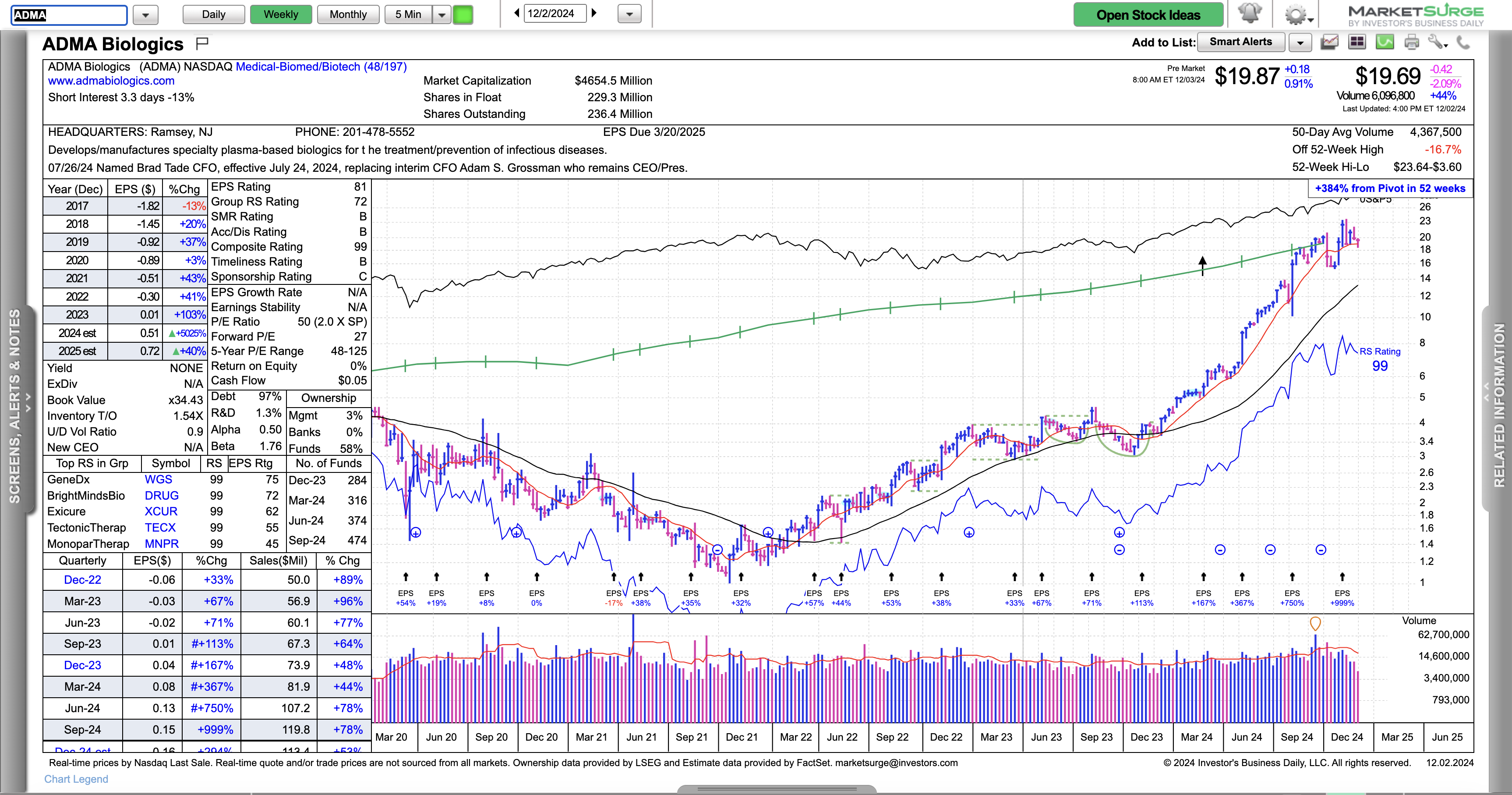
A savvy chart reader could have picked up shares of ADMA in December 2023, after the stock cleared a cup-with-handle basing pattern. Here’s how the stock performed since then.
The trick here was: You would have to know about ADMA in December 2023, before its big run-up, take a flier on a small stock from the notoriously volatile biotech industry, and choose this stock versus well-known large caps like Nvidia or Microsoft, which both cleared consolidations within a few weeks of ADMA’s breakout.
This kind of analysis, using the stock's price to understand investor behavior, is called technical analysis.
Analyzing the Fundamentals
Let’s continue using ADMA as an example of a relatively unknown leader.
For savvy investors, there was another clue that ADMA may have been setting up for a rally: Revenue and earnings were growing at ridiculously fast clips.
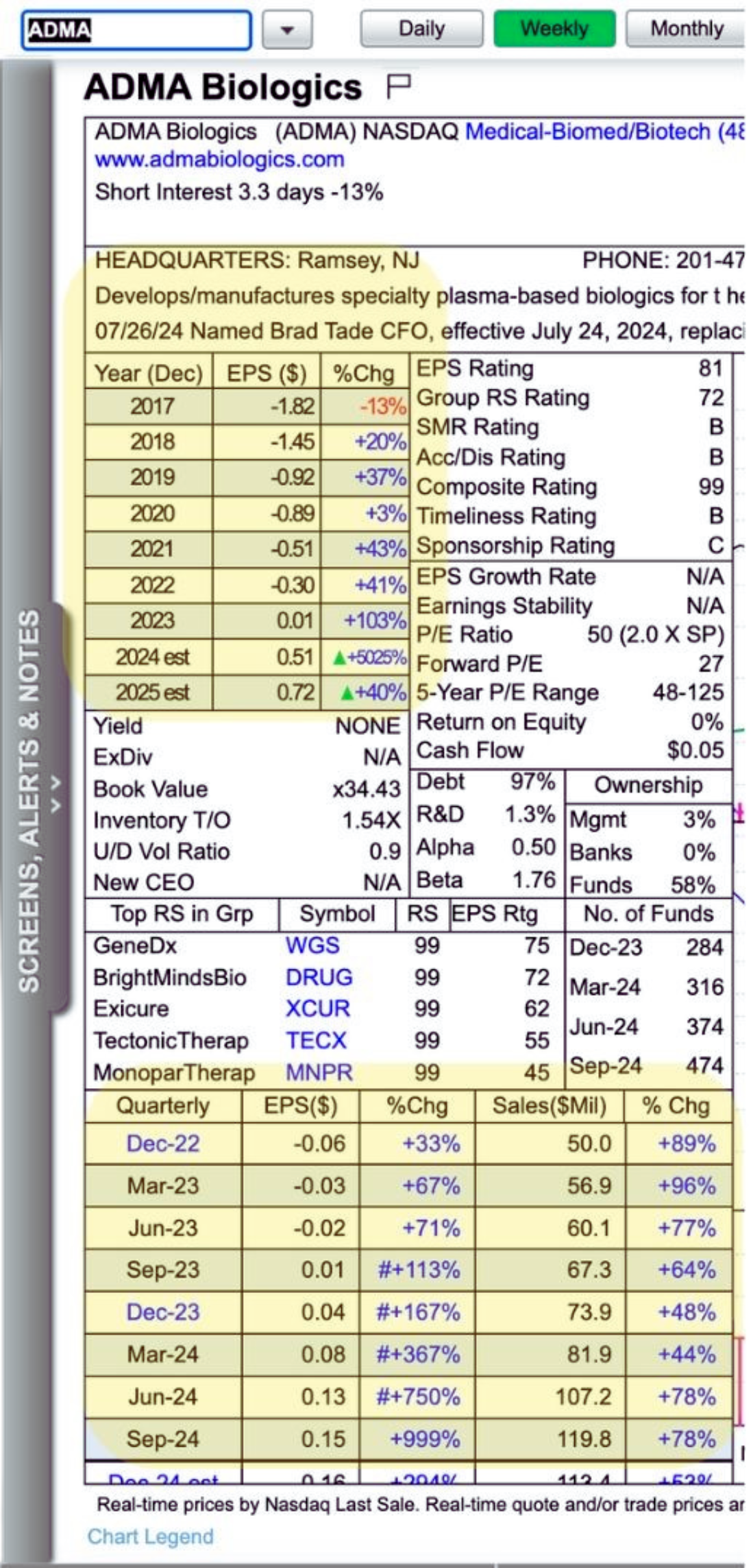
Fundamental analysis, analyzing the company's financial statements and news, is often a factor when analyzing value stocks.
Value stocks have historically outperformed growth, but this trend reversed after 2007. Since then, growth stocks have consistently dominated, driven by tech innovation and low-interest-rate policies boosting future earnings expectations.
Warren Buffett, perhaps the world’s most famous investor, has specialized in buying securities that he believes are trading far below their true value, which minimizes his potential losses if his analysis is off.
Think of his strategy like this: Imagine buying a $50,000 sports car for $30,000. Even if the car has some issues, you’re less likely to lose money because you got it for a bargain.
While Buffett tends to hold his investments for years, those with a trading-oriented approach may buy and sell in seconds, days, or weeks.
What they share in common is a concentrated portfolio. Diversification isn’t their priority because they have the time to monitor their investments closely and make adjustments as needed.
However, speculating, whether you’re using fundamental or technical analysis, or both, isn’t for everyone. It’s a full-time job and requires a lot of capital. Even if you’re as good as Warren Buffett, earning “just” 20% annually on $10,000 would only bring in $2,000 in year one.
In other words, a full-time job with a part-time paycheck.
If you’re truly interested in speculating and haven't joined already, consider a membership to TheStreet Pro where you can read the analyses of our team of experts and participate in a community with other stock pickers, including those who do it professionally!
The Two Types of DIY Investors
For those who prefer to grow wealth as investors rather than speculators, there are two main approaches:
1. The Asset Allocator
Asset allocators take a big-picture view of the market. Instead of picking individual stocks, they invest in broader themes, often using ETFs or mutual funds.
For example, they might invest in an ETF focused on electric vehicles or one targeting emerging markets in countries like China or Turkey. Their portfolios are typically diversified across equities, fixed income, and sometimes commodities or real estate.
Asset allocation generally includes some pretty “boring” investments, such as sector or index ETFs, along with investments in fixed income.
2. The Stock Picker
Stock pickers are more hands-on and similar to Warren Buffett in their approach.
They dig deep to research companies before investing, but unlike Buffett, they usually have day jobs.
Many rely on analyst reports or focus on industries they’re familiar with. Stock pickers often aim for diversification, holding stocks from multiple sectors alongside bonds or mutual funds to balance their portfolios.
But even stock pickers can benefit from outsourcing certain aspects of their investments, such as their retirement accounts.
Questions to Build Your Plan
No matter which type of investor you are, creating a solid plan is crucial. Ask yourself:
- What’s my time horizon?
- Am I really interested in doing this, or would I rather play golf or watch Netflix?
- Am I willing to dedicate myself to learning about the market?
- How much money do I have to invest?
- How much risk can I tolerate? In other words, how much can you afford to lose?
- What’s my strategy?
Creating an Investment Thesis
For every security you buy, develop a clear investment thesis that includes:
- Action Plan: What conditions would prompt you to buy, sell, or hold? What might make you change your mind?
- Bullish Case: What factors could drive the price up?
- Bearish Case: What risks could drive the price down?
Final Thoughts
Investing successfully starts with self-awareness and a clear plan.
Know who you are, what you’re working with, and how you’ll approach the market. There are plenty of ways to make money in the market, but over time, it doesn’t happen willy-nilly without some philosophy behind portfolio construction.