Investing in Your 20s
Draft Your Own Championship Team
You've reached your free article limit
You've read 0 of 1 free Pro articles.
You don’t build a winning football team by drafting only quarterbacks. You shouldn’t build your portfolio that way either.
Sure, flashy picks like crypto, AI stocks, and quantum computing plays like IonQ (IONQ) are exciting and get a lot of attention.
If you’re young, you’ve got time to take fliers at some of these speculative ideas.
But just like the Buffalo Bills (yeah, that’s my team, so they will be our analogy here) don’t pretend to build their entire team around Josh Allen, you can’t build your investment strategy around the most exciting players.
A smart portfolio isn’t a collection of high-risk bets: It’s a balanced strategy where each asset class plays a role, supports the others and helps you win in the long run.
Balance Builds Winning Portfolios
Think of your investment portfolio like the Buffalo Bills' 2025 draft strategy: Each pick plays a specific role in building a strong, balanced team. You’ve got a fast, high potential cornerback in Maxwell Hairston. That’s the function growth stocks play in your portfolio.
Defensive tackle T.J. Sanders is playing at a position that requires stability and reliability, without all the flash. Think of your bond holdings the same way. And yes, young investors a few years into their careers should have some bonds to mitigate some of the risk of stocks.
Tight end Jackson Hawes brings the flexibility to block and catch passes. Alternative investments, like commodities or real estate, bring some of that flexibility to your portfolio.
What Your Investing Lineup Might Look Like
What does a balanced "team" of investments actually look like?
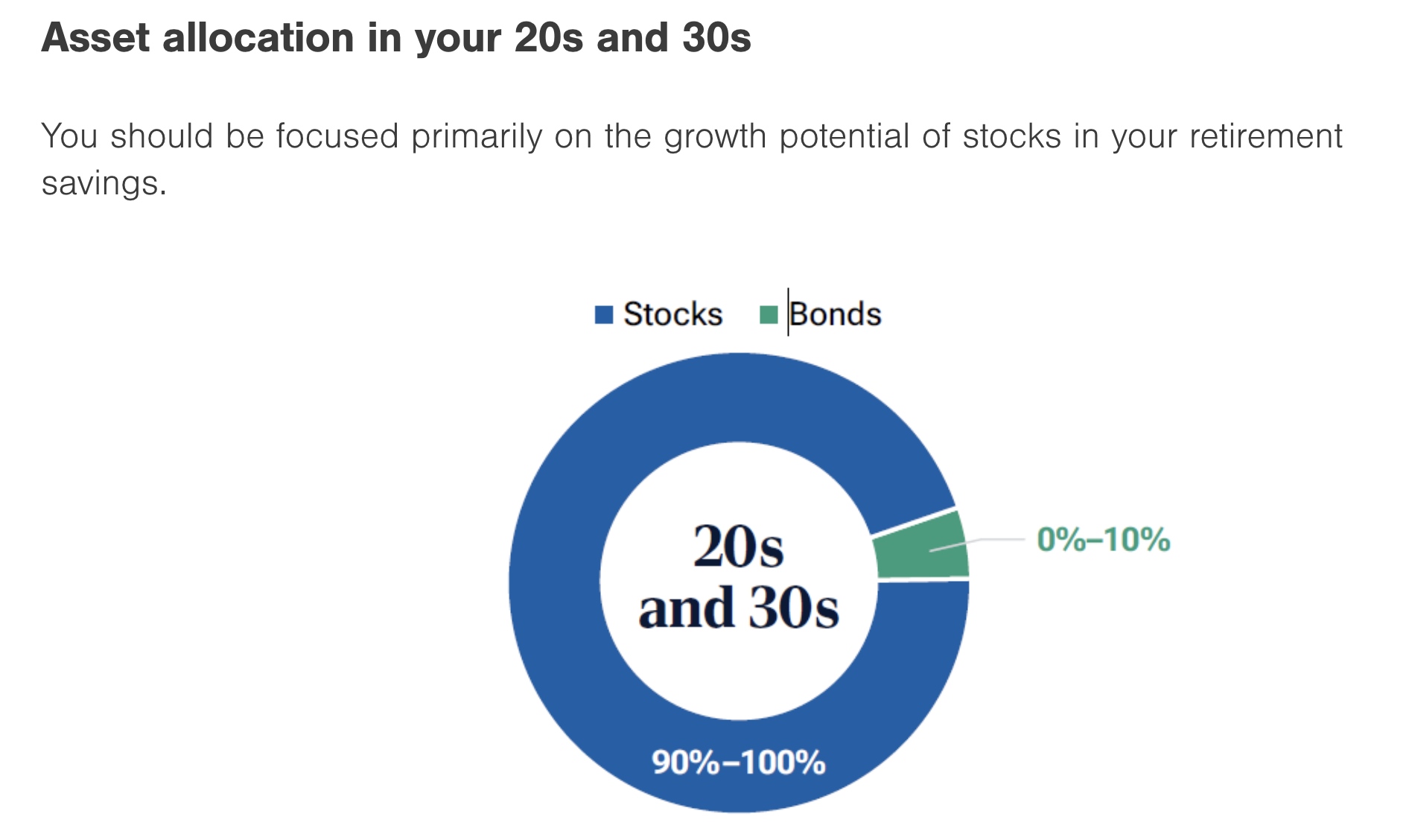
There’s no one-size-fits-all answer, but as a general rule, investors in their 20s and 30s should be loading up on stocks, which are more volatile than bonds, but also return more. At this stage of your life, you have plenty of time to recover from market corrections, which is why you can take more risk.
However, you also need some structure, and not invest solely in risky single stocks (remember IONQ, from a few minutes ago?).
That structure can come in the form of passive investing, using exchange-traded funds or even mutual funds with low expense ratios.
Here’s an idea of how your portfolio might look. Keep in mind, there are other funds that could work just as well; this is just to give you an idea.
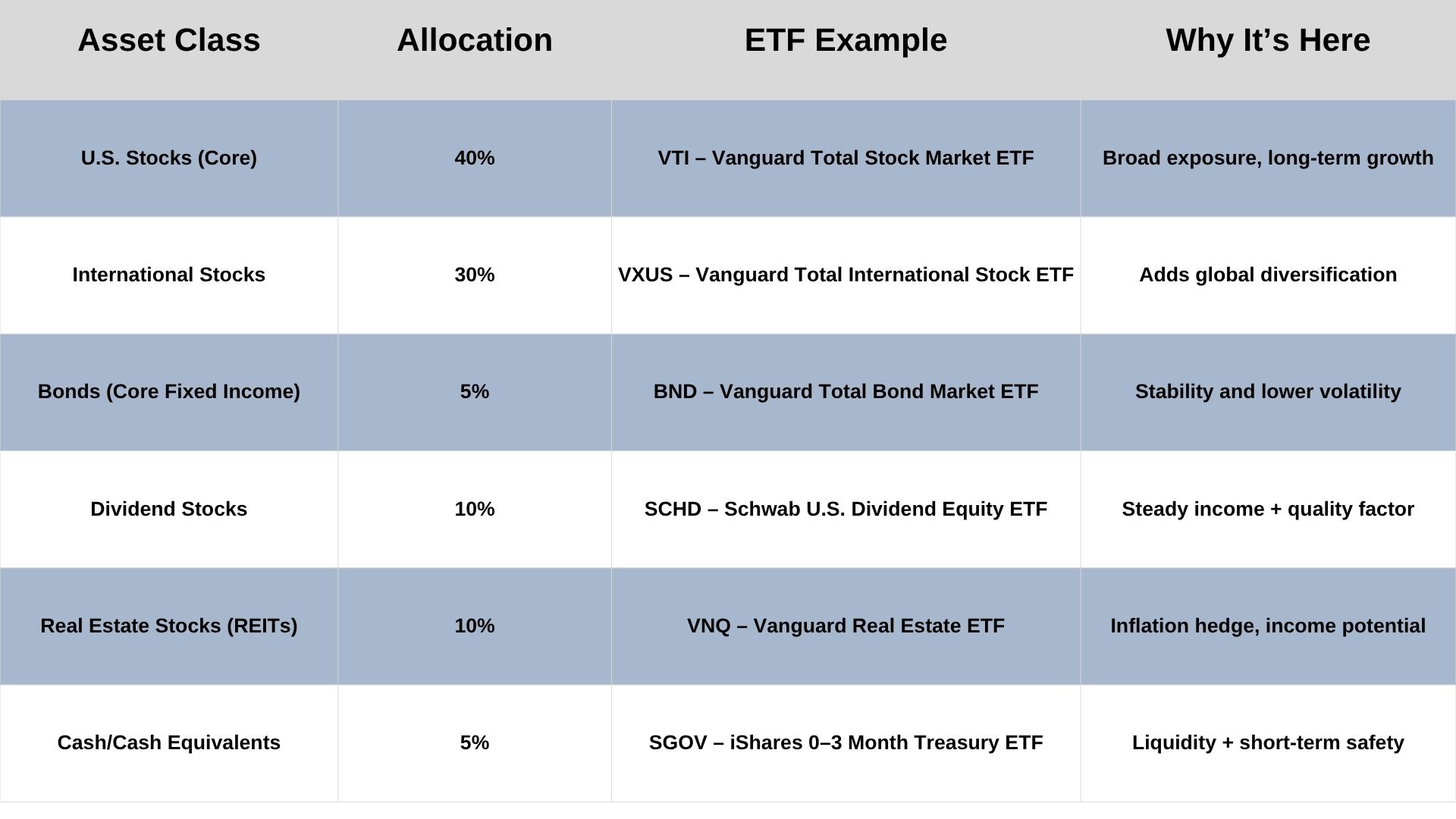
Notice, the stock portion of your holdings doesn’t just consist of the S&P 500 or the Nasdaq composite. The international holding in this example represents an investment that’s performed well recently, despite lagging in previous years. That’s a perfect illustration of why balance is important when it comes to managing your overall return.
How to Screen for ETFs (Beyond Just Performance)
Past performance might seem important, but asset classes rotate in and out of leadership. What’s hot this year may underperform next. So instead of chasing winners, here’s what to focus on when screening ETFs:
- Expense Ratio: Lower is better for index funds. VTI and VXUS, for example, charge just 0.03% and 0.07%, respectively, which works out to just 3 cents for every $100 you invest in VTI.
- Index vs. Active: Index funds are typically lower cost and more tax-efficient. Active ETFs may outperform on occasion, but not consistently, as plenty of research shows. Active funds also come with higher fees, so understand what you’re paying for.
- Number of Holdings: Watch out for over-concentration of any single stock or even sector. That can add risk.
- Trading Volume & AUM: Look for funds with healthy trading activity and significant assets under management (AUM). It helps with liquidity and stability.
- Fit Within Your Asset Class: Make sure the ETF actually matches the asset class you’re targeting. Some “thematic” ETFs blur categories or concentrate risk.
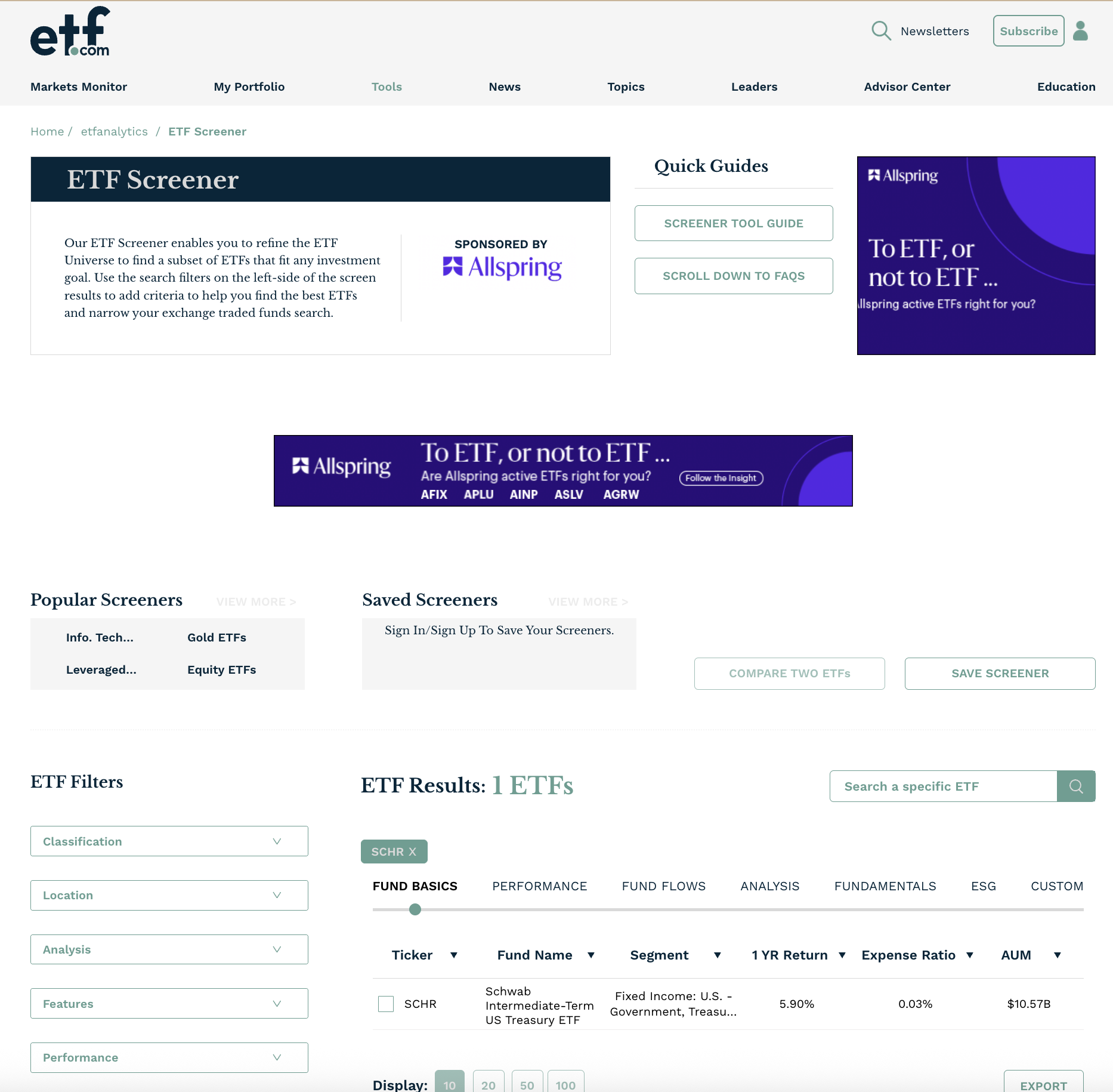
The funds in the table above are examples of low-cost portfolio holdings. If you want to find others that may fit those criteria above, ETF.com has a free screening tool that may help. You can filter for categories including classification, features, performance, issuers and index.
A broad lineup of ETFs will give you a balanced offense and defense, which is just as applicable to investing as it is to the Buffalo Bills, or the NFL team of your choice. Your stocks drive growth, your bonds and cash stabilize the portfolio, and alternatives like real estate give you another playmaker in the mix.
If you want some more pizzazz, it’s OK to own some crypto or speculative stocks, but keep them to a small portion of your allocation, or even better, treat them as “fun money” outside your retirement account.
Building wealth isn’t about picking the top stocks, which is insanely difficult to do on a regular basis. It’s about showing up consistently with a solid game plan.
A balanced portfolio gives you room to grow, while still protecting your downside when markets get rough. Because just like in football, championships aren’t won with highlight reels; they’re won with balance, discipline and long-term thinking.