How to Create Resilient Income for a Market Downturn
Economic downturns and pessimistic market sentiment can wreak havoc on investment portfolios. That’s where dividend stocks come in.
You've reached your free article limit
You've read 0 of 1 free Pro articles.
Yes, it’s early in the year, but dividend stocks are slightly outpacing the broader S&P 500.
The chart below compares year-to-date performance of the Vanguard Dividend Appreciation ETF VIG versus the SPDR S&P 500 ETF Trust SPY. You can see that the dividend ETF is slightly edging out the growth-heavy S&P 500.
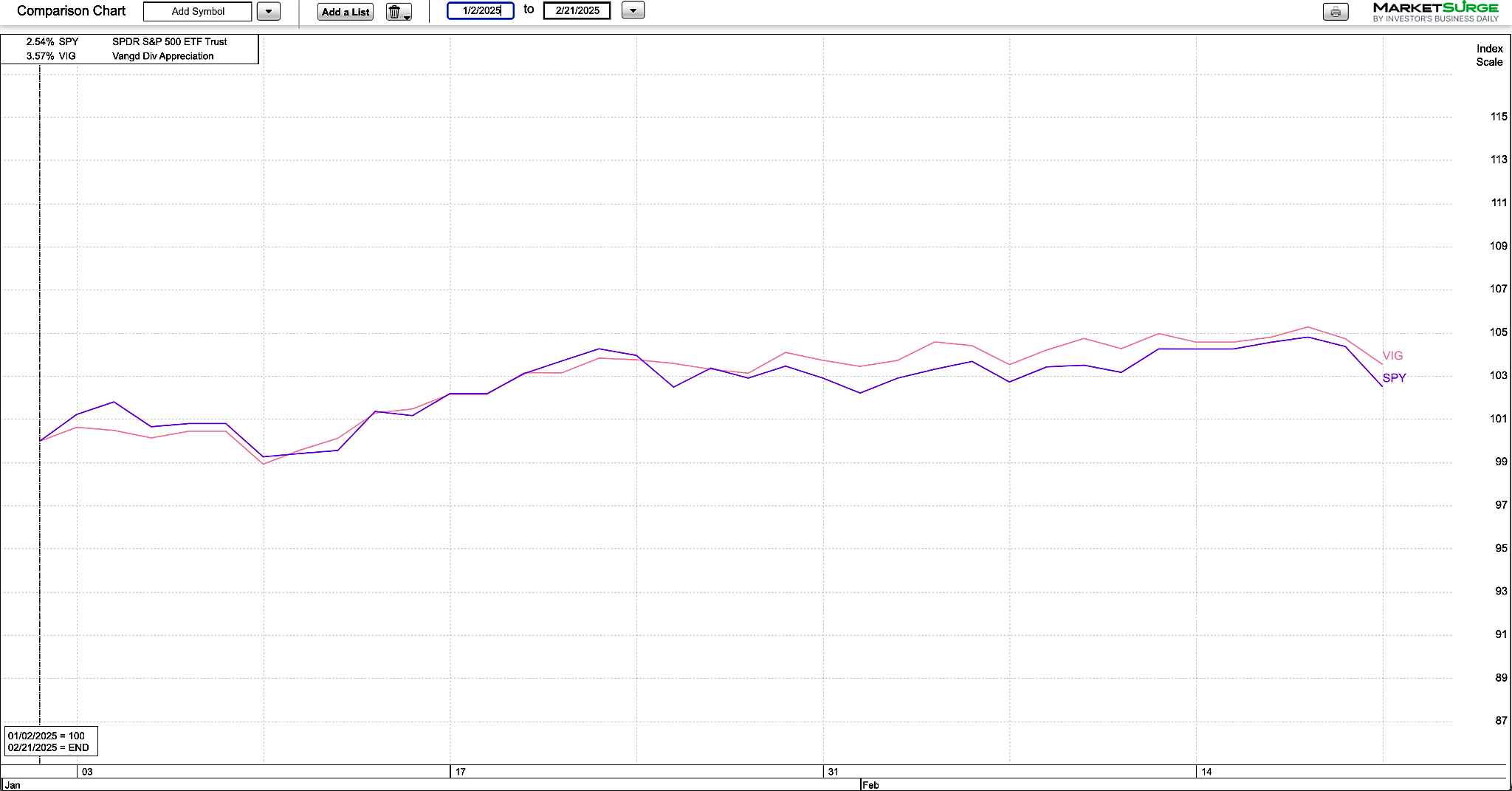
Stocks are holding up well despite plenty of political and economic uncertainty.
But it’s not much of a stretch to rattle off the potential pitfalls that could derail this year’s already precarious rally. Here are a few:
- Tech overconcentration
- Interest rates
- Shaky consumer confidence
- Federal deficit
- Stubborn inflation
- Tariffs
- Potential for growing unemployment
Economic downturns or even pessimistic market sentiment can wreak havoc on investment portfolios.
That’s where dividend stocks come in: They offer a recession-proof strategy by providing steady income and long-term growth potential.
Here are a few tips for using income stocks to preserve capital and smooth out withdrawals during a market pullback or recession.
How to Use DRIPs for Long-Term Growth
Dividend reinvestment plans (DRIPs) allow investors to automatically reinvest their dividends into additional shares, fueling compounding without needing extra contributions.
- Benefits of DRIPs:
- Maximize compounding: The more shares you own, the larger your future dividends.
- Benefit from market pullbacks: Reinvesting during downturns means buying shares at lower prices. That’s the first part of the “buy low, sell high” equation, but too often, investors balk at buying stocks trading lower.
- Eliminates market timing: Dividends are reinvested automatically, reducing the need for decision-making.
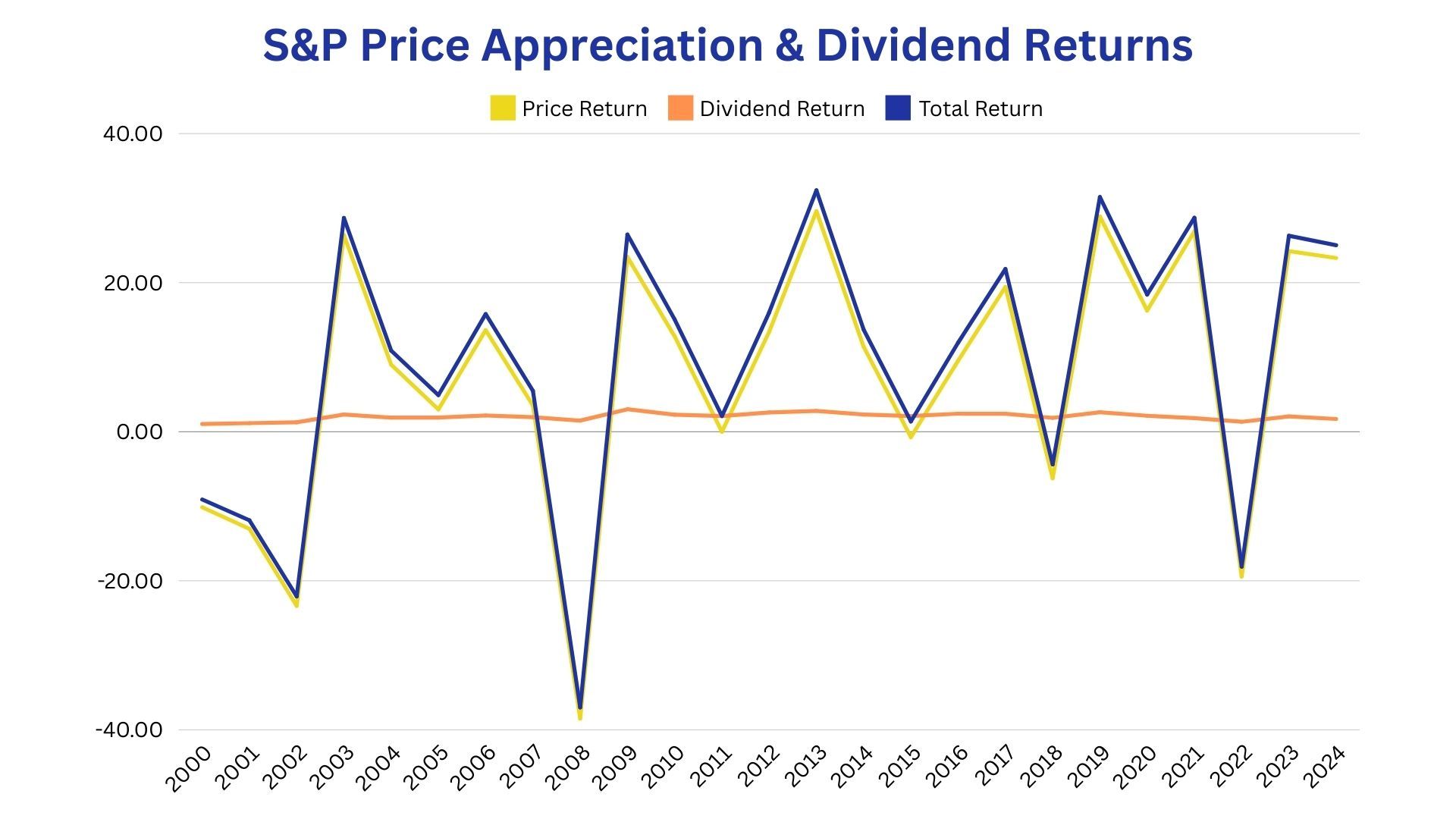
Avoiding Dividend Investing Mistakes During a Recession
Believe it or not, even though dividend investing is more conservative than trading, you can still make some big mistakes.
Those include:
- Chasing high yields. Jumbo-sized yields, such as those above 7% or 8%, often indicate that a company is in financial trouble.
- In early 2025, Walgreens WBA suspended its quarterly dividend for the first time in more than 90 years. Earnings have been declining since 2021, and the company was removed from the Dow Jones index in 2024.
- AT&T T struggled with its dividend due to excessive debt, and in 2022 slashed its shareholder payout.
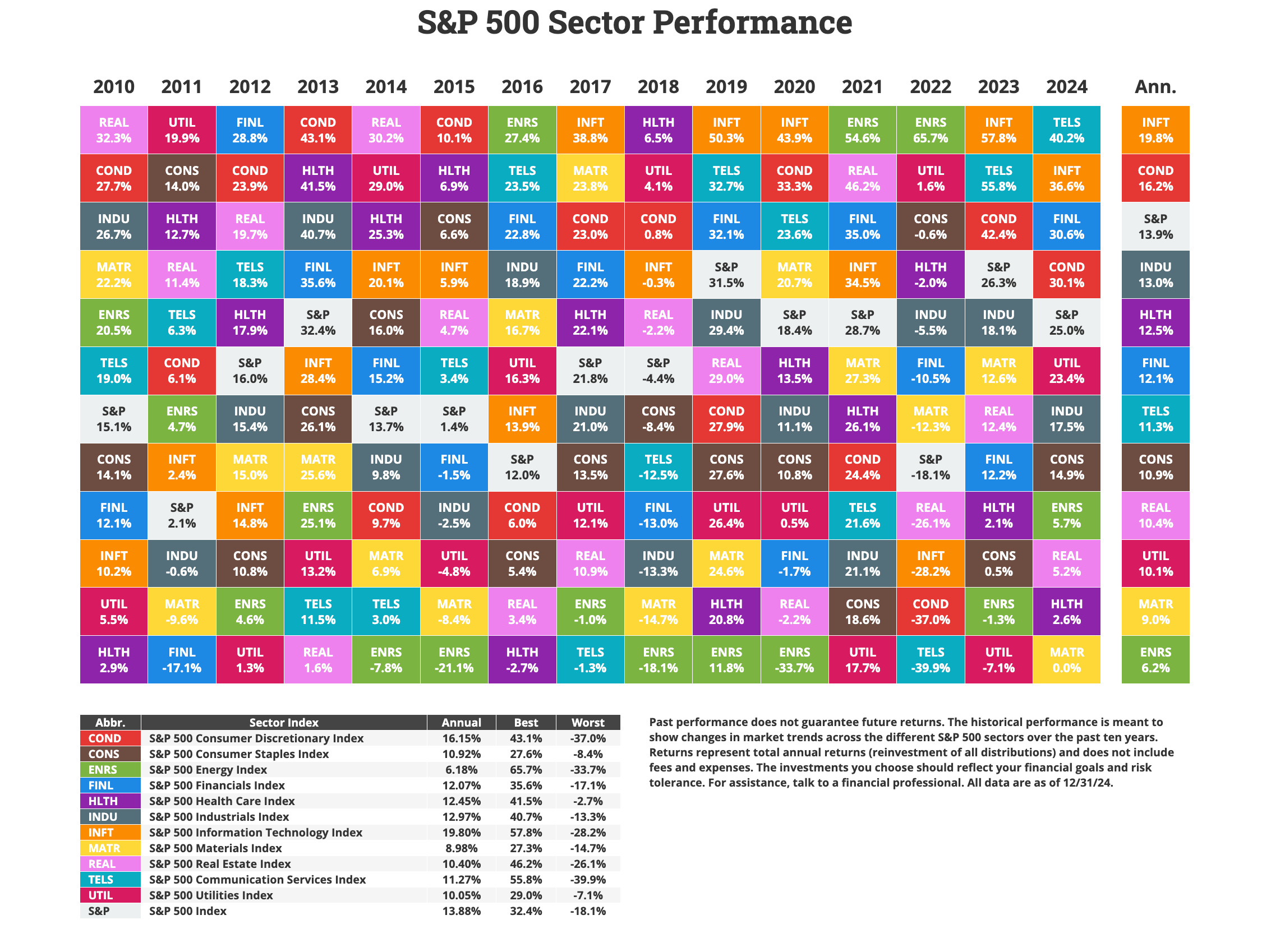
Consider Sector Strength in a Downturn
- Avoid cyclical stocks, such as retail and other discretionary sectors that suffer in recessions.
- Utilities and healthcare stocks outperform because their services remain in demand.
- Stick to consumer staples, healthcare, and utility stocks for recession-resistant dividends.