Has Pop Mart Seen the Labubu Bubble Burst?
Here’s how Hong Kong’s most dynamic stock – posting a 1,694% gain – is responding to the latest resale trends for the viral Labubu dolls.
You've reached your free article limit
You've read 0 of 1 free Pro articles.
It looks like Labubu fever may have broken.
I asked in mid-August how long the Labubu love-in could last. At that point, there was no sign of a decline in demand for the cuddly monster dolls made by Pop Mart International Group PMRTY (HK:9992).
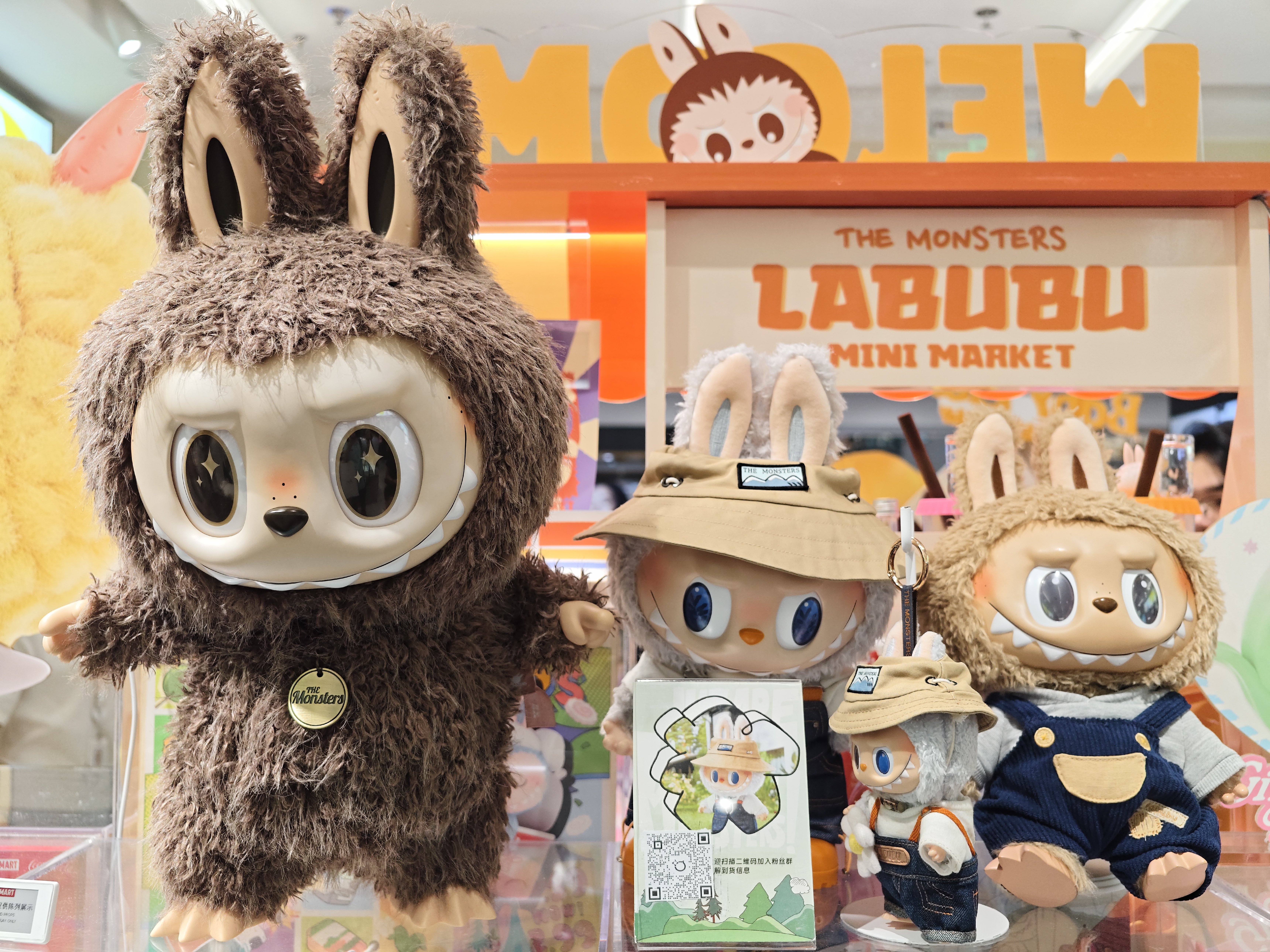
In fact, the company’s last reported sales blew the toy-store doors off their hinges. Sales for the first half of the year leapt 204.4%, while net profit skyrocketed 396.5%. That outdid, slightly, its prior guidance of a 200% sales increase and a 350% increase in profits for the first six months of 2025.
But viral trends do end, or at least peter out into dim memories of what once was. And judging by the secondary-market resale value of the latest edition of Labubu dolls, we may be headed down that road.
Lost on the Autobahn
I’ve just been reminded, on a visit back to my Bristol home in England, of how my sister lost her beloved Kiki doll that she was waving out the window of our car while we careened down the autobahn in Germany. The Kiki fell out of her hand, and the doll – known as Monchichi in Japan, where the line of stuffed money toys originated – came to rest in the median. Only by telling her that the rabbits would care for Kiki could we stop her incessant sobbing.
Kiki dolls, licensed by Mattel in the West, were all the rage in the early 1980s. The Rubik’s Cube had its heyday around the same time – I don’t recall, but a young me may well have been fiddling with a cube just as my sister lost her doll out the window – and a series of other toys followed: Cabbage Patch Kids, Beanie Babies, Tamagotchi, bobbleheads, and so on.
Labubus are unusual because they have morphed from kids toys to adult haute couture accessories. Blame the K-Pop band Blackpink, and most specifically the members Lisa and Rosé. Lisa, the stage name of the Thai singer Lalisa Manobal, posted an image of herself hugging a large plushy in April 2024. Interest across Southeast and then East Asia soon spiked.
A Vanity Fair 'Secret Obsession'
Lisa fed into the fervor. She then gave a video interview with fashion and culture trendsetter Vanity Fair discussing her “secret obsession,” delving into the intricacies of collecting not just Labubu (no tail) but also Zimomo (tail). There's also Labubu's boyfriend, Tycoco, and friend Mokoko as part of the series.
Lisa also touches in that video on Pop Mart’s use of blind boxes, meaning that Labubu buyers don’t always know which doll they’re going to get. You have to buy the whole set to be sure … which the pop star says she normally does. No disappointment that way, no hard feelings.
Lisa credits a friend in Thailand for first taking her to a Pop Mart store. She was unimpressed. “I was not into it at all,” she recalls. “No, I’m not gonna spend my money on this.” Until her friends told her how hard some of the toys were to find. That sparked her interest. Now she visits the Pop Mart store in every city on tour.

Obsessed With Pop Mart Stock
I have a friend in Hong Kong who is not obsessed with Labubu dolls, but is obsessed with Pop Mart stock. For good reason. It has been the star of the Hang Seng index in the last 18 months.
At the start of 2024, the stock was changing hands under HK$20. That’s well below its initial public offering price of HK$38.50, back in December 2020. But they doubled by mid-2024, then doubled again to HK$94 heading into this year.
It is in 2025 that Labubu stock mania has taken hold. The shares set an all-time closing high of HK$335.40 on August 26, and an intraday all-time high of just shy of HK$340. That’s an increase of a staggering 1,694.1% between January 5, 2024, and the August high this year.
The shares have now sunk back to HK$273, a drop of 24.3% from their highs. And it looks to me like a longer-term decline has set in.
Resale Values in Decline
What’s driving the share-price decline is the decline in secondary markets in Pop Mart’s home market, China. It looks a lot like the greatest speculative demand is drying up.
Pop Mart recently released a blind box of 14 “little Labubu” dolls. The set of mini-dolls were announced by CEO Wang Ning on August 20, when it updated earnings forecasts, sending the shares 12.5% higher to their record levels in response. Pop Mart stock was the most-active ticker in Hong Kong that day.
The mini-Labubus – designed as accessories for mobile phones and the like – were changing hands at a peak of C¥2,600 (US$365) on release. That set is now priced at C¥1,594 on resale sites in China, compared with its original retail price of C¥1,106 (US$155). The “hidden” secret toy from the set, Heart, has fallen from a C¥991 (US$139) resale price on the collectibles-resale platform Dewu to C¥679 (US$95).
The record price for a Labubu was set in June, when a human-sized plush figurine sold for C¥1.08 million (US$151,720) in a Beijing auction.
Pop Mart attributes the decrease in resale values to its increased production. It is opening stores at a sensible pace, but can’t control the whims of fashion.
One worrying trend is that 50% of consumers polled on the Alibaba Group Holding BABA (HK:9988) site Xianyu expect prices of the mini-Labubu to continue to fall. Larger versions of the dolls appear likelier to retain their value. But there are signs that consumers are losing confidence in Labubus as a store of wealth.
Consumers set the trends that the stock price will follow. Watch the shares of Pop Mart for further descent should we continue to see resale values flag.