Earny Asks: How Will the Government Shutdown Affect My Investments?
Will stocks rise or fall? How about bonds? We'll talk about what you need to know.
You've reached your free article limit
You've read 0 of 1 free Pro articles.
What's Next, Now That the Government Has Shut Down?
In this edition, we discuss:
- How long will the government remain shut down?
- What is the economic impact?
- How will your investments perform?
Let’s not sugarcoat this. A government shutdown is a disaster.
Whether you’re one of those people who believe that the worst nine words in the English language are Ronald Reagan's famous line, “I’m from the government and I’m here to help”; or you’re one of those people who believe that the worst 18 words in the English language are “the worst nine words in the English language are ‘I’m from the government and I’m here to help,’” people will suffer. And that’s not good.
I’ve been trying to understand how this will affect us and wanted to share what contributors on TheStreet and TheStreet Pro are saying.
Earny Asks: How Will the Government Shutdown Affect Investments?
Since this is an investing newsletter, let’s get the important part out of the way. How will your investments do during a shutdown and should you continue to invest?
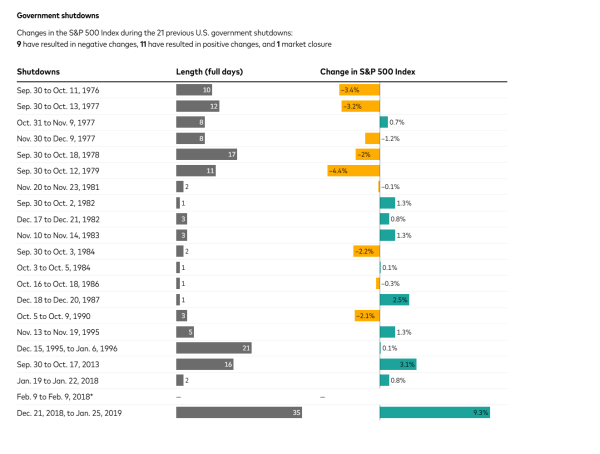
Let's start by looking back at history. TheStreet's Noah Weidner shared a study from Vanguard showing that during the 21 previous shutdowns since 1976, the S&P 500 rose 11 times and fell 9 times.
The gain in 2018 was more than 9%, but that followed a decline of nearly 20%, so the market was ready to bounce. Currently, the stock market is at all-time highs and stocks are as expensive today as they were before the dot-com bust.
Buyer beware — but not because of the shutdown.
Peter Tchir, a veteran trader and contributor to TheStreet Pro, suggests that stocks could be under pressure if the shutdown becomes lengthy and that bonds will be a good place to hang out.
In this week’s Podcast, Louis Llanes said the shutdown won’t last long but will result in additional market volatility. It’ll also hurt home sales, and both Louis and Chris Versace are trying to sell their houses. (Subscribe to TheStreet’s Stocks and Markets Podcast on YouTube or on Apple Podcasts.)
Ed Ponsi sees opportunities that he writes about in How Could the Government Shutdown Affect Your Investments? He details, with charts, the impact on stocks, bonds, gold and the dollar.
So, yeah. Stay the course with your current investment strategy. If the market falls, it won't be just because of the shutdown. But it could continue to rally, too! This is a time to be properly diversified to manage the increased volatility that will certainly come in the months ahead.

The Shutdown Will Affect More Than Just Your Investments
Here are additional comments from our team that you and Earny should know:
Tchir says the shutdown will last longer than expected. You should listen to him because the firm he works for, Academy Securities, is staffed by former military officers. His team is plugged in.
He believes that Republicans will take advantage of the shutdown to accomplish their goals. They’ll start by shutting down services that they see as nonessential and then evaluate what they think people are missing. Republicans have no incentive to make this shutdown short.
Stephen “Sarge” Guilfoyle tells us that 750,000 to 900,000 people will be furloughed. Many will be dismissed. Unemployment will rise. Businesses with government contracts will not get paid, will not have work, and will likely lay off more people.
Essential workers, like the military and air traffic controllers will work but not get paid. Can you imagine working for nothing? Sure, they’ll get paid later, but how do they pay their rent and mortgages in the meantime? And data that the Fed relies on will be cut. Restaurants and other businesses in the D.C. area will suffer.
Weidner offers a solid take over on TheStreet today. He asks: Why is this one different?
There are five main reasons why this shutdown is different:
- There’s an unwillingness to negotiate. Democrats want to save health care benefits. Republicans won’t budge and have no interest in doing so. They see an opportunity to get what they want and might be more willing to come to the table in November, when they hope to pass the full budget.
- Loss of important data from the Bureau of Labor Statistics and Census Bureau come when the Fed is beginning a rate-lowering cycle. They have lost their main tools and will have to look to outside sources for similar data.
- Jobs are on the line. Republicans have a stated goal to cut jobs. This is an opportunity to finish what DOGE started. And this could hurt your state. Office of Management and Budget Director Russell Vought and the Trump administration have committed to reductions, especially targeting blue states. Vought is an architect of Project 2025, the second Trump administration's blueprint.
- Loss of trust in the government has been increasing for years, but Weidner flags an NBC report saying that “furloughed workers at the Department of Education observed that their email accounts were "manipulated" to mail "partisan talking points" that blame Democrats for the shutdown.
- The impact to investors includes Fed rate decisions and greater anxiety among investors.
Let’s Sum It Up:
The shutdown could go on for longer than expected. If so, it could affect many more people than simply those who work in the government. People who are essential will continue to work without pay (and who wants to be in the sky when an air traffic controller is distracted?). But your investments, your home excluded, will not be significantly affected by the shutdown. That doesn’t mean your stocks are safe; it’s a risky market. But if they fall, it’s probably not because of the shutdown.