Do You Own Bitcoin? Ask Yourself Where It Gets Its Value.
Throughout history even very smart people have lost huge amounts of money 'investing' in since discredited concepts. I challenge readers to make the case for Bitcoin.
You've reached your free article limit
You've read 0 of 1 free Pro articles.
When you buy shares of stock you own a piece of a (hopefully) profitable company. That often generates capital appreciation, and sometimes dividend income over time. Selling covered calls on stocks can also provide income from their ownership if you are willing to cap potential gains at preset levels.
Owning fixed-income vehicles such as bonds, CDs or preferred shares promises set rates of interest payments over time, if the issuers or their insurance coverage live up to their commitments.
Precious metals like gold or silver have some actual value derived from their industrial usage, plus the idea that their long-term pricing could offset inflation. That concept works as physical assets cannot be “printed” like fiat-based currencies.
What do you get if you buy Bitcoin? A digital asset which has no true value. Bitcoins were created out of thin air by a creator who remains undetermined. Its price has fluctuated from just a few cents to well over $100,000 per “coin” since its inception.
The concept of “mining bitcoin” was designed to make it seem like actual precious metals or diamonds rather than something that only has value due to what people are willing to pay for it.
The graphic below shows the numerous times, since 2013, that Bitcoin pulled back by from 50% to more than 80%.
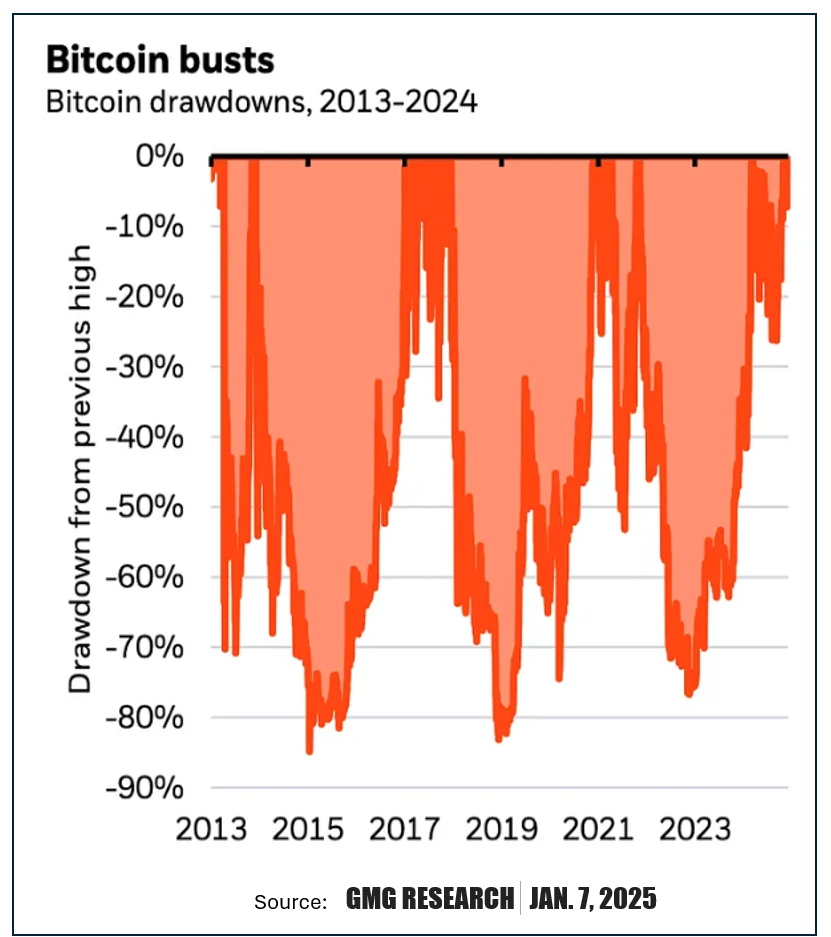
I got a text alert from Barron’s today with a blurb that said, “Bitcoin could surge to $200,000 or drop to $70,000.” Considering the chart above, I was taken aback by the audacity in that headline, which suggested $70,000 must be a future baseline.
Companies create value by earning money. I understand how Visa V and Mastercard MA make profits. They extract a percentage of every transaction they process worldwide.
The question today is, “How does Bitcoin create value?”
The only answer I can think of is, “It doesn’t.” Plenty of money is being made by intermediaries in Bitcoin trading. Lots of profits come from pocketing from bid-ask spreads and management fees for BTC funds and ETFs.
None of that, though, goes to “Bitcoin” itself.
I challenge readers to make the case for how Bitcoin can add actual value. Saying that there is a finite limit on how many Bitcoin can ultimately be created is ludicrous when there is nobody to enforce that when we cannot even know who is behind its issuance.
All the Bitcoin rules and regulations put into place in America are to ensure the IRS gets its share of any gains realized and to make it less likely that people can escape a money trail. There is not now, and never has been, a version of the FDIC to protect Bitcoin holders from unsavory, or bankrupt, custodians.
If Bitcoin markets later simply “close their doors” owners of Bitcoin could be wiped out with nobody to complain to.
The book shown below details historical financial bubbles over the centuries including the great Tulip Bulb craze when a single bulb was once worth more than the price of a fine house. It also covered the “South Sea Company,” formed in 1711, which is now believed to have been the very first publicly traded Ponzi scheme.
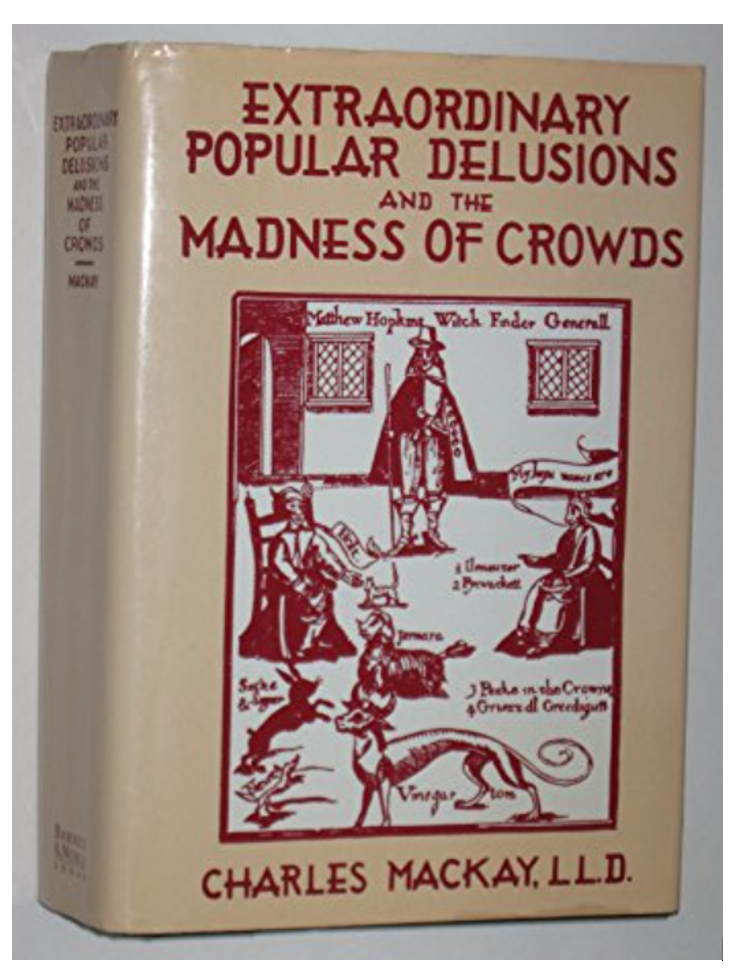
Even very smart people lost huge amounts of money “investing” in the book's list of historical, but ultimately bogus, enterprises.
More recent examples of near worthless “assets” include non-fungible tokens (NFTs) and Special Purpose Acquisition Companies (SPACs), where investors blindly put up money to fund future purchases of yet unknown target companies (in hopes for huge gains.)
You rarely hear much about either one of those now mostly discredited concepts.
My guess is that Bitcoin will end up being a chapter in some future book detailing modern investment scams, which later seemed obviously dubious.
Quite a few brilliant people that previously warned others away from Bitcoin are now “on board” in speaking about Bitcoin as a legitimate investment. The only things that really changed their minds are that the price surged higher and government regulation of BTC gave Bitcoin an aura of normalcy.
Those who forget history are doomed to repeat it.
At the time of publication, Price had no positions in any digital currencies.