Beleaguered Hong Kong Developer’s Massive Debt Burden Alarms Investors
New World Development is struggling to renegotiate its US$26.9 billion debt burden — and banks are worried they already have huge exposure to the property giant.
You've reached your free article limit
You've read 0 of 1 free Pro articles.
Hong Kong property giant New World Development NDVLY (HK:0017) has seen a bounce in its beleaguered shares Tuesday, reclaiming some of the ground lost Monday, as investors worry the Hong Kong developer will escape default despite its HK$210.9 billion (US$26.9 billion) debt burden.
The fate of New World has driven Hong Kong stocks the past few days amid the company’s unsuccessful attempts to renegotiate its massive debt load.
New World shares and bonds sold off after it announced on Monday that it would defer interest payments on four perpetual notes, putting off US$77.2 million in debt obligations that are due next month.
New World stock has been on a long downward road. They have fallen almost 90% since early 2021, and despite the bounce in Hong Kong stocks last September are still down 55.4% from a brief peak last October.
First Loss in Two Decades
That’s as a result of a four-year slump in sales. The revenue decline resulted in New World last year posting its first loss in two decades. The bank has quickly shuffled through three CEOs.
New World has been doing the rounds of Hong Kong banks, attempting to refinance HK$87.5 billion (US$11.2 billion) in loans. But the cash-starved developer has been struggling to drum up interest despite inviting more than 50 banks to participate.
Many of the lenders are concerned they already have huge exposure to the developer. The exposure is potentially so serious at a time nonperforming loans are rising that the chief risk officers of the banks are often called in to sign off on any deal.
New World has offered its crown jewel, the Victoria Dockside development on the Hong Kong waterfront, as collateral behind any renegotiated loans.
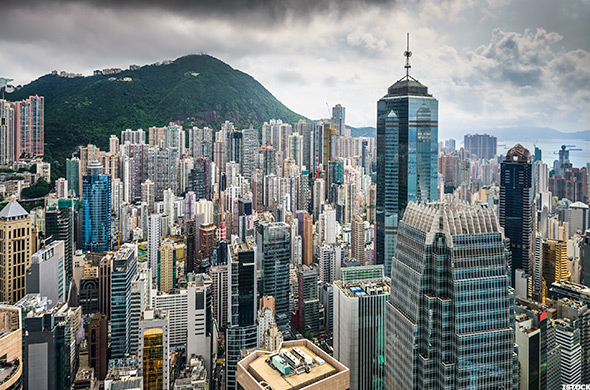
New World was founded in 1970 and is controlled by chairman Henry Cheng, the son of the founder, and his family, one of the richest in Hong Kong. It has built many of the skyscrapers that dominate the skyline in Hong Kong — the city with the most skyscrapers in the world.
Long Slump in Property Prices
At times leading the world in terms of housing prices per square foot, Hong Kong property prices have fallen 28% since their all-time high set in 2021. The property slump across the border in mainland China has starved the city of wealthy Chinese investors at a time that the Hong Kong and Chinese stock markets had been on a long losing run.
The Hong Kong property market has often been the worst performer among major stock markets until a rally last September, as Beijing pledged to stimulate the economy. While that’s stabilized the stock market, property prices tend to run around nine months behind any stocks rally, and have yet to respond.
Office property is faring even worse. The vacancy rate in Hong Kong, at 13.7% as of April, is near a historic high, while rents have now fallen for 36 months in a row.
New World worried investors when it decided not to call a US$345 million perpetual bond at 6.15% before the interest costs jump to 10%, suggesting it did not have the cash on hand to do so. The price of that bond has slumped to just over 50 cents on the dollar.
Banks See Nonperforming Loans Spike
HSBC HSBC (HK:0005) and its subsidiary Hang Seng HSNGY (HK:0011) as well as the Bank of China BACHY (HK:3988) and the Bank of East Asia BKEAY (HK:0023) are all heavily exposed to New World, and the Hong Kong property sector. Hang Seng, for instance, has seen nonperforming loans on commercial property rise to 15.1% of its portfolio as of the end of last year, up from less than 1% in 2023.
Estimates suggest that Hong Kong banks have around 20% of their total loan portfolio allocated to the property sector. The tricky part for the lenders is that if they act aggressively to call in bad debts, they risk sending property prices further south, hurting their own holdings.
Tuesday’s share rally indicates investors believe New World will not default and will come to some agreement with its lenders. It has reportedly already received written commitments on 60% of the US$11.2 billion loan renegotiation, with more lenders likely to commit.
At the time of publication, McMillan had no positions in any securities mentioned.