A very happy and healthy New Year to our wonderful subscribers and hard-working contributors and editors.
Tomorrow is the first blank page of a 365-page book. Write a good one. And remember, you don't have to see the whole staircase, just take the first step.
A sincere thanks for providing me with this platform over the last 28 years — I hope I still have a few good ones left in me!
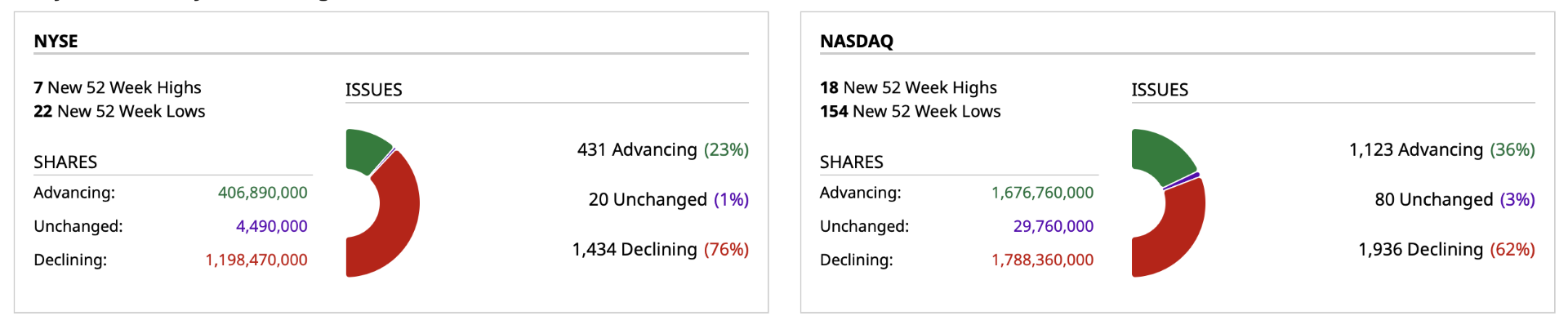
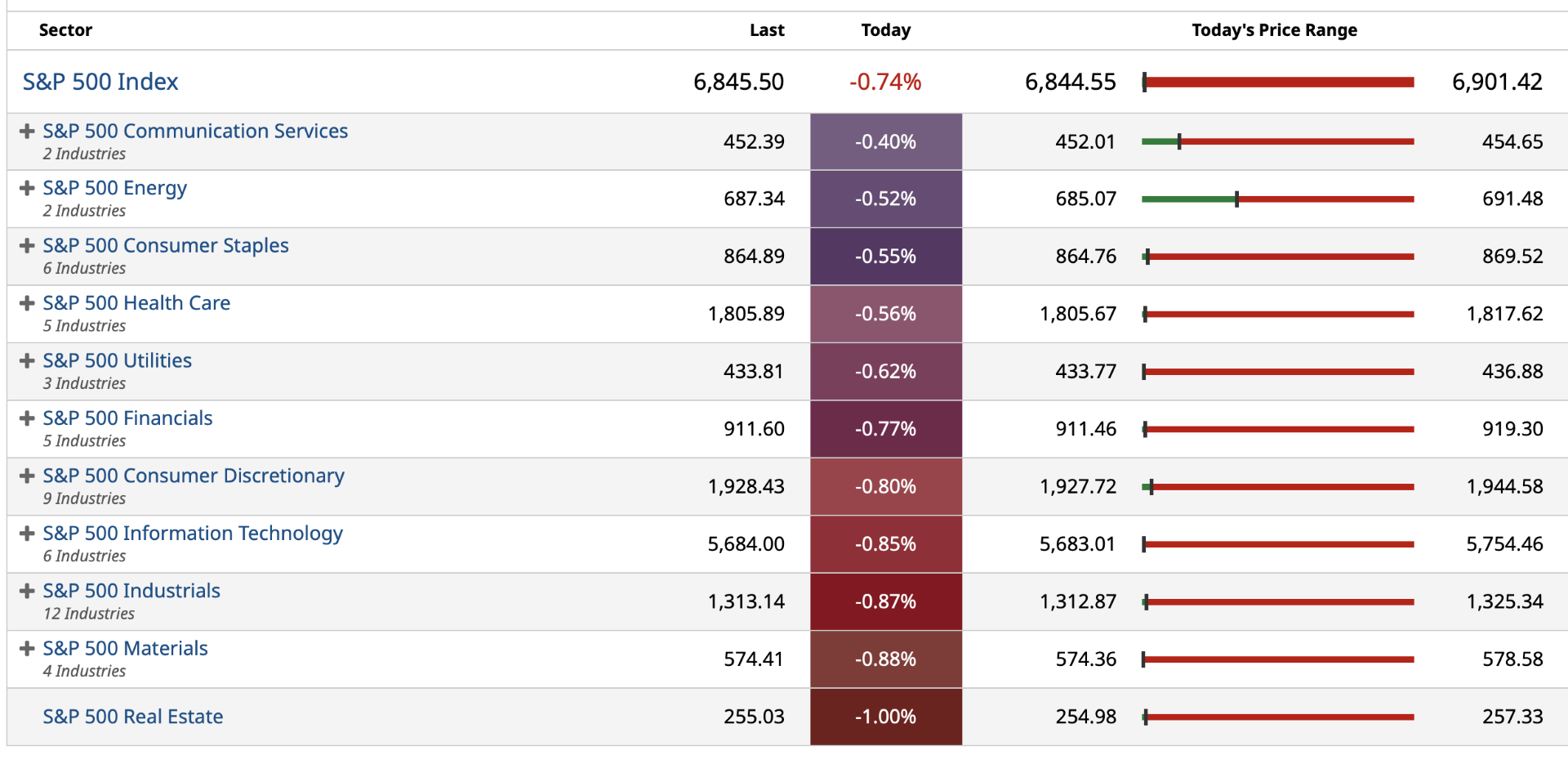
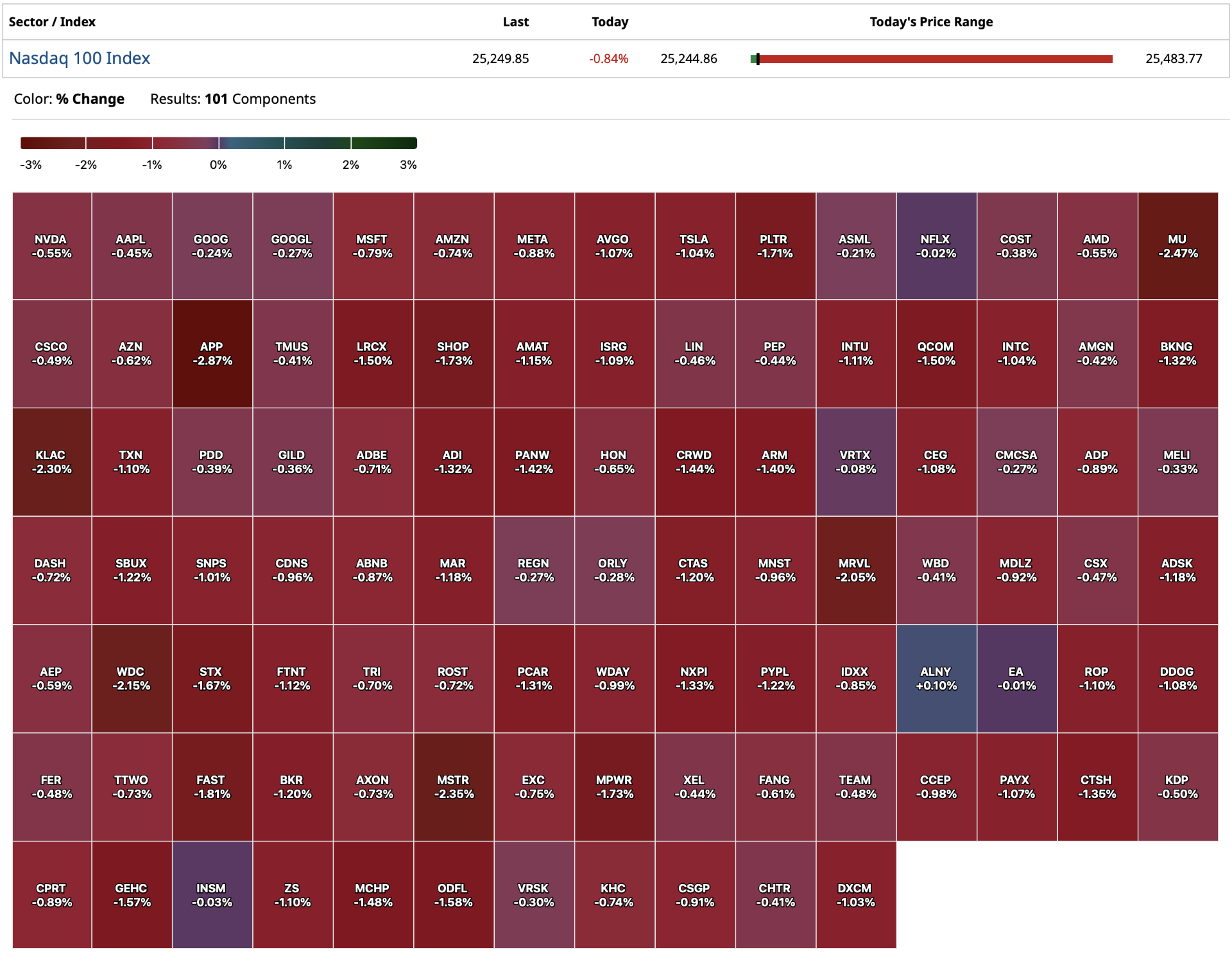
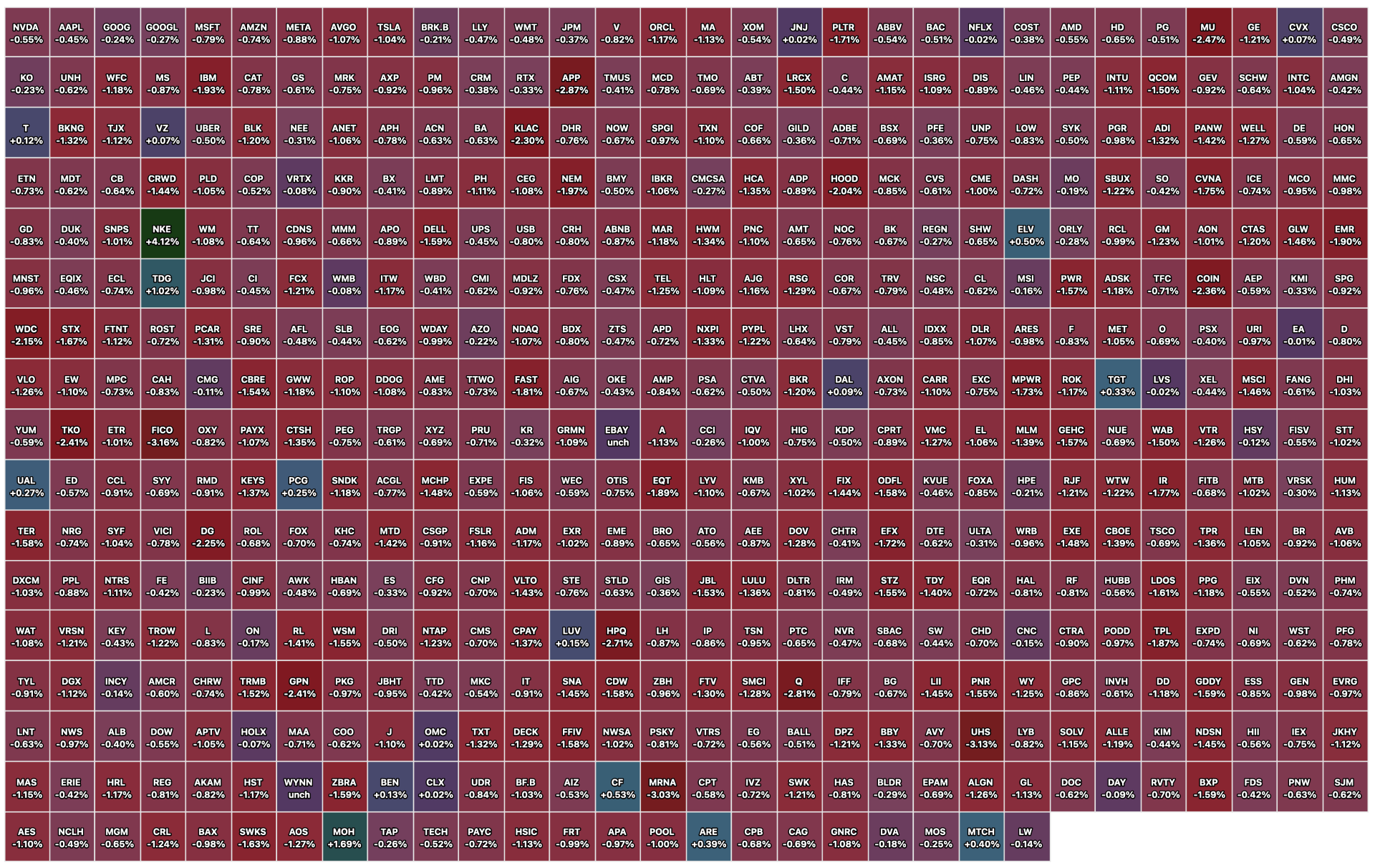
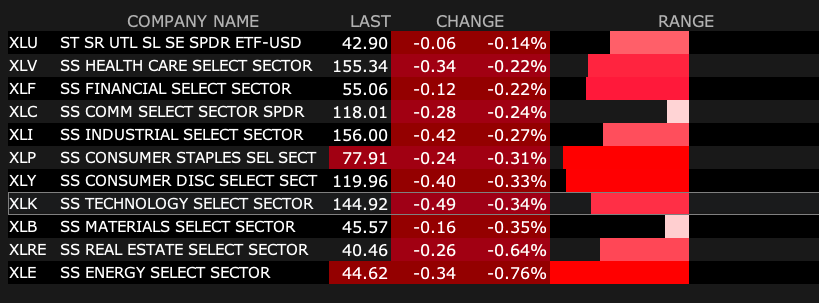
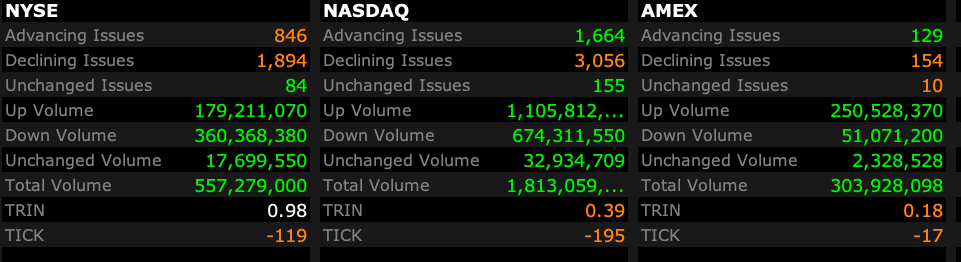
With S&P cash rallying about 20 handles (and now down by only -8) I am back shorting index calls.
I plan to give the market a wide berth over the next two hours but if there is window dressing I will be scaling into a much larger position in order to set myself up for the sort of positioning I want into the New Year.
For thousands of market participants Arthur was our boat's captain — steering the market's sometimes rough seas with agility and poetic grace:
O Captain! my Captain! our fearful trip is done, The ship has weather’d every rack, the prize we sought is won, The port is near, the bells I hear, the people all exulting, While follow eyes the steady keel, the vessel grim and daring; But O heart! heart! heart! O the bleeding drops of red, Where on the deck my Captain lies, Fallen cold and dead.
- Walt Whitman, Oh Captain! My Captain!
With Arthur Cashin's permission I reposted his daily market thoughts in my Diary for almost 20 years.
Arthur seemed to like me and I revered him — perhaps it was our mutual sense of history of the markets that brought us so closely together.
We both spoke our mind — dull to the consequences of transparency and honesty.
We both enjoyed writing our thoughts down on paper. (He literally used "paper," preferring to write out his notes by hand and delivering them to his assistant and my pal, Judi).
We both "didn't suffer fools" as he and I lacked patience and had little tolerance for the incompetent and foolish.
Arthur was religious and his religious market views were steeped in history and historical perspective. His thoughts and opinions were austere, humble and contemplative as if filled with almost monastic clarity.
Over the past three decades I spent many early evenings marinating the ice cubes with Arthur.
All of us were better off having Arthur in our lives — his pearls of wisdom will reverberate for years to come.
To honor my friend, here is the last "Sir Arthur Holds Court" in my Diary in early 2024 — right before his health began to fail:
Sir Arthur Holds Court
From Arthur Cashin:
The main influence on Wall Street during the second trading session of the year was not Spartacus or Hitler or any other notable celebrities. Rather, it was a somewhat rotund red cheeked fellow named Santa Claus and what was happening to the supposed Santa Claus rally, which seemed to be disappearing rapidly before the eyes of Wall Street traders. After a setback on the first trading day of the year, things began to look a little difficult for the Wall Street bulls as we were headed for a negative session in the second trading day of the year.
As you probably recall from the writings of Yale Hirsch, who developed the now proverbial Santa Claus rally, it is the last five trading days of the outgoing year and the first two of this year. The first trading day was a lousy session to begin with and traders became more concerned as they moved into the second session, and it did not seem to hold many promises. In fact, as they struggled through the morning, that became the topic among traders, and we touched on a good deal of that in this late morning update: The Wall Street bulls are beginning to worry that a rebellious elf has pushed Santa out of the sleigh.
This is the final day of the so-called Santa Claus rally and the last couple of days it has swung into negative territory. This is not a very good sign for the seasonal success marker. My friend, Jeff Hirsch, editor of the invaluable Stock Trader's Almanac reminds that when the Santa Claus rally fails, it puts in jeopardy or at least puts on the alert signal from a variety of other early seasonal indicators, making it a bit of an uphill fight for the bulls.
The process so far has not been at all helpful to the bulls and the lingering weakness in Apple continues to provide a slight negative tone to the market overall.
Unless the bulls can get the Cavalry out and promote a rescue rally for the afternoon, the old rule of thumb will be getting talked about and that is - if Santa comes to Broad and Wall, the bears may return to make the call. The yields are not providing much influence either way and does seem to look like the markets moving pretty much on its own internals.
Let's see if the newsticker can provide some help because the algorithms are not finding much hope in the internals. If nothing else, a negative close today may, at the very least, slowdown the insertion of funds for the New Year as money managers start to look for sectors that are showing any real promise. Remain alert. Certainly, remain wary, but please stay safe.
Shortly after the update went out, it was convenient that my pal, Josh Brown, partnered with another of my Wall Street trading friends, Barry Ritholtz, was on the screen and in Josh's own plain-speaking way nailed down what may be the causation of the Santa Claus rally disappearing and it had little to do with chart angles and moving averages and the like. It had more to do with capital gains and taxes as Josh aptly pointed out. A lot of people with that super late rally in 2023 were thinking about taking some profits and shifting sectors and not making a major decision, but basically repositioning themselves and their portfolios.
As Josh succinctly pointed out, one of things they normally would have to think about was their financial officers looking over their shoulder and saying - if you trim your position or shift your position here in the closing days of 2023, you are going to have to declare it on the taxes of this year that is now ending or if you wait and change those positions and make those decisions in the opening days of the new year 2024, you had the luxurious latitude of waiting days, weeks or even months before you had to declare for taxation purposes the day of that trade and make payments on the capital gains you might or might not owe.
What prompted this selling in the first two trading of this month - shooting Santa Claus in the foot - in all likelihood was something that had technically nothing to do with the stock market but more to do with tax positions of the entity who is doing the trading. Simply succinct and right on the mark as usual and once again, Josh laid it out to all of us that the answer was something you did not need a slide rule, calculator or a computer to determine.
Just tax timing. Pretty simple. Well, simple it may have been, but it did cause them to shoot the Santa Claus rally in its foot, perhaps even in both feet as it raised questions about the indications of the first few trading days toward the overall trading for the year 2024 and that will cause us and many others over the next several days to try and compute - are we seeing a true indication of what the balance of the years trading may look like or are we just stubbing our toe on an axiom of tax declarations. Nonetheless, the guidelines of an indicator are certainly the guidelines of the indicator. We were going to review those rather rare occurrences when the Santa Claus rally does not kick in, but overnight, our friend Jeff has magnanimously dipped into his prodigious files, and this is what he wrote:
On the heels of last year's momentous rally, the market is showing some signs of weakness causing the Santa Claus Rally to fail to materialize. Profit taking in January has become more commonplace in the last 25 years or so and January is notably softer in election years like 2024. Some profit taking is understandable following the massive rally from the end of October ranging from just over 16% for DJIA and S&P 500 to 19.9% for NASDAQ and 26.2% for Russell 2000 at their respective recent highs just before yearend. But the selling over the past few days is notable and a warning sign. Defined in the Stock Trader's Almanac, the Santa Claus Rally (SCR) is the propensity for the S&P 500 to rally the last five trading days of December and the first two of January with an average gain of 1.3% since 1950.
This indicator was discovered and first published by Yale Hirsch in the 1973 edition of the Almanac. The lack of a rally can be a preliminary indicator of tough times to come. This was certainly the case in 2008 and 2000. A 4.0% decline in 2000 foreshadowed the bursting of the tech bubble and a 2.5% loss in 2008 preceded the second worst bear market in history. Down SCRs were followed by flat years in 1994, 2005 and 2015, and a mild bear that ended in February 2016. Of the 15 down SCRs since 1950, 10 years have been up and 5 down, but the average gain is a measly 5.0%. As Yale Hirsch's now famous line states, "If Santa Claus should fail to call, bears may come to Broad and Wall."
With the Santa Claus Rally a no show we will be watching for a positive First Five Days (FFD) and January Barometer (JB), the second and third legs of our January Indicator Trifecta. Since 1950 there have been only three occurrences when SCR was down and both the FFD and JB were positive. Two out of three of those years were up over 20% and 1994 was a flat -1.5% with a 14.8% average gain on all three. Since there are only three down SCR years with up FFDs and JBs we present to you the other years with one of the Trifecta components down and the other two up. Of these 18 years 14 years were up and 4 were down with an average gain of 7.9%. So, as we said 2 out of 3 ain't bad when it comes to our January Indicator Trifecta.
Remember: if these seasonal indicators are negative and the market does not rally as it normally does during this time, we will likely shift to a less bullish posture - if not outright bearish. Thank you, Jeffrey, for that thorough review of some past occurrences.
Okay, now back to this morning. Overnight, global equity markets are once again showing signs of individuality. Japan closed down the equivalent of 180 Dow points. Hong Kong was flat. Mainland China was off about 130 Dow points and India was a bit of an odd man out, closing up the equivalent of about 250 Dow points. As we go to press, Europe is marginally optimistic. London is fractionally higher, but Paris and Frankfurt are up about the equivalent of 100 Dow points.
The calendar is not overly busy, but we begin with some job type information. Early on, we get the Challenger Layoff Report and at 8:15, we get the ADP Payroll Estimate and then at 8:30, of course, the Initial Jobless Claims and right after the opening, we get the PMI Composite. In midmorning, we get Natural Gas Inventories and, a little bit later, we get the Oil Inventories because of the New Year holiday earlier in the week.
After the close, traders will go to the newsticker to see what the Fed Balance Sheet looks like and if quantitative tightening continues and to what degree. A lot of finger pointing in the Middle East and some speculation that a further crackdown with the Houthi rebels may be in order, but no official confirmation one way or another.
Given the fact that geopolitics is bubbling up again, best stick to the current drill and that is stay very close to the newsticker. Keep your seatbelt fastened.
Stay nimble and alert and given these fractious times, please stay safe.
Based on principles from quantum mechanics—most notably Heisenberg’s Uncertainty Principle, superposition as formalized in Schrödinger’s equation (popularly illustrated by Schrödinger’s cat, which is both alive and dead until observed), and particle entanglement—a quantum system can exist in multiple possible states simultaneously until a measurement is made. Crucially, the act of observation itself alters the state of the system.
This is not mysticism; it is fundamental physics.
While human relationships and societies are not quantum systems, the logic of observation changing outcomes often appears metaphorically in real life.
- When Michael Burry exposed the mortgage-backed securities market as a house of cards, that awareness contributed to its collapse.
- When it becomes obvious to observers that Hyperscalers are "Overcapacitizing", from slower revenue growth, debt problems or other, the market will react unwell in due course.
Nothing changes until knowledge collapses the uncertainty into a definite state.
I own a lot of long expiration puts on various, what I view to be, overvalued AI stock. I have a lot of leash on them.
"Three thousand years of beautiful tradition, from Moses to Sandy Koufax."
- Walter Sobchak (played by John Goodman), talking about his Jewish faith in The Big Lebowski
Few of my columns have struck a chord as much as yesterday's tribute to my cousin Sandy Koufax on his 90th birthday. (See below)
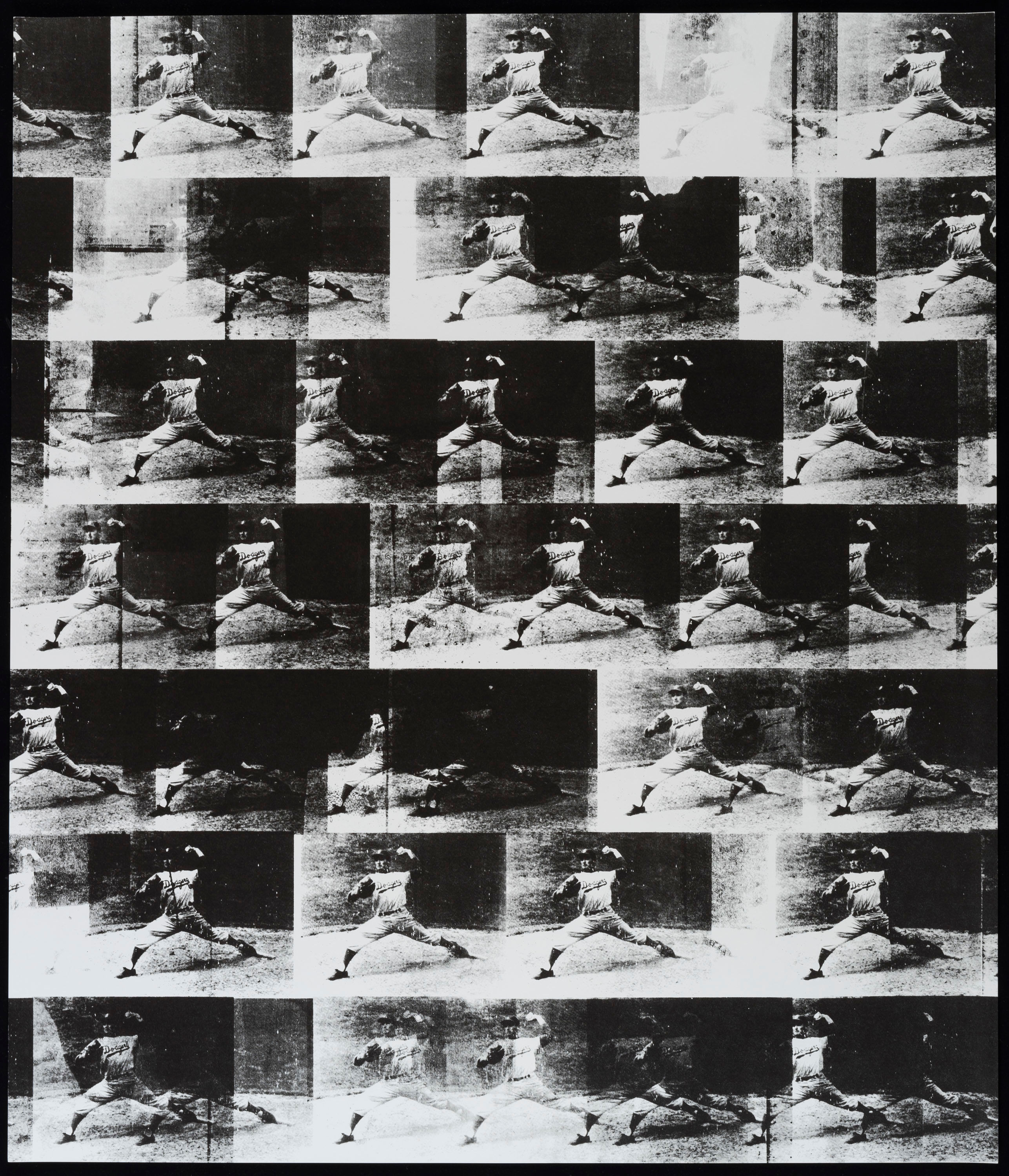
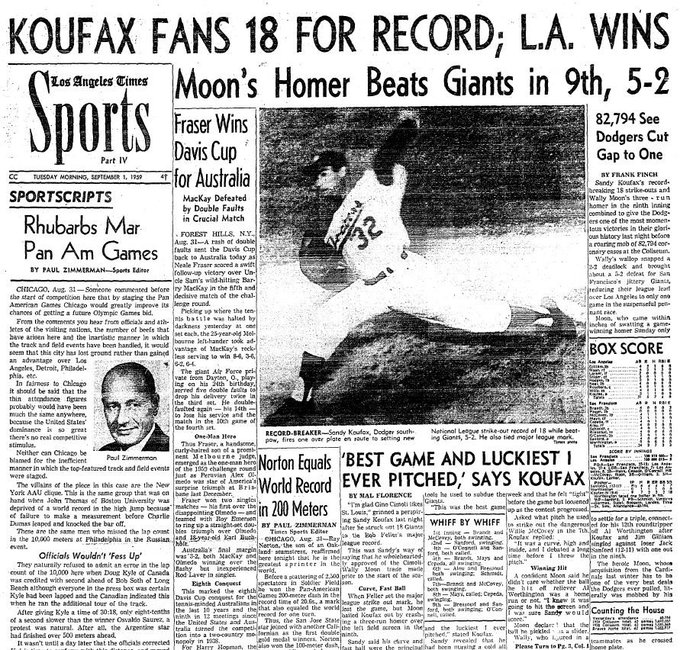
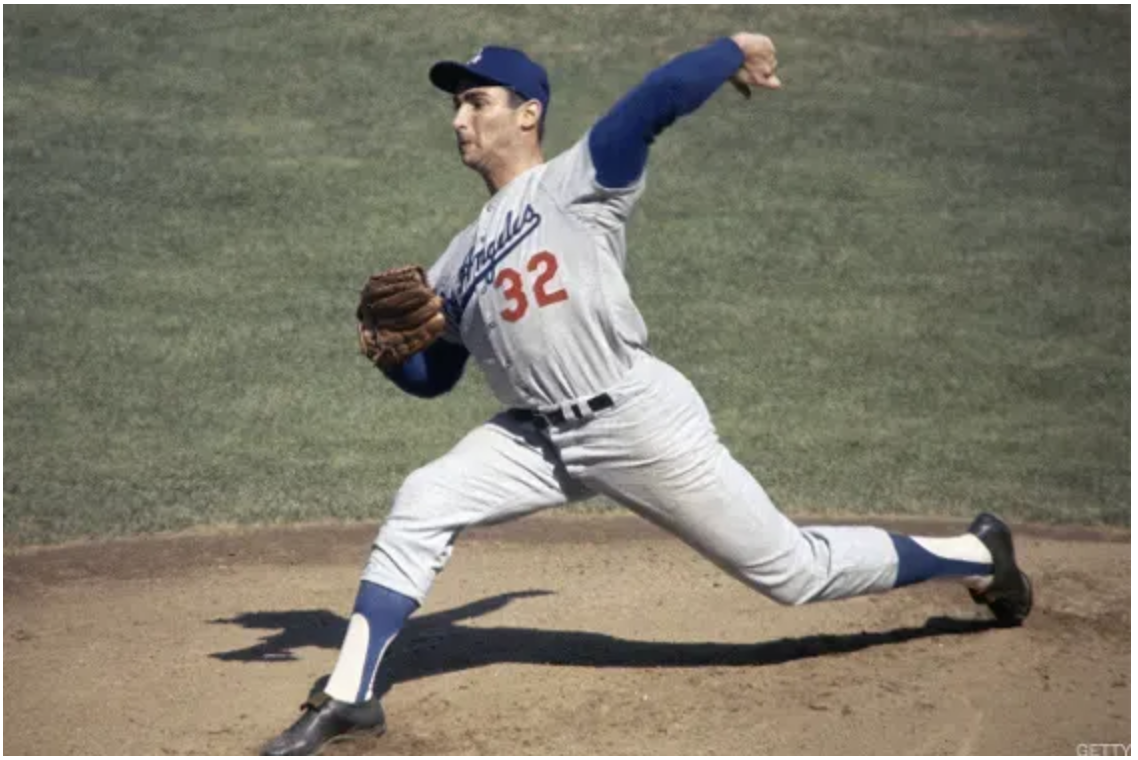
Sandy was THE GOAT — a genuine Brooklyn icon, and perhaps the greatest left-handed pitcher in the history of baseball.
Sandy was a role model.
When I was a teenager, my Grandma Jeannie Koufax told me to "always be a proud Jew like Sandy." Those words stuck with me for life.
To follow up on my column, let's start with a series of wonderful holiday greeting texts and comments about my Sandy post from my good pal (and another Hall of Famer), Jim Palmer — the fantastic Baltimore Orioles pitcher (who has the distinction of being the only major leaguer to hurl World Series game wins in three different decades!). Jim (#22) also reminds me (regularly!) that he was the youngest pitcher to have a complete game shutout in a World Series, doing so nine days before his twenty first birthday in 1966, in which he defeated Sandy Koufax in Sandy's last MLB appearance.
From Jim Palmer yesterday:
"Dougie, Sending Susan, Spencer and my greetings and we hope all is well. Who is this KOUFAX GUY? Willie Davis beat Sandy that day.... 0.0 going into the fifth inning and then Willie made the three errors. Typical Sandy game... The Dodgers usually don't beat themselves in those days... What an era, like Fenway Park - with Yaz, Lynn, Rice, Scott, Fisk, Evans -- a very tough lineup like the Dodgers!. Happy Holidays!!"
Here is a re-post of my birthday tribute to Sandy Koufax last year:
Happy Birthday, Cuz! May you stay forever young...
* Baseball is a metaphor to our capital markets.
* Sandy was a picture of perfection.
* They don't make pitchers like Sandy anymore and they don't make markets the same way they did either (and I remain fearful of market structure as a bonafide market risk in 2025).
May God bless and keep you always
May your wishes all come true May you always do for others And let others do for you May you build a ladder to the stars And climb on every rung May you stay forever young May you stay forever young
Here is one of my favorites from more than nine years ago:
Loss of (Our Market) Innocence
SEP 9, 2015 2:34 PM EDT
"We live in a dystopian investment world whose markets -- currencies, commodities, stocks and bonds -- have morphed into an Orwellian backdrop of omnipresent government intervention and manipulation that is increasingly dictated by the quant community. (Who worship at the altar of prices and price momentum and are agnostic on values.)... In recalling this past week's action, it should be clear to most that the market mechanism is broken.
As I wrote in this morning's opening missive, "A Picture of Imperfection," the market's mechanism is broken.
The collateral damage ... that has come out of a broken market dominated by quants makes both trading and fundamental investing difficult in a market that has morphed into one without memory from day to day. Moreover, "artificial" and deep gaps or advances in prices -- another outgrowth of quants' dominance in daily trading activity -- also render technical analysis less useful.
Investment Lessons From Baseball
Over the past 27 years, I have made clear my passion for the game (and purity) of baseball and the investment lessons I have gleaned from the sport.
Years ago, in "Defense Drill," I pointed out that it's not your batting average that matters in investing and trading, it's your defense that counts. Back in 2012, in "America's Pastime Applies to Markets," I recalled that I have learned over my career that (baseball) history is instructive for investors. And back in the summer of 2007 — just before all hell was about to break loose — I penned a column titled "Take Me Out to the Ball Game for a Sense of History":
But, tonight, September the 9th of Nineteen Hundred and Sixty Five, Sandy made the toughest walk of his life I am sure because through eight innings he has pitched a perfect game. He has struck out 11 and he has retired 24 consecutive hitters.
You can almost taste the pressure now... Krug must feel it too.
There are 29,000 people in the ballpark and a million butterflies.
I would think that the mound at Dodger Stadium is now the loneliest place in the world.
A lot of people in the ballpark now are starting to see the pitches with their hearts.
He is one out away from the promised land.
You can't blame a man for pushing so hard.
On the scoreboard in right field it is now 9:46 p.m. in the City of the Angels, Los Angeles, California.
A crowd of 29,139 just sitting in to see the only pitcher in baseball history to hurl four no-hit, no-run games. He has done it four straight years. And now he has capped it with a perfect game.
Sandy Koufax, his name will always remind you of strikeouts. He did it with a flourish. He struck out the last six hitters. And when we write his name in the record books, the "K" will stand out more than "O-U-F-A-X."
-- Vin Scully, calling the last inning of Sandy Koufax's perfect game 50 years ago
In marked contrast to the markets' imperfection, perfection was found on a baseball diamond in Los Angeles as 50 years ago today my cousin Sandy Koufax pitched a perfect game against the Chicago Cubs. The Cubs pitcher, Bob Hendley, threw a one-hitter — making the game, arguably, the greatest pitching duel in history.
As a teenager, I listened to the game with a small transistor radio. I moved the radio around my bedroom in Long Island to get the best reception possible.
They don't make pitchers like Sandy anymore and they don't make markets the same way they did either ("in the good old days").
Call me old-fashioned, but in Season of the Glitch, I outlined why more volatility will emerge from our broken markets and in the past I have been adamant in my view that we should KILL THE QUANTS BEFORE THEY KILL OUR MARKETS.
There have been a number of factors that have conspired over the last decade to produce the current environment, which resembles less of a stock market than a casino — providing fertile ground for the disruptive influences of quants, risk parity and other strategies that pay little heed to balance sheets and income statements:
-- Regulation: Volcker Rule, Basel III, Dodd Frank prevented dealers from providing their classical role of ensuring market liquidity and stability — in part because of lowered allowable leverage and, in part, because of a mandated reduction in proprietary trading activities.
-- The elimination of the uptick rule in 2008: This will go down as one of the dumbest regulatory moves ever.
-- The proliferation and popularity of ETFs: These weapons of financial destruction(which rebalance during the day) have taken a much larger share of trading activity as retail investors have moved away from individual stock picking and toward the use of "these baskets." (As evidence, a disproportionate amount of stock trading activity occurs in the first 30 minutes and last 30 minutes of daily trading, when ETFs "rebalance.")
-- The decline in retail investor involvement
-- The electronization of the NYSE: This has eliminated the stabilizing impact of market makers and specialists. In the past, human beings have used common sense, today emotionless machines rule the day and have recently proven disruptive to our market system.
-- The steady drop in commission rates, which gave brokerages less incentive to take the other side of a trade.
There are some easy near-term solutions to the adverse impact of our Brave New Market — including the adoption of a tax on financial (stock) transactions and/or the reimposition of the uptick rule.
Unfortunately, the SEC is asleep at the switch and, for now, we have to play the hand we have been dealt.
Bottom Line
So, get used to spending more time in a trading mode and less time in an investing mode — and given the rise in volatility, keep an eye on your portfolio's value at risk (VAR).
My cousin Sandy Koufax controlled his destiny with his golden left arm.
However, to an important degree, we — as market participants — have lost control of our markets and our investment destinies.
It's a sad state of affairs that is not likely to be resolved any time soon.
***
Finally, let me add another column on my cousin that I really enjoyed writing:
Eight years ago I wrote A Picture of Imperfection about my cousin, Hall of Fame Los Angeles Dodgers pitcher Sandy Koufax — comparing his pitching perfection 50 years earlier this month to the imperfect, quant-dominated stock-market mechanism that we face today.
As I wrote:
"In my recent column Season of the Glitch, I remarked that this is not your father's market -- it's materially influenced by quants and central planners. That makes it a model of imperfection (unlike my cousin Sandy Koufax, who pitched a perfect game 50 years ago today!)."
But something else important happened 57 years ago with Sandy — he decided to attend synagogue and observe Yom Kippur rather than pitch in the first World Series game against the Minnesota Twins.
Sandy's decision not to pitch on Yom Kippur, the holiest of Jewish holidays, still resonates today.
Don Drysdale pitched instead, but was hit hard and the Dodgers lost. Sandy came back from the Jewish holiday the following day and pitched Game Two, but gave up two runs in six innings as the Twins won 5-1 and took a 2-0 lead in the series.
Drysdale and fellow pitcher Claude Osteen won in the next two games for the Dodgers and tied the series at 2-2, then Sandy pitched a complete-game shutout in Game 5 to give the Dodgers a 3-2 series lead. But then the Twins won Game 6 to force a seventh game.
Sandy started that last game on just two days rest. Pitching through fatigue and severe arthritis, which would eventually end his career, Sandy couldn't throw his curveball and pitched nearly the entire game relying on fastballs instead.
But Sandy still managed to strike out 10 Twins en route to a three-hit shutout, winning the series for the Dodgers and a second World Series MVP award for himself. He was also named the Sports Illustrated 1965 "Sportsman of the Year."
Sandy started his pro career in 1955, but didn't blossom into legendary status until 1961. His stats were as dominant as any pitcher in the majors, but it was his final four seasons (1963-66) that earned his reputation as the modern era's greatest left-handed pitcher.
He pitched no hitters in each of those four years, and his average seasonal record was 24-7 with a 1.86 ERA. He also averaged 298 innings pitched and 307 strikeouts per season — striking out an amazing 382 batters in 1965.
But Sandy's most remarkable stat of that period was that he averaged 22 complete games per season. And in his last season (1966), his record was 27-9, with a 1.73 ERA, five shutouts, 27 complete games, 323 innings pitched and 317 strikeouts. These statistics are even more amazing when you consider that every pitch Sandy threw that year was made while in terrible pain from a seriously arthritic arm and shoulder.
I suppose there are lessons to be learned from Sandy's career about perseverance, achieving success and "playing in pain." Much like investors have struggled this year. But to many, the lesson he delivered by deciding not pitch on Yom Kippur was the greatest one of them all.
I wanted to wish all of my Jewish friends an easy fast -- and a G'mar Hatimah Tovah! ("May You Be Sealed for a Good Year in the Book of Life") to everyone, Jewish or not!