Daily Diary

D
Doug Kass
DATE:

You're reading 0 of 1 free page.

Register to read more or Unlock Pro — 50% Off Ends Soon

Not logged in? Click here to log in

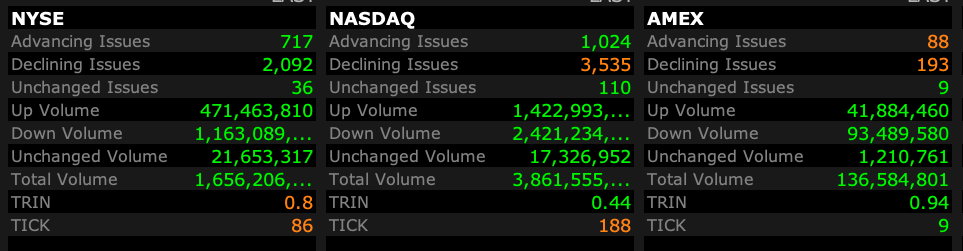
Friday's Closing Market Stats

Volume

- NYSE volume 23% above its one-month average;

- NASDAQ volume in-line with its one-month average;

- VIX index: up 22.85% to 20.54

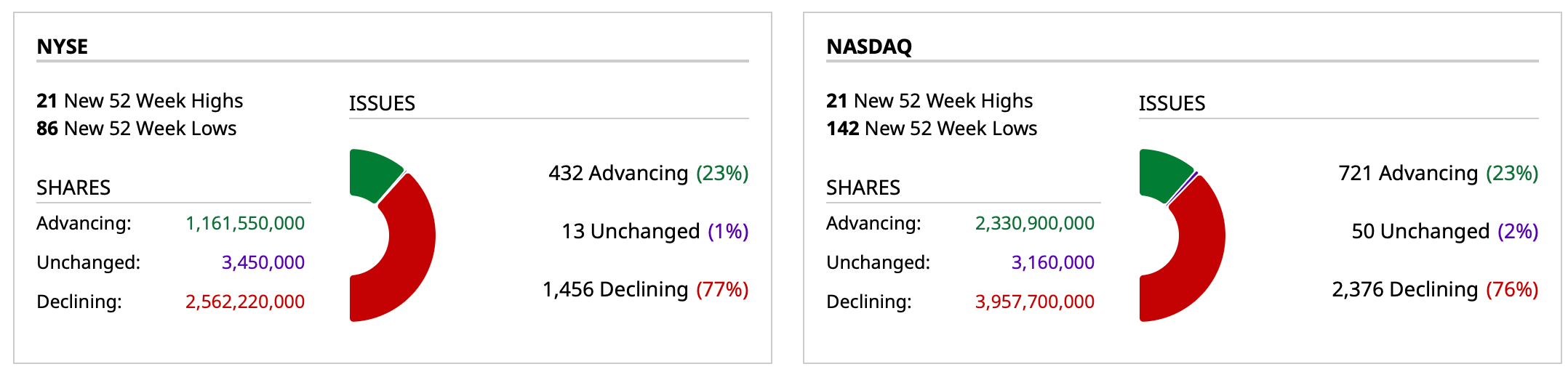
Closing Breadth

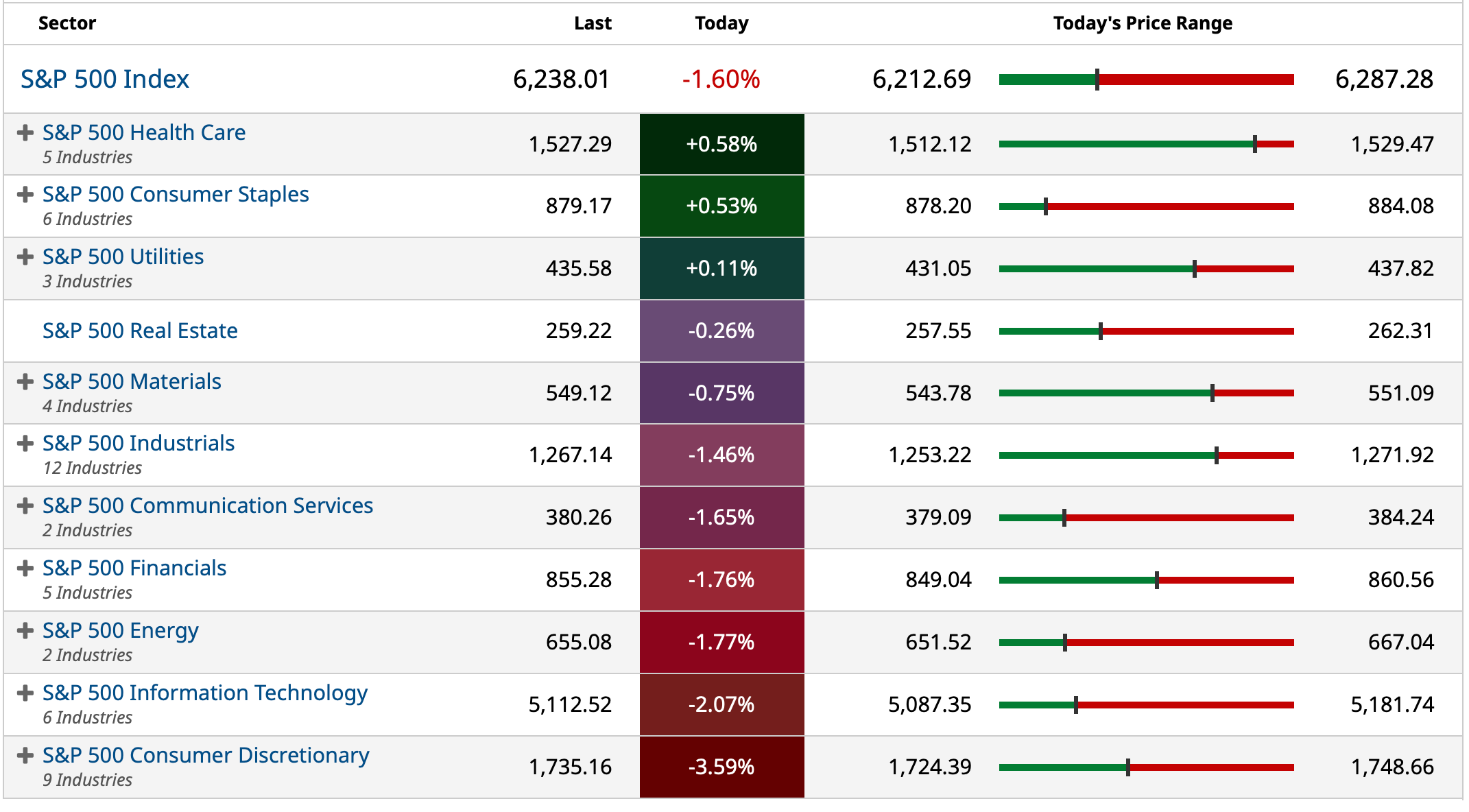
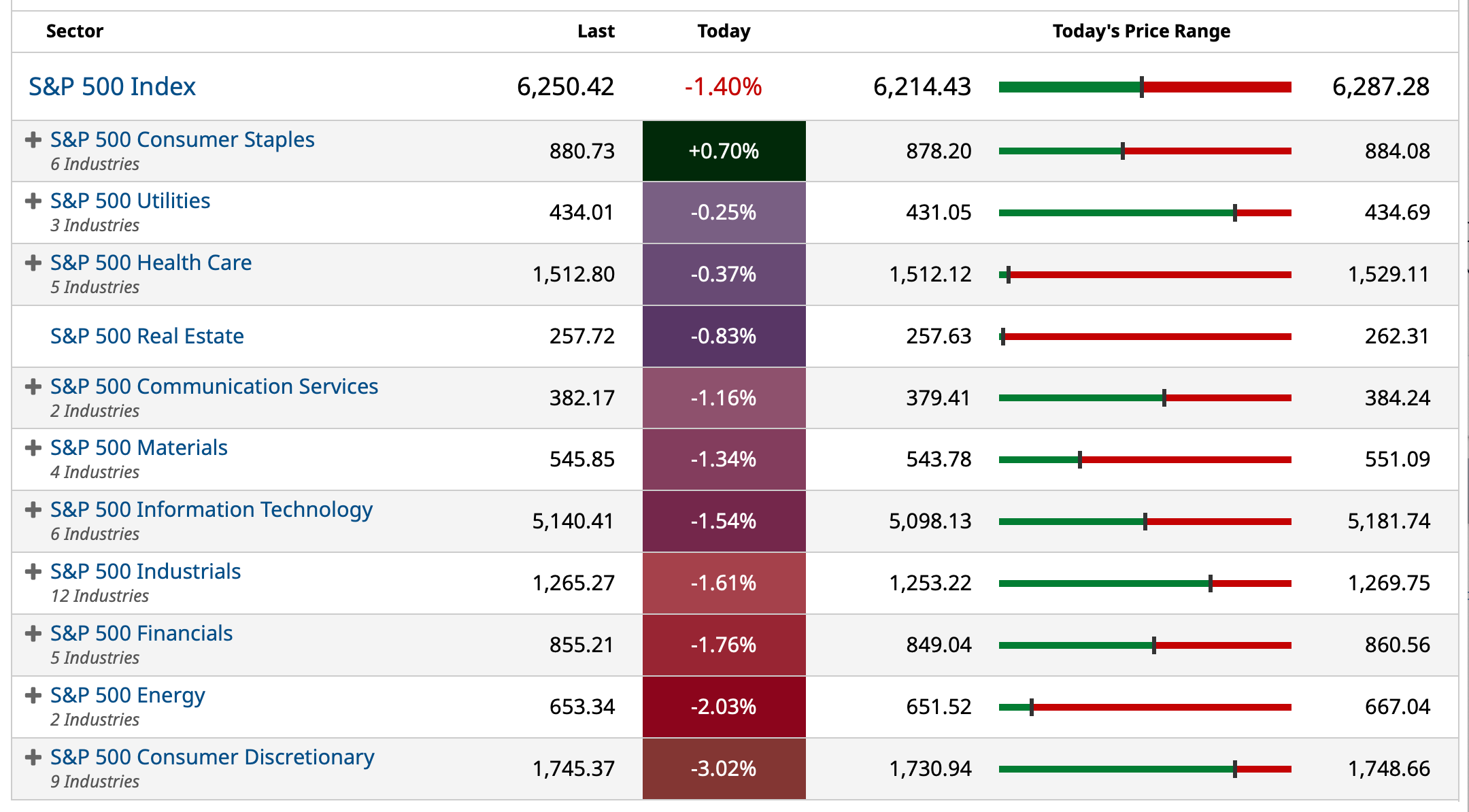
Sectors 

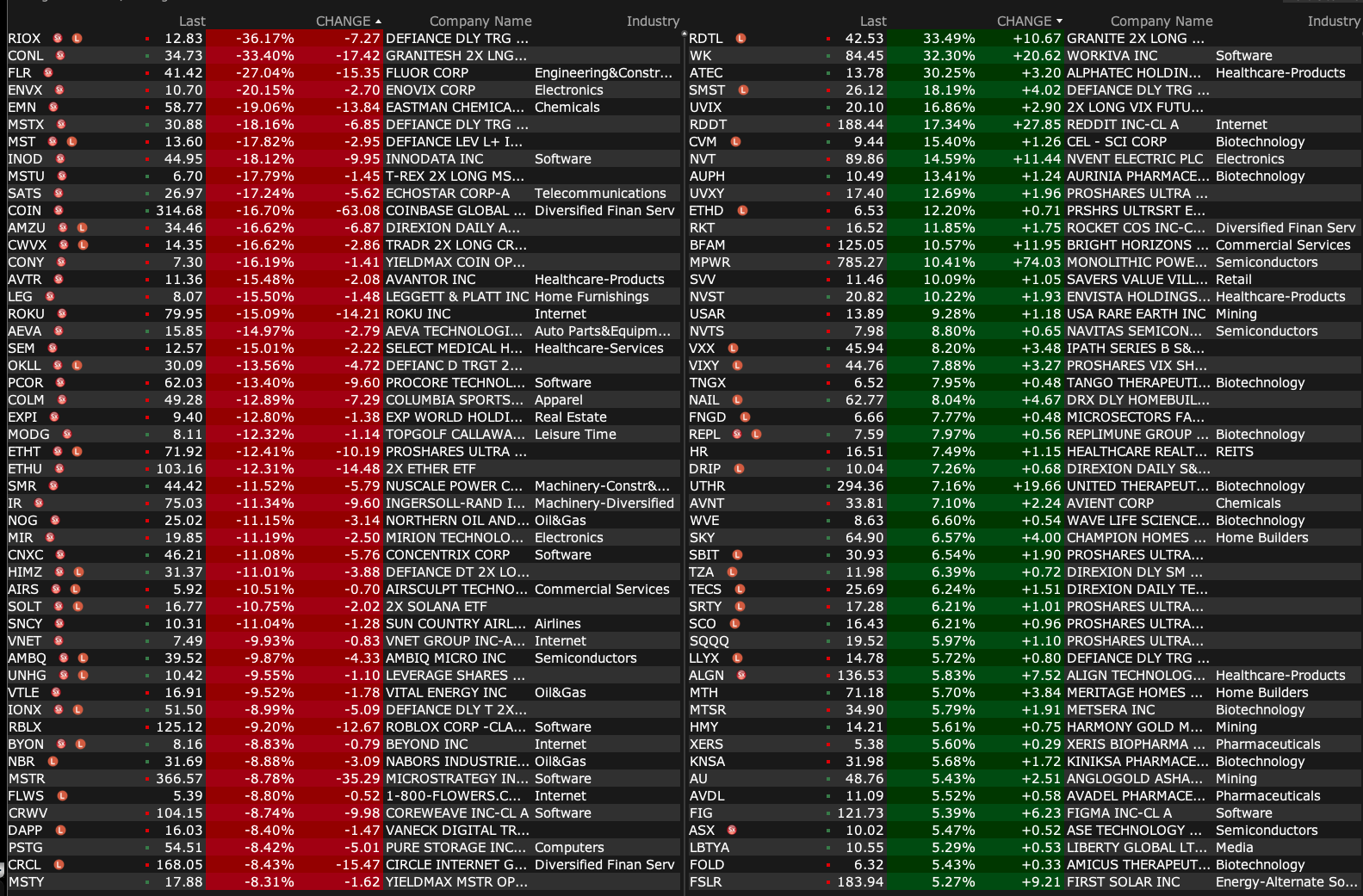
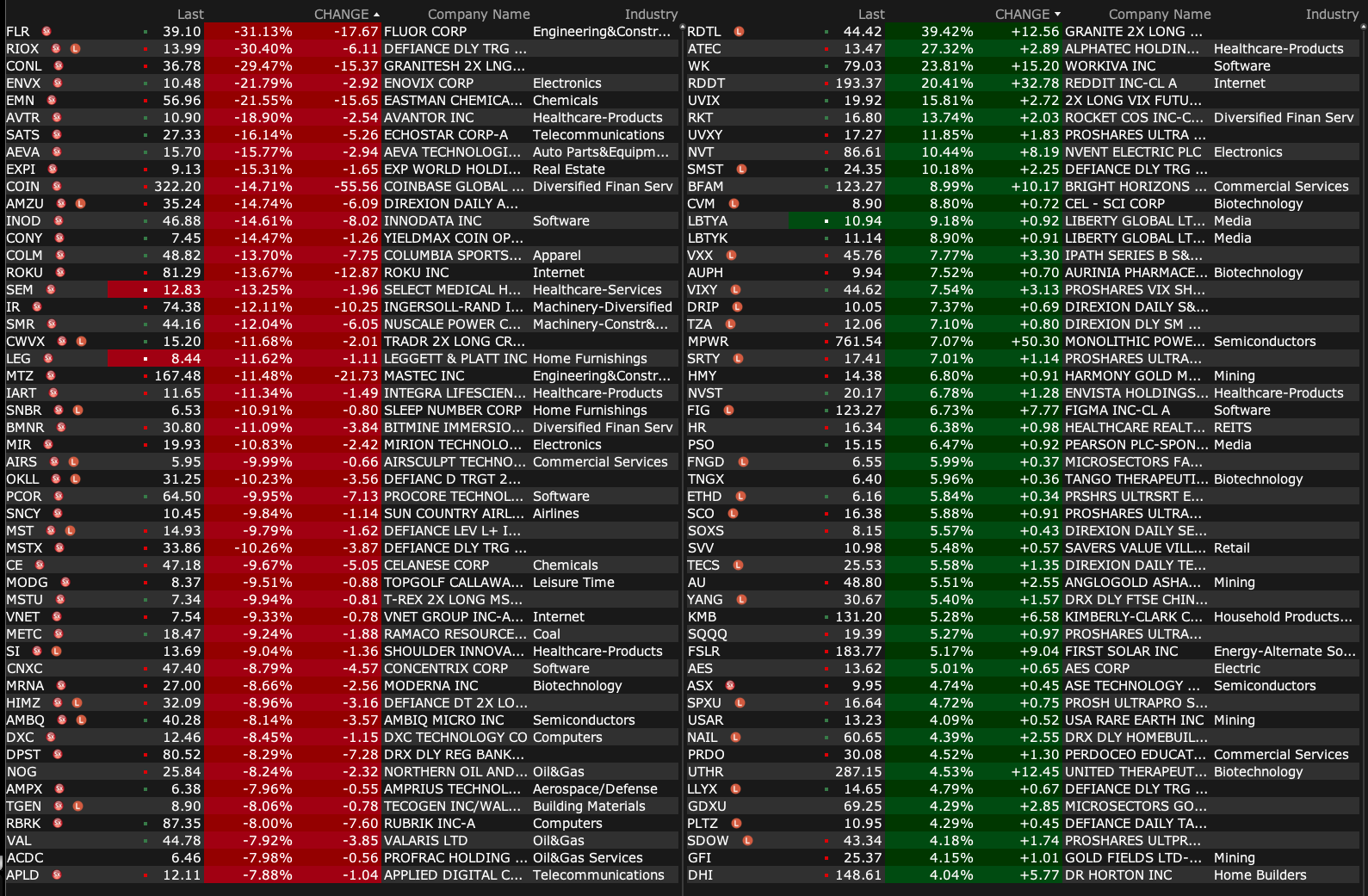
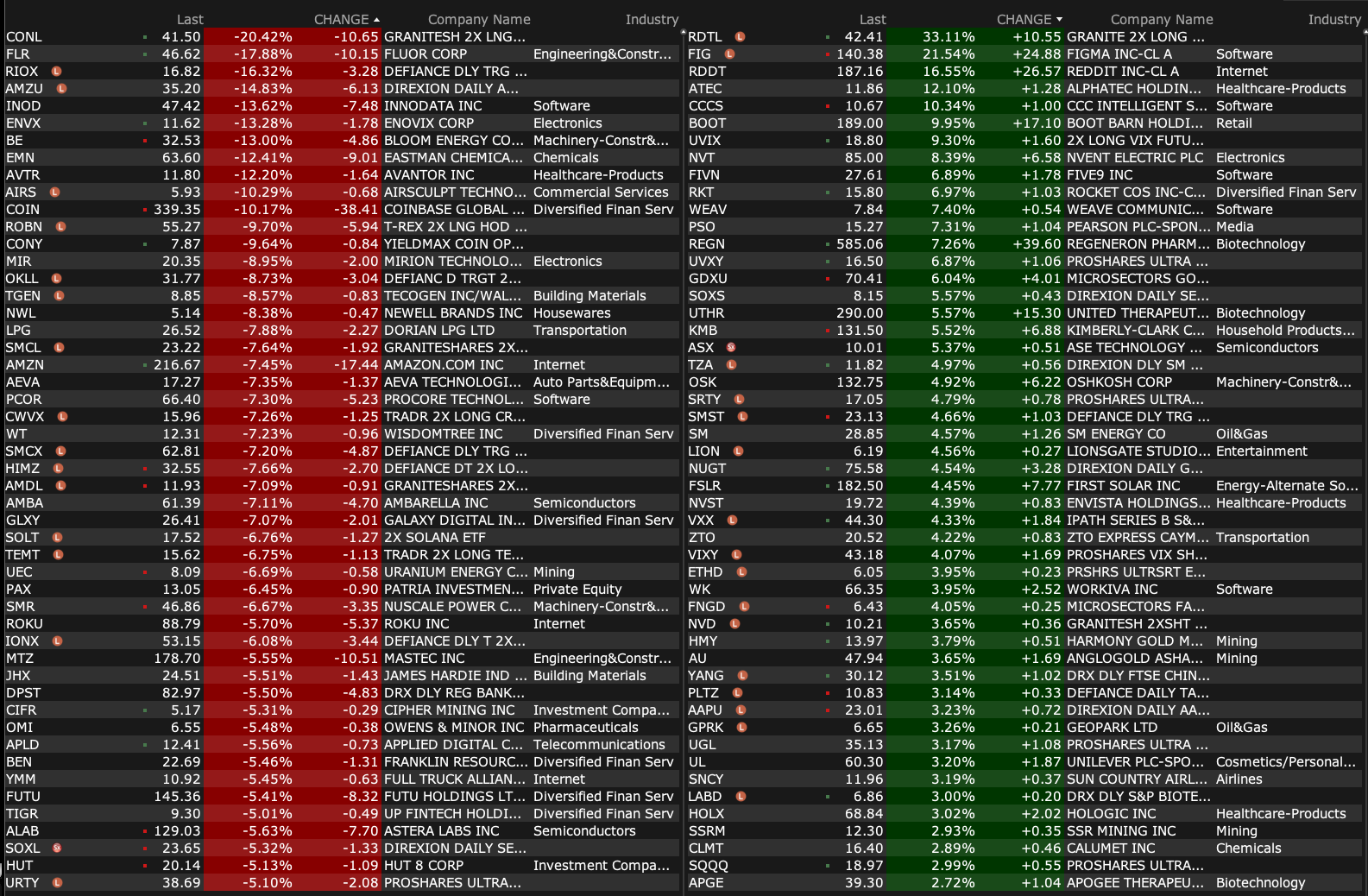
% Movers

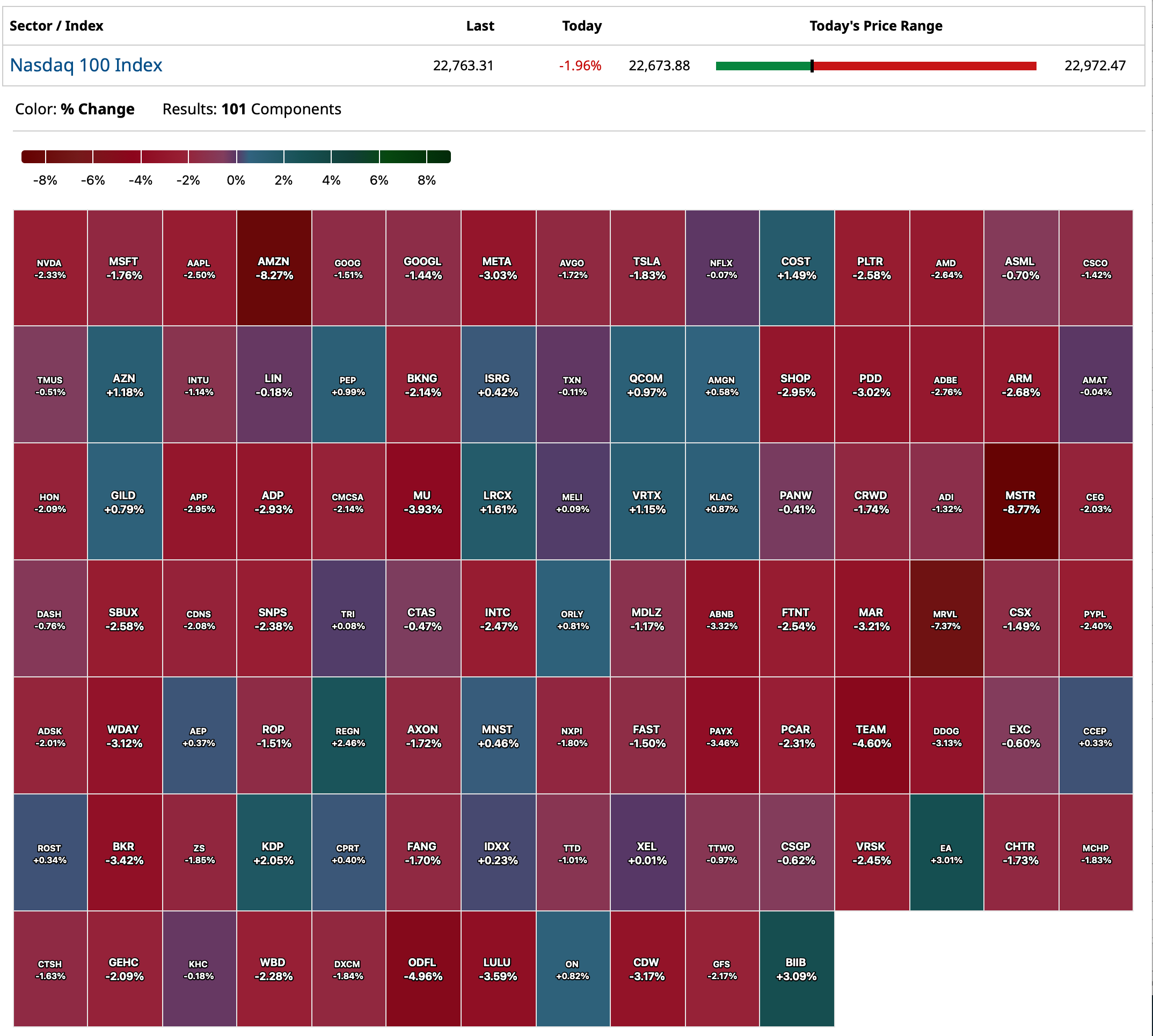
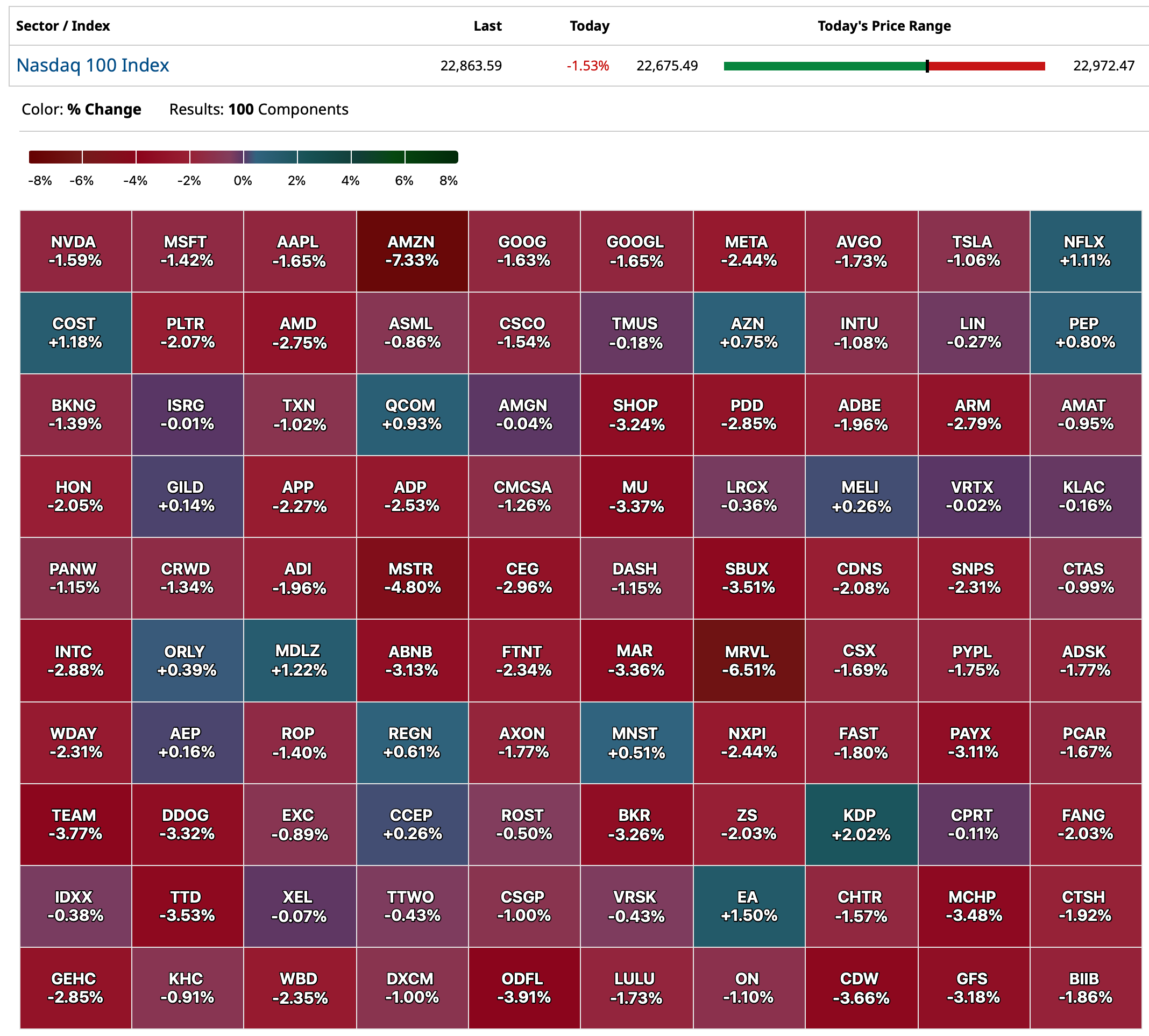
Nasdaq 100 Heat Map

BY Doug Kass · Aug 1, 2025, 4:49 PM EDT

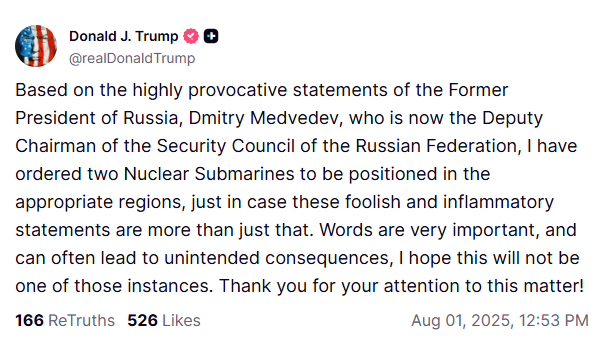
Truth (Social) Is Stranger Than Fiction

After the last two presidential tweets on Truth Social, I am going to end the day with a true story.

For over two decades, I spoke to Alan Abelson (Barron's) on every Thursday afternoon as he was in the process of outlining his column for Friday's editing and Saturday's publication.

On his birthday one year I sent a bunch of (fiction) books to Alan's residence in Croton-on-Hudson.

Ten days later I received the books back from Alan with a note saying:

"Dougie I don't read fiction because the crap that goes on in Wall Street is better than any fictional book ever written."

He was of course referencing people like Ivan Boesky, Bernie Madoff, Joseph Jett, Jordan Belfort, Michael de Guzman (Bre X), Bernie Ebbers and all the other crooks of the era he wrote about in Barron's, which outshone any fictional book ever written.

Thanks for reading my Diary today, all week and for the last 28 years!

Enjoy the weekend.

Be safe.

BY Doug Kass · Aug 1, 2025, 3:30 PM EDT

More President Trump

* I have no comment on this...

https://truthsocial.com/@realDonaldTrump/114954846612623858

I was just informed that our Country’s “Jobs Numbers” are being produced by a Biden Appointee, Dr. Erika McEntarfer, the Commissioner of Labor Statistics, who faked the Jobs Numbers before the Election to try and boost Kamala’s chances of Victory. This is the same Bureau of Labor Statistics that overstated the Jobs Growth in March 2024 by approximately 818,000 and, then again, right before the 2024 Presidential Election, in August and September, by 112,000. These were Records — No one can be that wrong? We need accurate Jobs Numbers. I have directed my Team to fire this Biden Political Appointee, IMMEDIATELY. She will be replaced with someone much more competent and qualified. Important numbers like this must be fair and accurate, they can’t be manipulated for political purposes. McEntarfer said there were only 73,000 Jobs added (a shock!) but, more importantly, that a major mistake was made by them, 258,000 Jobs downward, in the prior two months. Similar things happened in the first part of the year, always to the negative. The Economy is BOOMING under “TRUMP” despite a Fed that also plays games, this time with Interest Rates, where they lowered them twice, and substantially, just before the Presidential Election, I assume in the hopes of getting “Kamala” elected – How did that work out? Jerome “Too Late” Powell should also be put “out to pasture.” Thank you for your attention to this matter!

BY Doug Kass · Aug 1, 2025, 2:36 PM EDT

Boockvar's Summation of a Busy Week

From Peter Boockvar:

Positives,

1) Within the jobs report, average hourly earnings grew by .3% m/o/m and 3.9% y/o/y about in line while the average workweek moved up to 34.3 from 34.2 and vs 34.3 in the month before. Combine the two and weekly earnings rose .6% m/o/m and 4.2% y/o/y still reflecting good income growth.

2) The level of initial jobless claims was at just 218k, little changed with the 217k seen last week and below the estimate of 224k. The 4 week average fell to 221k from 225k and that’s the least since mid April. Continuing claims were unchanged w/o/w at 1.946mm and just off the cycle highs.

3) The June PCE inflation stats were up .3% m/o/m for both headline and core as expected and the headline figure for May was revised up by one tenth. The y/o/y gains were 2.6% and 2.8%, both one tenth above the consensus due to rounding.

4) Personal spending in June was as expected when we include a modest revision to May so no change to GDP estimates for Q2. Spending on big ticket durable goods fell for a 2nd month while rising for nondurable goods. Service spending rose again as it typically does. Income was also about as expected. Specifically looking at the private sector, wages and salaries rose 4.7%, the quickest pace since December.

5) The Q2 Employment Cost Index rose .9% q/o/q, the same pace seen in Q1 but one tenth above the estimate. Private sector wages and salaries rose 3.6% y/o/y vs 3.5% in Q1 and 3.8% in Q4 ’24 (measuring wages/salaries at individual level as opposed to above where it aggregates private sector pay) .

6) The Apartment List rental report for July said new rents were flat m/o/m and down .8% y/o/y. Of note, "The national multifamily vacancy rate ticked up to 7.1% this month, setting a new record for our index. We're past the peak of a multifamily construction surge, but the market is still absorbing all of the new units, and vacancies are still trending up."

7) The July Conference Board’s Consumer Confidence index rose 2 pts m/o/m to 97.2 and that was 1.2 pts above the forecast. For perspective, this index was at 132.6 in February 2020. The Present Situation slipped 1.5 pts, offset by a 4.5 pt rise in Expectations. One yr inflation expectations were 5.8%, down one tenth from June. The Conference Board said “Consumers’ write-in response showed that tariffs remained top of mind and were mostly associated with concerns that they would lead to higher prices. In addition, references to high prices and inflation rose in July, even though consumers’ average 12 month inflation expectations eased slightly.” The answers to the labor market questions were mixed.

8) The final July UoM consumer confidence index rose 1 pt to 61.7 and that is the highest since February though still remains well below the 101 in February 2020. The UoM said, "A rise in sentiment among stock holders was partially offset by a decline among consumers who do not own stocks."

9) From the view of the first time home buyer, S&P CoreLogic said home price growth continued to slow, iup 2.25% y/o/y in May.

10) From Amazon: "There continues to be a lot of noise about the impact that tariffs will have on retail prices and consumption. Much of it thus far has been wrong and misreported. As we said before, it's impossible to know what will happen. Where will tariffs finally settle, especially China? What happens when we deplete the inventory we forward bought or that our selling partners forward deployed in advance of the tariffs going into effect? If costs end up being higher, who will absorb them? But what we can share is what we've seen thus far, which is that through the first half of the year, we haven't yet seen diminishing demand nor prices meaningfully appreciating."

11) From Apple: While there definitely was US pull forward buying of iPhones ahead of tariffs (my wife was one of them) , "We saw an acceleration of growth around the world in the vast majority of markets we track, including Greater China and many emerging markets."

12) From Microsoft: "All up, Microsoft Cloud surpassed $168 billion in annual revenue, up 23%. The rate of innovation and the speed of diffusion is unlike anything we've seen. To that end, we are building the most comprehensive suite of AI products and tech stack at massive scale." Azure revenue growth was 34%, "driven by growth across all workloads." Their Q1 guidance for CapEx is $30b. Annualize that and it's an unbelievable 38% of their expected fiscal '26 revenue of about $318b. It was 13% in their 6/23 fiscal yr ended and 18% in 6/24 fiscal yr.

13) From Meta: With context that there are about 8 million people in the world, "We had another strong quarter, with more than 3.4 billion people using at least one of our apps each day and strong engagement across the board." Also, "On advertising, the strong performance this quarter is largely thanks to AI unlocking greater efficiency and gains across our ad system." On spending, "Capital expenditures, including principal payments on finance leases, were $17 billion, driven by investments in servers, data centers and network infrastructure." On the full year outlook, they expect CapEx "to be in the range of $66 billion to $72 billion, narrowed from our prior outlook of $64 billion to $72 billion, and up approximately $30 billion y/o/y at the midpoint...as we continue aggressively pursuing opportunities to bring additional capacity online to meet the needs of our AI efforts and business operations."

14) From Shake Shack: Comps grew by 1.8% y/o/y and "Trends improved throughout the period and into July." This was helped by "successful marketing activations, operational improvements, compelling menu innovations, and further improving the guest experience."

15) From Mastercard: "Consumer spending remains healthy, supported by low unemployment in wage growth that continues to outpace inflation. This is true across affluent as well as mass market consumers. While macro uncertainty remains due to government actions and geopolitical tensions, overall, we remain positive about our growth outlook as the fundamentals that support consumer spending have been strong...our overall cross border volumes continue to grow well in the mid teens range. This is supported by strong underlying consumer spending and a diversified portfolio across geographies and travel and non-travel spend."

16) From Visa: "Within spend categories in the US, we saw relative stability to Q2 when adjusted for leap year impacts. Both US discretionary and non-discretionary spend growth remained strong and we see no meaningful impact from tariffs...For cross border, total volume growth excluding intra-Europe remains strong and above pre-Covid levels, even with continued impacts from currency weakness and travel to specific countries. While we're not immune to macroeconomic impacts, our business has proven to be diverse, resilient and well positioned to capture the significant opportunities ahead."

17) From Hershey: “Consumption was strong across our top chocolate franchises, with Reese growth of 4%, Hershey up nearly 8% and Kit Kat up 3% in the quarter, behind our summer limited edition programs and media campaigns…Our portfolio led in share gains among the top ten Salty Snack manufacturers this quarter as our brands continue to resonate with consumers for permissible and better for you brands.”

18) From Mondelez: “If I go a little bit around the world, maybe starting in Europe, a good quarter in Europe with good numbers, strong share gains. Clearly the business is very resilient. The consumer is more confident in Europe, still quite fragile and frugal spending, but snacking continues to outpace food. And overall, I would say we feel pretty good about our European business. Consumers are not exactly bullish, and they’re focused on essentials, but they keep buying our category even despite the significant price increases that we had to do in chocolate.”

19) From Camping World: “We set a record selling more RVs than we ever have in an entire quarter, 45,000 units. We set a record in our finance and insurance department, highest amount of revenue we’ve ever generated, $200 million. And we set a revenue record for Good Sam.”

20) From Avis Budget: “So, kind of what we’re seeing in terms of RPD (revenue per day) isn’t all that different from what other participants in the travel industry are seeing. I think demand is firming up post the passage of the Big Beautiful Bill. For us, leisure is stronger than commercial right now. And pricing is more challenged than volume…But we do think that there are signs that things are firming up for the summer and I think summer is off to a good start.”

21) From EBAY: Gross merchandise volume rose 4% y/o/y, "accelerating by over 2 points sequentially. Revenue grew by more than 4%...our marketplace has proven resilient to recent uncertainty brought on by tariffs and trade policy changes...Collectibles was once again the largest contributor to growth as y/o/y growth in trading cards GMV accelerated for the 10th straight quarter on the back of continued momentum in both collectible card games and sports trading cards. Interest in Pokemon cards has surged recently, with GMV growth in the triple digits for the second straight quarter amid renewed interest from collectors and a particularly strong slate of product releases."

22) From MGM Resorts: "During the second quarter and now into July, performance on the weekends has been solid as we've been operating near capacity in our hotels across the spectrum. Our luxury offerings in Vegas maintained rate integrity with slot and table volume increasing about 4% and several properties reporting second quarter records for net revenue." Macau numbers were a record and their regional casinos did well.

23) From Sysco: “Traffic to restaurants improved throughout the quarter and Sysco specific initiatives delivered improved financial outcomes, top to bottom...All considered, Q4 was a relatively steady quarter from the perspective of restaurant foot traffic.”

24) From Royal Caribbean: “Bookings have accelerated since the last earnings call, particularly for close-in sailings. We continue to see engaged and excited consumers with roughly 75% intending to spend the same or more on leisure travel over the next 12 months. At the same time, more than half of consumers tell us they are booking closer to their departure date than they used to and for the people who intend to travel over the next 12 months, the majority have not yet booked.”

25) From Starbucks: "North America, Canada led the way with its second consecutive quarter of positive comparable sales. While in the US, comparable sales declined 2%. We are clearly in the early stages of our turnaround in the US, but our work is gaining momentum." Comps in China turned positive.

26) From Booking Holdings: They saw particular room night strength in Europe and Asia. "Asia in particular saw healthy growth, up low double digits, and we remain optimistic about our long term outlook for the region. The US continued to be our slowest growing region, but growth in the second quarter improved slightly from the first quarter and likely outpaced the broader US accommodations industry."

27) From AutoNation: "As was the case with the industry, our unit sales growth was strongest at the start of the quarter and moderated in May and June. And clearly there was a pull ahead of sales in late March and April in reaction to the tariff announcement, and it stands to reason that some portion of that demand was pulled ahead from the latter part of the second quarter."

28) Overseas manufacturing PMIs: Vietnam 52.4 vs 48.9, Thailand 51.9 vs 51.7, Malaysia 49.7 vs 49.3, Philippines 50.9 vs 50.7, Indonesia 49.2 vs 46.9. India was solid at 59.1 and Australia held above 50 at 51.3.

29) Germany said that unemployment in July rose by 2k people, below the estimate of up 15k.

30) The French economy grew faster than expected in Q2, up .3% q/o/q vs the estimate of up .1%. Consumer spending was a main factor.

31) Economic confidence in the Eurozone in July improved to 95.8 from 94.2, the best since February. Manufacturing confidence, along with services, consumer and retail all gained m/o/m while construction was down slightly.

Negatives,

1) July payrolls rose by 73k, below the estimate of 104k and there were big downward revisions to the two prior months of 258k combined. June saw job growth of just 14k with the private sector contributing just 3k vs a rebound of 83k in July. The unemployment rate ticked up by one tenth to 4.2% as expected as the household survey saw a drop of 260k, more than the drop in the labor force of 38k. The all in U6 rate rose to 7.9% from 7.7% and that matches a 5 month high and is just one tenth from matching the most since October 2021. The participation rate continued to shrink at 62.2% from 62.3% and that is the lowest since November 2022. The key 25-54 yr old cohort saw its participation rate fall by one tenth too to 83.4% but still near the recent highs. Of note too, the average duration of unemployment rose to 24.1 weeks, the longest since April 2022, a consequence of the slowdown in hiring. The 3 month average job gain is now just 35k vs the 6 month average of 81k and the 12 month average of 128k.

2) The July Challenger jobs report reflected a 29% rise in layoffs from June and up 140% y/o/y. They said “July’s job cuts are well above average for this month since the pandemic.” Over the past 10 years, July averaged layoffs of 60,398 and this July it was slightly above 62,075. They also said “We are seeing the Federal budget cuts implemented by DOGE impact non-profits and healthcare in addition to the government. AI was cited for over 10,000 cuts last month, and tariff concerns have impacted nearly 6,000 jobs this year.” Also, hiring's slowed to just around 3k, a multi year low.

3) Job openings in June totaled 7.437mm, down by 275k m/o/m and just below the estimate of 7.5mm. With the 2nd straight month of declines in hiring’s, the hiring rate fell to 3.3% which matches the lowest since June 2024 and is just one tenth from matching the least since 2013 not including Covid. The quit rate was at 2% for a 3rd straight month.

4) US GDP growth averaged 1.25% in the first half of 2025.

5) The July ISM manufacturing index fell to 48 from 49 and thus remains in contraction. The employment component fell to just 43.4 from 45. New orders were 47.1 vs 46.4 in the month before while prices paid fell to 64.8 from 69.7, still remaining well above 50. New export orders slipped to 46.1 from 46.3. Inventories fell a touch and remaining below 50. Just 7 industries saw growth vs 10 that are in contraction.

6) Bottom line from Apartment List in their July rent report, "The late spring and summer are normally the peak season for moving activity, and rent growth tends to ramp up at this time of year in tandem with demand. The fact that we've instead seen rent growth get increasingly sluggish indicates softness in the market, possibly reflecting declining consumer confidence amid a more uncertain macroeconomic outlook."

7) The MBA said purchase applications fell by 5.8% w/o/w after rising by 3.4% last week. Refi's fell for a 3rd straight week, down a modest 1.1%.

8) Pending home sales in June fell .8% m/o/m instead of rising by .2% as expected.

9) From Amazon: While AWS revenue growth has slowed to 17% y/o/y, "we have more demand than we have capacity at this point...The single biggest constraint is power. But you also see constraints off and on with chips and then some of the components that once you have the chips to actually make the servers."

10) From Apple: Tariffs will cost them $1.1 billion in the September quarter they estimate.

11) From Microsoft: One snippet of note on LinkedIn, "revenue increased 9% and 8% in constant currency with growth across all businesses, though talent solutions continues to be impacted by weakness in the hiring market."

12) From International Paper: "Industry demand in North America has been relatively stable, but softer than last year as economic uncertainty from tariffs continues to impact industrial production and box demand across the manufacturing sector."

13) From Schneider National: "We expect the economic uncertainty that characterized the second quarter to persist into the back half of the year, with trade policy continuing to evolve. In addition, the timing and impact of regulatory enforcement, such as requirements around English language proficiency and the use of B1 drivers, along with the recent legislative developments, remain unclear. Even so, we believe the most likely path forward is for the freight environment to continue its movement toward recovery, with capacity continuing to exit the market at a slow but steady drumbeat."

14) From Shake Shack: Their guidance includes the "degree of pressure on the consumer spending landscape and ongoing inflationary headwinds."

15) From Clorox: "While we delivered strong margin expansion and adjusted EPS growth for the year, we did not meet our topline expectations in the back half. We continued to see rapidly shifting consumer behaviors and broader market volatility which we expect to continue."

16) From Hershey: “This month Hershey announced a new price action on the entirety of our U.S. confection portfolio. These products represent roughly 80% of total net sales and through a combination of list price and price pack architecture, we will deliver an estimated 16 points of pricing contribution to the overall Company… This pricing announcement reinforces our commitment to covering commodity inflation with pricing over time.” Further, “Regarding tariffs, the global business environment remains dynamic as trade negotiations continue. For the full year, we are now modeling tariff expense in the range of $170 million to $180 million, below our prior expectations, due to inventory on hand, fluctuations in country specific rates, and sourcing optimization. Given the unique circumstances surrounding cocoa, which cannot be grown in the United States, we remain hopeful that tariffs on our largest exposure will improve as trade negotiations continue, though this will likely take time. We are not planning for relief in 2025 and have fully embedded these incremental costs in our full year outlook.”

17) From Mondelez: “If I go to the US, a little bit more of a difficult situation there. There’s a lot of consumer anxiety. They look at quite an uncertain outlook as it relates to their personal finances, job expectations, inflation. So they tend to focus more on essential items. The size of the basket is getting very important. Absolute price point. There’s channel shifting going on. There’s more promotions and some pack shifting too.”

18) From Wingstop: “I think you’ve heard a lot of others mention some weakening with the consumer demand to start third quarter and some industry signals have signaled some softness to the start, and I don’t think that’s any different for Wingstop. What we’ve referenced in some of our prior calls about seeing some softness in a few pockets over indexed to lower income or Hispanic consumers. I would say we really haven’t seen those pockets improve."

19) From Camping World: “On the new side, we were just slightly over $40,000 on a new ASP in 2024, and we’re operating today far below that, but we’ve already started to see that number tick up.” That means, "when margins remain constant, the amount of gross profit generated per transaction is just simply lower.”

20) From Old Dominion Freight: “Old Dominion’s second quarter financial results reflect continued softness in the domestic economy…Although the challenging economic environment has persisted for longer than we anticipated, we have remained focused on what we can control.”

21) From CH Robinson: "Although we're approaching the traditional retail peak season for ocean, the industry may not see traditional peak volumes as some retail customers are working through inventories and being highly selective and strategic about bringing in only the essential products they must import. We saw this dynamic with back-to-school ordering, and that trend is continuing as uncertainty about trade deals continues to shape customer behavior."

22) From Reynolds Consumer Products: They plan on taking price to make up for their higher costs. "So, as we said on the April call, we're expecting roughly 2 to 4 points of cost headwinds from commodities and tariffs through the year. That remains true. And similarly, as the guide contemplates full recovery of that, we're similarly anticipating 2 to 4 points of pricing."

23) From Ford: "We expect tariffs to be a net headwind of about $2 billion this year, and we'll continue to monitor the developments closely and engage with policymakers to ensure US auto workers and customers are not disadvantaged by policy change." That is a net number post their mitigation efforts.

24) From MGM Resorts: They referred to their Vegas business as "choppy." Remodeling and lower hold hurt MGM Grand "and to a much lesser degree, midweek performance at the Luxor and Excalibur" which caters to a lower income household compared to their other properties. "The lower midweek visitation in our more value oriented properties have continued in July, though we're taking advantage of this dynamic by pulling forward the MGM Grand room remodel timeline."

25) From Paypal: “the macro and consumer spending environment has been uneven. As we moved through the quarter, we observed a slight softening in retail spending in the US, most apparent in areas likely impacted by tariffs, such as Asia based marketplaces with higher exposure to goods sourced from China.”

26) From Proctor & Gamble: “What we are observing is that the consumer on both ends of the spectrum, the lower income consumer and the higher income consumer, they are reacting to the current volatility they are seeing and they are observing. And we see consumption trends consistently decelerating, not significantly, but we see a deceleration in the US. We see a deceleration in Europe and those are the biggest regions that have an immediate impact on the global category growth numbers. The volatility the consumer is seeing, I think is not necessarily grounded in their current reality, but more on what to expect for the future. So consumers are a bit more careful in terms of consumption. They are using up pantry inventory and they are looking for value either in smaller packs and promotions or in larger pack sizes in the club channel and online. That’s a behavior we’ve outlined before, but it’s not stopped. It’s continued.” And the cost of tariffs? “our outlook includes $1 billion before tax in higher costs from tariffs in fiscal ’26. This is based on tariff rates announced since July 9 and assumes USMCA exceptions…You can think about the tariff impacts in three buckets, about $200 million from materials and products imported from China to the US. Another $200 million from Canada’s tariffs on goods shipped from the US and the remaining $600 million from tariffs on goods coming to the US from the rest of the world.”

27) From Kering: “Overall, worldwide retail trends were similar in Q1 and Q2, but by region, notable changes occurred. The main feature was tourism spending, which clearly slowed down in Q2, impacted by currency moves and growing uncertainty depending on brands and regions."

28) From Whirlpool: “As expected, we navigated the challenging second quarter and continued to operate in an increasingly complex external environment. The macroeconomic uncertainty marked by elevated interest rates and evolving trade policies negatively impacted consumer sentiment. In particular, the weakness of consumer sentiment not only suppressed demand but also impacted itself as we continue to see consumers choosing to mix into lower end products. Furthermore, with the recent delays in tariff implementation, Asian competitors are not yet experiencing the full cost of tariffs and have continued to increase their imports ahead of our tariffs. In fact, we estimate that during the first half of this year, the amount of Asian appliance imports will approach the highest level on record. Needless to say that this pre-loading has created significant short term disruption, adding to the promotional intensity throughout the second quarter…it has become clear that they will extend well into the third quarter.”

29) From UPS: “Our second quarter financial results reflect the impact of a complex macro environment driven by ever evolving trade policies, as well as the significant actions we are taking to strengthen UPS’s competitive and financial positioning...Despite uncertainties around trade policies, in the second quarter the overall US economy demonstrated continued resilience. But our sector, specifically the US small package market, was unfavorably impacted by US consumer sentiment that was near historic lows. A recent research report from McKinsey showed that in the face of tariffs and other uncertainties, consumers are trading down, while at the same time splurging. For the first time in three years, consumer spending on discretionary categories like restaurants and automobiles outpaced growth in essential items.”

30) From Booking Holdings: "Inbound travel to the US was down y/o/y in the second quarter, particularly from bookers in Canada and to a lesser extent from bookers in Europe. That said, we also saw strong growth in other travel corridors, including Canada to Mexico and Europe to Asia, contributing to accelerating room night growth overall."

31) From Weyerhauser: "After a reasonably solid first quarter, housing starts have softened over the last few months, total starts averaging 1.3 million units on a seasonally adjusted basis in the second quarter. And single family starts below 1 million units. While the broader economy appears to be holding up reasonably well, the combination of weaker consumer confidence and elevated mortgage rates has been a headwind for housing activity. As a result, the spring building season was softer than we were expecting at the outset of the year, and I suspect we'll continue to see some choppiness in the housing market in the near term."

32) From Mohawk Industries: "A dominant trend across our geography is consumers' deferral of large discretionary purchases, which has reduced demand in our industry for almost three years. Geopolitical events, inflation, and low housing turnover are contributing to market uncertainty that is limiting residential remodeling and new construction. The commercial channel continues to outperform residential. However, the architectural billings index in the US is forecasting slowing conditions." In dealing with tariffs, "We have begun to address the implemented tariffs through price adjustments and supply chain optimization." By how much? They said 8% price increases are being implemented.

33) Overseas manufacturing PMIs: China 49.5 vs 50.4, Taiwan 46.2 vs 47.2, South Korea 48 vs 48.7, and Japan at 48.9.

34) BoJ Governor Ueda continues to drag his feet on raising interest rates in response to still high inflation and the clear displeasure with a higher cost of living on the part of the Japanese citizenry.

35) Germany's economy remained soft in Q2, contracting by one tenth q/o/q as expected.

36) Eurozone July CPI rose 2%, one tenth more than expected with a core rate up by 2.3% as forecasted. 2% is where the ECB currently has their deposit rate so REAL rates are zero.

BY Doug Kass · Aug 1, 2025, 2:00 PM EDT

My Tweet of the Day (Part Trois)

https://www.twitter.com/DougKass/status/1951336999396196748

BY Doug Kass · Aug 1, 2025, 1:43 PM EDT

President Trump Speaks

BY Doug Kass · Aug 1, 2025, 1:02 PM EDT

Say No to Starbucks

* Despite the recent and rapid share price decline.

I have received a number of inquiries on Starbucks SBUX from our subs as it continues to fall from earlier this week.

The shares are -$3 lower today and down by almost -$10 since earlier this week following what I felt to be a misinterpreted and positive view of the quarterly results. They were not positive (despite what Josh Brown and others seem to view).

The new CEO, Brian Niccol, effectively sold Chipotle at $60/share and got a ridiculously high pay package from Elliott when Starbucks shares languished at $75/share.

As we have learned subsequently, Chipotle was in a spiral lower.

When he got to Starbucks Niccol started off by using fancy jargon to distract from the fact that Starbucks is losing to both value and premium brands/operators. Frankly, real operators don't talk like he does, hucksters do.

Starbucks now faces a very expensive overhaul in its physical locations and product offerings (see the danish below!)

Starbucks is currently trading at more than 30x despite not covering its dividend. Stocks that don't cover dividends trade under 10x.

The brand is now very weak competitively — they aren't premium (artisans, local brands, etc.) and the previous also-rans are coming in hot with smaller footprints.

From a product standpoint they sell more chemicals, sugar and ice — it's not coffee.

Today it is the Regal Cinemas concession stand without the movies. The notion that the baristas want to hang with the customers has been lost.

I am not sure what is the best corporate comparison is, but the company is losing and the whole "Back To Starbucks" initiative seems as if the company is running out the clock so Niccol's compensation package hits and walks away with $100 million.

I can't envision a positive case for the company, which continues to be a fave of the Fin TV crowd — just listen to the CNBC crew — Josh Brown, etc. 

Here is what I recently wrote:

Passing on Starbucks and Chipotle

Over the last two weeks I have been doing a deep dive on two (economic/profit and market) underperformers — Starbucks (SBUX) and Chipotle (CMG).

I am passing on both — I would not bottom fish despite the material share-price weakness.

In summary, the two companies have morphed into overpriced purveyors of food/coffee — while the quality of their product offering has deteriorated and the selling cost of the product has risen.

Here is a $3.25 cheese danish at Starbucks. I couldn't create a danish as unappealing:

I suspect the turnaround in both companies will take a lot longer than the consensus expects.

By Doug Kass Jul 30, 2025 2:03 PM EDT

BY Doug Kass · Aug 1, 2025, 12:15 PM EDT

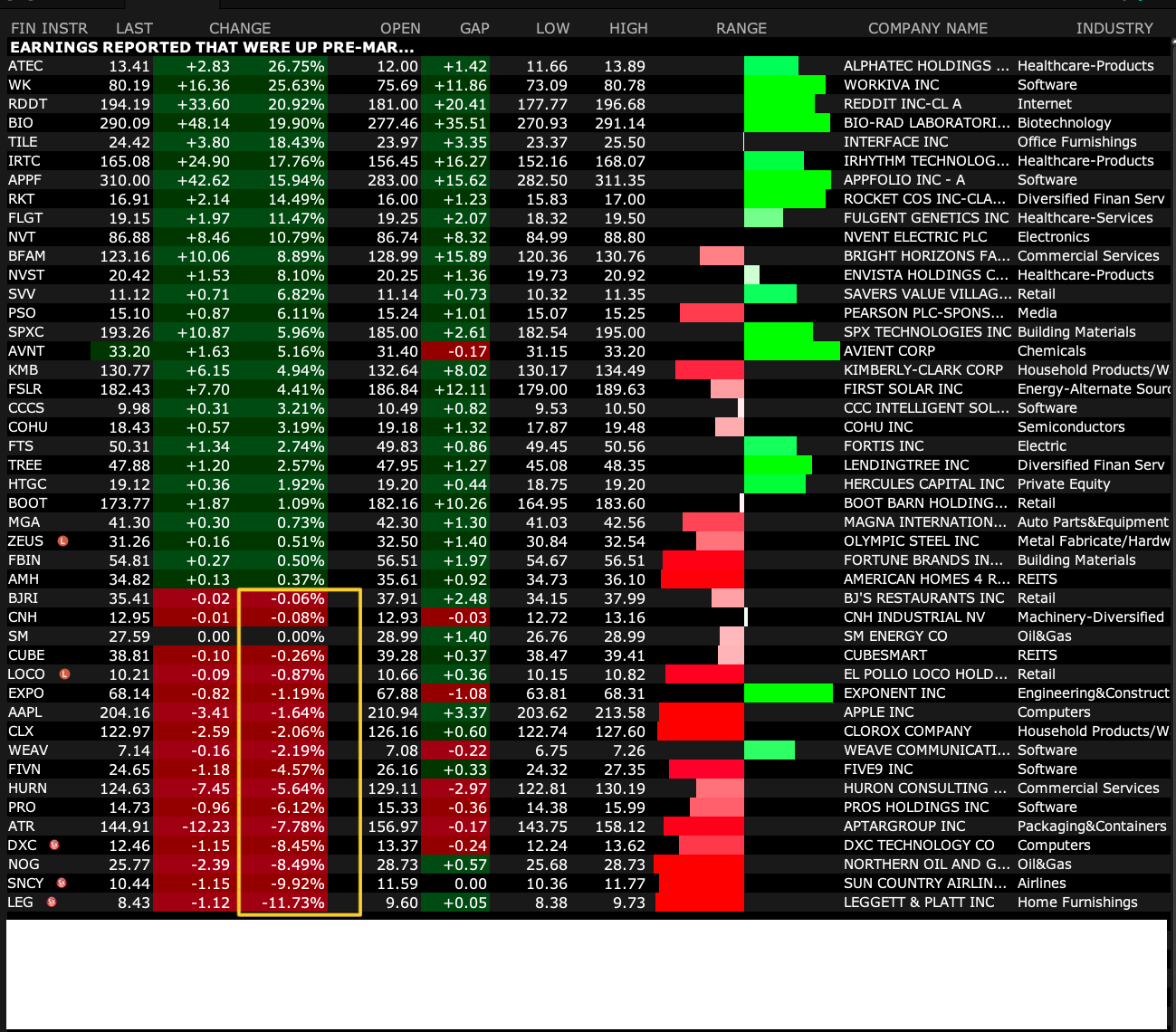
Higher Profile Eearnings Names That Reversed Since Pre-Open

Some of the more higher-profile earnings stocks that were UP pre-open and since reversed, including AAPLCLXLEGNOG.

BY Doug Kass · Aug 1, 2025, 12:00 PM EDT

High VIX, Low Breadth and More Market Stats

High VIX

- NYSE volume 29% above its one-month average;

- NASDAQ volume 3% below its one-month average;

- VIX index: up 21.47% to 20.31

Low Breadth

S&P 500 Sectors

% Movers

Nasdaq 100 Heat Map

BY Doug Kass · Aug 1, 2025, 11:30 AM EDT

Tweet of the Day (Part Four)

https://www.twitter.com/KASDad/status/1951288040153886735

BY Doug Kass · Aug 1, 2025, 11:15 AM EDT

No Index Positions Right Now

I have collapsed my long SPY/QQQ against short SPY/QQQ calls — no positions now.

I will reshort on strength.

BY Doug Kass · Aug 1, 2025, 10:52 AM EDT

My Tweet of the Day (Part Deux)

https://www.twitter.com/DougKass/status/1951283917689942272

BY Doug Kass · Aug 1, 2025, 10:45 AM EDT

Boockvar: Remind Me Why, Again?

From Peter Boockvar:

I do have an open mind on the administration's tariff strategy, I try to understand the purpose and the economic goals. But, I still can't figure it out and see only economic damage from it than any notable benefits. You want to make the US the most attractive place to do business? Further lower the corporate income tax rate and make us the next Ireland. Throw in deregulation on a variety of industries and voila, you'll have a formidable economy and competitive position. What really struck me this week with the consequences of this scattershot tariff approach rather than something narrow, focused and strategic was Ford telling us that tariffs will cost them $2 billion this year, after mitigation efforts, and they aseemble almost all of their cars in the US. You want full vertical manufacturing of everything that makes a car? You will have unaffordable cars for many and we'll be completely priced out of the global marketplace.

Here's another run through on some earnings calls and I have to reiterate how mixed and uneven it's been. To say again, the only drivers of economic growth still are anything related to the massive GenAI CapEx spend, upper end consumer spending and still large amounts of government spending that flows into the private sector, particularly interest income for savers which flows to those upper income consumers. This is all seen in the stock market too as stocks are being mostly powered by anything AI related but there are plenty of pockets of weakness elsewhere.

From Amazon:

"There continues to be a lot of noise about the impact that tariffs will have on retail prices and consumption. Much of it thus far has been wrong and misreported. As we said before, it's impossible to know what will happen. Where will tariffs finally settle, especially China? What happens when we deplete the inventory we forward bought or that our selling partners forward deployed in advance of the tariffs going into effect? If costs end up being higher, who will absorb them? But what we can share is what we've seen thus far, which is that through the first half of the year, we haven't yet seen diminishing demand nor prices meaningfully appreciating."

I recommend that Andy Jassy read The Boock Report and I can help answer some of those questions for him from what I'm hearing from hundreds of other companies, some of which we own stock in.

"We also have such diversity of sellers in our marketplace, over 2 million sellers in total with differing strategies of whether to pass on higher cost to consumers and that customers are advantaged shopping at Amazon because they're more likely to find lower prices on the items they care about."

While AWS revenue growth has slowed to 17% y/o/y, "we have more demand than we have capacity at this point...The single biggest constraint is power. But you also see constraints off and on with chips and then some of the components that once you have the chips to actually make the servers."

CapEx was an incredible $31.4 billion in the quarter. "We expect Q2 CapEx to be reasonably representative of our quarterly capital investment rate for the back half of this year. AWS continues to be the primary driver as we invest to support demand for our AI services and increasingly in custom silicon like Trainium as well as tech infrastructure to support our North America and international segments." They also are spending heavy on "our fulfillment and transportation network."

From Apple:

While there definitely was US pull forward buying of iPhones ahead of tariffs (my wife was one of them), "We saw an acceleration of growth around the world in the vast majority of markets we track, including Greater China and many emerging markets." China's 4% q/o/q growth was helped by Chinese subsidies.

"we did see some obvious signs of pull ahead really in the April timeframe around the tariff related discussions that were out in the marketplace. And so we felt that that was, from what we saw, about a 1 point impact of the 10 points at a total company level of growth. And so that was the limited impact that we really saw for the quarter."

Tariffs will cost them $1.1 billion in the September quarter they estimate.

From Avalon Bay Communities, the apartment landlord:

"While our expectations for job growth in the second half of the year are a little more muted than they were in January, demand remains healthy across most of our portfolio. And importantly, new supply in our established regions continues to decline to levels not seen in over a decade. This low level of supply should continue for the foreseeable future, given that the barriers to new development, particularly in our suburban established regions, are substantially greater than most markets across the country."

I'll argue again, renters should enjoy the slowdown in rent growth while they can because we're sowing the seeds for an eventual rise.

Sunbelt continues to be over supplied and their occupancy here is at 89.5% vs their total market occupancy, with many coastal properties, at 94.8%.

Same store revenue grew 3% in the quarter in part because most of their properties are coastal as said which has seen better rent growth.

From International Paper and whose stock fell 12%:

"Industry demand in North America has been relatively stable, but softer than last year as economic uncertainty from tariffs continues to impact industrial production and box demand across the manufacturing sector."

"Based on our order patterns through July, we expect industry box demand to remain stable in the third quarter with upside potential in Q4 if geopolitical pressures ease and economic activity improves."

On their EMEA business, "The weak market is a headwind for us, with macroeconomic volatility in the region."

"box shipments slowed sequentially in the second quarter by approximately 1%, primarily driven by market softness in April and May. June volumes, however, showed signs of recovery, which has continued into July."

From Schneider National, a stock that was little changed:

"We expect the economic uncertainty that characterized the second quarter to persist into the back half of the year, with trade policy continuing to evolve. In additions, the timing and impact of regulatory enforcement, such as requirements around English language proficiency and the use of B1 drivers, along with the recent legislative developments, remain unclear. Even so, we believe the most likely path forward is for the freight environment to continue its movement toward recovery, with capacity continuing to exit the market at a slow but steady drumbeat."

From Shake Shack, whose stock fell 15%:

Comps grew by 1.8% y/o/y and "Trends improved throughout the period and into July." This was helped by "successful marketing activations, operational improvements, compelling menu innovations, and further improving the guest experience."

You know what also helped in July? The Dubai Shake offering and I have to say, it's so good.

They took 3% of pricing vs 7% in 2024.

Their guidance includes the "degree of pressure on the consumer spending landscape and ongoing inflationary headwinds."

On the big increase in beef prices, "We are very confident that we're going to be able to mitigate a lot of this beef inflation with supply chain and operational productivity."

From Clorox and who lowered guidance last night in their earnings release:

"While we delivered strong margin expansion and adjusted EPS growth for the year, we did not meet our topline expectations in the back half. We continued to see rapidly shifting consumer behaviors and broader market volatility which we expect to continue."

From Mastercard and whose stock rose 1.3%:

"Consumer spending remains healthy, supported by low unemployment in wage growth that continues to outpace inflation. This is true across affluent as well as mass market consumers. While macro uncertainty remains due to government actions and geopolitical tensions, overall, we remain positive about our growth outlook as the fundamentals that support consumer spending have been strong."

"our overall cross border volumes continue to grow well in the mid teens range. This is supported by strong underlying consumer spending and a diversified portfolio across geographies and travel and non-travel spend."

I'll add this. When listening to credit card companies on the state of the consumer we have to keep in mind that as a collector of a 3% fee on every swipe, higher inflation is great for them as they live in a nominal world where costs don't necessarily rise to the same degree. Also, the use of credit from cash is a secular trend. With a 62% EBITDA margin for MA, this is an extraordinarily profitable business.

With the crazy volatily and price response to the week's tariffs news on copper, the CRB raw industrials index did pull back to a 6 week low.

Here is a rundown of the July PMI's released and a very mixed bag:

China 49.5 vs 50.4

Taiwan 46.2 vs 47.2

Vietnam 52.4 vs 48.9

Thailand 51.9 vs 51.7

South Korea 48 vs 48.7

Malaysia 49.7 vs 49.3

Philippines 50.9 vs 50.7

Indonesia 49.2 vs 46.9

PMI's for the Eurozone was left unrevised at 49.8, the UK was tweaked to 48 from 48.2. India's was revised to 59.1 from 59.2, Japan's final was 48.9 and Australia's was 51.3.

BY Doug Kass · Aug 1, 2025, 10:30 AM EDT

How I'm Trading the Indices

With S&P cash -110 handles I have added to my index common long against my short index calls.

Now small sized on a delta-adjusted basis in the indices.

Added to index longs at:

SPY $620.88

QQQ $552.85

BY Doug Kass · Aug 1, 2025, 10:23 AM EDT

Tweet of the Day (Part Trois)

https://www.twitter.com/SpencerHakimian/status/1951034558587249115

BY Doug Kass · Aug 1, 2025, 10:15 AM EDT

Boockvar on the Jobs Report

From Peter Boockvar:

Jobs Rundown and Let's Be Honest Here

July payrolls rose by 73k, below the estimate of 104k and there were big downward revisions to the two prior months of 258k combined. June saw job growth of just 14k with the private sector contributing just 3k vs a rebound of 83k in July. The unemployment rate ticked up by one tenth to 4.2% as expected as the household survey saw a drop of 260k, more than the drop in the labor force of 38k. The all in U6 rate rose to 7.9% from 7.7% and that matches a 5 month high and is just one tenth from matching the most since October 2021.

Average hourly earnings grew by .3% m/o/m and 3.9% y/o/y about in line while the average workweek moved up to 34.3 from 34.2 and vs 34.3 in the month before. Combine the two and weekly earnings rose .6% m/o/m and 4.2% y/o/y still reflecting good income growth.

The participation rate continued to shrink at 62.2% from 62.3% and that is the lowest since November 2022. The key 25-54 yr old cohort saw its participation rate fall by one tenth too to 83.4% but still near the recent highs.

Of note too, the average duration of unemployment rose to 24.1 weeks, the longest since April 2022, a consequence of the slowdown in hiring.

About all of the job growth came from health/social assistance, the consistent contributor to job growth, which rose by 79k. Elsewhere, there was no job growh in the aggregate. Leisure/hospitality hiring slowed to just 5k, financial activities added 15k and retail by 16k. Jobs were shed in professional business services and information, along with wholesale trade.

On the goods side, manufacturing employment shrunk by 11k but rose slightly in construction by 2k.

The government lost 10k jobs led by the federal government and DOGE.

Bottom line, let's be honest here, volatile and costly trade policy has stalled decision making on the part of companies with many hitting the pause button on hiring. If I had a dollar for every earnings call where an executive mentioned 'the challenging macroeconomic environment.' Treasuries are rallying across the curve in response not surprisingly and we can likely bank on a September Federal Reserve rate cut. The fed funds futures are now pricing in an 88% chance of two rate cuts this year, up from 48% after the Powell presser. The US dollar is softer too after the nice bounce its had off its worst first half of the year since 1973 and gold is up almost $50 an ounce.

The 3 month average job gain is now just 35k vs the 6 month average of 81k and the 12 month average of 128k. This is coincident with a US economy whose GDP growth was just 1.25% in the first half of 2025.

BY Doug Kass · Aug 1, 2025, 10:00 AM EDT

More Tales From Nvidia: Ludicrous Capital Spending and More

Here is a follow up from yesterday's Examining the Sources of the Upside Surprises at Meta and Microsoft:

-- Per my point on all of the capital and operating expense becoming a burden, I neglected to mention that is even with depreciation schedules that are an absolute joke. They could be 2x-4x too long, or even worse in certain cases.

Heck, CoreWeave CRWV somehow gets away with reporting earnings before expenses. Nvidia NVDA is telling us their release cycle on new chips is going to be a new family every year, which is where you will need to be to stay on the cutting edge:

https://www.twitter.com/RealJimChanos/status/1950690540095418561

The amount of capital spending is also now at ludicrous levels, in part because of the accounting gimmicks that hide its true cost:

https://www.twitter.com/RealJimChanos/status/1950855988661158301

At some point this will start getting into the numbers, even with the gimmicks. And I still do not know where all the space, power, water, and even ancillary equipment will be found for all of this. There is only so much stuff the air conditioning manufacturers can make!

-- Even with the absurd depreciation schedules, and other accounting gimmicks, per the Amazon AMZN report last night, the capital expense is starting to bite and hit the numbers. Margins at AWS are finally starting to feel it, and they disappointed. Growth was nothing to write home about either. That is why Amazon's shares sold off last night. (As well, there was likely a pull forward of retail margins due to tariff onboarding — before tariffs has people spooked retail will be hurt in quarters ahead as well).

-- Going back through the Microsoft MSFT results, for all the hype about their cloud growth, which is impressive, it sounds like a lot of it is coming from legacy Azure cloud services. They still refuse to provide any tangible data about AI revenues:

SATYA NADELLA: "Yeah, I mean, just that three things are really happening. One is the remarks with Nestle, with the SAP instances they moved, along with a lot of the data that’s associated with it in a bunch of servers. That’s a classic example, I think, whether it’s VMware migrations or migrations of SAP or even just our own server migrations, they’re pretty healthy. And it turns out that we’re still not anywhere close to the finish line, at best, maybe in the middle innings of that. The second thing that’s also happening is cloud-native applications that are scaling. This is even excluding all of the AI stuff, just the classic cloud-native e-commerce company, let’s say. These are scaling in a big way. And some of those customers were not on Azure previously, but now, they’re increasingly there because they have come for AI, perhaps, but they now stay for more than AI. And so, to me, that’s another thing you see in overall, what’s happening across the Azure number. And then, of course, there are the new AI workloads."

-- Other point on the notion that Gen AI is not working exactly right, Meta META, at least, is trying a different approach with Superintelligence. Which is damning for all the money still flooding into Gen AI investments. In addition to MSFT, this is one of the other big spenders that is telling you Gen AI is not all it is purported to be. Meta is trying a different approach, and MSFT is orienting themselves to provide profitable hosting services to those who want to lose money on Gen AI, so MSFT at least can make money off of it. 

-- I reiterate my point about the reflexive nature of this whole thing. Retail runs the stocks, passives (which is now everyone, including mutual funds, hedge funds, and algos) follow, more money gets spent (including the VCs who play the Ponzi scheme; it is crazy the valuations they are doing deals at), retail buys more, stocks go up more, more money is spent, and there you have it. 

Regarding the VCs, this is what they do. More and more funding rounds at higher and higher valuations, where nothing changes, or in some cases, gets worse. And they just rely on the public markets to bail them out of this, which the public markets have done. Either directly or indirectly where the public companies use their inflated stocks to acquire them. This is only a paltry 32x revenue!

TechCrunch: Ramp hits $22.5B valuation just 45 days after reaching $16B

Page excerpt:

Eric Glyman, co-founder and CEO of expense management startup Ramp, announced on Wednesday a fresh $500 million raise at a whopping $22.5 billion post-money valuation. This new round, led by Iconiq Growth with participation from Founders Fund and D1 ...

https://www.cnbc.com/2025/07/30/robinhood-hood-q2-2025-earnings.html

From yesterday:

Examining the Sources of the Upside Surprises at Meta and Microsoft

Per the point in the last More Tales From Nvidia about AI being so bad, it is good, the Microsoft (MSFT) and Meta (META) results will be spun as “AI,” of course.

But, Facebook/Meta sells ads. The entire revenue and earnings upside is from selling ads, not AI.

The bolus of CAPEX is now in the numbers. They are no longer raising CAPEX (just slightly elevated the low end of the range), because they cannot bear any more expense. The have pushed it about as hard as one can.

As I have written, Microsoft (and Nvidia (NVDA) ) gets the benefit of the rest of the ecosystem continuing to burn money on this stuff, which is what is reflected in their cloud revenue. Their CAPEX is driven by what they need to provide these services to the AI money losers (which may include Meta), but their CAPEX increased less than revenue. And the rate of change in CAPEX on a sequential basis has now slowed. They beat revenue by $2.5 billion, and about half of the beat was the legacy stuff and was not related to AI.

Anyway, the revenue and earnings are good, especially at Meta, but it is not the AI that is doing it. It is the business that is doing it. It is quite a good business. Monopolies usually are. Same can be said of Microsoft.As for where this goes, there is still clearly a bolus of spending in the system, but I remain in the same place. There better be a massive breakthrough from this batch of spend over the next few quarters, if not, it is going to be "Houston We Have a Problem" once again.My guess is no massive breakthrough, and then a retrenchment, as finally a new approach is evaluated. As to whether the new approach will work, and generate ROI on a full system basis, we shall see, and I will believe it when I finally see it:

Meta

Revenue $47.52 billion, +22% y/y, beating estimate $44.83 billion.

FB Advertising rev. $46.56 billion, +21% y/y, beating estimate $44.07 billion.

META said it expects 2025 capital expenditures, including principal payments on finance leases, to be in the range of $66-72 billion, also higher from the previous estimate of $64-72 billion.

Microsoft

  • *MICROSOFT 4Q CLOUD REV. $46.7B, EST. $45.96B
  • *MICROSOFT 4Q INTELLIGENT CLOUD REV. $29.88B, EST. $29.1B
  • *MICROSOFT 4Q CAPEX INCLUDING LEASES $24.2B, EST. $23.17B

PS: Per my point about the reflexive nature of this whole thing. Retail runs the stocks, passives (which is now everyone) follows, more money gets spent (including the VCs who play the Ponzi scheme), retail buys more, stocks go up more, more money is spent, and there you have it.

Meme stock buyers are now an important allocator of capital in the U.S. economy.

Wow.

Position: Long META (VS)

BY Doug Kass · Aug 1, 2025, 9:30 AM EDT

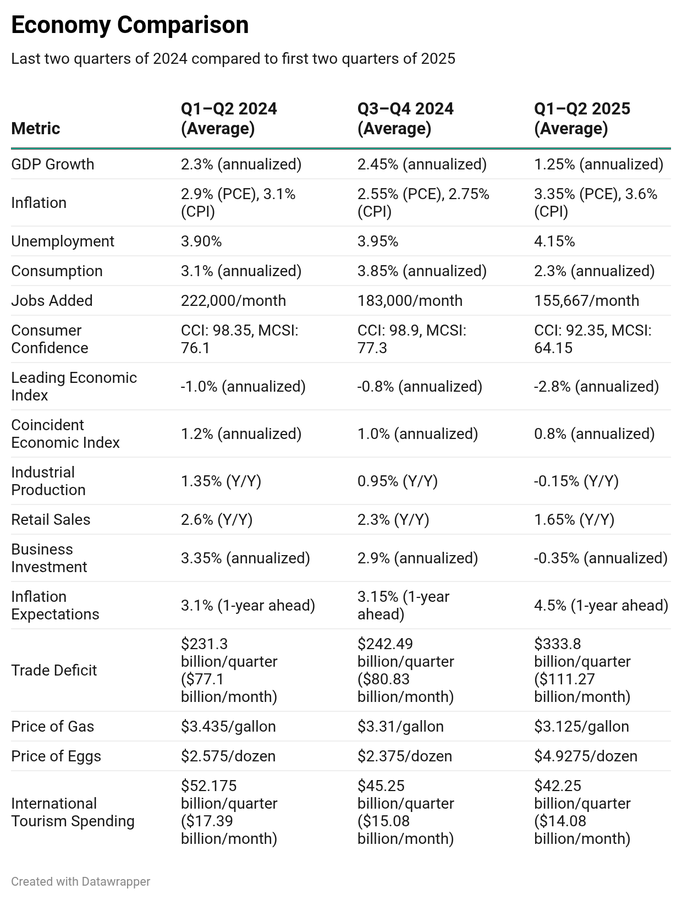
The Trump Economy (1Q-2Q 2025) vs. The Biden Economy (2024)

BY Doug Kass · Aug 1, 2025, 9:20 AM EDT

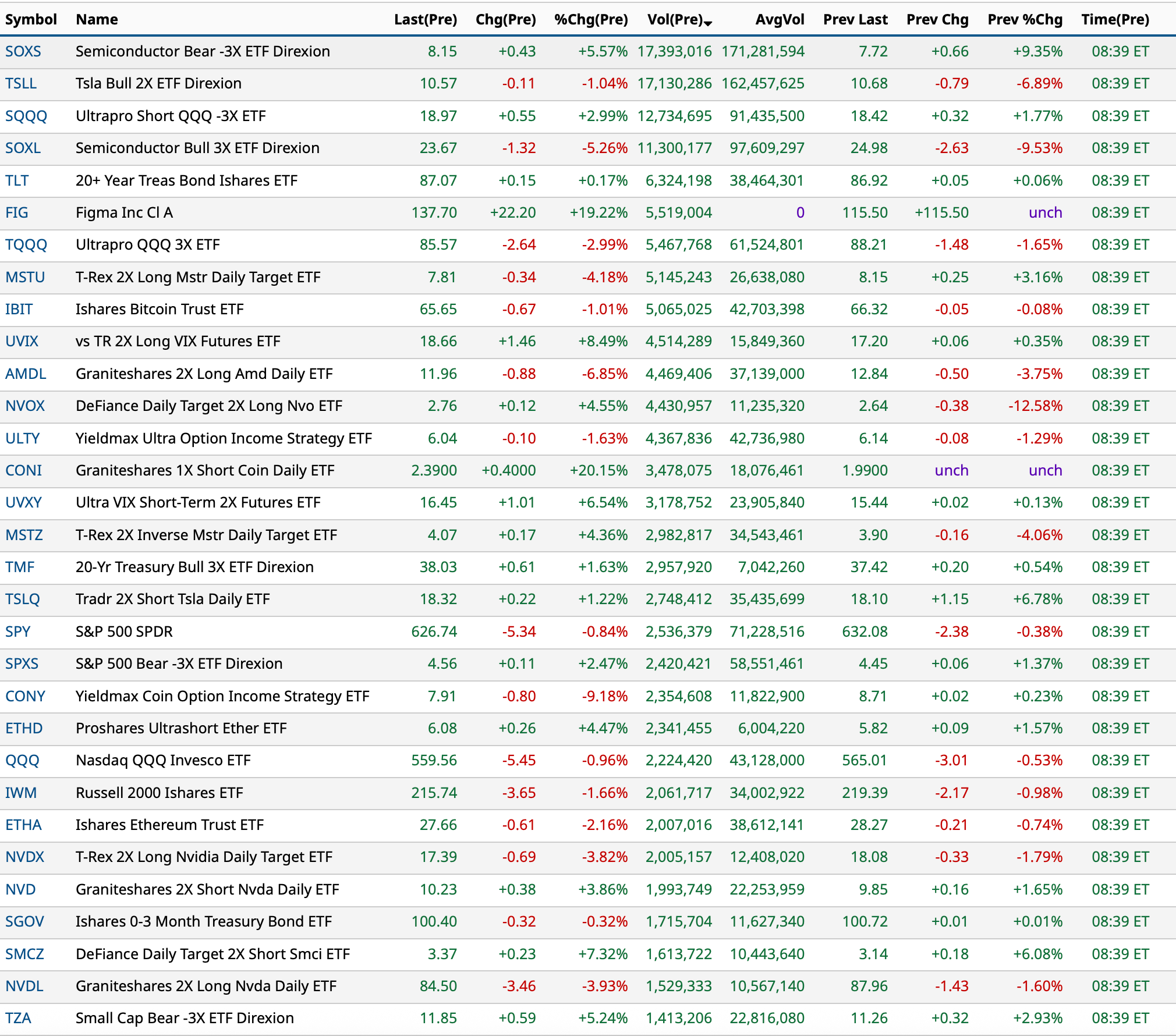
Most Active Premarket ETFs

As of 8:39 AM:

BY Doug Kass · Aug 1, 2025, 9:10 AM EDT

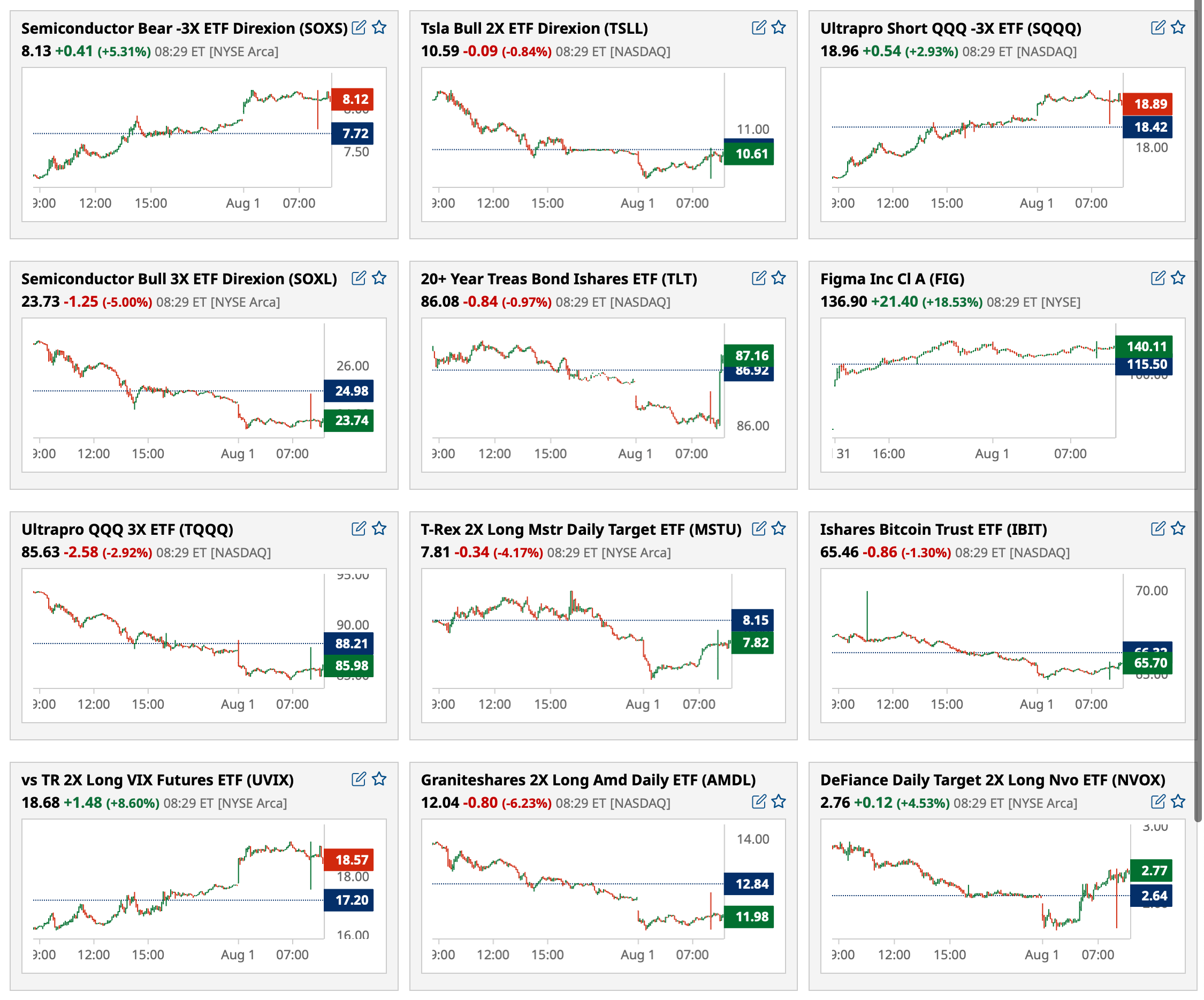
Premarket % Movers

As of 8:47 AM:

BY Doug Kass · Aug 1, 2025, 9:00 AM EDT

Select Premarket Movers

Upside:

-BTAI +26% (completes last patient last visit (LPLV) in the pivotal Phase 3 SERENITY At-Home clinical trial)

-FIG +17% (momentum following IPO)

-RDDT +16% (earnings, guidance)

-APPF +14% (earnings, guidance)

-FIVN +8.0% (earnings, guidance)

-WEAV +5.6% (earnings, guidance)

-KMB +5.1% (earnings, guidance)

-MGA +4.4% (earnings, guidance)

-REGN +4.3% (earnings, guidance)

-FSLR +4.1% (earnings, guidance)

-LEG +4.1% (earnings, guidance)

-COHU +2.3% (earnings, guidance)

-PIPR +2.1% (earnings, raises dividend; to acquire G Squared Capital Partners, a boutique investment bank)

Downside:

-FLR -16% (earnings, guidance)

-ENVX -14% (earnings, guidance)

-INOD -14% (earnings)

-BE -13% (earnings, guidance)

-EMN -13% (earnings, guidance)

-GWW -12% (earnings, guidance)

-WSC -12% (earnings, guidance)

-AVTR -11% (earnings, guidance)

-COIN -9.9% (earnings, guidance)

-RIOT -8.3% (earnings)

-AMZN -8.2% (earnings, guidance)

-SATS -8.0% (earnings)

-SYK -7.0% (earnings, guidance)

-MRNA -6.8% (earnings, guidance)

-RGA -6.7% (earnings)

-HIMS -5.2% (US plans Medicare, Medicaid coverage for weight-loss drugs)

-ROKU -4.2% (earnings, guidance)

-LYB -3.1% (earnings, guidance)

-NVAX -2.9% (downside momentum)

-IR -2.6% (earnings, guidance)

-EIX -2.1% (earnings, guidance)

-MSTR -2.1% (earnings; announces $4.2B STRC At-The-Market Program)

-NWL -2.1% (earnings, guidance)

BY Doug Kass · Aug 1, 2025, 8:53 AM EDT

Reaction to Light Jobs Numbers

A light non-farm payrolls increase of 73k had not yet had the negative impact expected by JPMorgan this morning:

The following scenario analysis is NOT A PRODUCT OF JPM RESEARCH, this is a trading desk view from JPM US Market Intelligence.

· [5%] Above 140k. SPX gains 1% - 1.5%

· [25%] Between 120k – 140k. SPX gains 50bp – 1.25%

· [40%] Between 100 - 120k. SPX gains 25bp – 75bp

· [25%] Between 80k – 100k. SPX loses 50bp – 1%

· [5%] Below 80k. SPX loses 1.5% - 2.5%

- JPMorgan

BY Doug Kass · Aug 1, 2025, 8:37 AM EDT

Economic Calendar for Friday

BY Doug Kass · Aug 1, 2025, 8:20 AM EDT

From The Street of Dreams

From JPMorgan:

US MKT INTEL NFP SCENARIO ANALYSIS – We think that the outcomes are skewed positively and that the market will react positively to any number above 100k. The chatter is that the whisper numbers are now above Bloomberg consensus, e.g., 115k vs. 110k. PMI / ISM releases earlier this year reflected a view that businesses have cash to spend on both capex and hiring but that uncertainty around trade and taxes created too much uncertainty. Now, we are closer to certainty on both metrics. While that may only be partially witnessed in this print, this give confidence that we do not see hiring number experience a significant down-move. Longer-term, there are issues there are economic headwinds from the trade war, but the magnitude and timing remain tricky, but we do not think we see the brunt of that headwind in the July data that prints in August.

and...

JPM MARKET INTEL EQUITY & MACRO NARRATIVE

Last night, Trump ended his tariff extension for most countries, announcing the new reciprocal rates on dozens of countries in his executive order (here). Key takeaways from Thursday’s announcement from International Market Intelligence:

· The minimum reciprocal tariff rate was set to 10%;

· Switzerland’s tariff rate increased to 39%, but government has indicated it still ‘seeks negotiated solution’ with the US, and that announced tariffs ‘differ significantly’ from draft;

· Canada’s tariff rate increased to 35% (USMCA exemption remains in place);

· Mexico’s current 25% fentanyl tariff and USMCA exemption was extended for another 90 days;

· Increased pressure on the pharma sector, with Trump sending letters to the largest drugmakers demanding price cuts and asking them to apply “most favoured nation” drug pricing to Medicaid (see more from research below).

Market Reactions? Futs are lower with RTY underperforming. On sector basis, Consumer Discretionary and Health Care are among the biggest sector laggards. Yields are relatively unchanged on the front end of the curve, with 30y adding 3bp.

Ahead of August 1, there have been expectations around a unfavored Canada deal (Trump has been talking about Canada’s stalled negotiation progress) and higher average tariff rates. The biggest worse-than-feared surprise last night came from the 35% Canada tariff announcement, despite USMCA exemption still in place. The end of the tariff extension does not mean that negotiation will stop, particularly with the new 90-day window with both China and Mexico and ongoing negotiation with Canada/India. We still see the most important catalyst of the week to be NFP today, as investors will have another opportunity to assess growth impacts from tariff.

US MKT INTEL’S NFP SCENARIO ANALYSIS

Feroli’s full NFP preview is here. He sees 100k jobs being added versus the Street’s estimate of 109k; a step down from last month’s 147k print. For the unemployment rate (U.3) he sees 4.2%, in line with the Street’s estimate. For Average Hourly Earnings, he sees +0.3% MoM and +3.8% YoY.

The following scenario analysis is NOT A PRODUCT OF JPM RESEARCH, this is a trading desk view from JPM US Market Intelligence.

· [5%] Above 140k. SPX gains 1% - 1.5%

· [25%] Between 120k – 140k. SPX gains 50bp – 1.25%

· [40%] Between 100 - 120k. SPX gains 25bp – 75bp

· [25%] Between 80k – 100k. SPX loses 50bp – 1%

· [5%] Below 80k. SPX loses 1.5% - 2.5%

BY Doug Kass · Aug 1, 2025, 7:55 AM EDT

Tweet of the Day (Part Deux)

https://www.twitter.com/robin_j_brooks/status/1951228314078622023

BY Doug Kass · Aug 1, 2025, 7:40 AM EDT

Tweet of the Day

https://www.twitter.com/MikeZaccardi/status/1951230845655597494

BY Doug Kass · Aug 1, 2025, 7:30 AM EDT

Reviewing Yesterday's Reversal

Here is what I wrote in the premarket (6:50 AM) when S&P futures were 50-60 handles higher:

After the Gold

* Here are my expectations for today's market action...

I expect an exhaustion move to the upside in Meta (META) and Microsoft (MSFT) . And possibly, Nvidia (NVDA) .

By contrast, financials, homebuilders, private equity, the Russell index and the equal-weighted S&P index (RSP) may suffer.

Stay tuned.

Position: Long META (VS)

By Doug Kass Jul 31, 2025 6:50 AM EDT

This was a reasonably good call (better Jewish luck than Christian science) as:

* Microsoft MSFT gave up nearly $25 of its advance from the premarket!

* The markets reversed hard — SPY ended -$3.50 (after being +$6) and QQQ was -$4.44 (after being +$7).

* Both the IWM and RSP were weak all day — even during the morning's advance. Both closed down more than one percent.

* Financials (we recently sold out of all our fin longs), homebuilders, private equity (also liquidated a week ago) were downside leaders (JPM -$4, C -$2.21, WFC -$1.36, AXP - $6, GS - $10, BX and KKR each -$4) etc.

NVDA (we are short through GRNY) closed down by more than three dollars after being +$4 in the early morning.

Of course, after the close, AMZN disappointed. This, in addition to the tariff surprises, has resulted in about a -60 handle drop in S&P futures in the early going.

BY Doug Kass · Aug 1, 2025, 7:20 AM EDT

Premarket Trading

With S&P futures -74 handles I am taking down my index short exposure by buying SPY/QQQ common against short calls:

* SPY $625.41

* QQQ $558.12

Moving from medium sized to small sized — on a delta equivalent basis.

I plan to reshort (and sell my index longs) on any rally.

BY Doug Kass · Aug 1, 2025, 7:10 AM EDT

Charting the Technicals

https://www.twitter.com/neilksethi/status/1951011381802574070
https://www.twitter.com/TrendSpider/status/1951023230166376628
https://www.twitter.com/yuriymatso/status/1950989305788448867
https://www.twitter.com/JC_ParetsX/status/1950881509042196567
https://www.twitter.com/MikeZaccardi/status/1951007214887739526
https://www.twitter.com/jaykaeppel/status/1950959505795064270
https://www.twitter.com/mark_ungewitter/status/1950918116021534756
https://www.twitter.com/nullcharts/status/1950980087836295657
https://www.twitter.com/LindaRaschke/status/1950906511430971815
https://www.twitter.com/brewmarkets/status/1950924464327118893

Bonus — Here are some great links:

Strong Trends Meet Soft Seasonality

Here Comes August, Buckle Up

How Can the Markets Overcome Bearish Seasonality?

Financials, Volatility and Leverage

The Carvana Comeback

BY Doug Kass · Aug 1, 2025, 6:55 AM EDT

Did You Know....?

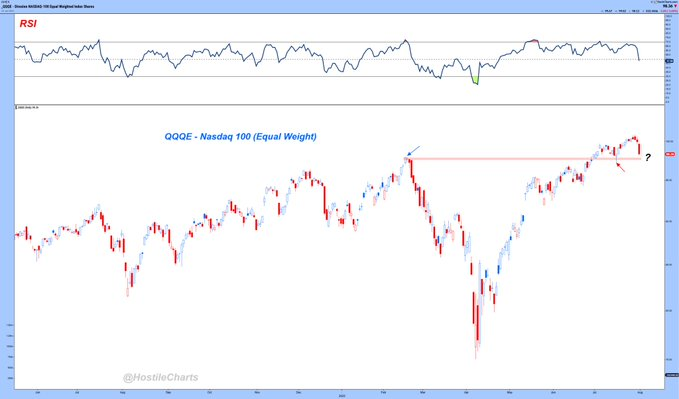
Did you know the Nasdaq Equal Weighted Index was down every day this week?

Now you know!

BY Doug Kass · Aug 1, 2025, 6:45 AM EDT

From Wally

https://www.twitter.com/WalterDeemer/status/1950948751859646748

BY Doug Kass · Aug 1, 2025, 6:25 AM EDT

Chart of the Day

https://www.twitter.com/jasongoepfert/status/1950972585480745304

BY Doug Kass · Aug 1, 2025, 6:15 AM EDT

My Tweet of the Day

https://www.twitter.com/DougKass/status/1951056574639648926

BY Doug Kass · Aug 1, 2025, 6:05 AM EDT

The Oscillator Is Now Modestly Overbought

The S&P Short Range Oscillator moved to -0.73% vs. 0.80% — that's slightly overbought.

BY Doug Kass · Aug 1, 2025, 5:55 AM EDT

National Housing Downturns Always Start in California

* It is not different this time...

Wolf Street howls about the building inventory of unsold homes on the West Coast. 

BY Doug Kass · Aug 1, 2025, 5:45 AM EDT