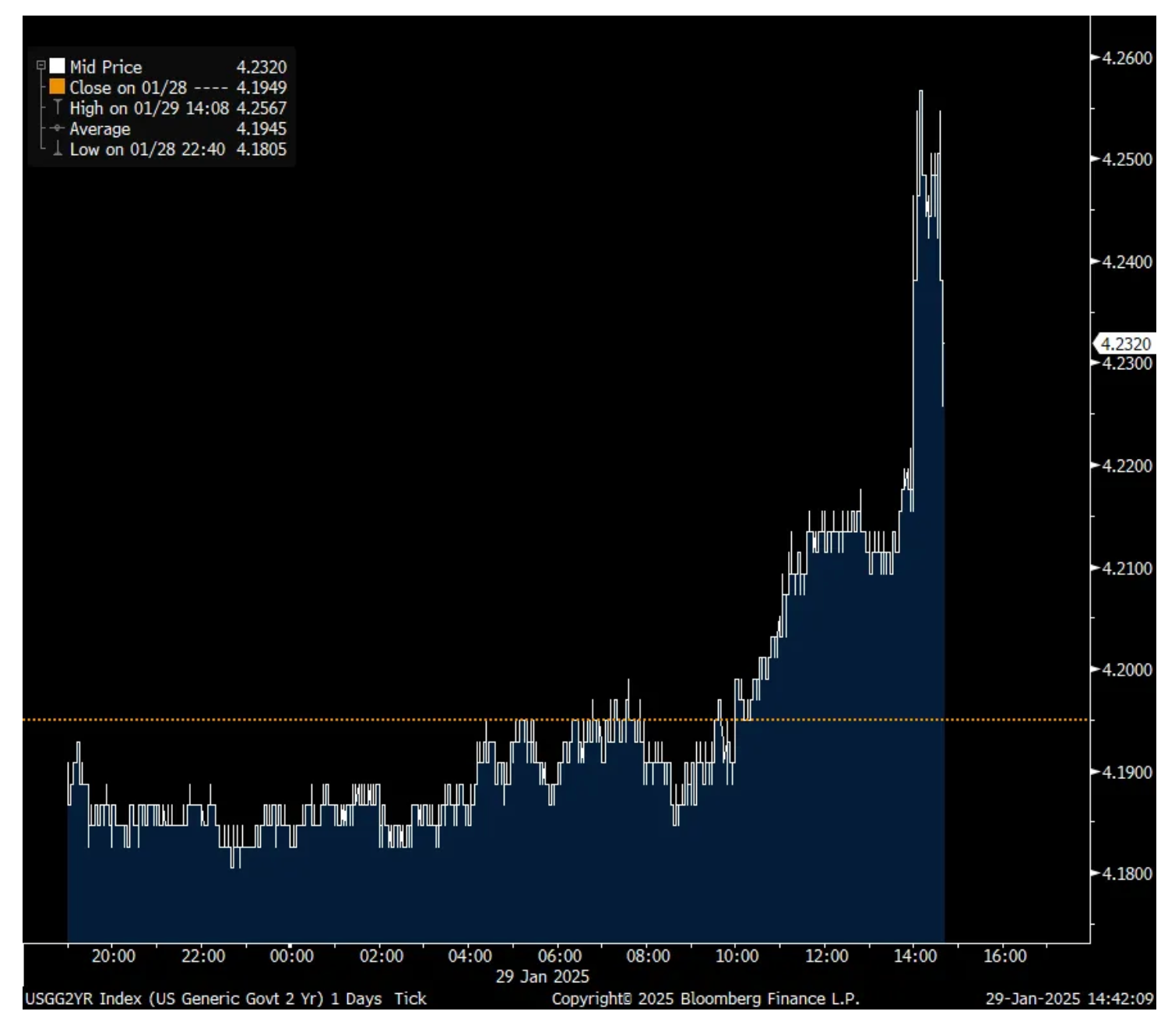
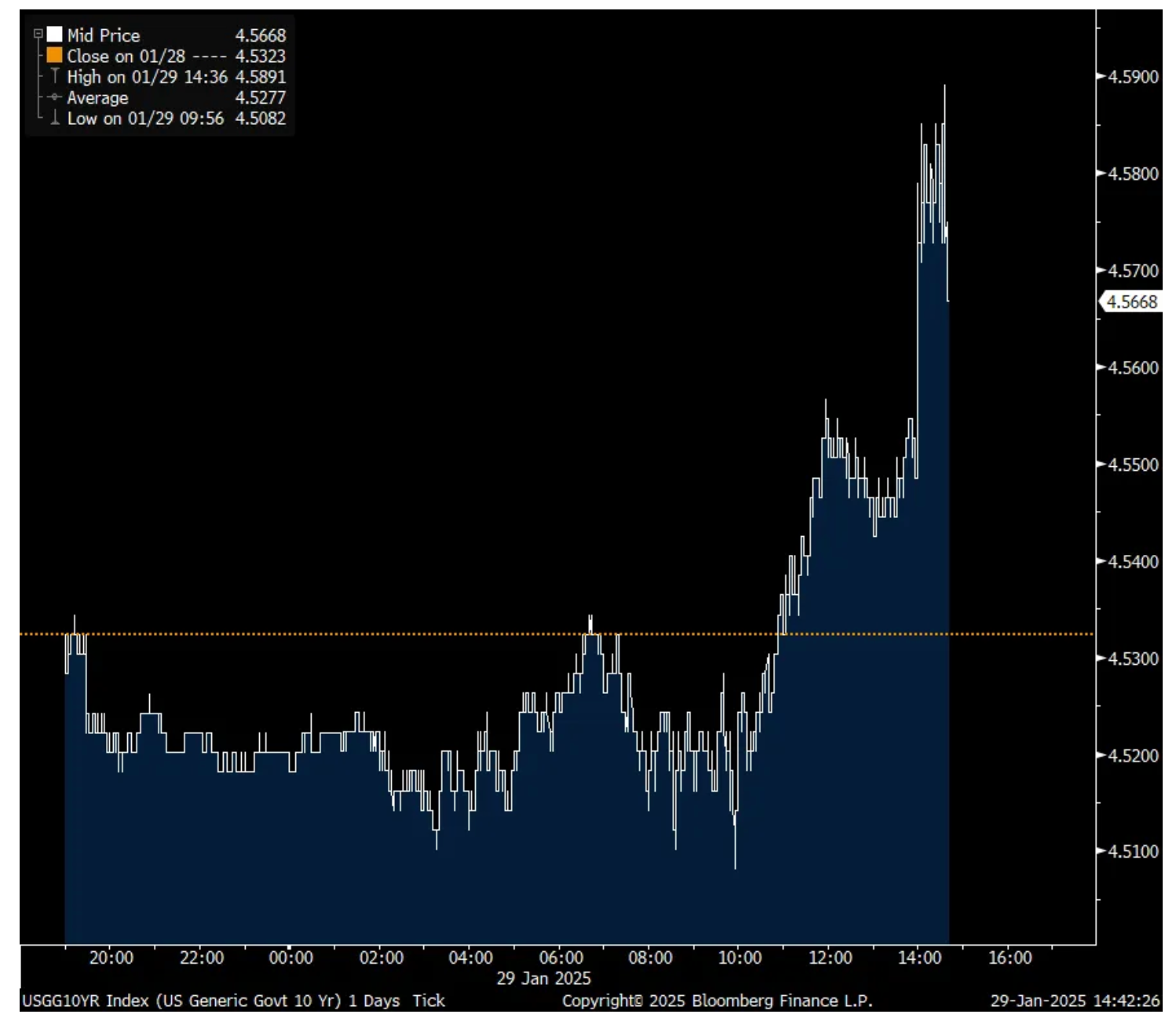
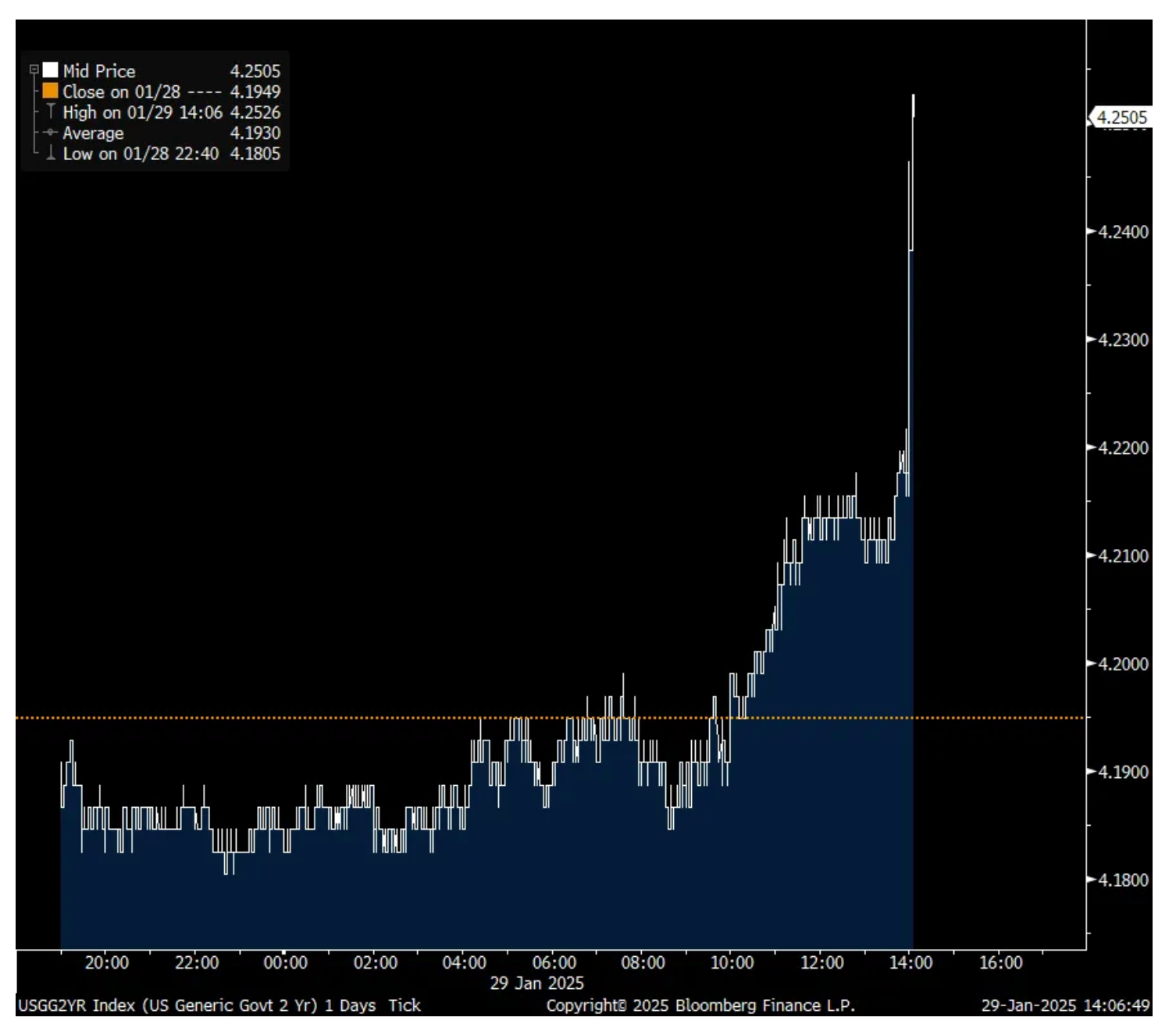
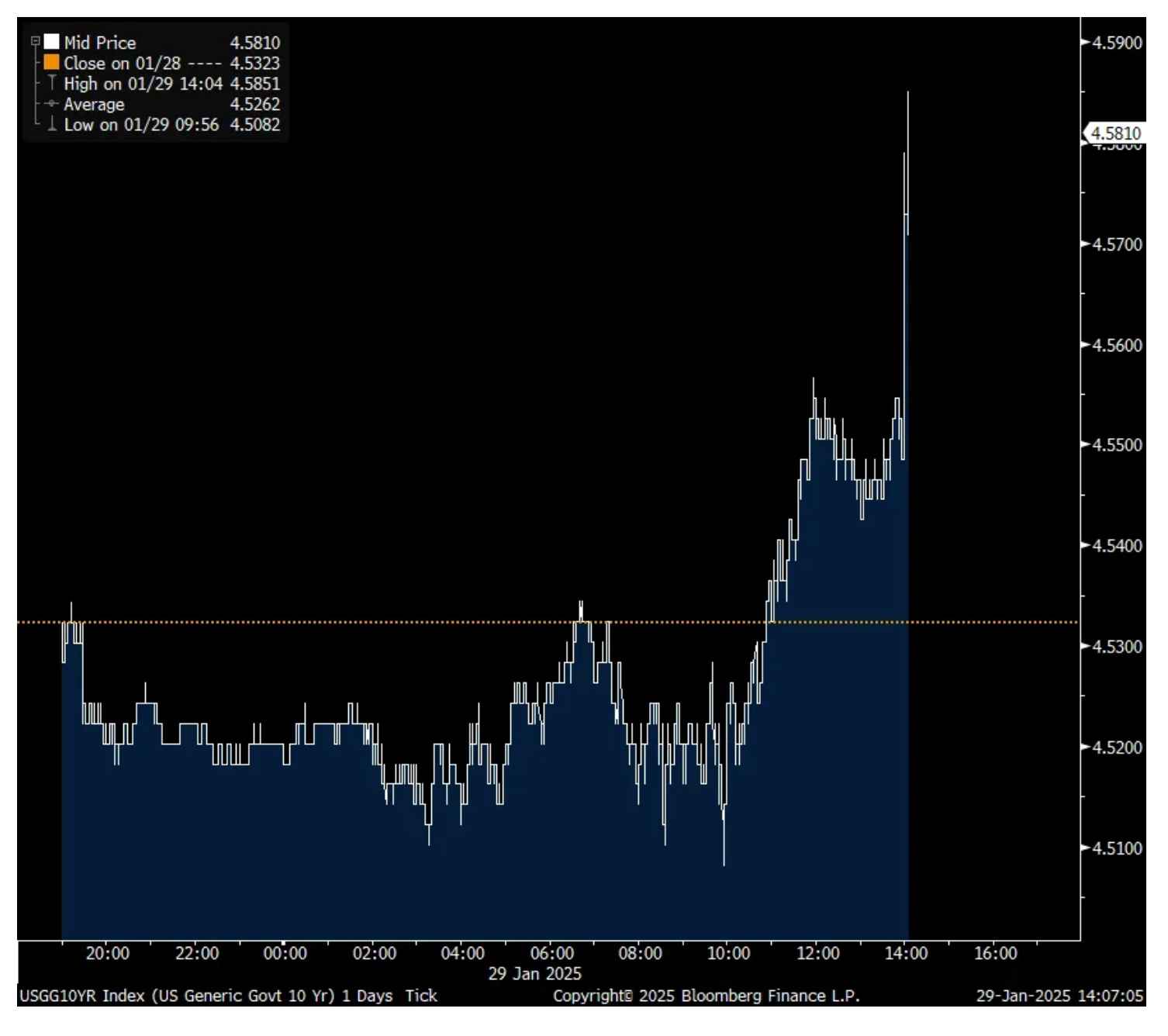
Jay Powell in his presser said the tweaks in comments on the labor market and inflation in the FOMC statement should not be interpreted as a signal. Here is an updated intraday chart in the 2 yr and 10 yr.
There were two changes in the FOMC statement relative to the one given in December of note. On the labor market they said “The unemployment rate has stabilized at a low level in recent months, and labor market conditions remain solid.” This compares to the previous statement that said “Since earlier in the year, labor market conditions have generally eased, and the unemployment rate has moved up but remains low.”
Today’s line would be a bit more hawkish way of describing things I’d say.
On inflation, all they said was “Inflation remains somewhat elevated.” They cut out half the sentence which included this line seen in December when they said “Inflation has made progress toward the Committee’s 2% objective but remains somewhat elevated.”
So, does that imply they think they’ve stopped making progress? A bit more hawkish here too.
In response, the 2 yr yield is at the highs of the day as is the 10 yr yield. As said this morning, does Jay Powell in his presser agree with what Chris Waller said a few weeks ago or does he push back. As seen just with this statement, it was a slight pushback I believe.
Either way, no cut was of course expected today and now they can sit back and absorb all the economic data and hopefully get more details of what Trumponomics will look like in terms of tax and tariff policy, among other things as the next meeting is not until March 18/19. That said, the longer end of the bond market has stolen the show since the Fed first cut rates in September and has really neutered the relevance, I believe, of Fed policy.
Before this meeting, the market was pricing in a 32% chance of a March cut. It stands as of this writing at just 12%. The first rate cut this year is now looking more like July than June as seen in the pricing in the fed funds market.
The market had more intraday moves than a shortstop batting .110 today!
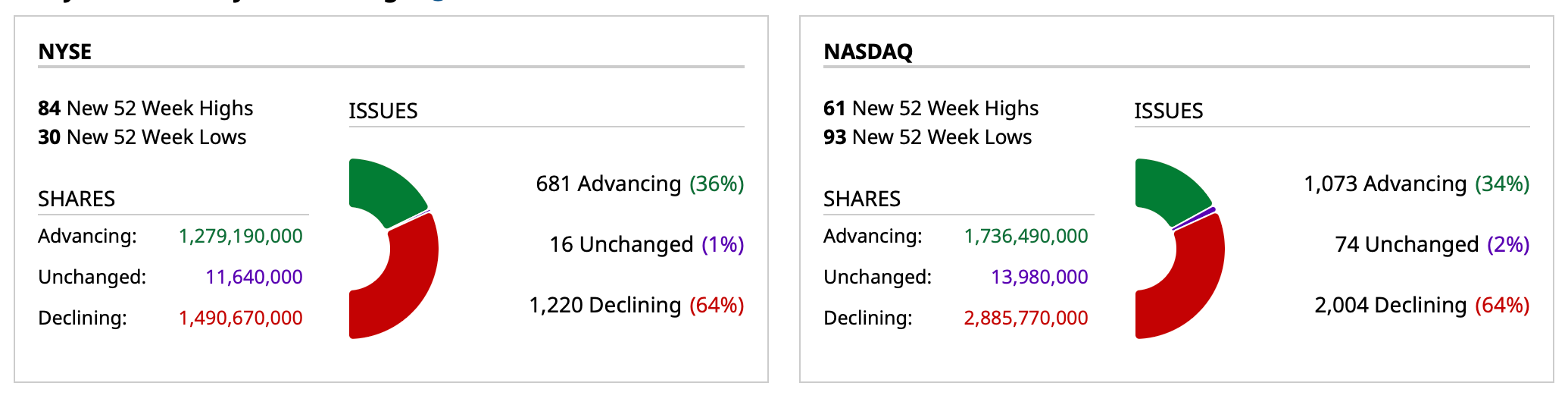
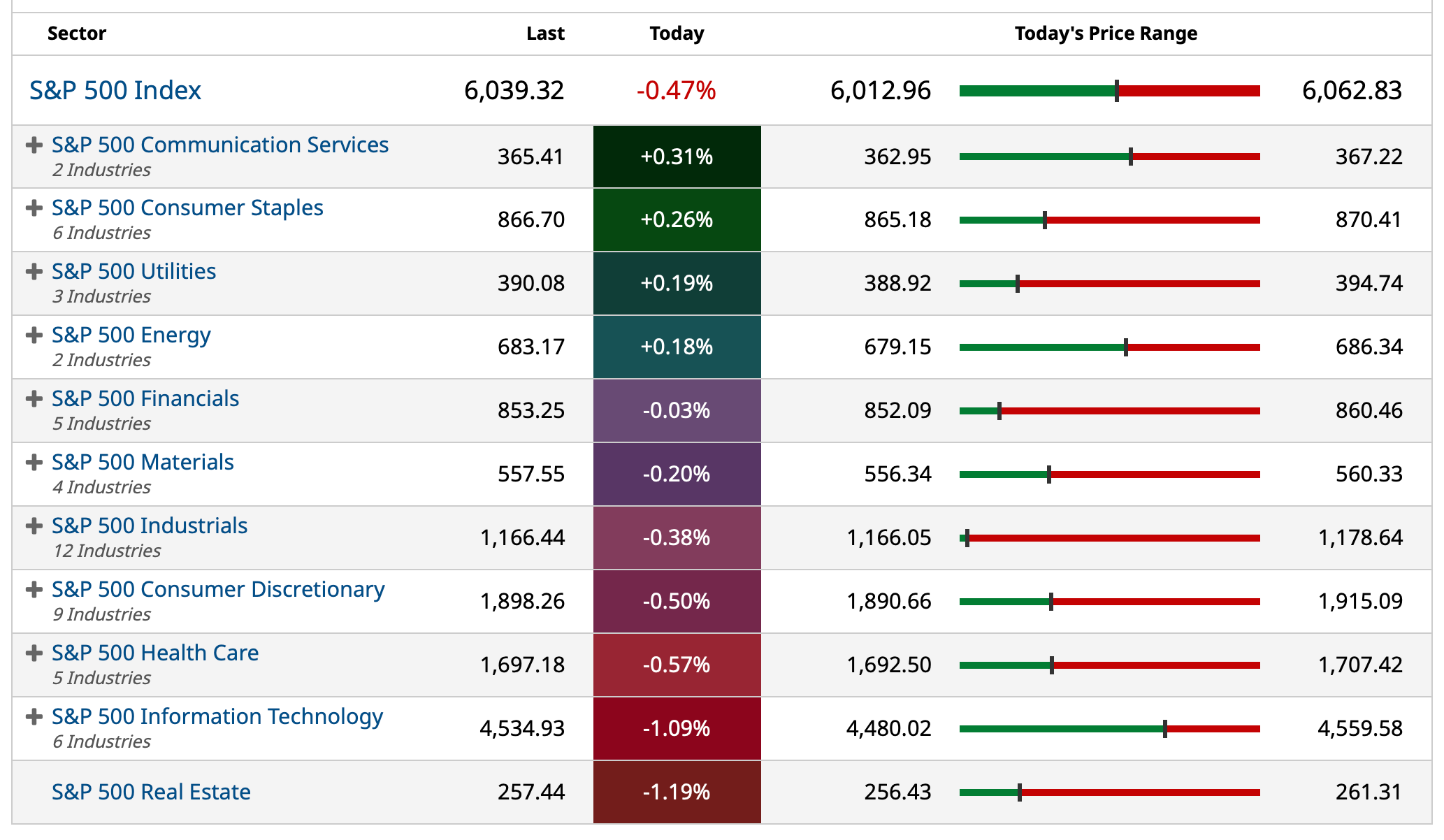
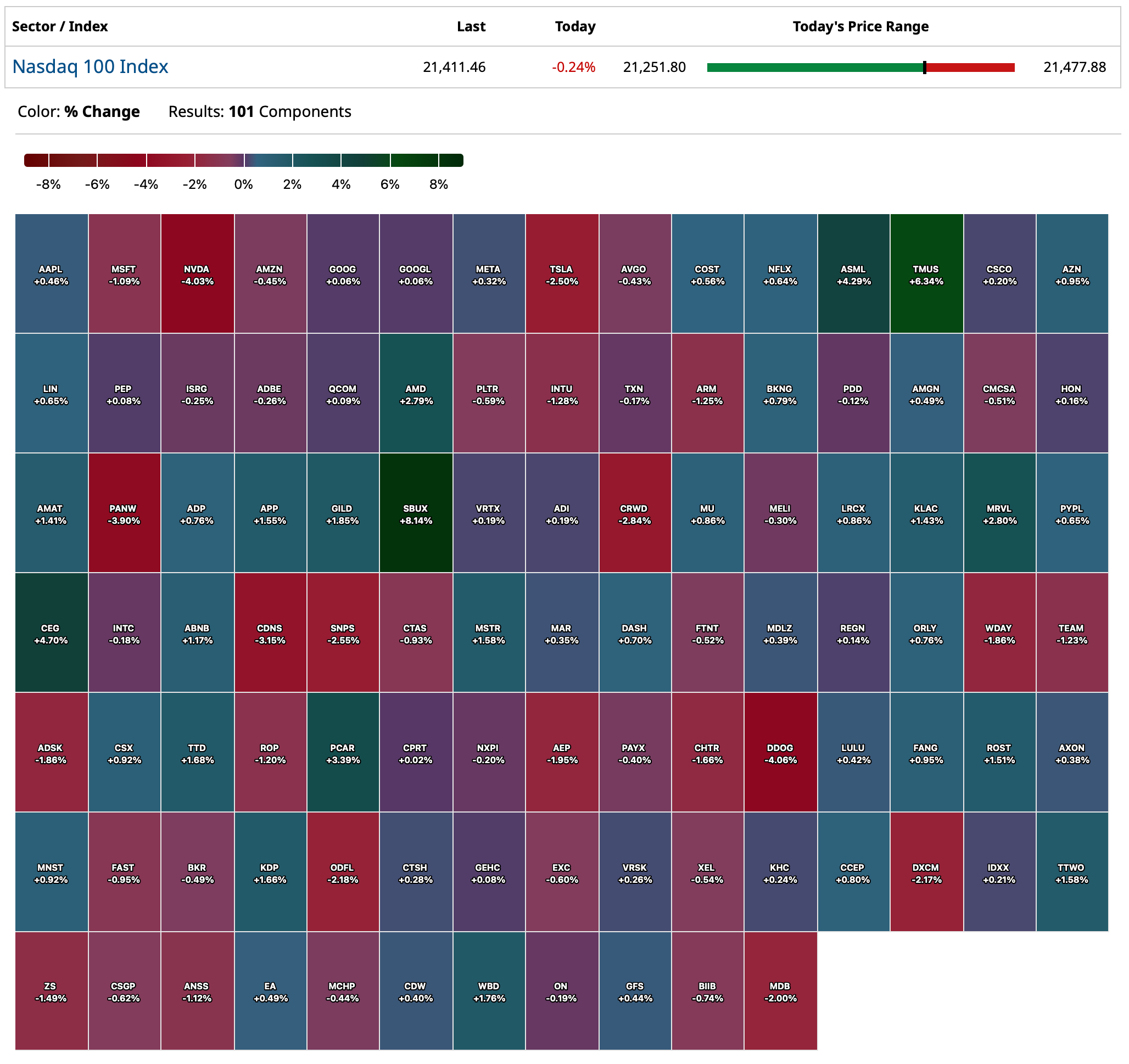
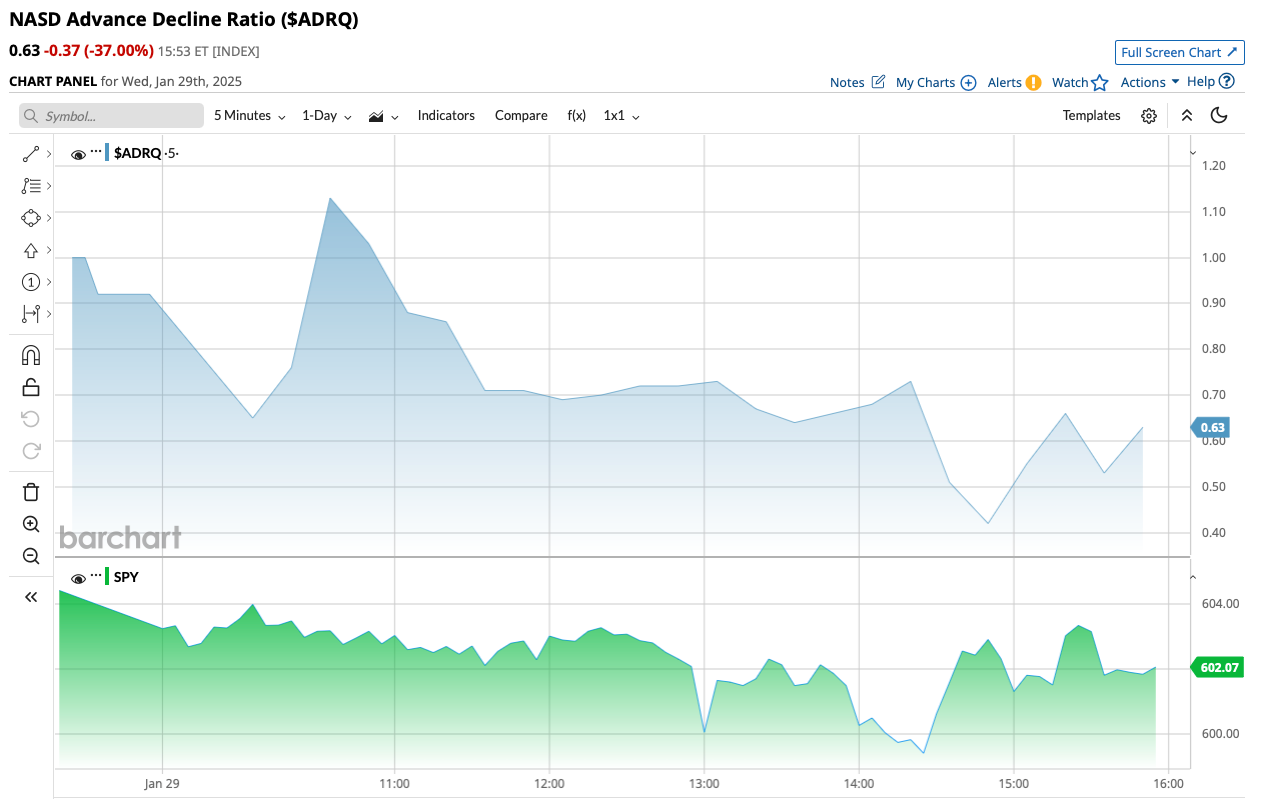
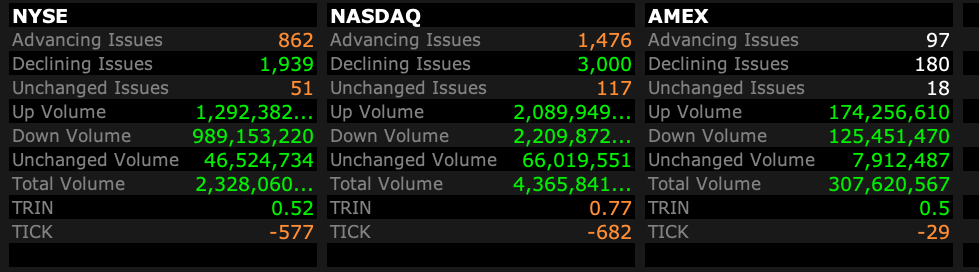
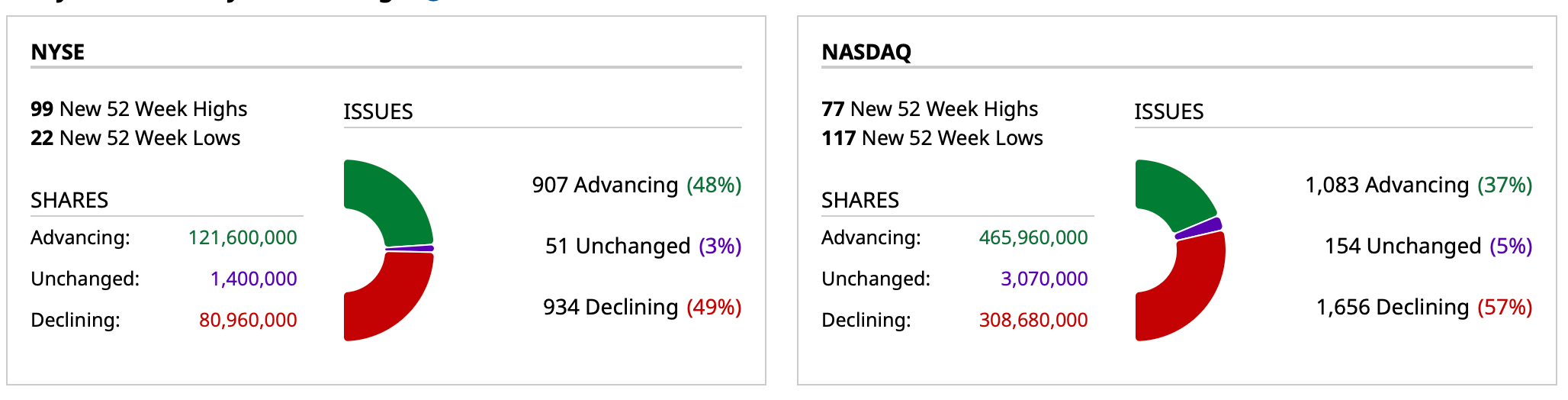
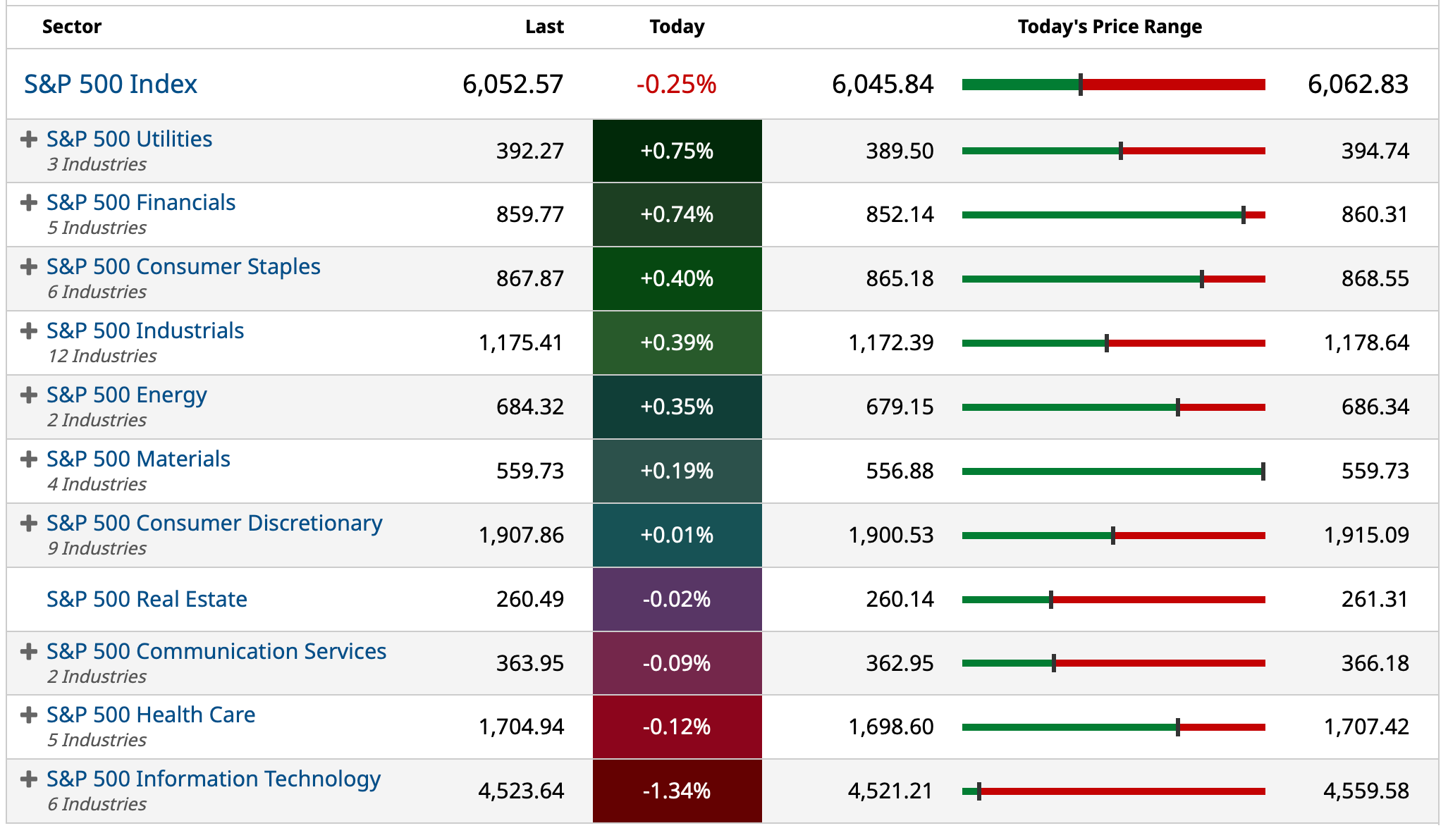
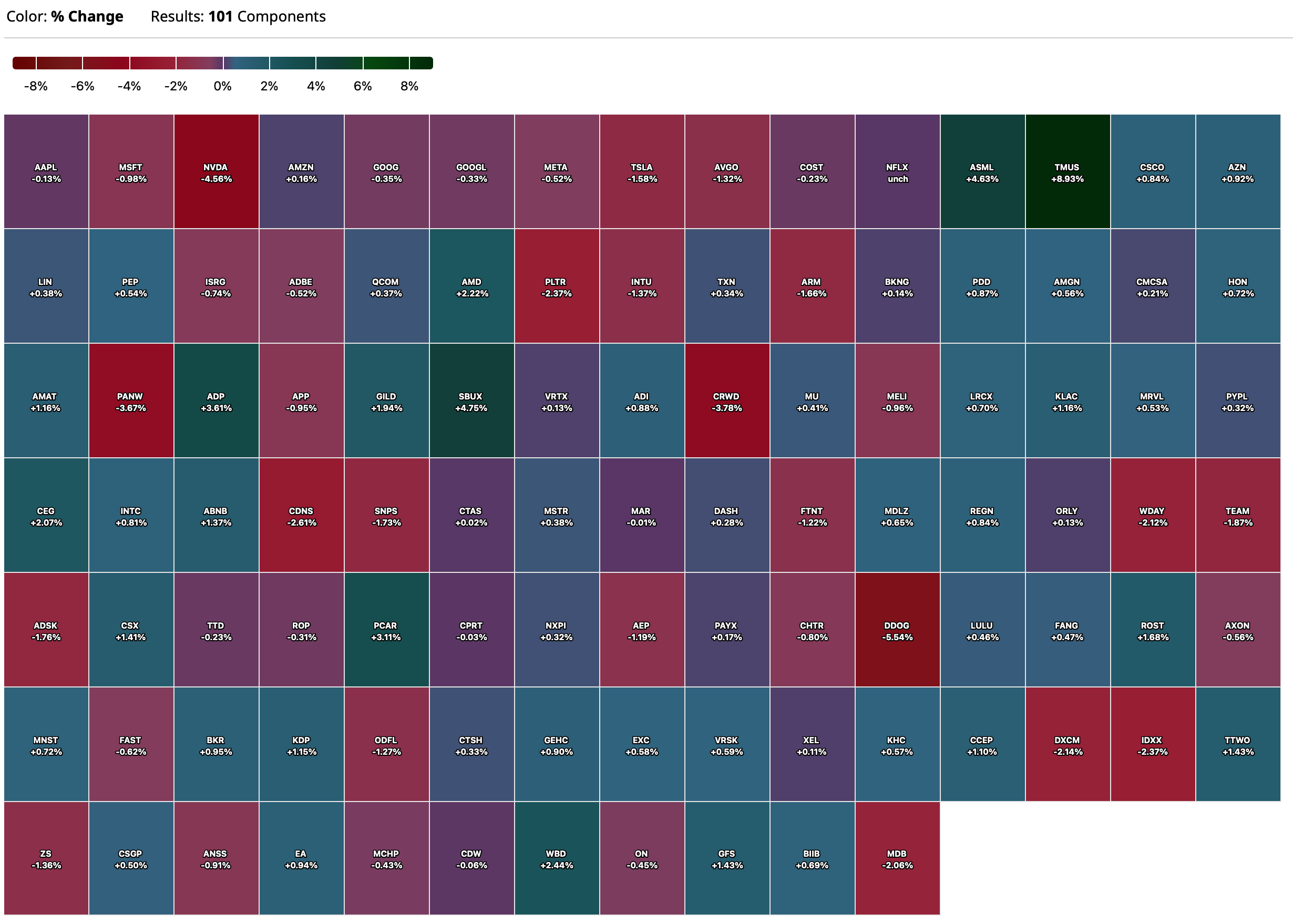
Breadth is weak (at around 2-1 negative on both the NYSE and Nasdaq) and the equal-weighed S&P is -0.53% (the second day in a row of relative underperformance in equal weighted):
At 2:20 p.m. S&P cash is down by -50 handles.
Here are today's "Things":
* I traded Indices back and forth, profitably (making multiple points on SPY/QQQ shorts and covers, three times!). Out of all Index shorts now.
* I added across the board to MSOS at $3.39 and individual cannabis equities (TCNNF at $4.81, AYRWF at $0.46, CRLBF at $0.88, GTBIF at $6.97)
* I added to JPM $270.27 and XLF $51.72 shorts — and initiated shorts in MS at $140.42, GS at $646.80 and C at $81.53.
Market, volatile? Just look at Boeing BA intraday on Tuesday and this morning...
Yesterday I sold all of my BA at $186.32.
Today the shares are falling, trading at around $171!
That was quick!!
In response to some questions, I would be a buyer between $155 -$165.
From Tuesday:
Jumping Off Boeing
Boeing is trading +$12.50 on a release that was generally expected.
I just sold my remaining position at $186.32 - as it is nearly +$40 from my cost basis of a few months ago, substantially reducing the previously favorable reward v risk.
Boockvar on What to Watch from Fed, Earnings Calls
From Peter Boockvar:
Oh yeah, there is a Fed meeting today
Oh yeah, there is a Federal Reserve meeting today as I almost forgot with Trump 47 and the now DeepSeek news dominating the headlines. The statement seen at 2pm will be a non-event but I'm most interested in two things when it comes to the Powell press conference. Will Powell echo what Governor Chris Waller said a few weeks ago on CNBC when he said "As long as the data comes in good on inflation or continues on that path, then I can certainly see rate cuts happening sooner than maybe the markets are pricing in." Or was Waller just politicking for Powell's job when it frees up in May 2026 in being dovish and getting in the good graces of Trump who said he wants interest rates lower, immediately? Or will Powell, as I think he should, just be non-committal on rates from here, especially as headline GDP (goosed by both government spending and government incentives via infrastructure, IRA and Chips Act) continues to be around 2.5% and as we await what the tax/tariff policy will be from the new administration.
Also, will there be any questions and Powell comments on the Fed's balance sheet. Most expect QT to end this year but when and at what targeted level?
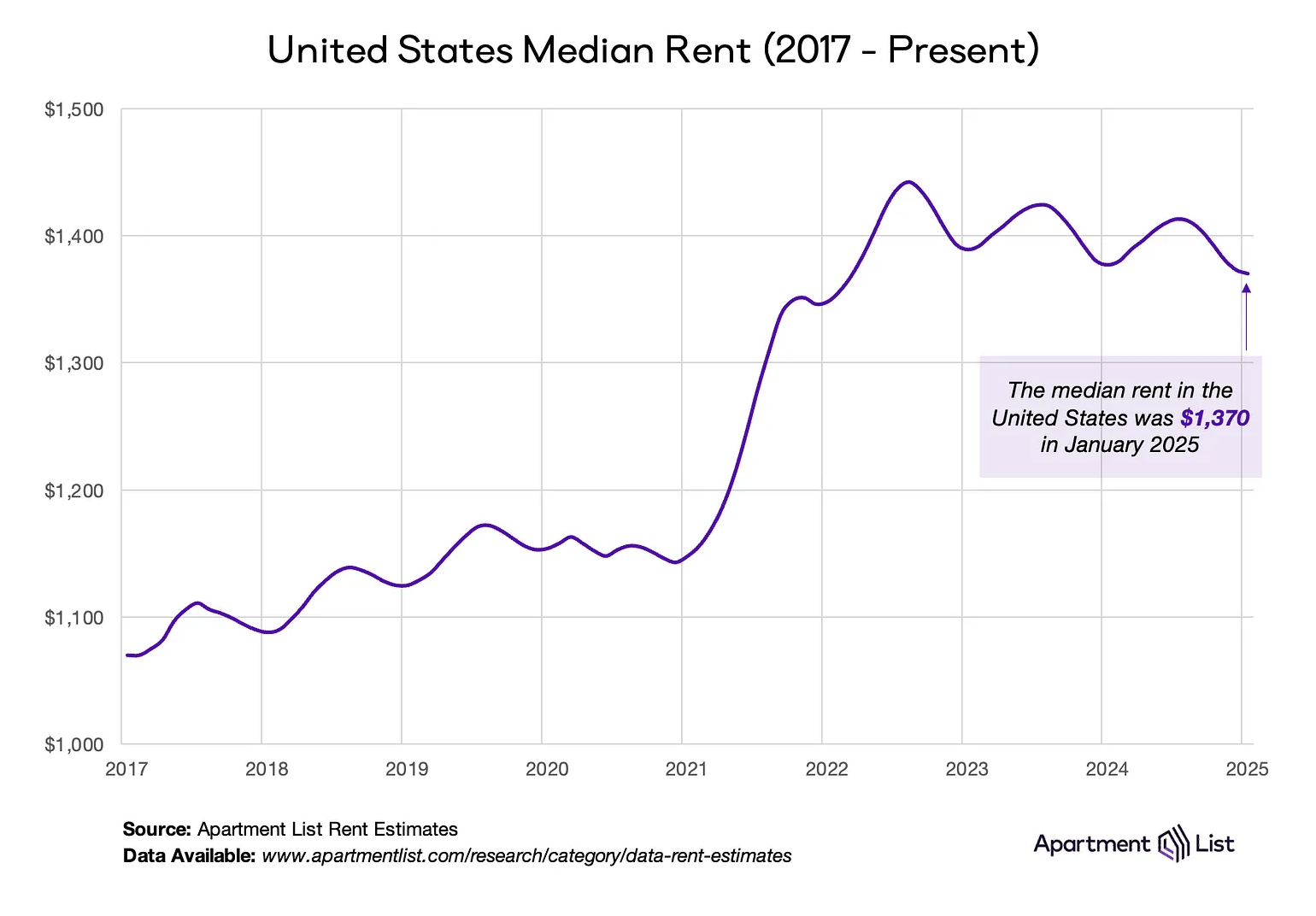
On inflation, the rental growth moderation should continue to filter thru the services component but with still many of the unknowns, I just don't see how Powell has any confidence on how things ultimately play out to commit to anything today. As for rents, Apartment List on Monday said that NEW rents fell .2% in January m/o/m in the seasonally slow rental period. They are down .5% y/o/y. The vacancy rate rose one tenth to 6.9% which is the highest dating back to 2017 when they first started collecting this data point. We know all about the big supply that came on line last year with almost all of it in the sunbelt with Austin, Texas leading the way on the price declines.
Apartment List also said this though, "Year-over-year growth has now been negative since June 2023, but in recent months, there are signs that we could see a return to positive growth this year...With the supply wave now getting past its peak, it appears that the era of declining rents could be nearing its end."
This is something I've been arguing about. We have to enjoy this rental deceleration while it lasts because it won't. With the huge affordability challenge in buying a new home for a first time buyer, rental demand will continue to be solid and as we digest the large amount of new supply, and as there will be very little new supply in the coming few years, rental prices will reaccelerate I believe in the back half of this year, into 2026.
To the many earnings calls.
From Starbucks whose global comps fell 4% and did the same in the US:
"US comparable store sales improved sequentially throughout the quarter, most evident in the morning day part as non-Starbucks Rewards customers grew from our strategic shift to broader marketing. Our ticket growth in the US remained strong at 4% due to the benefits from the prior year pricing, attach and fewer discounts. These drivers more than offset mix shift into lower priced beverages and removal of the extra charge for non-dairy milk customizations."
"Our US category share among QSRs also recovered in Q1 following two quarters of declines. These things tell us our actions are resonating with customers."
"In the US alone, we still see the potential to double our store count while improving the overall health of our portfolio."
In the face of record high coffee prices, Starbucks seemed to have done a good job in hedging this exposure but will clip earnings by one penny per share and they said "Although we can pass this cost to our business partners, higher prices to an already pressured consumer will likely impact our segment volumes and ultimate revenue and profitability."
From Houlihan Lokey, the investment bank and saying that higher interest rates are squeezing some businesses, as we know and M&A interest is picking up:
"Corporate finance and financial and valuation advisory continue to benefit from improvement in the M&A and financing markets, while financial restructuring had another solid quarter as it continues to benefit from record leverage and persistently higher interest rates."
From LVMH:
"2025 is starting well, and I will tell you all about it in a moment. A robust year, despite a challenging global environment, weaknesses in Asia, except Japan that reported strong growth thanks to its currency. The US, uncertainty because of an election year. Europe is fairing quite well. But all in all, the context was a little bit more challenging."
"Asia is still pretty difficult all year round. That's true across Asia, including mainland China. Roughly 10% drop over the year. As for Europe, it's similar to what you saw in the US, a slight improvement, and at the end of the year, mainly in Fashion & Leather goods.
From Polaris, the maker of snowmobiles, ATVs, boats and motorcycles and whose business is tough right now with higher rates and big ticket items just not selling so well in this demographic:
"2024 presented significant challenges across the powersports industry, leading to a prolonged down cycle driven by various factors affecting OEMs, dealers and consumers...We know these are challenging times for consumers in our industry."
"If I could sum up dealer sentiment right now, I would say they are cautious. They are closely watching inventory across all categories and OEMs. Dealers are seeing OEMs take different approaches in this prolonged down cycle and are therefore choosing to keep inventory light as they continue to experience low retail. Just this last quarter we've seen news of OEMs filing for bankruptcy or shutting down production for a prolonged period of time as well as OEMs putting part of their business up for sale which leads to many questions - many to question the future of some brands."
"Similar to dealers, we remain cautious about the industry. Retail trends have not given us a reason to change our outlook, nor do we see much change for the consumer in 2025."
Kimberly Clark had some interesting comments on birth rates where they are unfortunately falling in many places, as they sell diapers:
"I'd say the good news is birth rate declines are leveling off, and in some markets, notably Korea, we saw a positive birth rate in the third quarter, which continued in the fourth and that was the first time in 8 years and in China was positive in birth rate as well. So I'd say, one, on penetration, birth rate declines kind of inflecting a bit at least early signs."
By the way, the birth replacement rate in South Korea is the worst in the world at about .7.
From Sysco, the biggest food distributor into the restaurant business:
"Foot traffic to restaurants in the US was down approximately 2% for the 2nd quarter, which represents a moderate improvement from Q1. We expect to see continued improvement in traffic trends as we head into the 2nd half of the year."
"Inflation for the industry has maintained at approximately 2%, which is within the normal range, when we look at cost of goods sold inflation over the course of decades."
From GM:
"I think there's some speculation out there that we saw a big pull ahead in demand in the month of December, whether that was EV driven or just consumer driven ahead of inauguration. I think one of the things is we're adopting a little bit of a wait-and-see on that. January has been really noisy...about both the weather, the fires in California, etc...So it's tough to glean whether there was a big pull forward. So, we've kind of projected demand to be pretty similar to last year."
With mortgage rate still hovering around 7%, the MBA said purchases were flattish w/o/w, down .4% and lower by 7.3% y/o/y. Refi's fell 6.8% w/o/w, though up 5.2% y/o/y. Back to the Fed, as we know their 100 bps of rate cuts ended up worsening housing affordability with the jump back up in mortgage rates in response.
Australian bonds rallied overnight after Q4 CPI was one tenth below expectations, though the December print of 2.5% was in line. The Aussie$ is lower while stocks there rallied.
In Europe, the Swedish Riksbank cut rates by 25 bps to 2.25% as expected but said they are now on hold. The Governor said "Our best estimate is that we trough where we now are at 2.25%, but it is genuinely uncertain whether that view will hold."
An expected rate cut is expected to come from the Bank of Canada to 3% but that could be it for them for a bit too.
* Morgan Stanley confirms our channel checks on this pet company...
This morning Morgan Stanley lowered its price target on Elan ELAN from $15 to $14 - keeping equal weight:
After having met with several Animal Health management teams at VMX, the world's largest companion animal health conference, the Morgan Stanley analyst tells investors that "sentiment was cautious into 2025" on low compliance and deteriorating vet office visit trends.
In light of foreign exchange dynamics and "a continuing lackluster vet visit backdrop," the firm is trimming estimates and price targets for Zoetis ZTS, Idexx IDXX and Elanco.
From Morgan Stanley's report:
We met with several management teams and animal health industry professionals at VMX, notably Zoetis, Elanco Animal Health, IDEXX Laboratories, Covetrus, Patterson Companies, among other constituents. Some key takeaways from our conversations include: (1) vet office visits / compliance remain an enduring headwind across the industry likely continuing well into 2025; (2) innovation and leveraging across the industry likely continuing well into 2025; (2) innovation and leveraging alternative channels offer offsets for pharma in a lackluster demand backdrop (ELAN, ZTS); (3) dermatology and parasiticides may get more competitive (MRK AH potential '25 launches, covered by MS Pharma Analyst Terence Flynn), (4) price increases are only slightly more subdued than '24 (still +MSD across AH pharma); and (5) IDXX showcased its innovation lineup, detailing Cancer Dx, albeit offering limited insight into inVue traction (LT prospects remain favorable, in our view, see survey here).
Importantly, in light of FX dynamics and a continuing lackluster vet visit backdrop, we are trimming our estimates and Price Targets for ZTS, IDXX, and ELAN. Enclosed, we detail key model updates as well as takeaways by company across pharma, diagnostics, and services in Animal Health.
Two days ago I cautioned on ELAN:
ELAN Disappoints
Our channel checks for Elanco (ELAN) are a bit disappointing.
I was hopeful that the company would be street expectations, but that now appears challenging.
Though the quarter is not reported until February 24 (four weeks away), discretion is the better part of valor and I have sold most of my common holdings.
However, I am keeping my calls (as the pet company remains a bonafide takeover candidate).
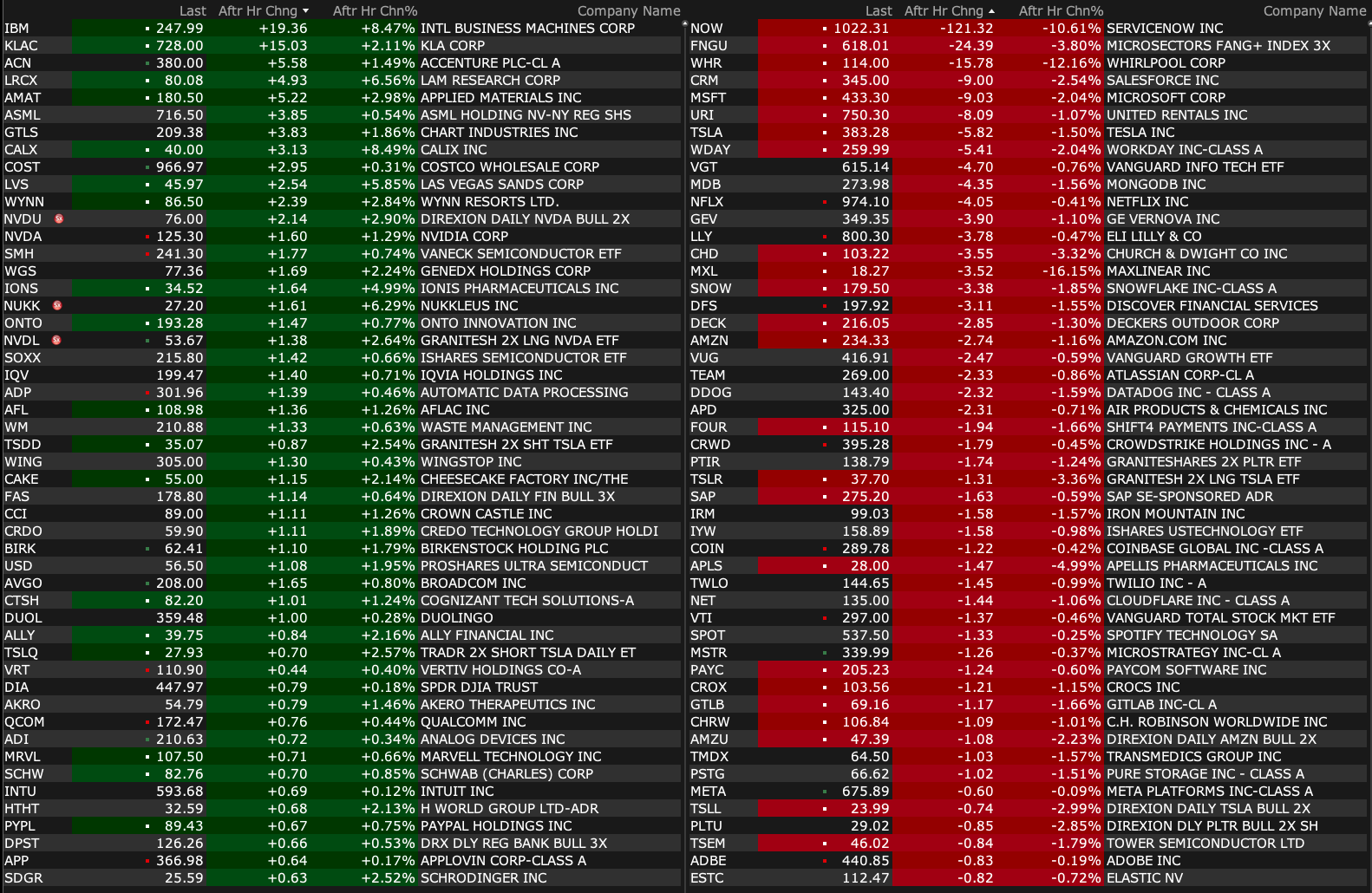
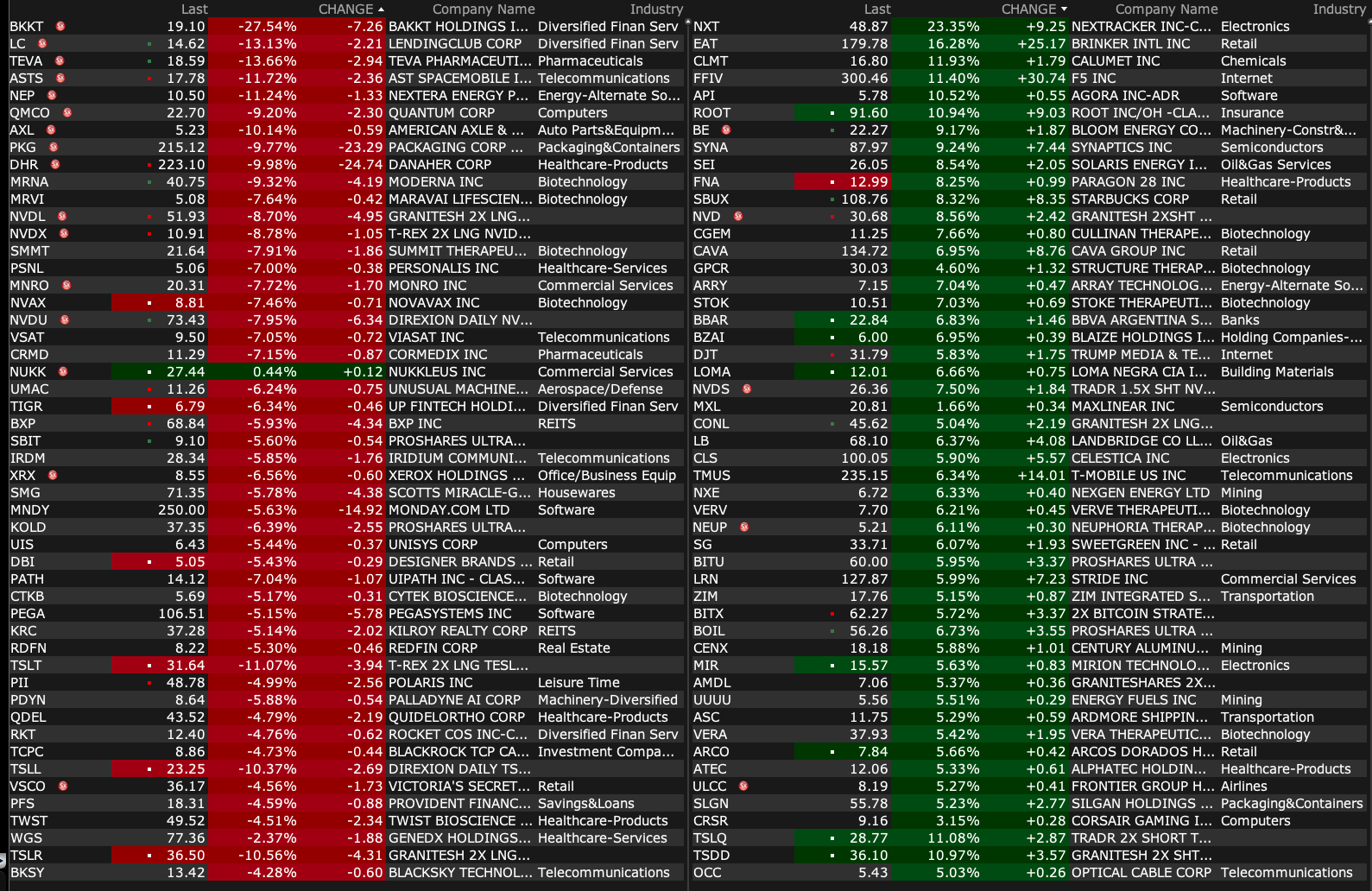
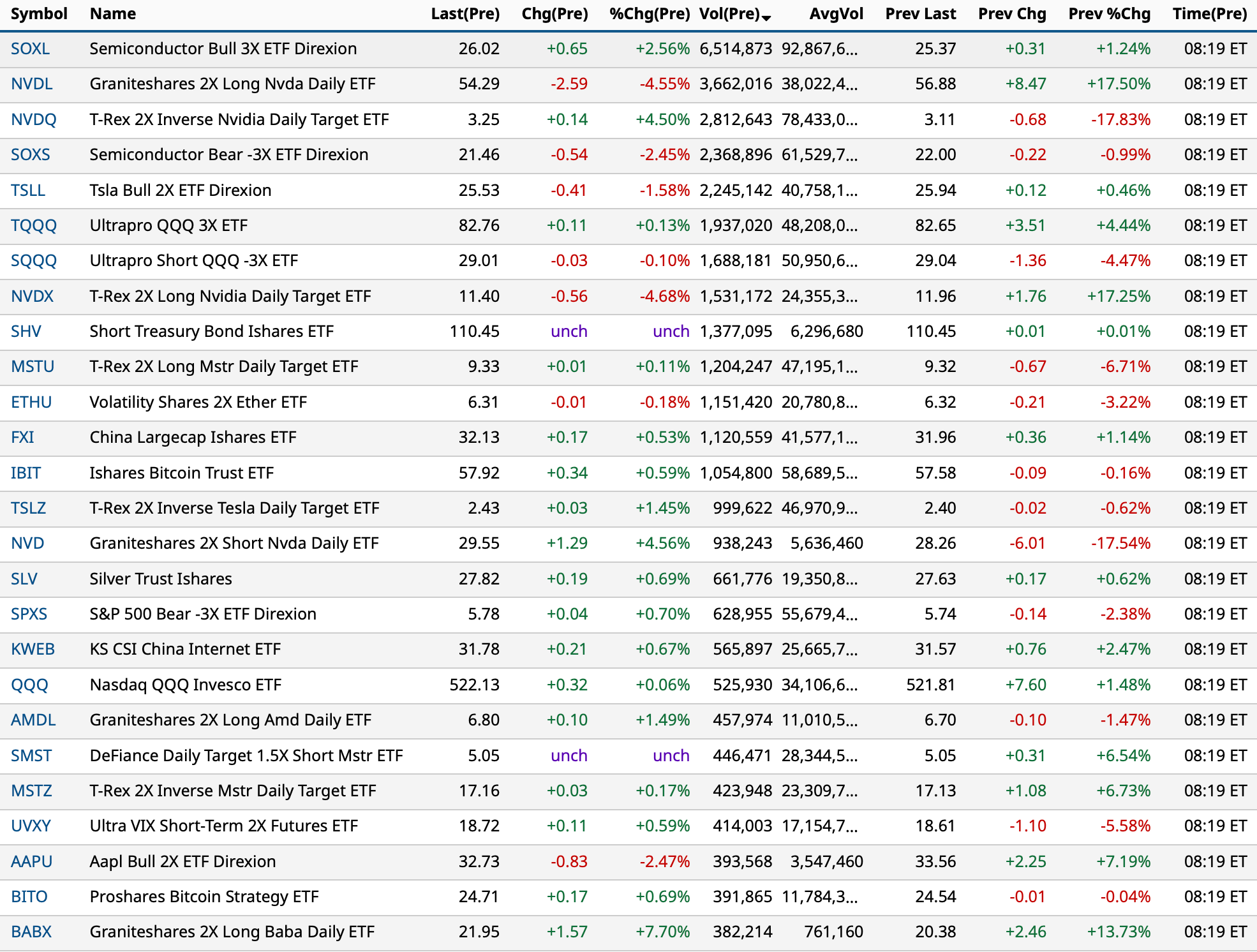
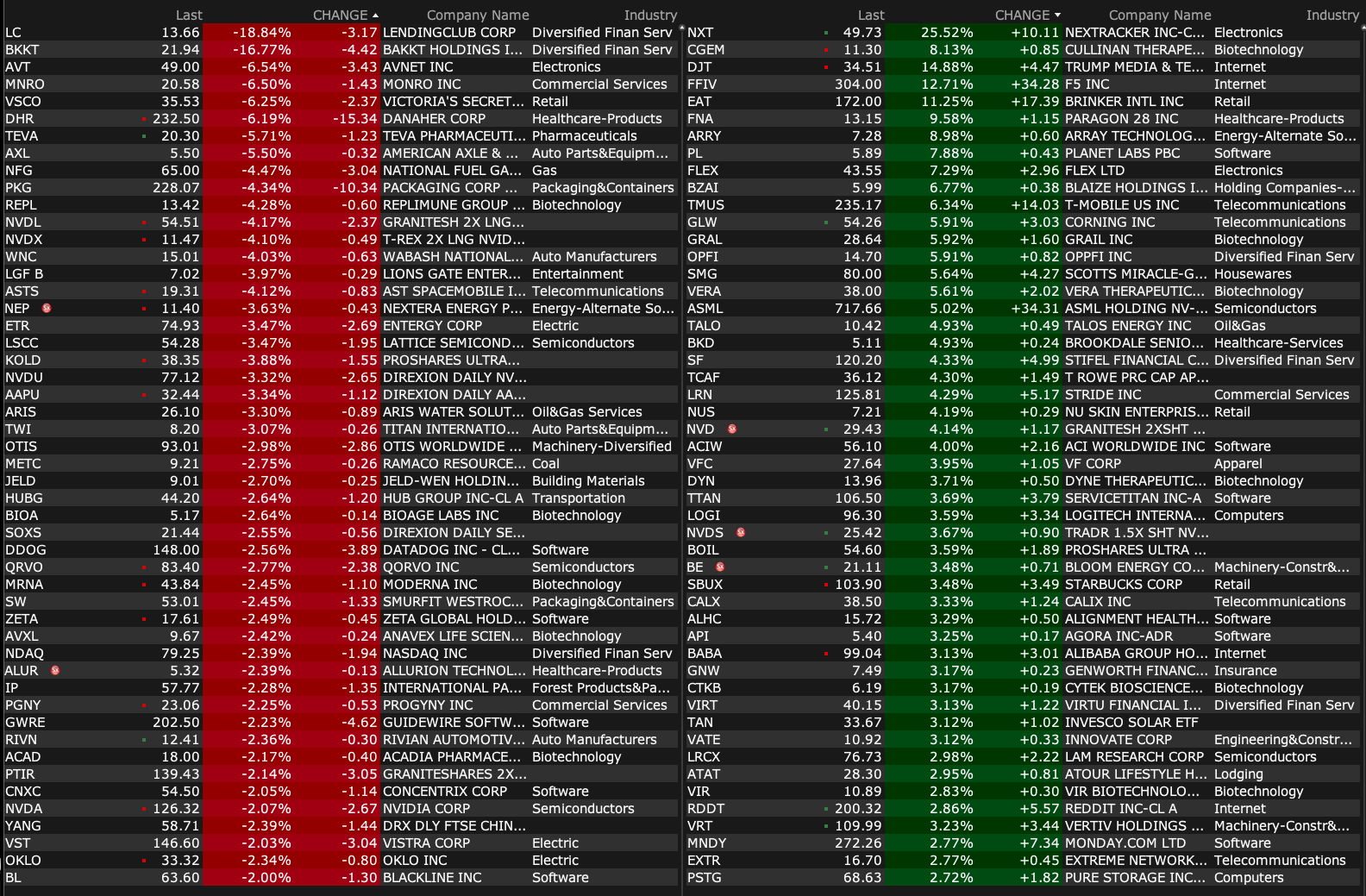
-NXT +22% (earnings, guidance) -FFIV +13% (earnings, guidance) -EAT +12% (earnings, guidance) -AZUL +8.4% (finalizes restructuring with Bondholders, Lessors and OEMs; issues $525M in Superpriority Notes due 2030 and Settlement of Exchange Offers) -SHCO +8.4% (Third Point Capital discloses 9.9% stake) -FNA +8.3% (to be acquired by Zimmer Biomet at $13.00/shr in cash for $1.1B) -EXTR +7.7% (earnings, guidance) -FLEX +7.1% (earnings, guidance) -PL +7.0% (signs deal with European Space Agency) -TMUS +6.5% (earnings, guidance) -VIRT +6.1% (earnings, guidance) -GLW +5.9% (earnings, guidance) -ASML +5.8% (earnings, guidance) -SMG +5.6% (earnings, guidance) -SF +4.3% (earnings, guidance) -VFC +3.8% (earnings, guidance) -LRN +3.6% (earnings, guidance) -BABA +3.3% (claims AI model outperforms DeepSeek) -LOGI +3.3% (earnings, guidance) -SBUX +3.1% (earnings, guidance) -HSIC +2.0% (earnings, guidance; reportedly KKR has amassed a large stake)
Downside:
-ZNTL -34% (plans ~40% workforce reduction to support Late-Stage Azenosertib Development providing extended cash runway into late 2027 with data readout from potentially registration-enabling DENALI Part 2 study anticipated by end of 2026) -MANH -24% (earnings, guidance) -LC -20% (earnings, guidance) -VSCO -6.2% (Scott Sekella appointed new CFO, effective June 2025; adjusts guidance) -DHR -6.1% (earnings, guidance) -AVT -5.6% (earnings, guidance) -QRVO -4.7% (earnings, guidance) -LII -3.8% (earnings, guidance) -MNRO -3.7% (earnings, guidance) -TEVA -3.2% (earnings, guidance) -OTIS -3.0% (earnings, guidance) -AXL -2.1% (confirms agreement for the entire issued and to be issued ordinary share capital of Dowlais [DWL.UK] at ~85.2p/shr and EV of £1.16B; affirms guidance) -NDAQ -2.1% (earnings, guidance)
Let's start with this announcement early in the morning about potentially more AI competition from Alibaba BABA.
More snippets.
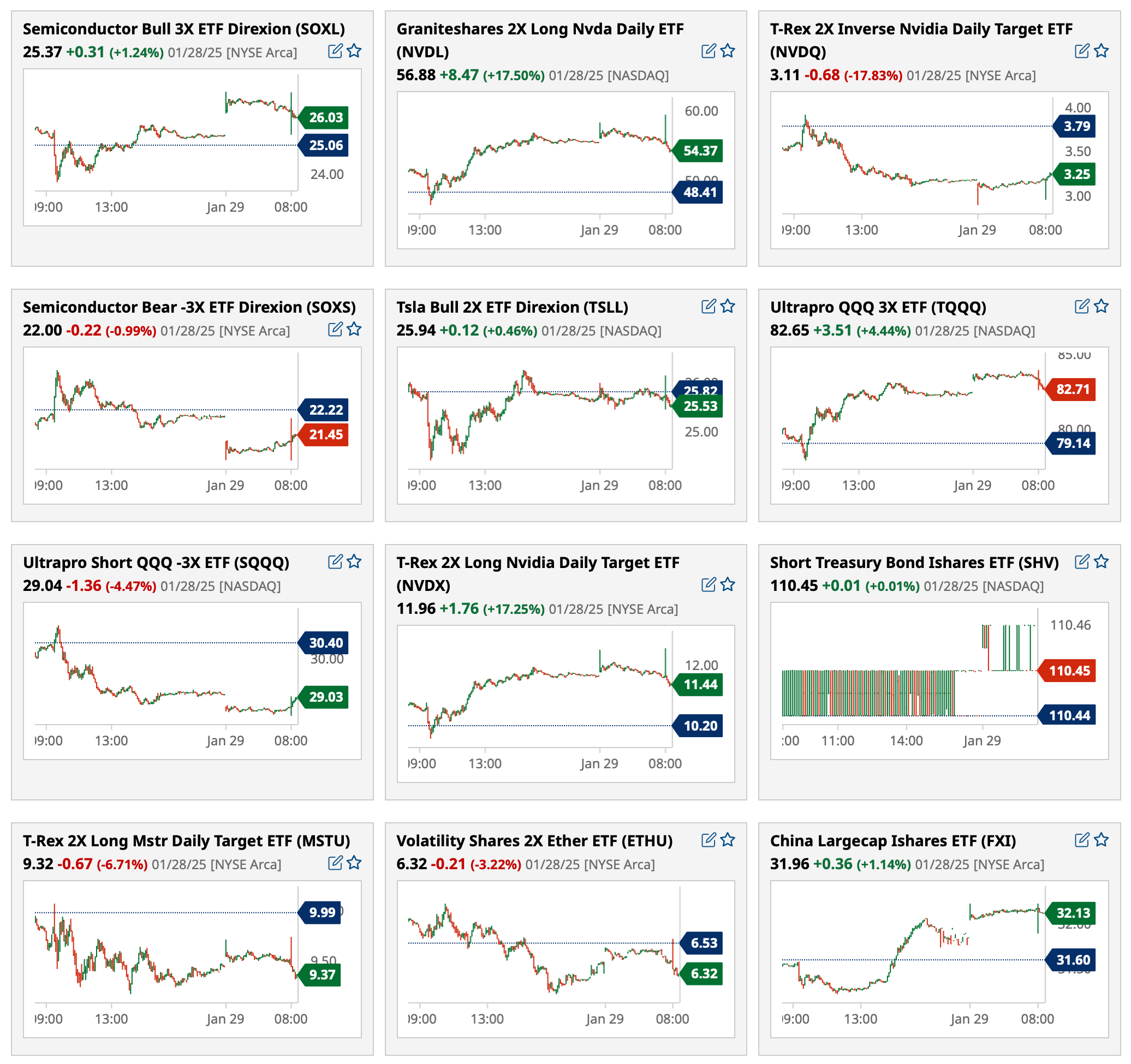
First, an observation. If you look at the amount of $ trading in Nvidia NVDA, and the amount of market cap involved, don't ever let anyone ever tell you again that when the government prints money it does not go into the economy and into the price of everything!
This information was all out there. Maybe if people would have done a little due diligence, as opposed to just blindly following what they are told by the guys selliing AI, none of this would have been a surprise. Second of all, given this stuff was all out there, it is very challenging for me to believe that people in the industry (Nvidia, Microsoft, Sam Altman, etc.), did not know about this. And per my prior "Tales" on the Satya Nadella tweet, we did not hear a peep about it from them. If it was such a positive development, they would have been touting this just like they tout everything else:
Plenty of Breadcrumbs
Breadcrumbs about the "cost-effectiveness" of what DeepSeek is doing have been dropped for MANY months, including this from July:
Next, a thoughtful piece of research by Julien Garran at MacroStrategy. All the lenders that took chips as collateral for their loans, whoa boy:
It has been an extraordinary week for Large Language Model (LLM) AI. First, we had Trump’s and Sam Altman’s announcement of the ‘Stargate’ US$500bn US LLM datacentre infrastructure build out. Then, with little fanfare, Deepseek released its R1 LLM as an opensource model. On Thursday Sam Altman launched Open AI’s first ‘agent’ called Operator, that is meant to order you pizzas, buy your groceries and tickets to a ball game. Then, by Friday, people started to realise that Deepseek was beating the best-in-class US LLM’s on their own test metrics, but that it had reportedly only cost a fraction to train, and you could run it on a high-end PC. This past week’s announcements put the nail in the coffin for LLM AI compute market this cycle. But they were simply the culmination of a series of developments, all in the public domain and discussed regularly on these pages, that had collapsed the market for LLM AI compute already, bringing H100 rental prices down from US$8/hour in Q2 2023, to 99c/hour as of last week. It is only this week that markets have noticed.
I estimate that Blackwells will have to rent for US$9.20/hour to make a 5% return on capital, and US$10.60/hour with tariffs. LLM developers will face a trade-off; run three H100s in parallel for US$3/hour or less, or run a Blackwell, to get the same compute. Well before Deepseek landed, I argued that Blackwells would struggle to rent for anything close to that and that there was a growing likelihood that we’d start to see order cancellations. The Deepseek launch and Trump’s tariffs have raised the likelihood of cancellations dramatically.
There are several major implications; first, you’d have to have a really good aesthetic or pollical reason to use something worse than Deepseek, and more expensive to run, like Chat GPT, Anthropic, Copilot etc. This renders the developers’ entire capex in LLMs to date close to valueless. It also raises the question why would you invest in training a next LLM if a competitor usurps you within three months with an opensource ap that is much cheaper to use? This should collapse future LLM training. Finally, if the cost of inference is also much lower, then the market for compute, which is already in the basement, and where rental for new chips doesn’t cover the cost of capital, will weaken even further.
At the same time, Open AI’s new ‘Operator’ agent is not fit for prime time, while multiple reports suggest that scaling, the improvement of LLMs with increased training, has hit a wall. In short, the LLM AI development and datacentre ecosystem is now fundamentally broken. At some point, the US$34bn+ credit in the ecosystem will head for the exit, and that suggests that the protagonists in LLM AI development, datacentres and chipsets, have a long way to fall. In the next cycle, cheap compute may open up opportunities for useful aps, but not in this one.
This tweet is interesting too regarding my point that the current export controls are a paper tiger. DeepSeek is using the highest end part that is not supposed to go to China:
The export controls, as currently structured, are meaningless, maybe purposefully and they were just PR from the prior administration to make it sound like they were tough on China. So many ways to get around them. Nvidia can ship to a legitimate destination, then whomever has the part can turn around and sell it into China. It is not complicated. I think Nvidia has even publicly owned up to the fact that they don't know where all their parts ultimately end up.
To whit, Nvidia U.S. revenue growth over the last three quarters is +21%. Nvidia's Singapore revenue in the last quarter was $7.7B (+185% YoY) — more than half its U.S. revenue in the same quarter. Seems rather strange given the export controls? Where does it go once it gets to Singapore? Also, the fact that U.S. growth has now slowed to 21pct y-y tells you something about underlying U.S. demand, and how it is flattening.
This remains a risk too. The current administration, if they behave in a way that is consistent with their behavior to date, and their public statements that AI is a national security issue, will find a way to cut this stuff off. I am sure they know what the food chain looks like, and the various ways parts can make it over to China. There is a way to stop it.
Holy Retail!
And once again per the point about money being put into the economy. The goofy thing is maybe the world has turned upside down, and institutions will chase retail now (retail seemingly is not afraid of catching falling knives), and the algos will frontrun and turbocharge all of it? It really is a brave new world out there.
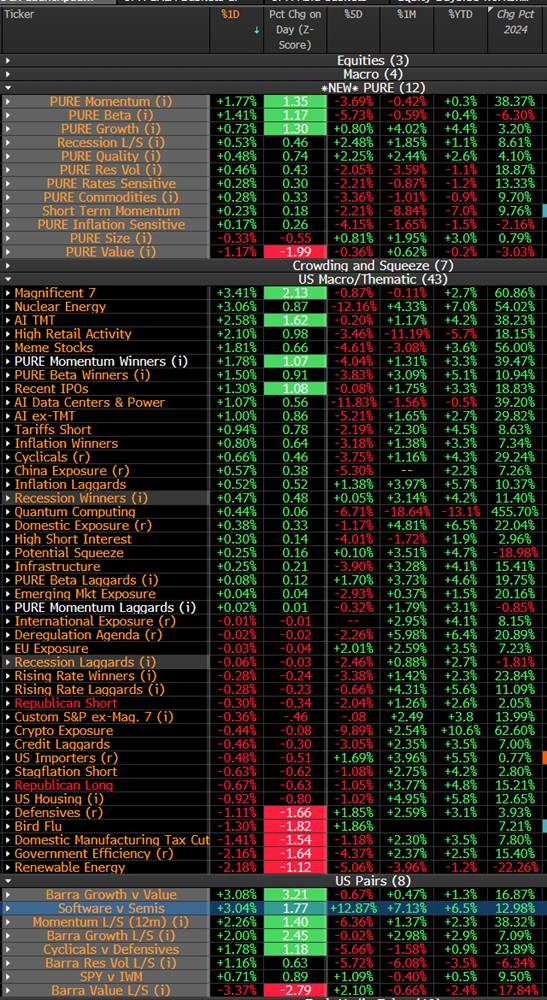
US: Futs are flat with Tech/Small-caps big higher as the market looks to recover from Monday’s Tech Plunge. Pre-mkt, Mag7 names are mixed with Semis rallying but this may not mean the end of the Semis-to-Software rotation which is +10% this week (JPPQSFSM Index). Bond yields are flat to down 1bps ahead of what is expected to be a dovish pause by the Fed today. USD strength continues, given the likelihood of new tariffs announced this week or weekend. Cmdtys are mixed as Ags and Metals are bid.
and...
EQUITY AND MACRO NARRATIVE: What a difference a day makes … Retail investors were very active in the second largest buy-day since the Inauguration, buying ~$1.8bn vs. $512mm (1-month avg), +2.75z.NVDA retraced ~44% of its Monday loss.What changed? Not much actually. While there were some extreme moves on Monday, the equal-weighted SPX (SPW Index) closed +2bps and the moves in Credit did not match their Equity counterparts. So, if we take a step back and look at fundamentals, we remain in Goldilocks territory with an update on ISMs and NFP next week. While the market is not the economy, if the US remains in a 2.5% - 3% range for real GDP it will be difficult for stocks to move lower. Today, we enter a critical part of the earnings season with Mag7 kicking off (previews in the succeeding sections).
· FED –Feroli expects a dovish pause and maintains his call for 2x rate cuts in 2025, one in June and one in September.
·TREASURIES –Before the events of Monday, Jay Barry likes owning the 2Y but the 7bps move on Monday made the risk/reward less favorable and he took profits. Longer duration bonds are unlikely to see their yields decline materially given the uncertainty surrounding policy and the US fiscal outlook.
· USD – the dollar has been reactive to tariff headlines and we saw a jump overnight on suggested policy from Bessent and then additional Trump comments.
· FED BREAKEVENS FROM RATES TRADING (David Nadle) –In the last several sessions vols have softened (despite a brief pop yesterday in the rally) and the surface has steepened. Dealers remain long gamma across a wide range of strikes (+/- 20 bps in 10s) and program sellers have remained active in 1m10y, selling ~750mm 1m10y equivalents per day. In core gamma payer skew has softened driven selling from FM and AM both outright and via ladders in addition to yesterday’s sharp reversal of rate/vol directionality driven by a shift in equity/rate correlation. Payer skew now appears to offer quite attractive entry levels as dealers flip short gamma >4.75 in CT10y and points such as 1m10y +25 are merely +2.5 ABPV of skew. We continue to favor surface steepeners as realized vol is likely to remain somewhat suppressed given gamma positioning. On the LHS FM has continued to sell 1y tail vol, mostly as ATM straddles, as the vol slide remains attractive with the fed unlikely to be active in H1. VoV has richened in this sector as ATM vols have come lower, particularly on the call side of the distribution. We have seen FM buying risk off hedges in 1y tail low strikes driving this rotation Heavy gamma positioning and a fed that is expected to be quiet for the next several months results in tomorrow’s breakevens being the lowest FOMC breakevens since November of 2021.
o SFRH5: 2.25bp
o SFRH6: 5.50bp
o SFRH7: 5.75bp
o FV: 5.625bp
o 5y: 5.50bp
o TY: 5.125bp
o 10y: 4.625bp
o US: 4.50bp
o 30y: 4.25bp
o *the 1d terminal breakeven (premium/dv01) for a straddle struck at 3pm today, expiring at 3pm Wednesday

Kass: A January 2025 Market Top and the Beginning of the End of the Mag 7?
* The equity risk premium is at a two decade low — thus, stocks are materially overvalued relative to bonds.
* Almost every other traditional valuation metric is above the 95%-tile.
* The promises of a new Administration (deregulation, pro growth economic policies and lower corporate/individual tax rates) have been fueling the animal spirits since the November election.
* As well, the dominance of passive investing products and strategies (that worship at the altar of price momentum) have, in turn, propelled equities higher as that momentum builds.
* Company buybacks have added to investors' glee and upwards price momentum since early 2024.
* Nonetheless, based on history, today's valuations (statistically) represent a very poor launching pad for future equity returns.
* January 2025 (the end of The Nifty Fifty) resembles January 1973 (the possible end of The Magnificent Seven) in so many ways.
* Unexpected corners of speculation and leverage could lay the ground for a more significant market decline (than is represented by our baseline expectation (of about a -10% drop).
The December 2024/January 2025 period marks the beginning of what I expect to be a lower-trending market accompanied by rising volatility.
I expect 2025 to look far different than last year.
While, in managing my hedge fund, I predominantly focus on an assessment of reward vs. risk on individual stocks — if I was forced to hazard a precise forecast I would project only about a 5% upside and a 10% to 15% downside for the S&P 500 Index in 2025 (or roughly 2-times to 3-times more risk than reward).
This commentary will explain why heady valuations are rarely a good launching pad for higher stock prices.
I will explore and summarize some of our fundamental near and intermediate-term concerns.
I will compare today with early 1973 (which marked the end of the Nifty Fifty era) and produced years of subpar returns for the major market averages. Then, I will highlight some longer-term existential market threats that few discuss, but that have a reasonable chance of emerging.
As I wrote to my Limited Partners several weeks ago:
"Many of our fundamental concerns (growing policy (fiscal and monetary) risks, sticky inflation, slowing economic growth and rising interest (higher for longer)) are finally beginning to be accepted by investors — at a point in time in which valuations are elevated and consensus corporate profit estimates seem too optimistic. We are increasingly more confident that stocks will correct to more attractive levels than exist right now — at which time we can begin to accumulate selected stocks that meet our investing criteria and standards."
You're the top! You're the Coliseum You're the top! You're the Louver Museum You're a melody from a symphony by Strauss You're a Bendel bonnet A Shakespeare's sonnet You're Mickey Mouse You're the Nile You're the Tower of Pisa You're the smile on the Mona Lisa I'm a worthless check, a total wreck, a flop But if, baby, I'm the bottom, you're the top
Besides the greatest degree of optimism that has prevailed since 2022, extended valuations, the likelihood that some (much?) of the appreciation in equities stems from automated buying by Index investors (without regard for their intrinsic value) and the multiple factors discussed in recent months — there are other cautionary signposts:
* The enthusiasm surrounding quantum computing and AI.
* The implicit assumption that the constituents of the Magnificent Seven will continue to be successful.
* The relative valuations of U.S. stocks compared to the rest of the world.
* Though unrelated to equities, the price of bitcoin (regardless of worthiness) has risen by over 450% over the last 24 months — this obviously doesn't suggest an overabundance of caution!
Looking Back on the Year
What differentiates our hedge fund, Seabreeze, from many "long/short funds" is that, in times of market concern, we run a bona fide "hedged" portfolio.
Most of the larger "long/short" hedge funds have abandoned short selling of individual equities altogether for a variety of reasons — not the least of which is that they can't get scale on the short side in specific names. Instead, these Funds often resort to shorting Indices, if they do anything on the short side at all.
As many recognize by now, I am as comfortable being short as being long.
A closer examination of our short book should make our differentiated approach apparent. We don't seek drama and beta in our shorts. Rather, we typically focus on non-crowded shorts (in which the short interest as a percent of float and average daily trading volume are low).
We don't short valuations. Our short selection is based on a bottom-up analysis; it's most often an assessment that companies' business models are deteriorating or broken relative to consensus expectations.
Here are examples of some of our individual shorts that we have held throughout most of the year:
The Coca-Cola Company KO, Starbucks SBUX, Chegg CHGG, Winnebago Industries WGO, FIGS FIGS, Medical Properties Trust MPW, Blackstone Mortgage Trust BXMT, Sleep Number Corporation SNBR, Aegon AEG, Walgreens Boots Alliance, Inc. WBA (now covered), Warner Bros. Discovery WBD, F45 Training Holdings Inc. FXLV, Petco Health and Wellness Company WOOF, B. Riley Financial RILY and Intuit INTU.
Our short book is hardly a "who's who" with regard to familiarity by most investors! You won't see a Mag 7 short in our holdings. By staying away from high-risk popular and crowded shorts — despite the market's sea of green in 2024 — our individual equity shorts contributed positively to last year's investment returns.
Price Is What You Pay, Value Is What You Get
"What the wise man does in the beginning, the fool does in the end."
- Warren Buffett
" A bull market is like sex, it feels best just before it ends."
- Barton Biggs
It should not come as a surprise that the return of an investment is significantly a function of the price paid for it. For that reason, investors clearly shouldn't be indifferent to today's heady market valuations.
As expressed earlier, equities begin 2025 at an historically high level. The CAPE price-to-earnings multiple cyclically adjusted price-to-earnings ratio developed by Yale University's Bob Shiller (I have lectured in his class since 2011!) is at 37-times, having expanded from 32-times a year ago and 27-times two years back. The last time valuations were so high was at the beginning of 2022 — a year in which the S&P Index fell by 20%. Before the CAPE was that high in 2001 — the start of a major bear market. In fact, in the last century the CAPE multiple has been this high only three percent of the time — making the current ratio a 2.3 standard-deviation event.
S&P 500 CAPE Multiple
United States (ratio)
Shading indicates recession; Source: Haver Analytics, Robert Shiller, Rosenberg Research
Historically, a high CAPE is a launching pad for inferior returns:
United States
Source: Bloomberg, Rosenberg
My friend, Oaktree's Howard Marks recently discussed this subject in one of his memorandums:
Source: J.P. Morgan Asset Management
The above graph, from J.P. Morgan Asset Management, has a square for each month from 1988 through late 2024, meaning there are just short of 324 monthly observations (27 years x 12). Each square shows the forward P/E ratio on the S&P 500 at the time and the annualized return over the subsequent 10 years. The graph gives rise to some important observations:
There’s a strong relationship between starting valuations and subsequent annualized 10-year returns. Higher starting valuations consistently lead to lower returns, and vice versa. There are minor variations in the observations, but no serious exceptions.
Today’s P/E ratio is clearly well into the top decile of observations.
In that 27-year period, when people bought the S&P at P/E ratios in line with today’s multiple of 22, they always earned 10-year returns between plus 2% and minus 2%.
In November, a couple of leading banks came out with projected 10-year returns for the S&P 500 in the low- to mid-single digits. The above relationship is the reason. It shouldn’t come as a surprise that the return on an investment is significantly a function of the price paid for it. For that reason, investors clearly shouldn’t be indifferent to today’s market valuation.
You might say, “making plus-or-minus-2% wouldn’t be the worst thing in the world,” and that’s certainly true if stocks were to sit still for the next 10 years as the companies’ earnings rose, bringing the multiples back to earth. But another possibility is that the multiple correction is compressed into a year or two, implying a big decline in stock prices such as we saw in 1973-74 and 2000-02. The result in that case wouldn’t be benign.
Stocks Remain Defiant in the Face of Higher Yields and Sticky Inflation
Most recently interest rates have climbed much higher than consensus expectations — with the yield on the 10-year Treasury note approaching 4.75%, a multiple-month high.
Investors have continued to ignore the signposts of continuing inflation:
Source: Hedgeye
The recent disaster in Los Angeles will likely serve to exacerbate inflationary pressures — as building material prices rise and insurance premiums are poised to take off.
Importantly, the increase in interest rates and the absence of a more favorable EPS backdrop have contributed to an ever-thinning equity risk premium — in which the spread between the S&P Index's forward earnings yield and the 10-year Treasury yield has reached a 23-year low:
David Rosenberg provides a succinct explanation to high valuation and for the equity market's indifference to the mounting concerns of sticky inflation, rising interest rates and other possible negative outcomes:
"Because I believe that earnings growth estimates are too lofty, even with the AI craze and how it will change the world, and because I believe that the ERP should be above zero (as risky assets should command a risk premium against riskless assets), I am still largely on the sidelines. I also believe that by the time the top is turned in, there will be a mad scramble to get out because the two extreme primal emotions of investing, fear and greed, never go out of style. Greed has been working, and may continue to work in 2025, but nothing lasts forever.
The problem is that because there is so much overexposure to equities on household balance sheets, everyone is going to be trying to bail out together with precious few buyers on the other side, because there aren’t exactly a whole lot of folks out there with a cash position like mine (oh, save for Warren Buffett… the two of us will be there, rest assured, to provide liquidity when the time comes). I don’t know when that time will be, but I do know it will come."
For now, it is clear that investors have lengthened their time horizons amid a perceived shift in the technology and productivity curves. This has meant that historical analysis of classic short-term valuations has not worked.
However, we can say with a fair degree of certainty that we don't expect this to be a permanent condition.
What We Failed To Expect in 2024
"A mistake that people often make is they compare themselves with others who are making more money than they are and conclude that they should emulate the others’ actions...after they’ve worked. This is the herd behavior that so often gets them into trouble."
- Howard Marks
"We derive no comfort because important people, vocal people, or great numbers of people agree with us. Nor do we derive comfort if they don't. A public opinion poll is no substitute for thought."
- Warren Buffett"
With the benefit of hindsight — "animal spirits" and the fear of missing out — were the key factors that contributed to the 2024 reset in valuations. Specifically, about $1 trillion of inflows into equity mutual funds/ETFs and an equivalent amount of company share buybacks spurred the advance in price earnings multiples.
I did not expect such a strong reset in valuations in the face of limited changes in profit expectations.
January 2025 Resembles January 1973
The conditions that exist today remind us of an important market top that took place in January 1973.
Like 52 years ago, today we face a combative President (Nixon/Trump), market leadership is narrow (it was The Nifty Fifty in the early 1970s and The Magnificent Seven in recent years), interest rates and inflation have turned up (from the prior few decades) and public sector debt has been climbing rapidly. Also, like in 1973, we lack visibility today with regard to any fiscal discipline by our government.
In both periods, the forward price-to-earnings was extremely elevated (today, at 23x, in the 96%-tile), the market advance was not broadening out, the "animal spirits" took stock prices higher without a commensurate change in future profit forecasts, and the equity risk premium was paper thin.
An epic market top was completed in January 1973 — leading to a poor year for the S&P Index, which marked the beginning of the end of the Nifty Fifty and several years of weak performance in the Indexes.
I expect something similar in January 2025 — an important market top, a down year for the averages and marked by the beginning of the end of the Mag 7, which could extend multiple years.
The Unexpected and Leveraged Corners of Speculation
* As we have already noted, the entirety of the recent market advance has been based on an expansion in price-earnings multiples.
* As narratives multiply and fear/doubt disappear, guards and disciplines are dropped with many asset classes at all-time highs.
* But as asset prices rise, diligence and the assessment of reward vs. risk should take on greater irrelevance — unfortunately, just the opposite is occurring.
* And so should the concept of "a margin of safety" be evermore embraced — as it is an essential and integral ingredient to investing over a "market cycle."
* Expect the unexpected...in the corners of leverage and those that are endorsing the narrative of a "new paradigm" (of higher valuations).
Over history, market inflection points and economic dislocations often come from places not anticipated. Indeed, the most important turning points in markets (and in life) often come at the most unexpected times and in the most unexpected ways. In particular, leverage, as proven by history, is often uncovered in unexpected places.
Think about the collapse of a generally unknown currency, the Thai Bhat that gripped Asia in 1997 and then spread to other countries (with a ripple effect), raising fears of financial contagion and a worldwide economic meltdown. Or the failure of the highly leveraged (and formerly successful) Long Term Capital hedge fund (managed by several Nobel Prize winners in economics) in the following year — which was, in part precipitated by the Russian Debt crisis in 1998 and required a multibillion-dollar bailout by 14 banks (orchestrated by The New York Federal Reserve). But the best example of hidden leverage (where no one was looking) was seen in The Great Financial Crisis of 2007-09 when one overleveraged segment, real estate, proved to be the Achilles Heel for the global economy.
Indeed, what started out as what many believed to be only a few California mortgages underwater, multiplied geometrically and almost bankrupted our worldwide financial system — as the layers of leverage were swiftly uncovered and spread rapidly.
This commentary will highlight several significant market (and economic) risks that are not regularly discussed. The "failure" or combustion of any of these factors could have an adverse impact on equities and the domestic economy:
* The U.S. economy has never been more levered to the U.S. stock market. Indeed, one can argue that — with household ownership of equities at an all-time high, with a chorus of "it’s different this time" and with dreams of a new investing paradigm (of higher valuations) dominating the narrative. As discussed below, it is almost as if the domestic economy is being collateralized by a foundation asset, equities.
From Tom Dyson:
"The US stock market is such a foundational asset. You could say, the US stock market has become the collateral that backs the world economy, and all its debt. As long as the stock market keeps rising, everything’ll be okay. But as soon as it turns down, things will start breaking. Employment, real estate values, consumption, trade… and even the government’s finances. It’s the wealth effect, when the stock market is such an important store of wealth. They all rely on a strong stock market to function. The fact that the world’s prosperity has one single point of failure – even as it rises day after day – should terrify you. The market’s function should be to allocate scarce capital efficiently… not collateralize the entire system. In effect, it’s become too big to fail, which is an acute fragility for our capitalist system. As allocators of capital ourselves, how should we approach our investment discipline in a market where expectations (and stock market values) are literally “off the charts”? The bears say "every other time this has happened, there's been a big wreck." The bulls say "this time is different, and besides, the trend is your friend and getting the timing wrong is the same as being wrong. “What do you do? Neither position is falsifiable. Which means there is no way to figure out the correct answer with logic… or research… or data. So it comes down to philosophy. Are you a contrarian? Or are you a trend-follower?... The global debt stock surged by over $12 trillion in the first three quarters of 2024 to a record high of nearly $323 trillion. It’s a huge wealth bubble and when it pops, $400 trillion or $500 trillion of (mostly) paper claims ($323 trillion in debt plus whatever owners’ equity the system has) will rush for the exits and seek safety. And policy makers won’t be able to stop it."
* No country is an island. The current narrative is that the outlook for the U.S. is great but the outlook for Europe, U.K. and China is not good. The problem with this optimistic line of thinking is that over 40% of revenues in the S&P 500 come from abroad:
* Elon Musk's health and business/innovative successes are critical to a continuation of economic growth and stock market gains. Musk's broad reach — on the road, underground, in space, over the internet, in defense, in artificial intelligence — has now advanced into Washington, and in the formulation and implementation of policy. To have one person so immersed and involved in all these critical areas could pose broad risks — in many ways.
* An extremely leveraged cryptocurrency market represents potential systemic risks. It is my view that cryptocurrency is "the mother of all bubbles" perpetuated by a number of factors (including the rejection of fiat money) and developing digital narratives — many of which have a weak foundation of logic. The absurd notion that the limiting of supply of bitcoin is as stupid as it is damning — as there is no limit to the supply of other cryptocurrencies. To us, the sheer market size of Bitcoin and other cryptocurrencies is a manifestation of the risks.
When the cryptocurrency markets implode, which is my baseline expectation, the contagion effect will likely be pronounced on all of the capital markets.
* Both fiscal and monetary policy — which is needed to secure the foundation of growth — are travesties. Neither political party has been fiscally responsible — the profligate spending over the last few decades continues apace. (I do not, in any way, buy Elon Musk's objective of cutting $2 trillion from the U.S. budget, as when you go over the numbers only about $1.5 trillion can be cut (and that is if one cut all that was "available" to be cut in total). As well, the Federal Reserve has been guilty of reckless, feckless, and fatuous policy in its delayed response to inflation and then, in effecting a rapid rise in interest rates. I have little confidence in Powell's Fed steering clear of debris in his remaining time at that institution. Nor am I confident in any Fed chairman that might replace him.
* Changing market structure poses a significant market risk. Passive investing has engulfed the stock market landscape. We are all traders now, on the same side of the boat and worshiping at the altar of price momentum.
Massive inflows into passive strategies and products have been the straw that has stirred the market's drink. In part, those inflows, have contributed to a near-unprecedented narrowing in the equity risk premium (to 20-year lows) while the risk to earnings growth is at 20-year highs:
I can guarantee you (and history has proven) that these inflows — as well as FOMO and the animal spirits — will also not be permanent conditions. And when market momentum is broken and inflows turn into outflows, markets will likely suffer more meaningfully than most investors expect.
Bottom Line
As we enter the new year, we are of the view that stocks are increasingly vulnerable.
Specifically, we estimate that the market’s downside is probably between 2-times to 3-times the upside.
Despite heady valuations, the short-term headwinds are multiple, and the intermediate-term and other existential risks are considerable and growing.
On the latter point, as the New York Times columnist Ezra Klein writes about existential (society) risks:
"Donald Trump is returning, artificial intelligence is maturing, the planet is warming, and the global fertility rate is collapsing.
"To look at any of these stories in isolation is to miss what they collectively represent: the unsteady, unpredictable emergence of a different world. Much that we took for granted over the last 50 years — from the climate to birthrates to political institutions — is breaking down; movements and technologies that seek to upend the next 50 years are breaking through.
"Any one of these challenges would be plenty on its own. Together they augur a new and frightening era. I find myself returning to a famous translation of a line from Antonio Gramsci: “The old world is dying, and the new world struggles to be born: Now is the time of monsters.”
That said, and as I have discussed in the past — I am fully cognizant that short selling preserves capital (in tough times) and long buying creates capital (in good times).
As I have reminded my investors and our subscribers in the past, our cautious investment stance — leading to a portfolio consisting of pairs trades and a sliver of a net short exposure — is not permanent by any means. Equities tend to rise most of the time and being long has an inherent advantage over being short. (Longs theoretically have no limitation to the upside in percentage terms, while shorts can only return 100% (upon bankruptcy).
If I am correct in our ursine view, a top-heavy technology-based Mag 7-led market should soon begin to topple, finally providing us with some long opportunities in the months ahead (or even sooner).
This article is a compilation of recent commentary in my Daily Diary on the TheStreet Pro and comments delivered to my investors at my hedge fund, Seabreeze Partners.)
At the time of publication, Kass was short KO (VS), SBUX (VS), CHGG (VS), WGO (S), FIGS (VS), MPW (VS), BXMT (VS), SNBR (S), AEG (VS), WBD (S), FXLV (VS), WOOF (VS), RILY (VS), INTU (S).